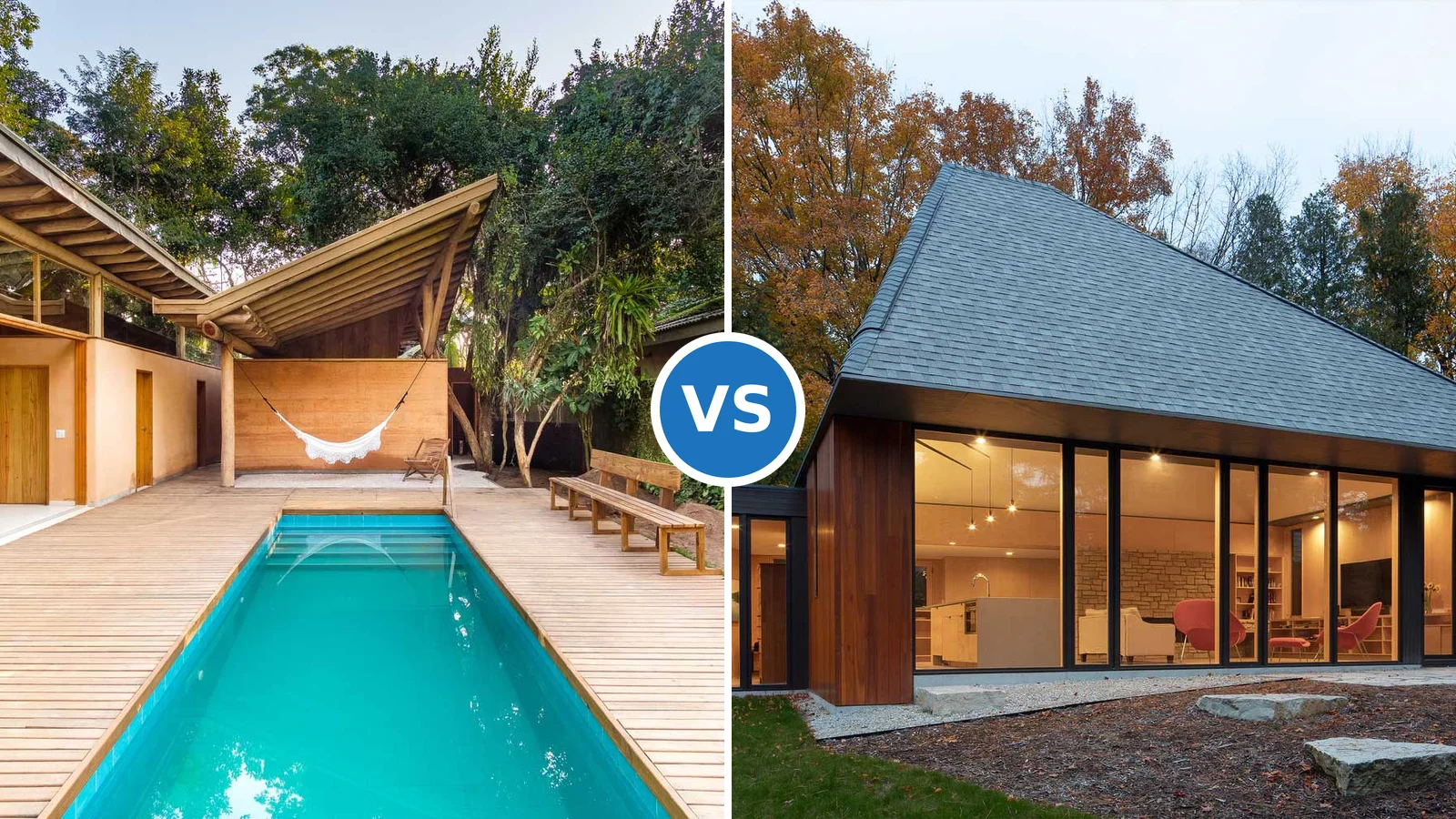
The bungalow house vs cottage question is broader than it looks, because both words cover many building types. Here it compares two concrete approaches: a single-story bungalow where every room sits on one open level, and a cottage built as a group of small houses, each with its own job. The real decision is whether your household wants one connected space or several private ones.
In short, a bungalow suits people who want easy movement, lots of daylight and a direct link to the garden in a warm climate. A cottage cluster suits families or home workers who value privacy and separate zones, and who have the land to spread out.

What each option means in practice
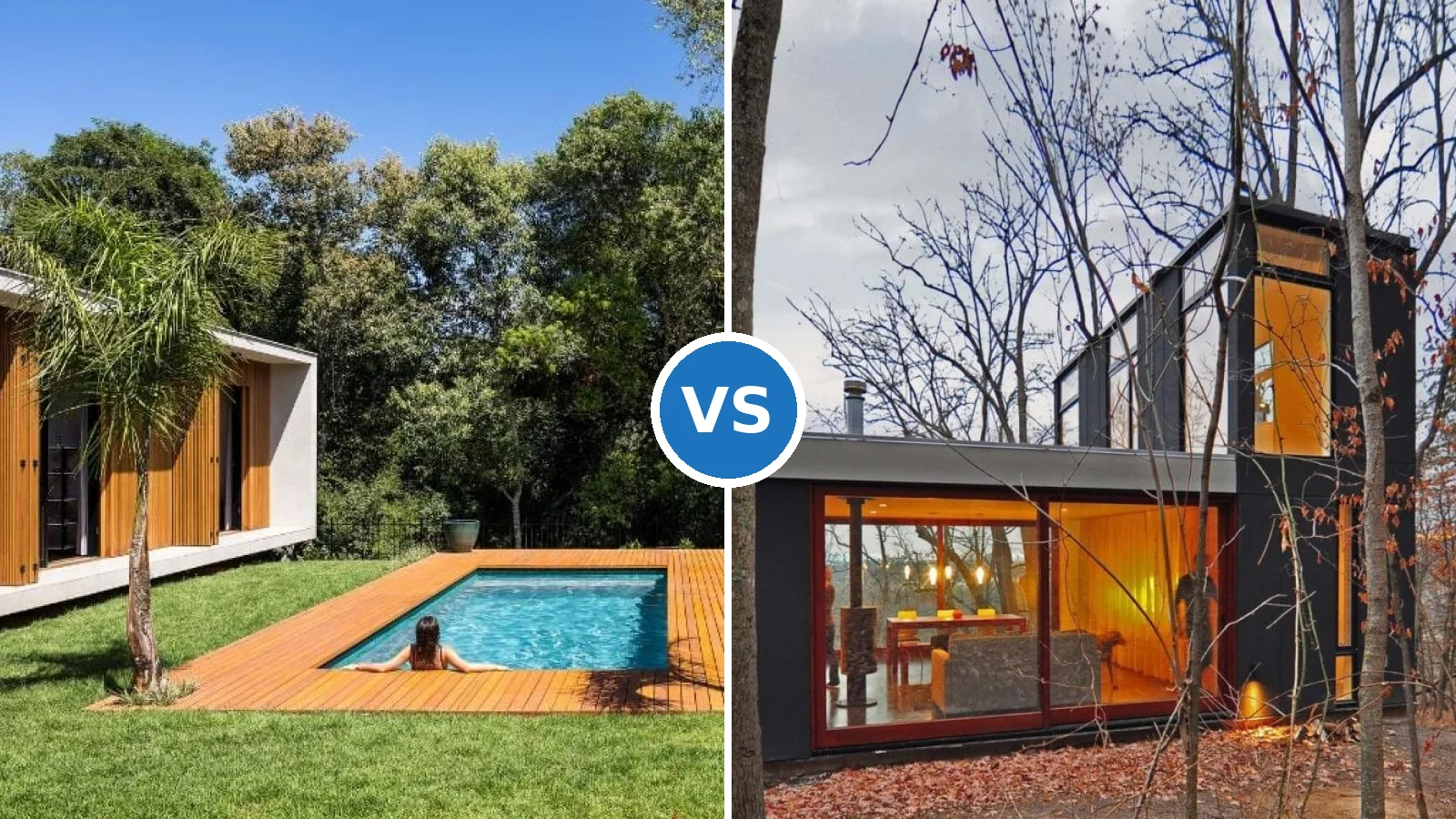
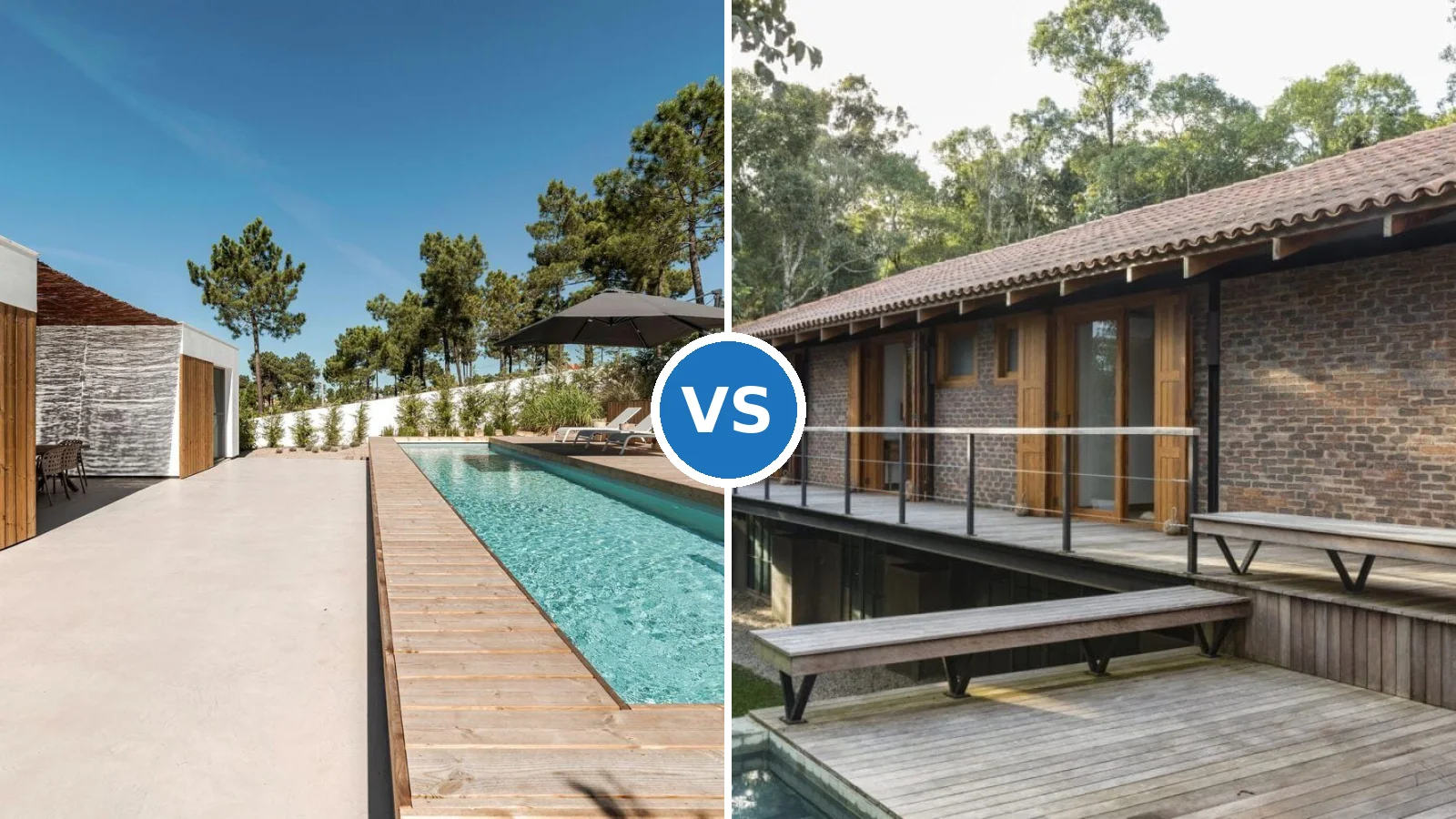
The single-story bungalow in Brazil keeps the classic program on one floor: living room, kitchen, bedroom, bathroom and a terrace. Glazed doors, panoramic windows and natural materials make the house feel open to the forest around it, and a sloped roof helps bring light deep inside.
The small cottages built as a micro-town take the opposite route. Instead of one large house, three small buildings each handle a function such as work, family time or recreation. Passages link them, but each has its own exit to the courtyard, so every unit can be used on its own.
Quick Verdict
- Choose a bungalow house if you want every room on one level with short, simple routes between them.
- Choose a bungalow house if you live in a hot climate and want daylight and garden views from every room.
- Choose small cottages if separate zones for work, rest and guests matter more than compactness.
- Choose small cottages if you have a larger plot and value privacy between household members.

Head-to-head on the criteria that decide it
The two designs share natural materials and large windows, so the differences lie in how space is organized and what the building is built to handle.
| Criteria | Bungalow House | Small Cottages |
|---|---|---|
| Layout | One open level with rooms flowing into each other | Several small buildings, each with one function |
| Privacy | Few partitions, so activities share one space | Separate buildings with windows facing different directions |
| Daily movement | Every room reached indoors on one floor | Moving between functions means using passages |
| Climate focus | Compressed-earth walls stay cool in hot zones | High tiled roof and wood finish aimed at energy efficiency |
| Garden connection | Each room opens straight onto the outdoors | Each building opens onto a shared courtyard |
| Land needed | Fits one footprint | Needs room for several buildings and paths |

Where the bungalow wins
The bungalow is the stronger pick for ease of living. With no stairs and few internal walls, moving from bedroom to kitchen to terrace is short and simple, which helps with small children or anyone who prefers to avoid steps. Every room has an open passage to the outside, and panoramic glazing on the south side keeps the space bright.
Its wall build is another advantage in heat. The Brazilian house uses earth mixed with water and cement, a technique the source describes as intended for beach houses in hot zones, because it keeps interiors cool in summer and comfortable in winter. Round windows with shutters add natural air circulation.


Where small cottages win
Cottages win on privacy and zoning. Because each building faces a different direction, the units feel independent, and the views change from one to the next. Keeping the kitchen and shared spaces apart from the main living quarters gives the owners a quiet place to rest, much like a traditional farm courtyard.
The format is also more flexible over time. A studio, a guest house and a family house can each be used, closed or rented on their own, which a single open plan cannot offer. The high roof with flexible tiles and wood-clad walls help the buildings sit easily in a wooded landscape, and the source highlights their energy efficiency and pleasant microclimate.


The most common mistake when choosing
The usual error is choosing by look rather than by daily routine. Picture a family that falls for the cottage cluster but places bedrooms in one building and the kitchen in another on a cold, rainy site. Every breakfast and late snack becomes a trip through a passage, and the charm fades fast.
The reverse happens too. A household with a home office and frequent guests may choose an open bungalow for its light, then find there is no quiet corner for calls. Map who does what, and when, before falling for a facade.

Bungalow house vs cottage and who should choose which
Pick the bungalow if you want a compact single-level home with daylight in every room, a strong link to the garden and walls built for a warm climate. It also works well on a narrower plot where one footprint makes more sense than several.
Pick small cottages if your household needs separate zones for work, rest and guests, and you have the land for several buildings and paths. For both routes, budget planning tips in our piece on budget-friendly home improvement ideas can help keep finishes in line with your spending.