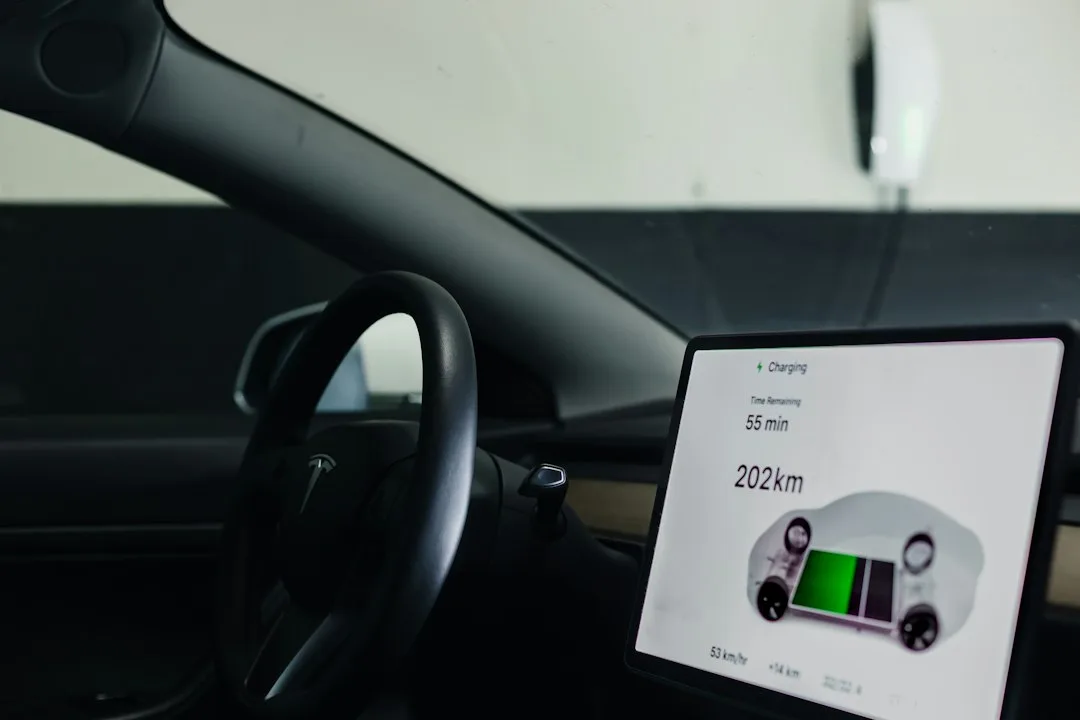
A car used to be finished the day it left the factory. Today a Tesla can gain new features overnight while it sits in a driveway, and a Rivian can change its drive modes without anyone touching a wrench. Over-the-air software updates now shape ownership as much as horsepower or trim level does.
That changes the rules.
How Carmakers Started Fixing Cars Without a Shop Visit
Tesla was the early mover here. Its cars have long received software packages over Wi-Fi and cellular connections, and the company has used that channel to push fixes tied to driver-assistance alerts. Owners did not have to bring the car in for a parts swap.
Rivian followed a similar path with its R1T and R1S, delivering packages that change charging behavior, climate controls and infotainment features. Ford’s Mustang Mach-E and BMW models with connected cabin systems receive comparable downloads, although the scope depends on model year and region. Timing matters.
The reason is practical. A modern car runs on dozens of electronic control units, and each one holds code that can be rewritten. Many fixes that once meant a parts order are now a download.
Quick Tips
- Check the owner app or the system settings menu for a software update section.
- Read the release notes before installing, especially for driver-assistance changes.
- Start downloads when the car is parked and the battery has enough charge to finish.
- Ask your dealer whether any open recall fix can be applied remotely.
What Over-the-Air Software Updates Can Change in a Car
Tesla’s infotainment screen is the obvious target, with map data, app menus and voice controls changing often. Powertrain calibration, battery thermal settings and driver-assistance thresholds also run on software. Each category carries different risk, so automakers gate some changes behind a dealer visit.
Think of it as layers. Cabin features sit at the top and change most often. Core braking and steering logic sits deeper, and manufacturers test those packages far more heavily before release.
| Update Type | Typical Delivery | What Owners Notice |
|---|---|---|
| Infotainment and apps | Over-the-air download | New menus, updated maps, added app features |
| Battery and charging settings | Over-the-air download | Charge limit options and thermal behavior |
| Driver-assistance software | Download or dealer visit | Warning timing and camera tuning |
| Recall fix | Remote or dealer, per notice | Changed behavior, sometimes new parts |
Why Software Fixes Save Owners Time and Hassle
Rivian owners who receive a feature package at home skip a service appointment entirely. For many households that means no lost workday and no rental car. The savings are small per update, but they stack up over years of ownership.
Software also reaches cars faster than parts do. A recall fix that needs a component may wait weeks for stock, while a download can go out to every affected vehicle at once. That speed is why manufacturers push so many fixes this way.
Families who plan around autonomous commuting will feel this more than most. Their cars must behave consistently from one day to the next, and steady software is what makes that possible.
The Mistake That Leaves Cars Running Old Code
Picture an owner who swipes away the update prompt on a Ford Mustang Mach-E every time it appears. Months pass, and a feature the owner wanted never arrives. The bigger problem is a safety package sitting unapplied in the car’s history.
This is the mistake that shows up most often when used cars change hands. The owner assumes an update is cosmetic and postpones it, then sells the car with an open recall attached to the vehicle record. The buyer and dealer then have to sort out what was never installed.
The fix is simple. Install recall and safety packages as soon as you can, and schedule feature updates for a parked, charged moment when you can watch the progress. Skipping the update does not protect the car. It only delays the fix.
What Warranty Coverage Usually Means for Software Fixes
Tesla and Rivian both handle recall-related software as part of normal vehicle coverage, not as a separate purchase. Feature packages are a different category, and some sit behind subscriptions or paid add-ons. Read the terms before assuming everything arrives free.
Warranty timing matters here too. A fix delivered during coverage keeps the cost on the manufacturer’s side, while the same problem found after coverage ends may fall on the owner. Keep dated records of every installed package.
Buying Used Cars With Software History in Mind
Before you buy a used Mach-E, ask the seller to show the current software version and the date of the last update. A car with no recorded packages and an open recall deserves a closer look. Recall status can be checked by VIN through the manufacturer or the federal safety agency.
Software history is becoming part of the vehicle record, much like service stamps once were. A seller who can show clean updates has a stronger story than one who cannot. That makes buying certified used stock easier, too.