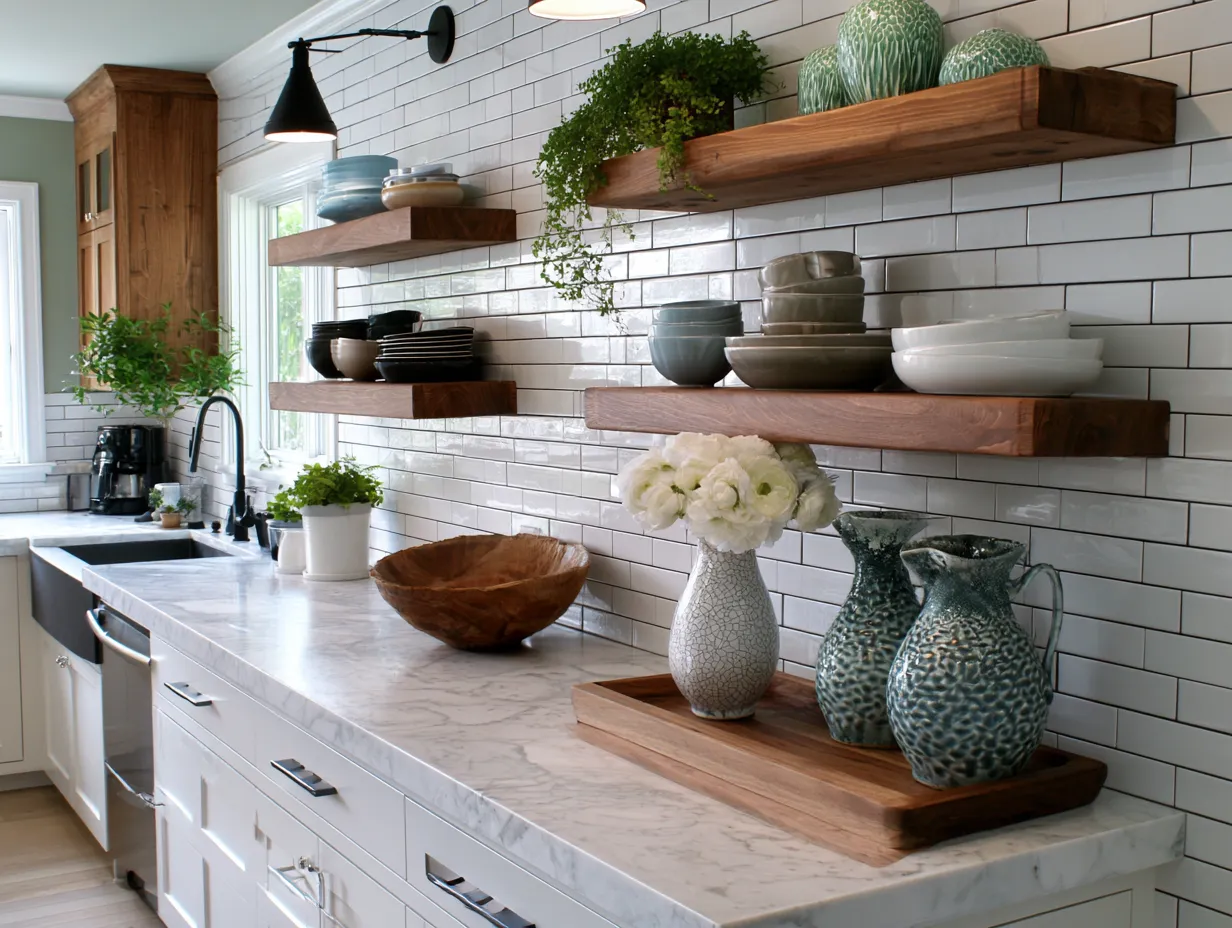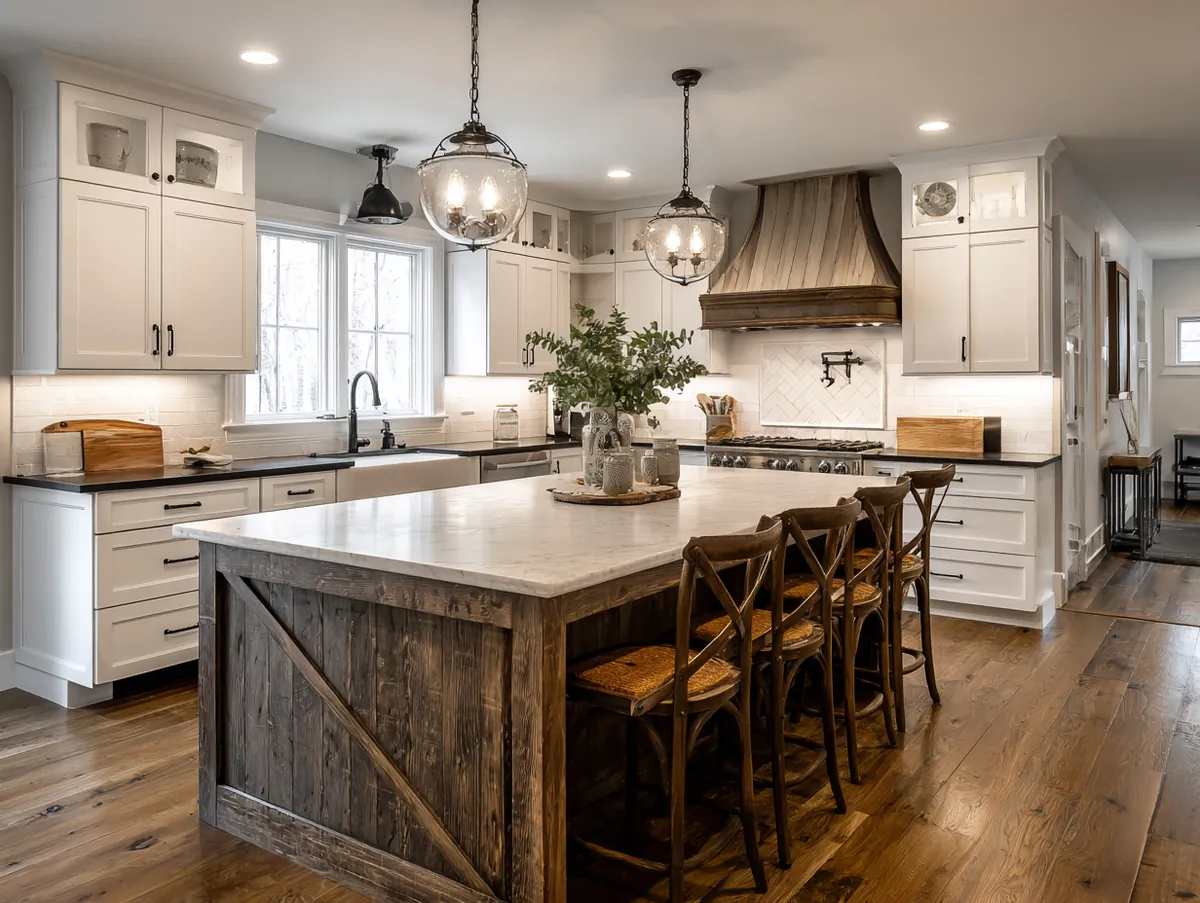
Small farmhouse kitchen ideas look effortless on Pinterest and genuinely stressful in person — mostly because the wrong moves pile up fast in a compact space. Dated cabinets, a crowded countertop, one dark corner near the stove: each one chips away at that cozy-but-functional feeling the farmhouse style is supposed to deliver. The good news is that the design logic behind a small modern farmhouse kitchen is actually simpler than it looks, and it works across a wide range of budgets.
The five approaches below cover the full range — from a tight layout that maximizes every inch to a weekend-budget refresh that punches well above its price tag. Each one applies to a different kind of homeowner, and each one sidesteps the rookie mistakes that make small farmhouse kitchens feel cramped instead of considered.
Farmhouse style earns its staying power because it favors real materials over decorative gestures. Wood that shows its grain, tile that has weight, hardware that feels like it belongs — these are the elements that make a compact kitchen feel grounded rather than overdone.
- Shaker-style cabinetry in white or off-white makes the single biggest visual difference in a small farmhouse kitchen — stock units run $368–$520 per unit in 2025
- An apron-front (farmhouse) sink is the most recognizable farmhouse marker; fireclay options at Home Depot start around $263 for a 30-inch basin
- Butcher block countertops from IKEA (KARLBY or BADELUNDA) cost $10–$25 per square foot DIY-installed — the most budget-accessible warm-material option
- White subway tile backsplash runs $2–$15 per square foot for materials; the 3×6 format in a running bond pattern suits every kitchen layout
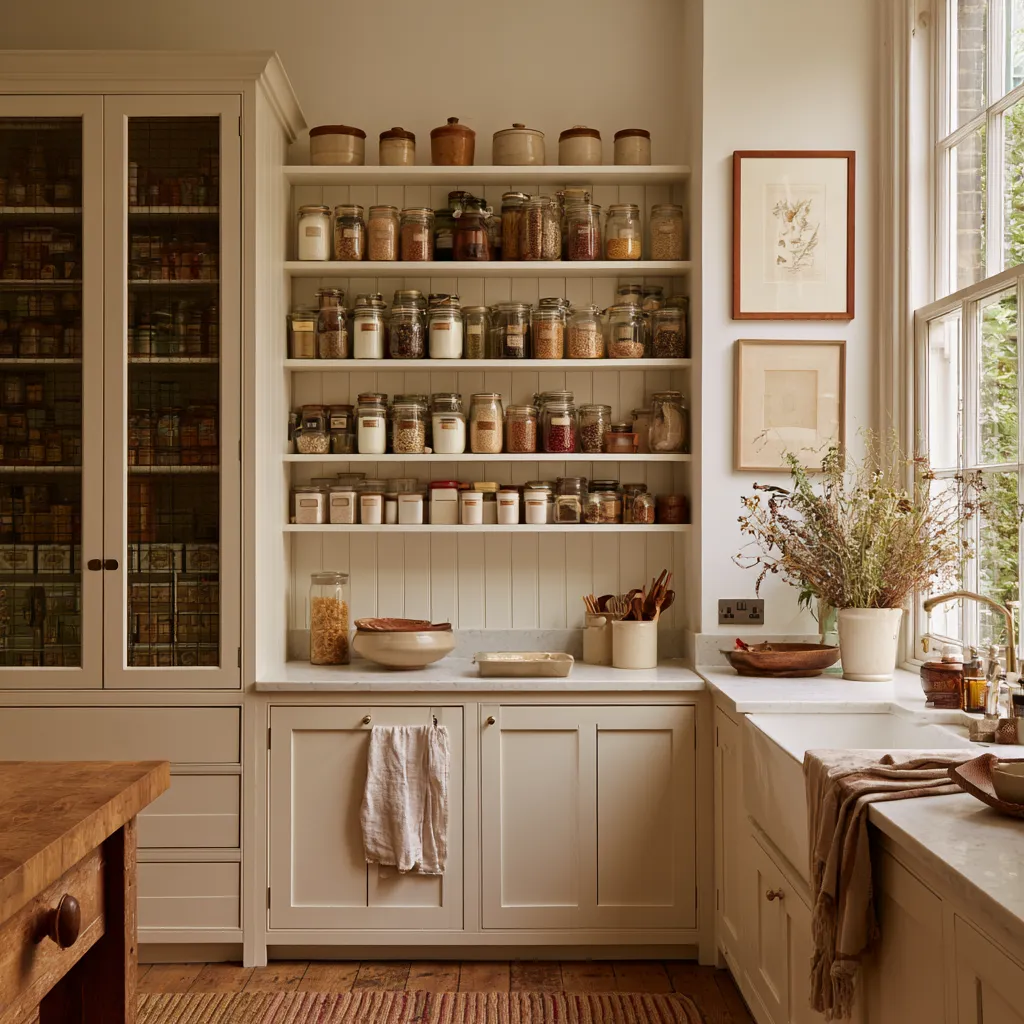
- Natural light and open shelving do more work than any decorative accent — keep upper shelves visible, not buried behind cabinet doors
- Farmhouse minimalism means fewer, better things: one cast iron piece on a shelf reads as intentional; seven mismatched mugs reads as clutter
Compact Space, Full Character — Making the Most of a Small Farmhouse Kitchen Layout
Small farmhouse kitchens work best when every surface has a job — not just a look. The trap most homeowners fall into is loading the limited footprint with decorative objects before solving for storage, workflow, and light. Once those three are resolved, the character comes naturally from material choices rather than from accessories stacked onto a dysfunctional base.
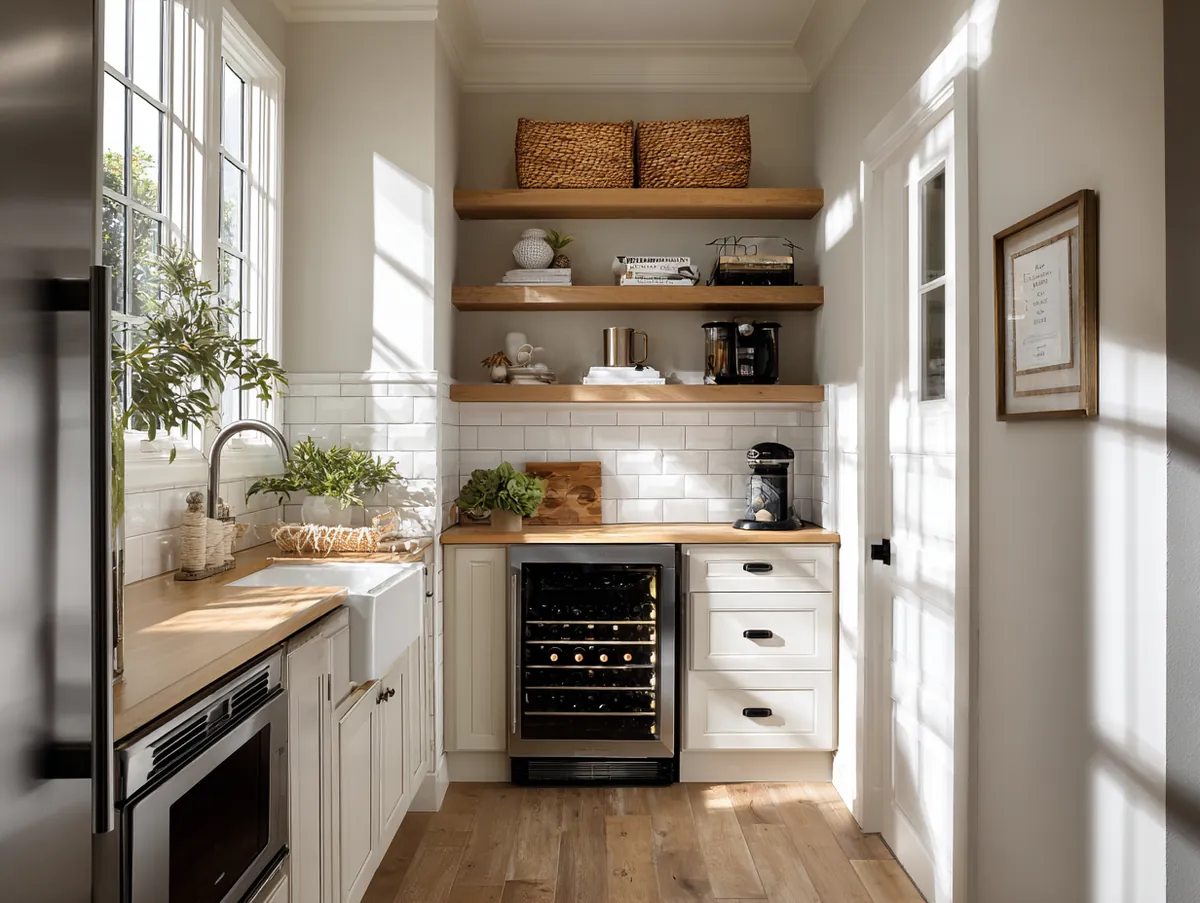
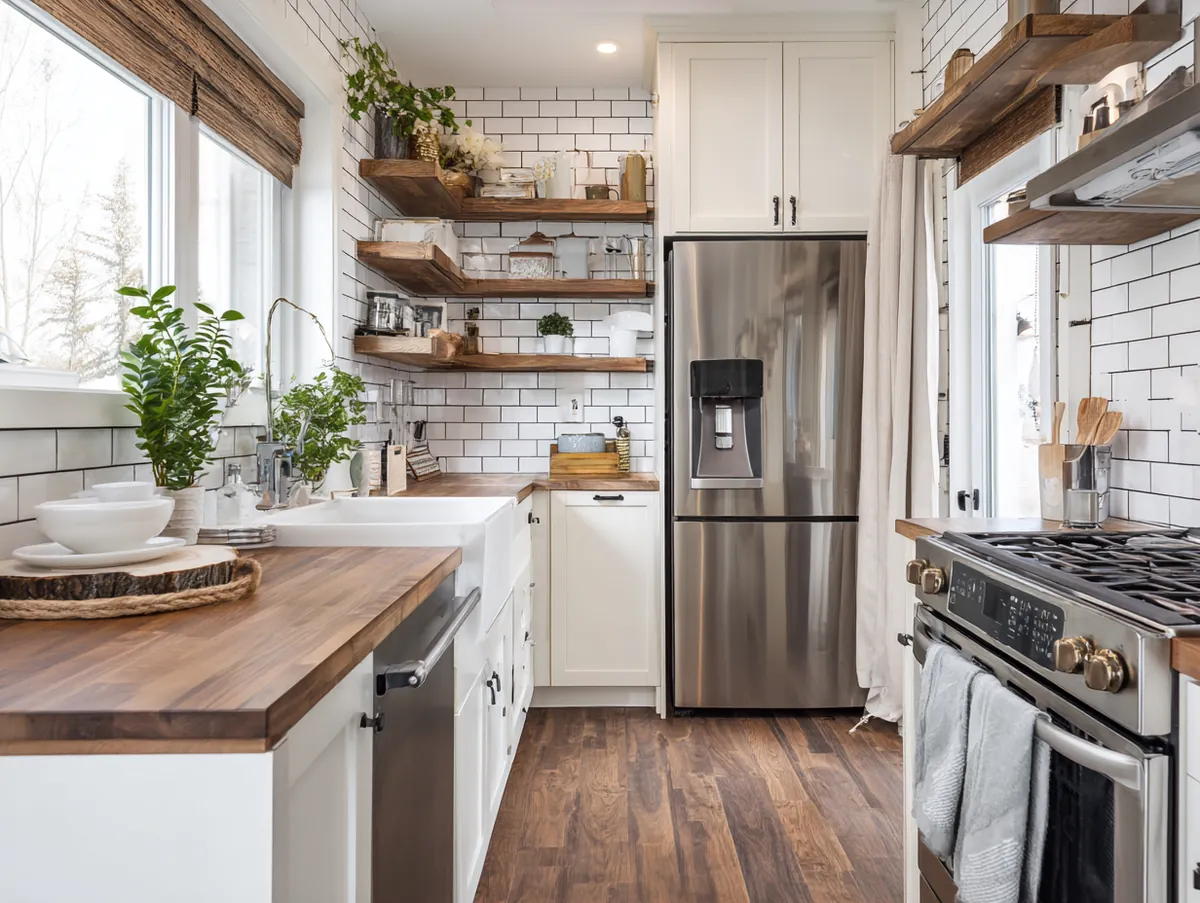

Shaker-style cabinetry in off-white or a warm white is the layout move that delivers the most return per dollar in a small kitchen. The flat recessed panel keeps the wall from feeling heavy, white reflects light back into the room, and the classic profile translates directly into the farmhouse aesthetic without requiring any additional styling effort. Stock Shaker units range from $368 to $520 per unit in 2025 — a full upper-cabinet run in a small galley kitchen can come in under $3,000 in materials. What doesn’t work: going too dark on lowers in a space under 100 square feet. Dark bases add visual weight the floor plan can’t absorb, and the kitchen reads as a closet rather than a kitchen.
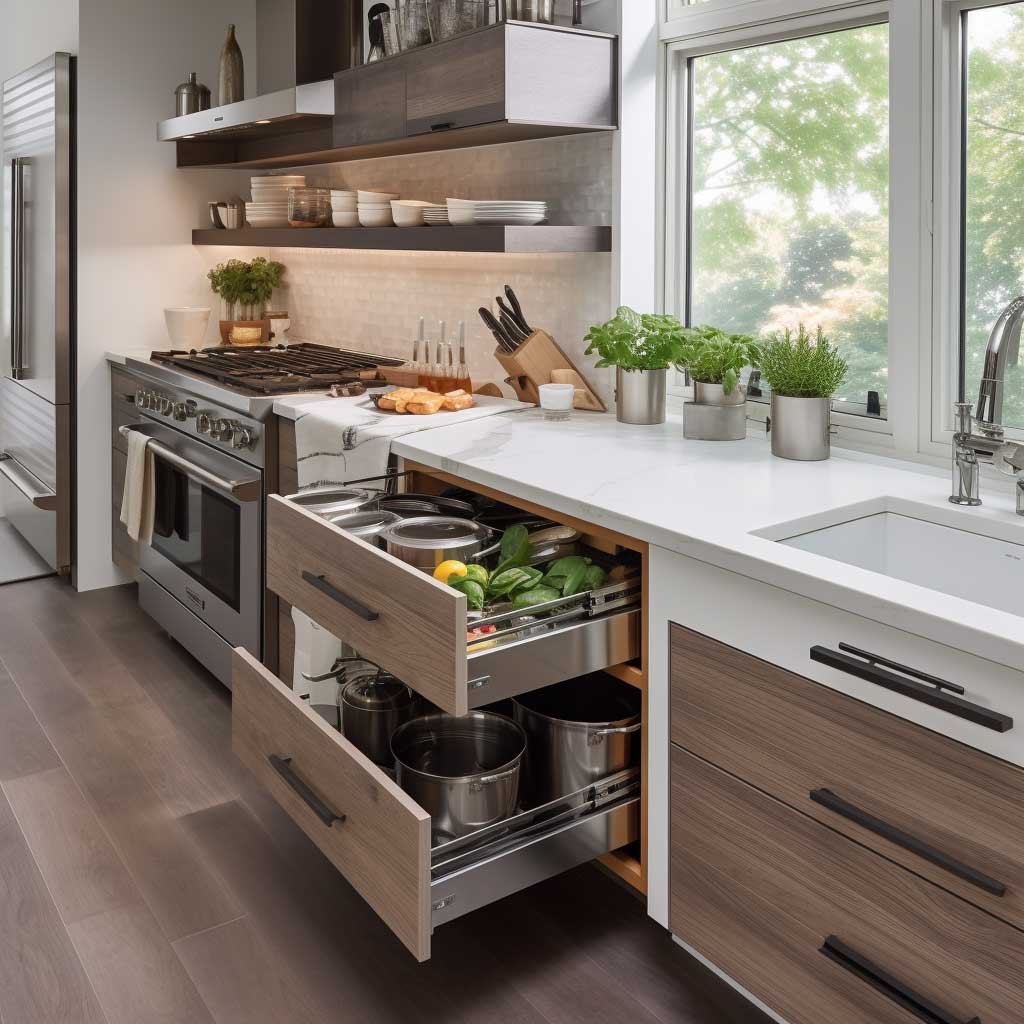
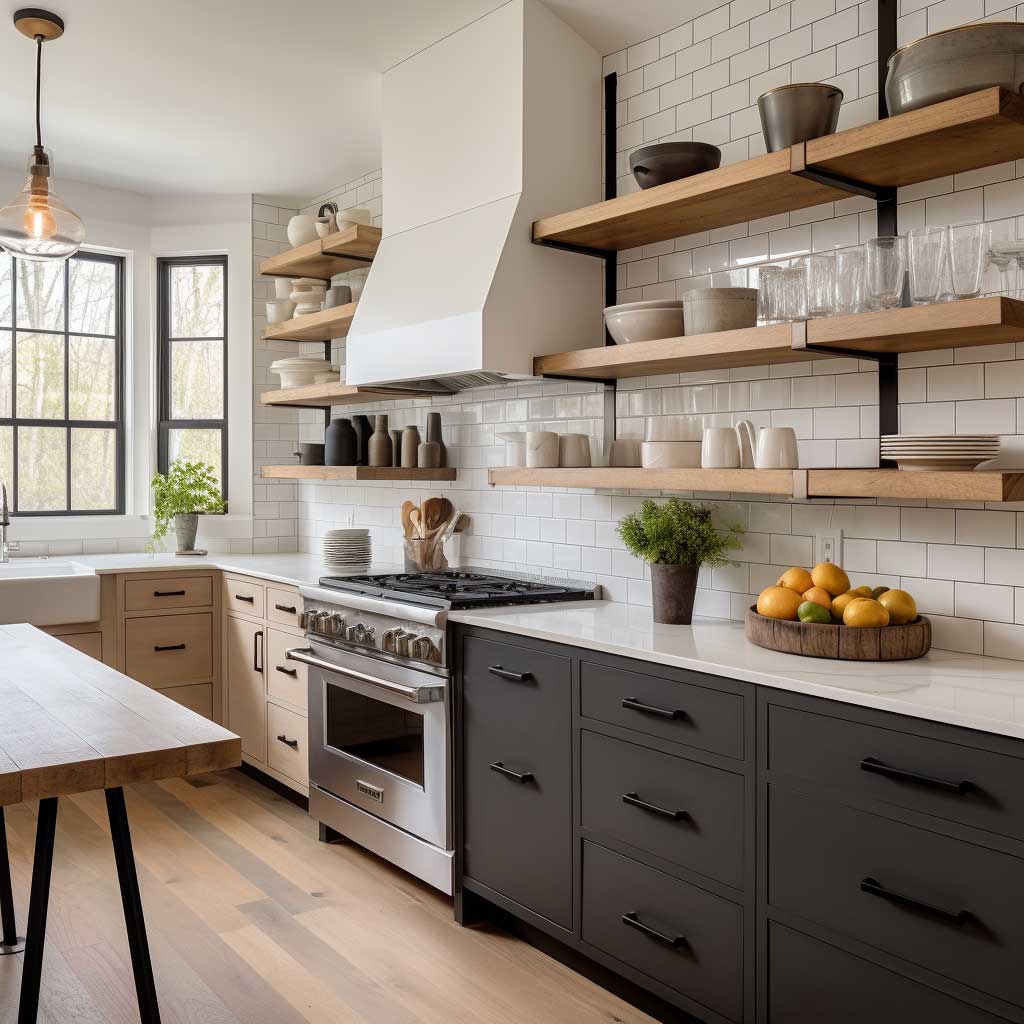
Think of the work triangle — sink, range, refrigerator — as the traffic conductor for the whole room. In a compact layout, every inch of clearance matters: designers recommend a minimum of 42 inches between opposing countertop runs for a one-cook kitchen, and 48 inches if two people regularly work in the space at the same time. Open shelving on one wall, swapping upper cabinets for two floating wood shelves, visually opens that wall while keeping the storage functional. A pot rack above the range frees up an entire base cabinet — a straightforward trade most small-kitchen owners don’t make until they’ve run out of room and started stacking lids on top of lids.
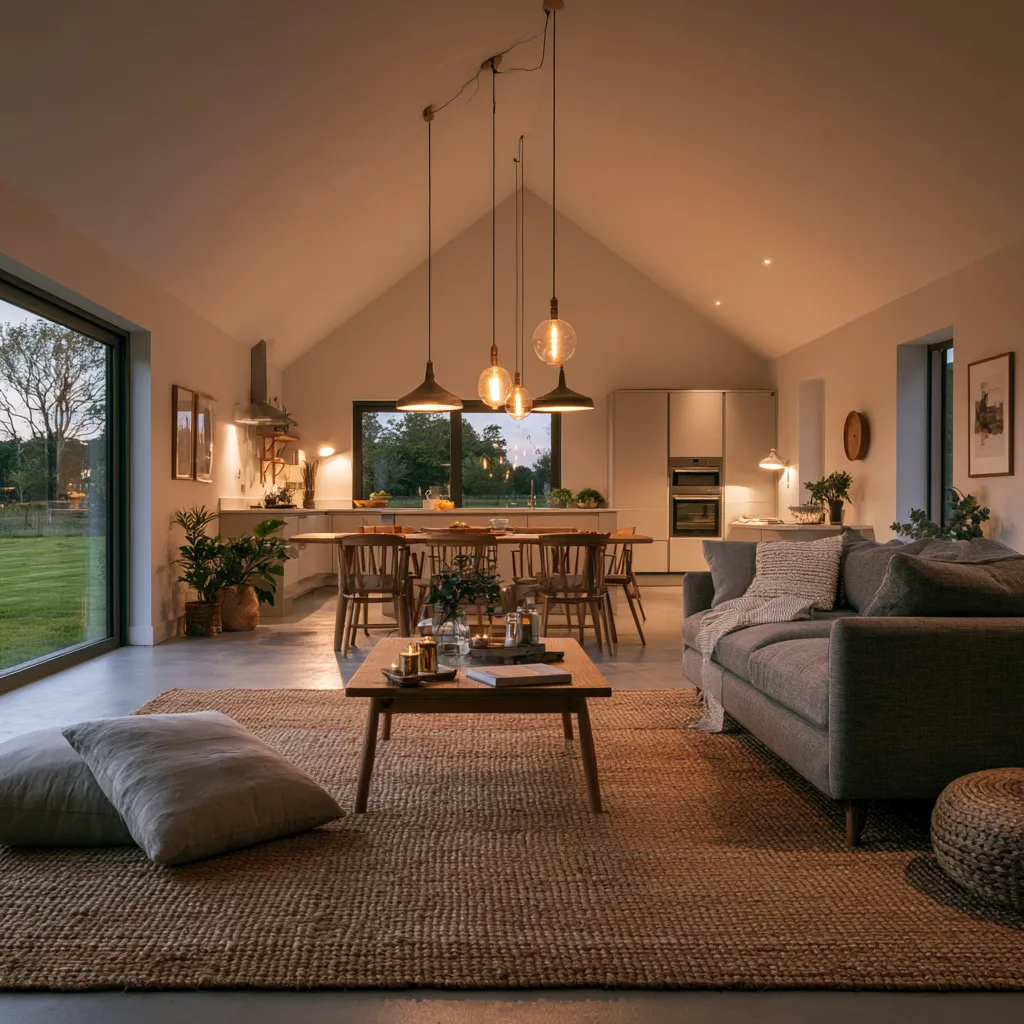
Flooring choice amplifies the layout. Wide-plank hardwood or large-format tile laid straight — not diagonally — along the length of a narrow kitchen draws the eye forward and makes the room read longer. Diagonal layouts are a common recommendation but they create more visual activity, which is the last thing a small space needs. A natural wood floor in white oak or hickory tones warms the room and carries the farmhouse register without requiring a single decorative decision on top of it.


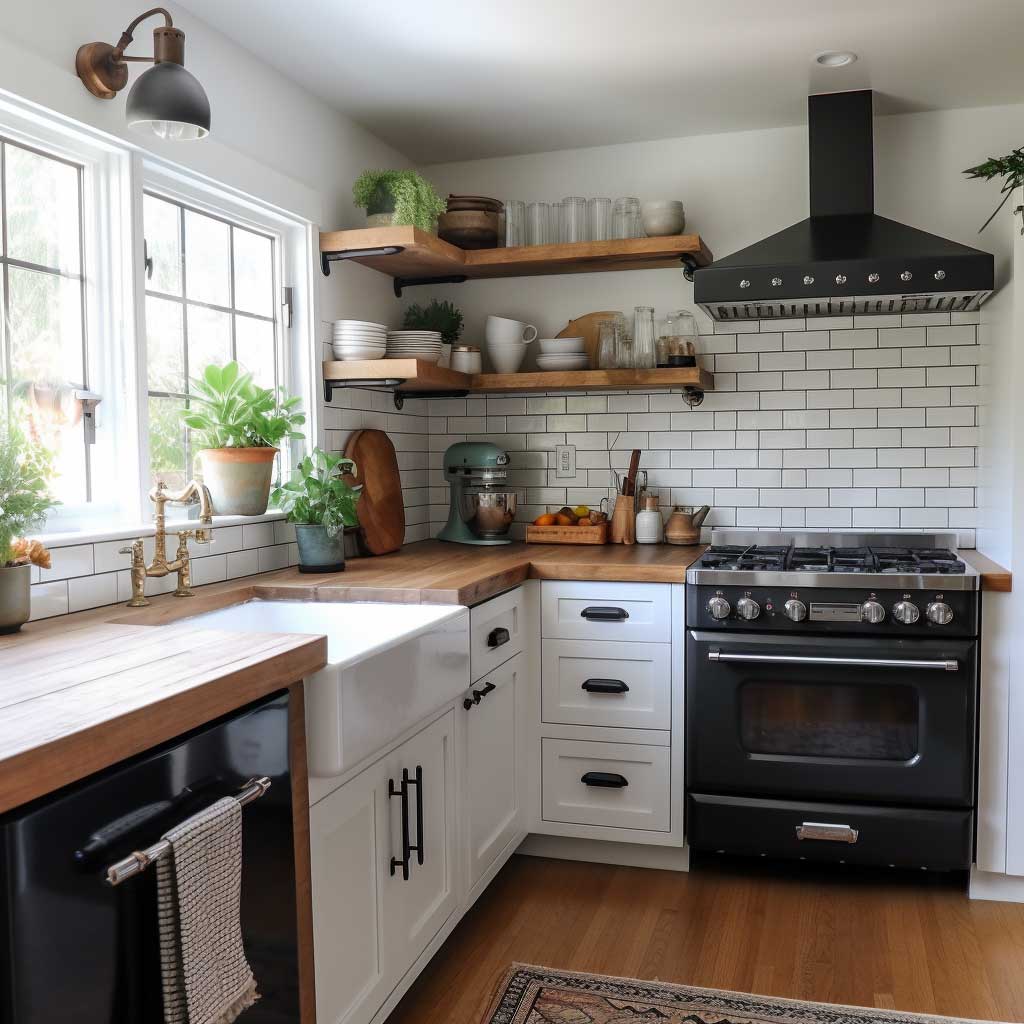
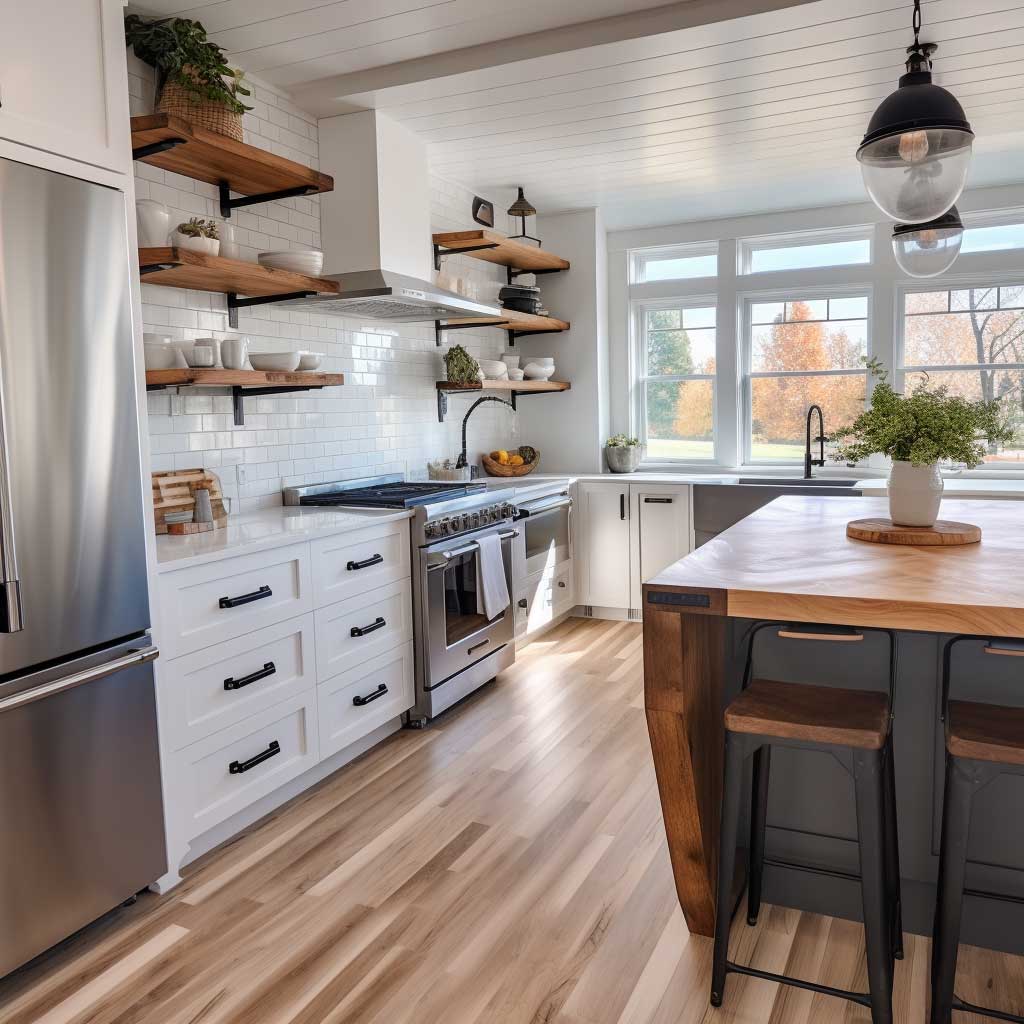

Vintage-Leaning Small Farmhouse Kitchen Design Without the Thrift Store Look
Layering vintage references into a small modern farmhouse kitchen is a precision exercise — too few and the space reads as generic, too many and it tips into a prop warehouse. The distinction between vintage flair that works and vintage flair that overwhelms comes down to how the references are introduced: through material choices and hardware rather than decorative objects scattered on every surface.
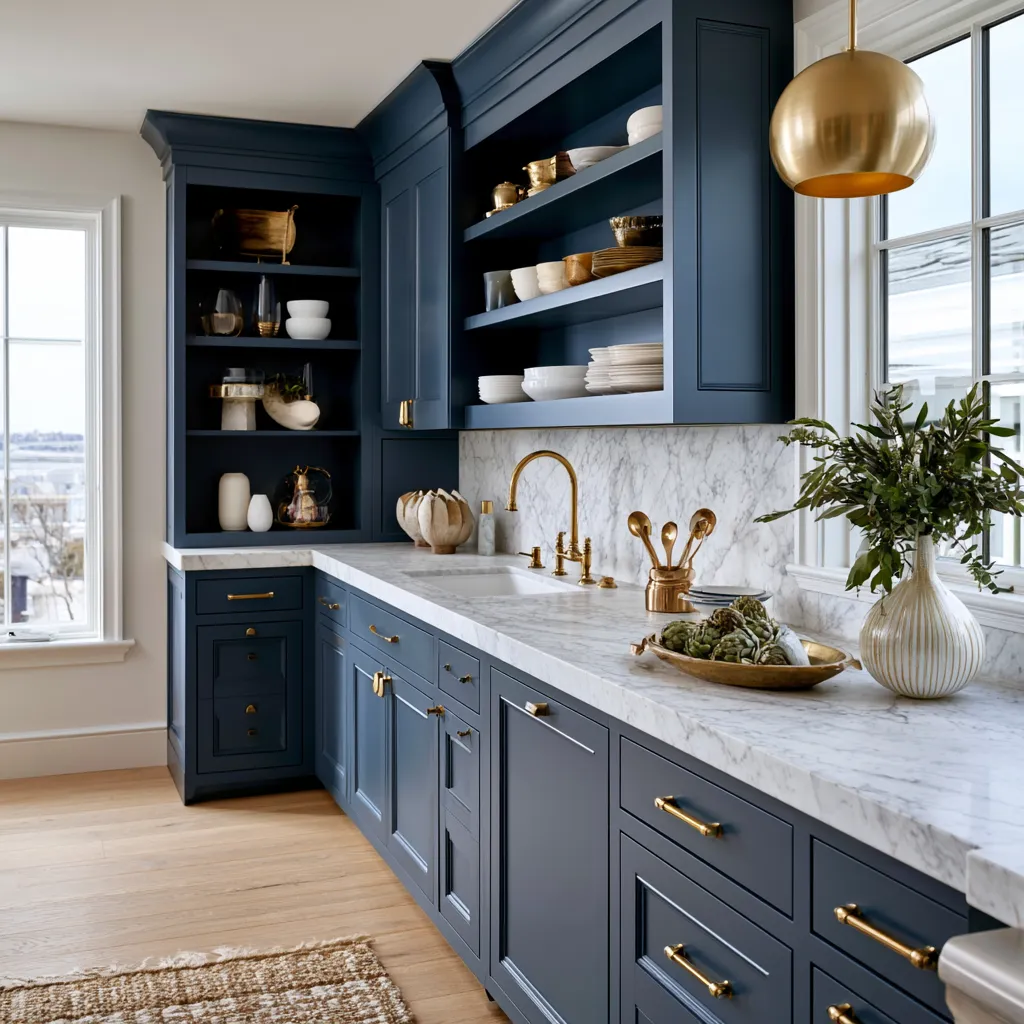
Cabinetry is where vintage personality enters most naturally. Distressed or antiqued finishes on base cabinets, paired with glass-front uppers in a simple divided-lite pattern, pull the eye back toward traditional craftsmanship without demanding a renovation budget. Bridge faucets — the style with two handles joined by an arched spout — are the single hardware upgrade that most consistently reads as vintage in a farmhouse kitchen. Fixtures in unlacquered brass or oil-rubbed bronze develop a patina over time that chrome and brushed nickel never will. What to avoid: ceramic knobs with hand-painted designs, vintage signs hung on the backsplash wall, and cluster-lighting made from mason jars. These are costume pieces, not material choices, and they date faster than any surface finish.
Soapstone countertops carry genuine vintage character — the material has been in American kitchens since the 18th century, develops a dark patina with use, and resists heat and staining without sealant. Soapstone slabs run $70–$120 per square foot installed, positioning them as a mid-range option against marble ($100–$250) but above quartz ($50–$150). Reclaimed wood shelving — pulled from old barn board or factory flooring — brings the same depth through its nail holes, color variation, and surface texture. The trick here is to use reclaimed wood for shelves or a single accent wall panel, not for countertops: unfinished reclaimed wood near a sink is a water damage problem waiting to happen.
Apron-front sinks carry the farmhouse signal more efficiently than almost any other single fixture. A fireclay 30-inch apron-front sink at Home Depot runs approximately $263 for an entry-level model; Kohler’s Whitehaven fireclay version goes $800–$1,100 with a deeper basin better suited to households that cook seriously. The exposed front panel reduces the need to lean over the counter and accommodates sheet pans that a standard undermount cannot. Pair it with a high-arc bridge faucet in brass and the sink becomes the visual anchor of the kitchen, doing the work that a collection of vintage accessories would never achieve as cleanly. For more on pairing sink choices with farmhouse kitchen layouts at different scales, the open concept modern farmhouse kitchen design breakdown covers every decision point from sink to ceiling.


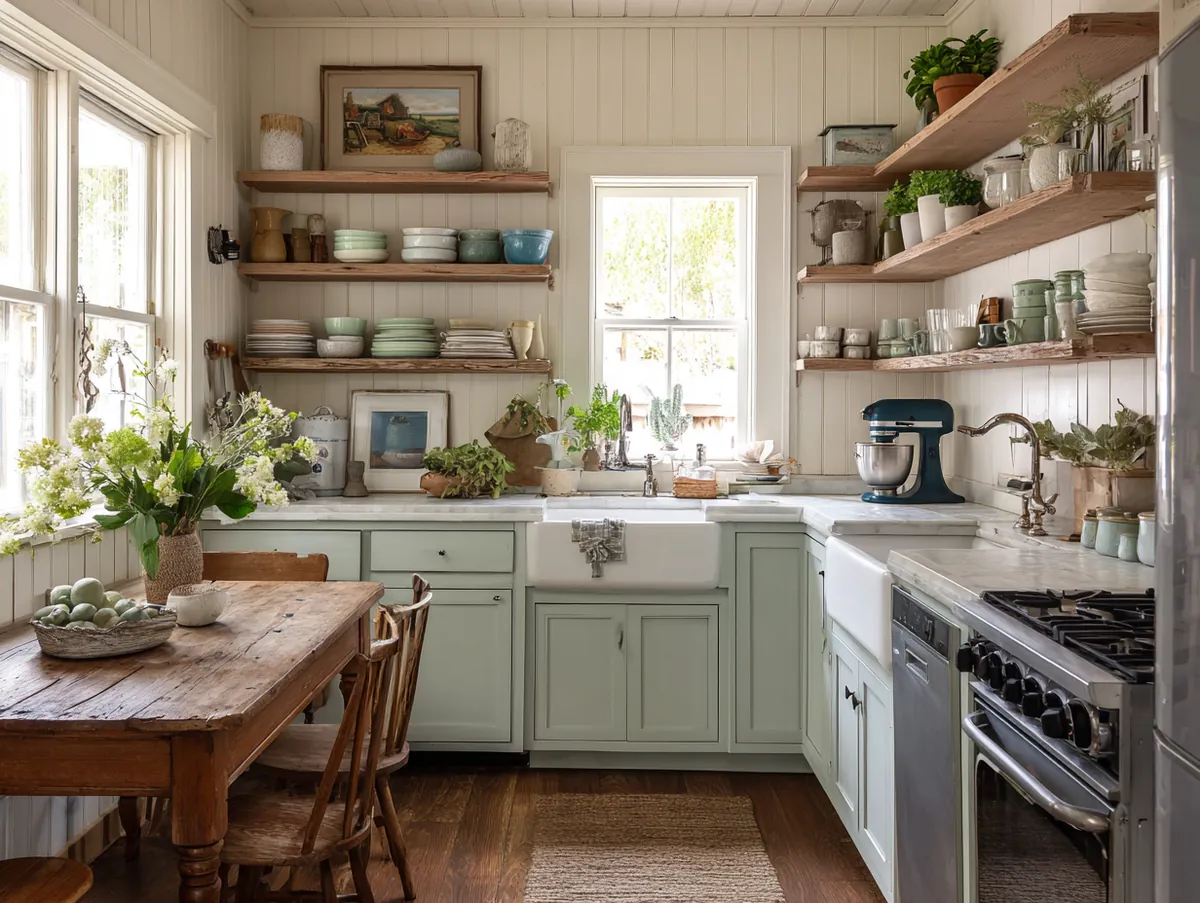


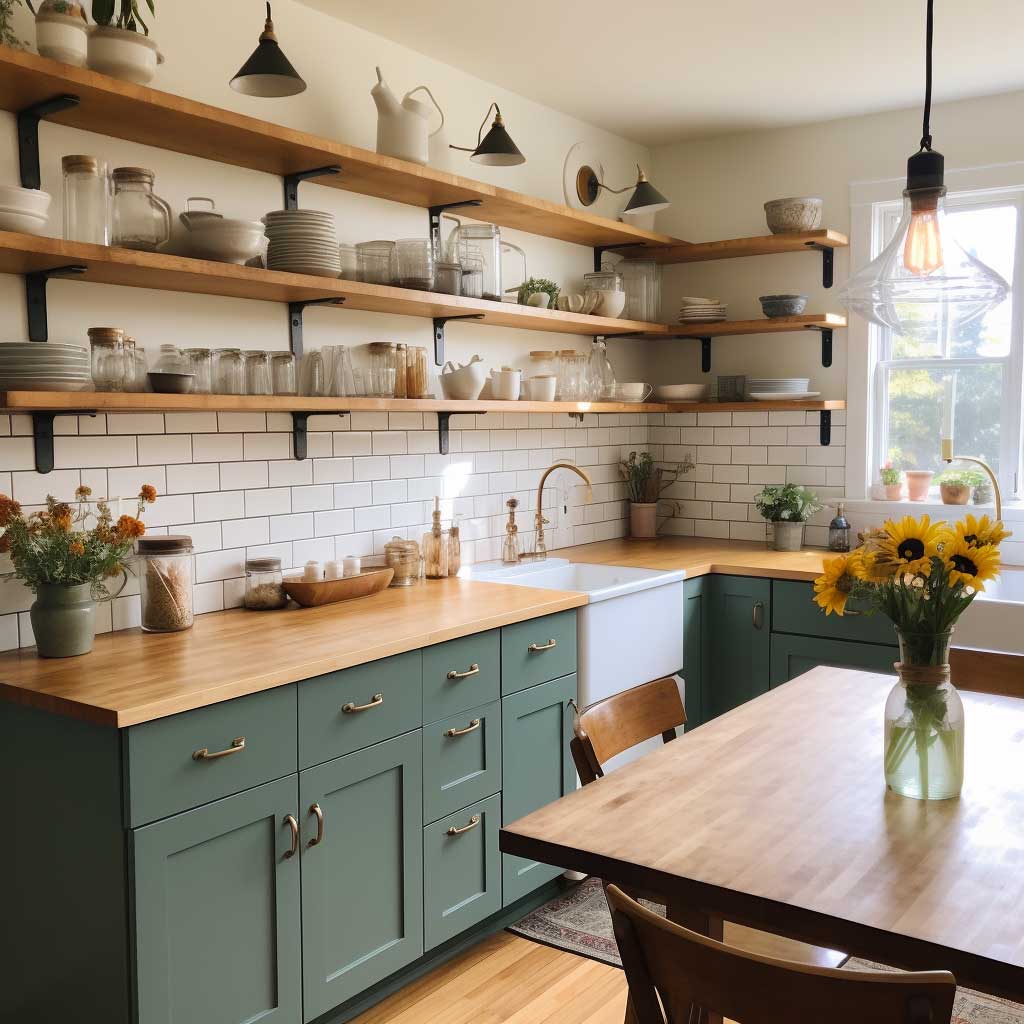
Clean Lines Hold the Small Farmhouse Kitchen Together — A Minimalist Farmhouse Approach
Farmhouse minimalist kitchen design — the GSC cluster with the second-highest impression volume in this article’s topic set — resolves a real tension: the farmhouse aesthetic naturally accumulates texture, while minimalism strips it away. The version that actually works keeps the material palette narrow and lets each material carry more weight. Three well-chosen surfaces do more than seven competing ones.
Flat-panel Shaker cabinets in a single color — no two-tone, no accent island in a contrasting finish — give a small kitchen the visual continuity that makes it read larger. Matte black hardware is the right call here: it adds edge without color, and it stays consistent whether paired with white cabinets, gray ones, or natural wood tones. Quartz countertops in a light concrete or cream finish run $50–$150 per square foot installed and hold up to daily cooking without the sealing schedule that marble demands. A waterfall edge on a small island — where the countertop material folds over the side panel — creates a strong architectural gesture in a compact footprint without requiring additional square footage.
What separates a farmhouse minimalist kitchen from a merely austere one is the texture layer. Shiplap behind open shelving, a raw wood floating shelf above the range, linen window treatments at a window over the sink — these bring the organic warmth that stops the space from feeling clinical. Ask yourself: does each element serve a functional purpose AND bring material character? If the answer to either half is no, the piece probably doesn’t belong in a small kitchen operating on minimalist logic. The wrong move in this approach is over-tiling: a subway tile floor AND subway tile backsplash AND a tile range surround in the same small kitchen creates a grout-line visual frequency that a minimalist scheme cannot absorb.
Pendant lighting over a small island or peninsula is the one place a minimalist farmhouse kitchen should spend more than expected. A single statement fixture — an aged iron dome or a simple cage-style pendant — defines the zone and brings warmth at eye level that recessed cans cannot replicate. Two identical pendants at 30-inch spacing over a 48-inch island give the room a focal point above waist height. Industrial-style pendants at Home Depot in the farmhouse finish category run $97–$156 for a two-light fixture, making this a high-impact, accessible upgrade.
Don’t mix tile formats across floor and backsplash in a small kitchen. Subway tile on the wall and a different-size tile on the floor creates two competing grids. In a space under 120 square feet, that visual frequency reads as noise. Pick one format and keep the floor in hardwood or large-format stone.
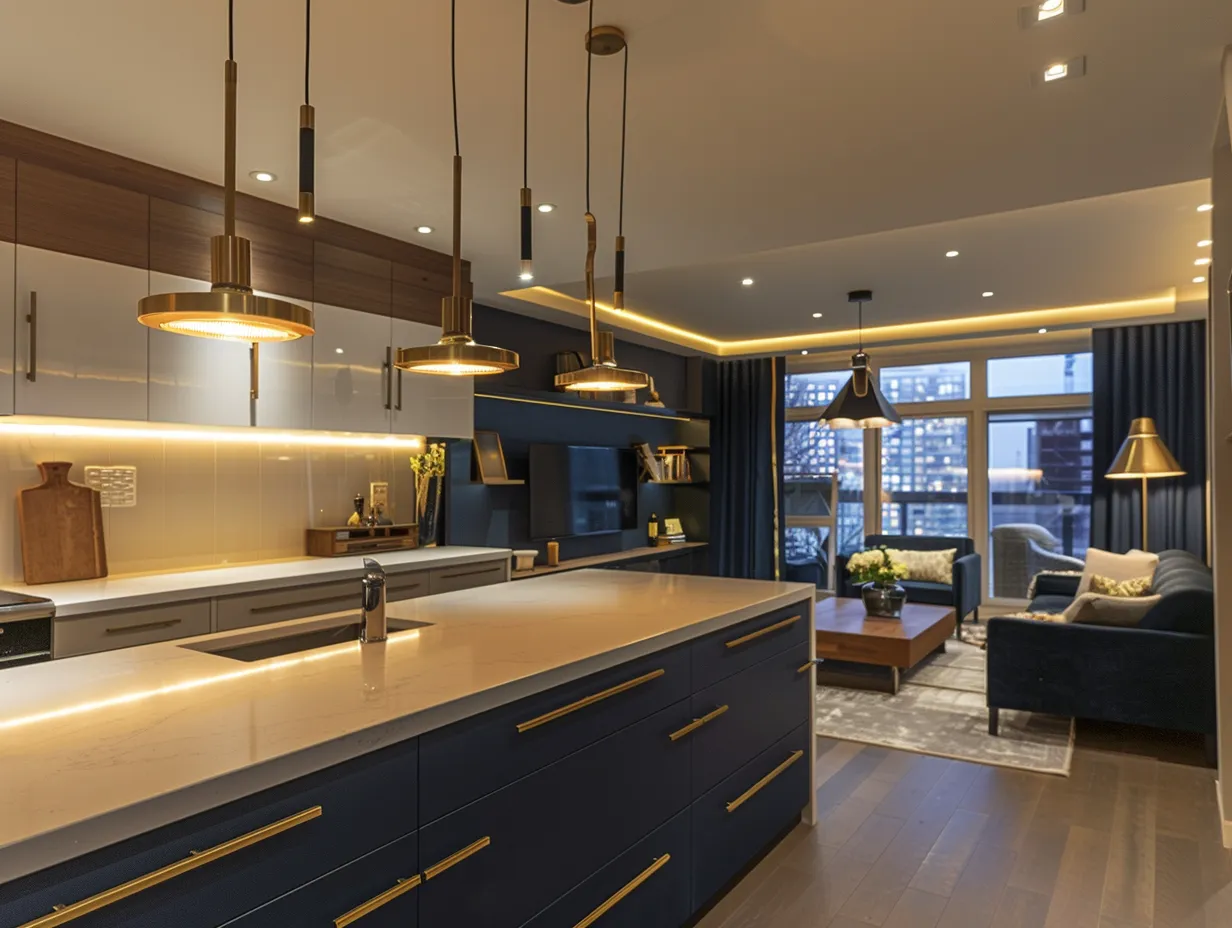
Don’t use two-tone cabinetry in a galley layout. A dark island base against white perimeter cabinets works in an open-plan kitchen where the island floats in space. In a narrow galley, the dark lower cabinet reads as a visual barrier and shrinks the room further. Keep the color consistent in tight footprints.
Don’t hang decorative signs or seasonal décor on the backsplash wall. The backsplash is a structural surface — subway tile, stone, or shiplap — not a display ledge. Anything hung on it competes with the material, undermines the minimalist logic, and needs to come down every time the trend shifts.


Wood, Stone, and Light — Natural Materials That Define the Small Farm Kitchen Aesthetic
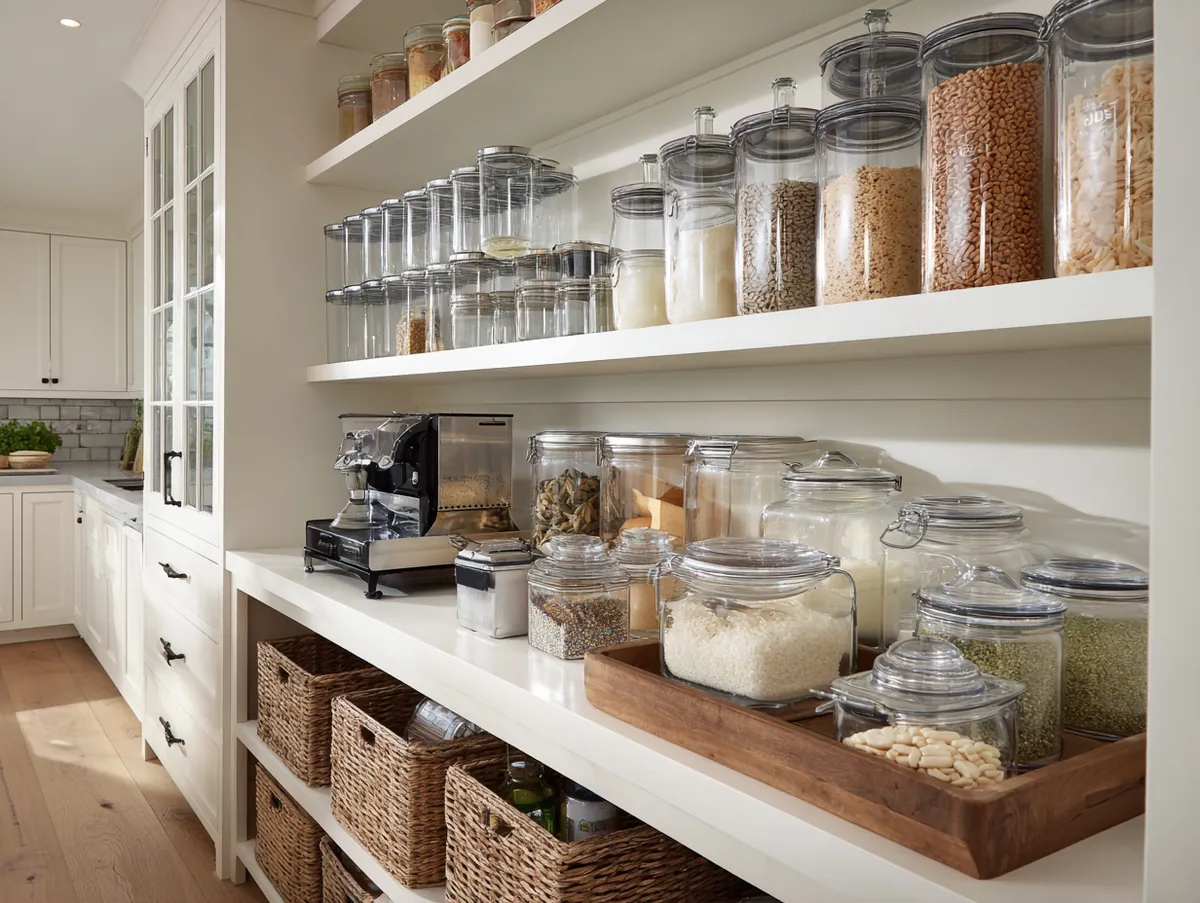
Small farm kitchen spaces read as authentic rather than styled when natural materials do the structural work — not the decorating. Wood grain, stone variation, and the particular quality of light that comes through an unobstructed window are the elements that deliver the warmth farmhouse design promises. Introducing them through surfaces rather than accessories is the difference between a kitchen that feels designed and one that feels like it was always there.
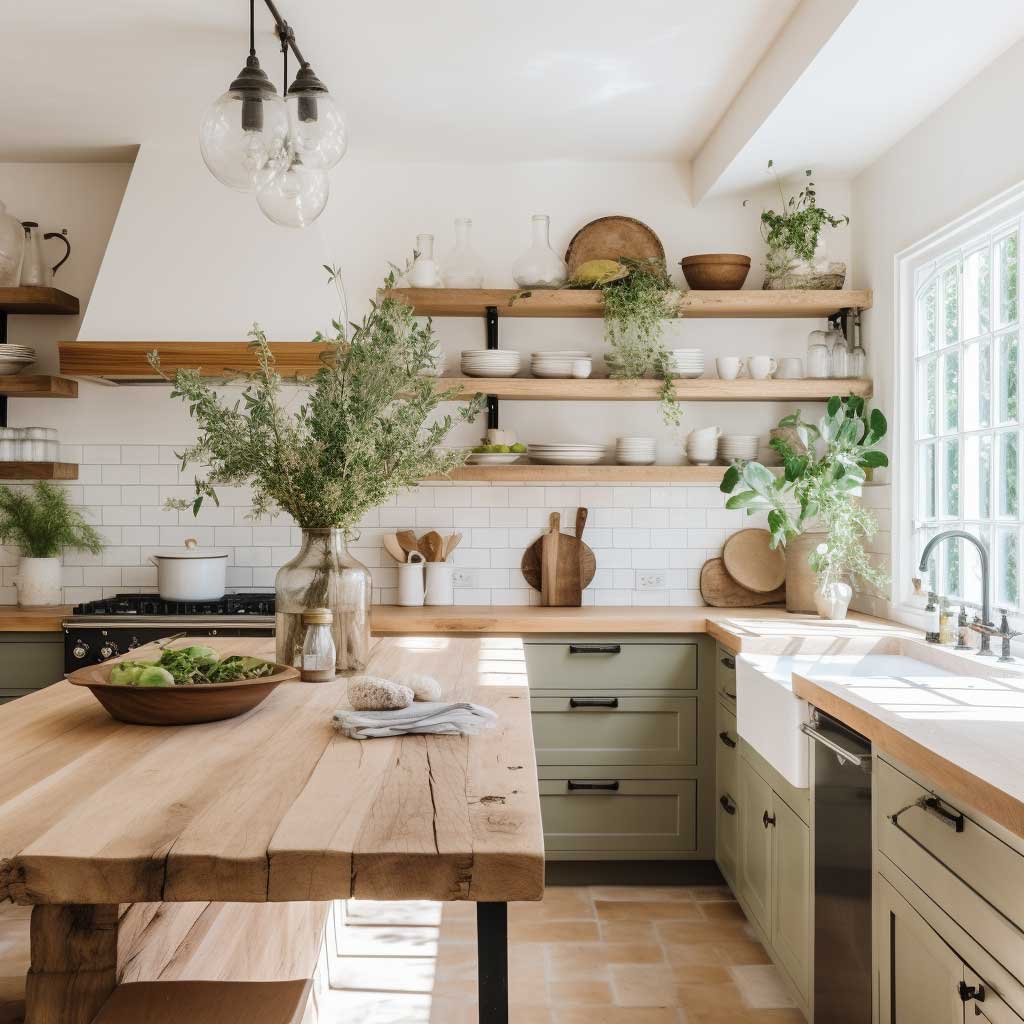
Butcher block is the most accessible natural material for a small kitchen on a meaningful budget. IKEA’s KARLBY and BADELUNDA series — edge-grain birch and oak panels — run approximately $10–$25 per square foot DIY-installed, making a 25-square-foot countertop run achievable for $250–$625 in materials. Hard maple butcher block at Home Depot goes $30–$60 per square foot before installation. Both are real wood, not veneer, and both develop surface character with use that stone and quartz never will. The caveat is honest: sustained water near the sink is the enemy. A butcher block section near an undermount sink needs a food-grade oil finish every six to twelve months and meticulous drying habits — the horror stories about black rot all trace back to a dishcloth left bunched near the drain.
Stone countertops — granite, soapstone, or quartzite — bring a different kind of depth. Each slab is unique, and the natural veining or grain patterns do visual work that no engineered surface replicates. Granite costs $50–$100 per square foot installed at entry level; soapstone runs $70–$120. The honest case against marble in a small working kitchen is not aesthetic — it’s maintenance. Marble stains from red wine, tomato, and citrus within minutes of contact and requires professional sealing annually. In a kitchen used daily, the patina builds fast and unevenly. Quartzite (not to be confused with engineered quartz) offers a similar visual weight with better acid resistance and is worth the $20–$30 per square foot premium over marble for a household that actually cooks.
Light is the natural material most people forget to protect. A window over the sink — even a modest 24×36-inch casement — floods the work zone with directional light that makes the textures of wood grain and stone come alive. Covering it with a tier curtain or a valance blocks exactly the light that makes natural materials worth having. Stylists recommend leaving the window above the sink clear, or adding a simple linen Roman shade that stacks completely out of the sightline when raised. Potted herbs on the sill — rosemary, thyme, basil — bring living green into the material palette and cost less than any decorative accessory with equivalent visual payoff.



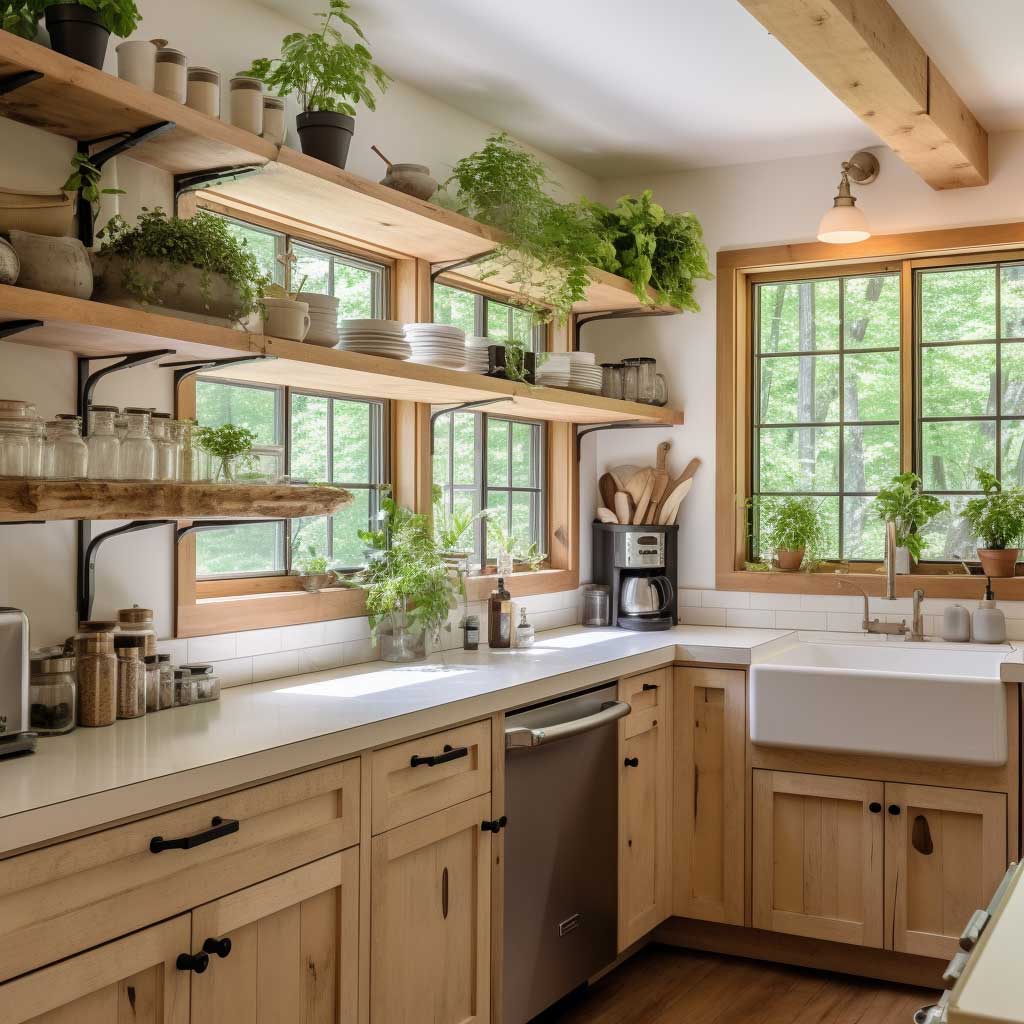

Farmhouse Kitchen Ideas on a Budget — Ranked by Impact per Dollar Spent
Farmhouse kitchen ideas on a budget have a clear hierarchy: some changes cost $30 and shift the entire room, others cost $3,000 and barely register. The homeowners who get the most out of a budget renovation are the ones who sequence those changes correctly — starting with the moves that have the widest visual effect and leaving the expensive structural work for later, or skipping it entirely when an affordable swap delivers the same result.
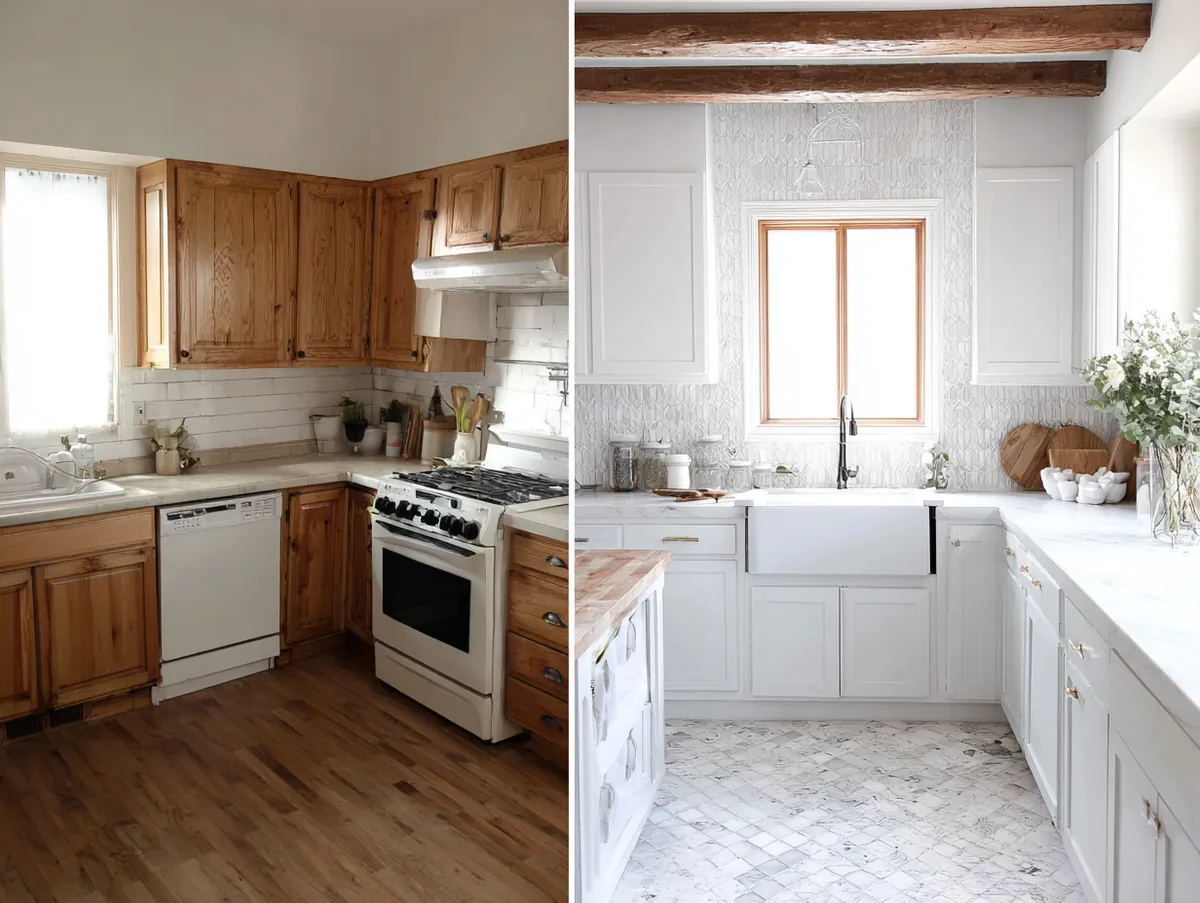
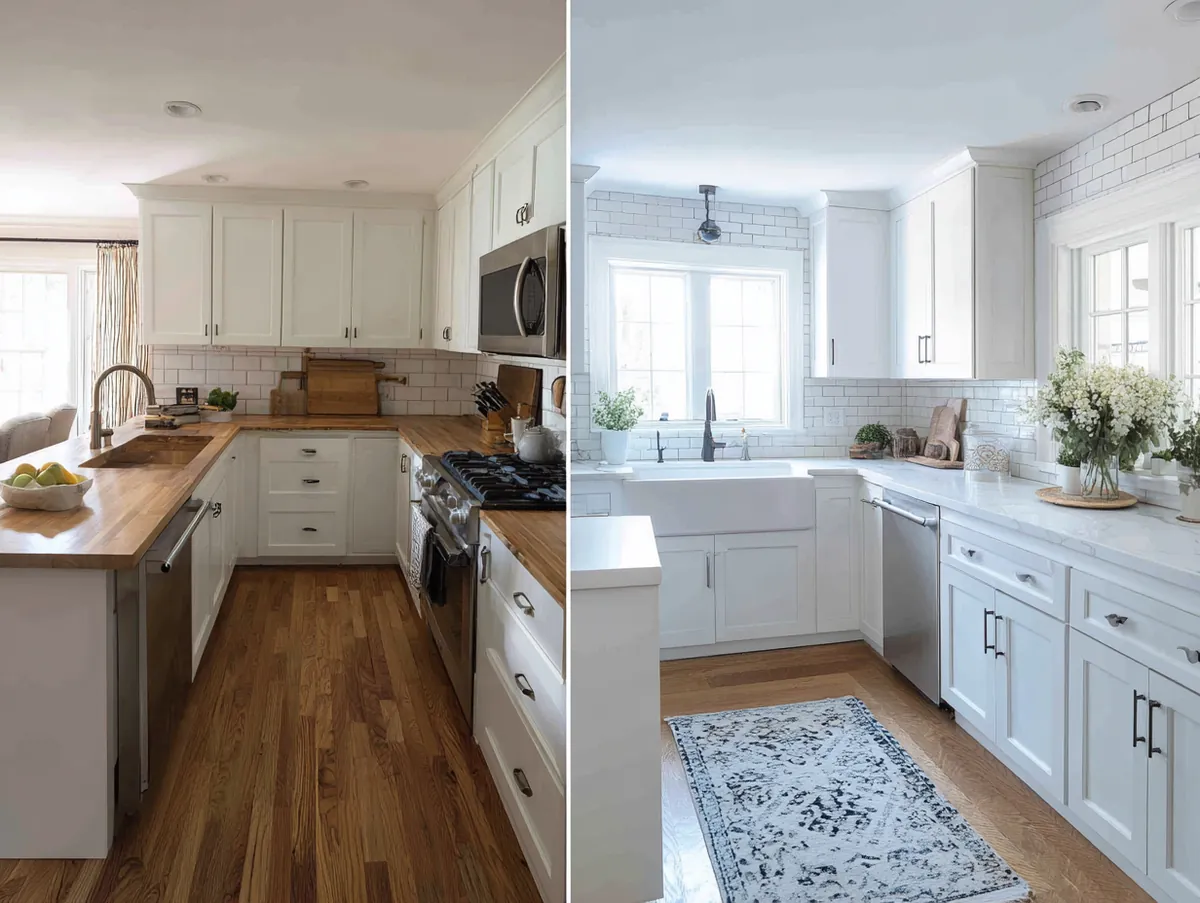
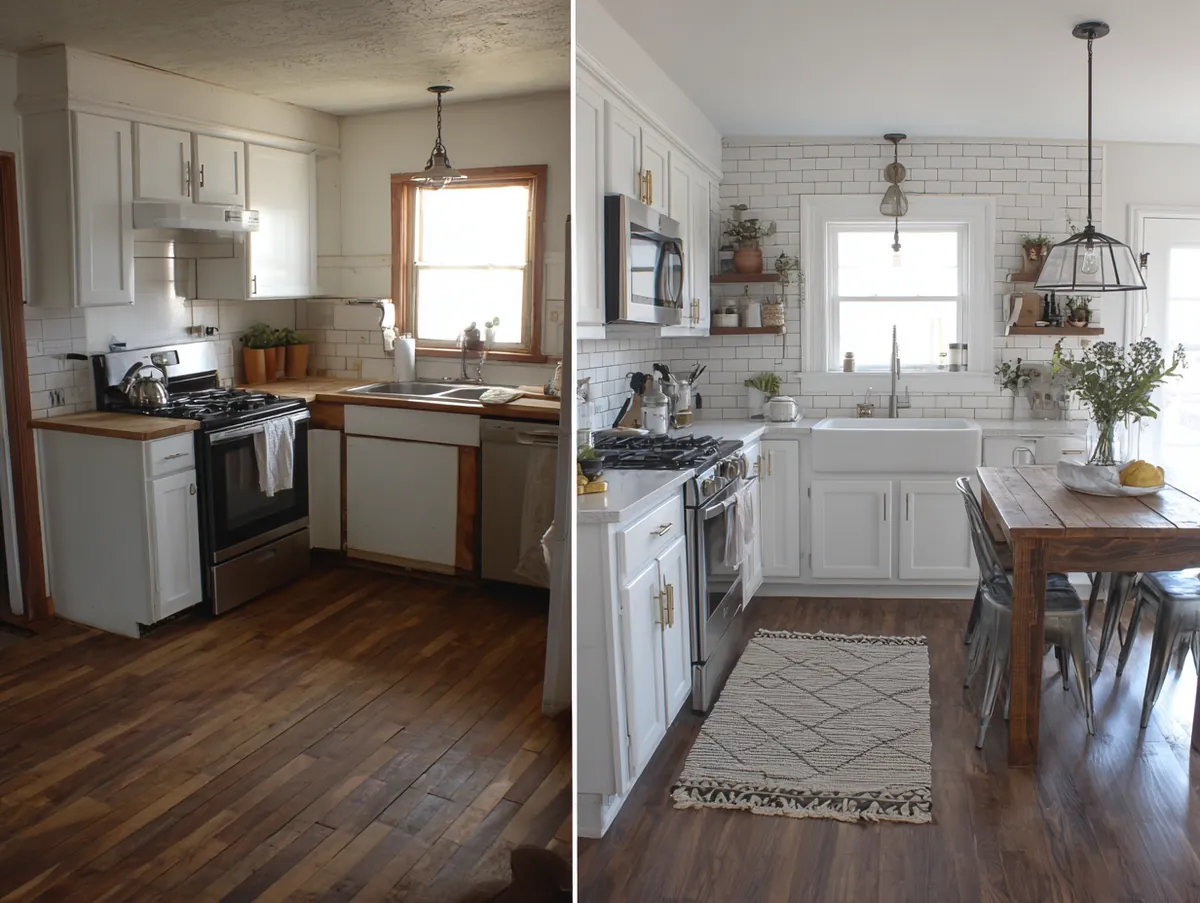
Cabinet hardware is where the sequence starts. Swapping out builder-grade knobs for black iron bin pulls or unlacquered brass cup pulls costs $3–$8 per piece — a full kitchen set of 20 handles runs $60–$160. The visual shift is immediate and out-of-proportion to the investment. Repainting existing cabinets in Benjamin Moore White Dove or Sherwin-Williams Alabaster ($50–$70 per gallon, one gallon covers approximately 400 square feet with two coats) transforms the cabinet volume without requiring new boxes or new doors. What this approach cannot fix: cabinet boxes that are warped, swollen, or pulling away from the wall. Paint masks surface imperfections but amplifies structural ones — doors that don’t hang square will hang more noticeably wrong in a freshly painted white.
Backsplash is the next-highest-impact change for budget farmhouse kitchen renovations. White 3×6 subway tile at Home Depot runs $4.41 per square foot for the Rittenhouse Square Matte Arctic White ceramic tile — a 30-square-foot backsplash in materials costs roughly $132. With professional installation ($7–$35 per square foot depending on pattern), a complete subway tile backsplash in a standard kitchen comes in at $200–$1,100 total. Peel-and-stick tile panels offer a renter-friendly alternative at $20–$50 per panel; they read well in photos and degrade within 18–36 months of daily kitchen use, so the economics only favor them when the kitchen is temporary or the lease prohibits permanent installation.
An open pipe-and-board shelf — black iron pipe hardware from Home Depot paired with a single plank of pine or reclaimed lumber — costs under $80 in materials and replaces an upper cabinet run that closes off the wall. Displaying white dishes, a small collection of glass jars, and one or two ceramic pieces on that shelf does the farmhouse aesthetic’s aesthetic work at a fraction of what a cabinet replacement would cost. The catch is that the shelf punishes dishonesty about daily habits: if the counter below is consistently cluttered, the open shelf above will compound that problem rather than solve it. For more storage strategies that work in compact kitchens across different budgets, the very small kitchen ideas on a budget resource covers the sequencing in full.


| Approach | Best For | Key Material | Budget Range |
|---|---|---|---|
| Compact Shaker Layout | Full kitchen planning from scratch | Stock Shaker cabinets, wide-plank floor | $3,000–$8,000 |
| Vintage-Leaning Flair | Updating existing cabinets with character | Apron sink, bridge faucet, soapstone or reclaimed wood | $500–$5,000 |
| Farmhouse Minimalist | Clean-slate renovation with long-term focus | Quartz countertop, shiplap accent, dome pendant | $4,000–$12,000 |
| Natural Materials | Material-first design with organic warmth | Butcher block, quartzite, wood floors | $800–$6,000 |
| Budget Refresh | Renters or short-term owners, immediate impact | Paint, hardware, subway tile, open shelf | $200–$2,000 |
For a deeper look at how modern farmhouse kitchen design principles scale from compact to full-size, Dura Supreme’s Modern Farmhouse Kitchen Design guide covers cabinet door profiles, hardware logic, and material sequencing in detail — useful reading before committing to cabinet specs.
The Takeaway
A small farmhouse kitchen earns its look through material honesty, not decorative volume.
Shaker cabinetry in off-white, an apron-front sink, and a backsplash in classic 3×6 subway tile ($2–$15 per square foot in materials) are the three decisions that signal the style clearly enough to build everything else around.
Budget determines the countertop: IKEA butcher block at $10–$25 per square foot DIY-installed for the renovation on a timeline, quartz at $50–$150 per square foot installed for the one that needs to last twenty years without maintenance anxiety.
Open shelving, clear windows, and one pendant fixture do more for the farmhouse atmosphere in a small kitchen than any collection of decorative objects. Save this post before you start the conversation about cabinets or countertops.
FAQ
farmhouse kitchen ideas for small kitchens
small farmhouse kitchen ideas on a budget
farmhouse minimalist kitchen design
small modern farmhouse kitchen countertop options
what makes a small kitchen look farmhouse without a full renovation
small farm kitchen flooring options
Complete guide
Every Modern Kitchen Design Idea Worth Stealing Right Now
Layout, cabinets, islands, materials, color, lighting — all in one place
Complete guide
Small House Design Ideas That Make Every Square Foot Feel Intentional
Exteriors, layouts, kitchens, bedrooms, bathrooms, outdoor — all in one place
Complete guide
Farmhouse Style Ideas for Every Room and Outdoor Space
Kitchens, bathrooms, bedrooms, exteriors, decor, outdoor — all in one place