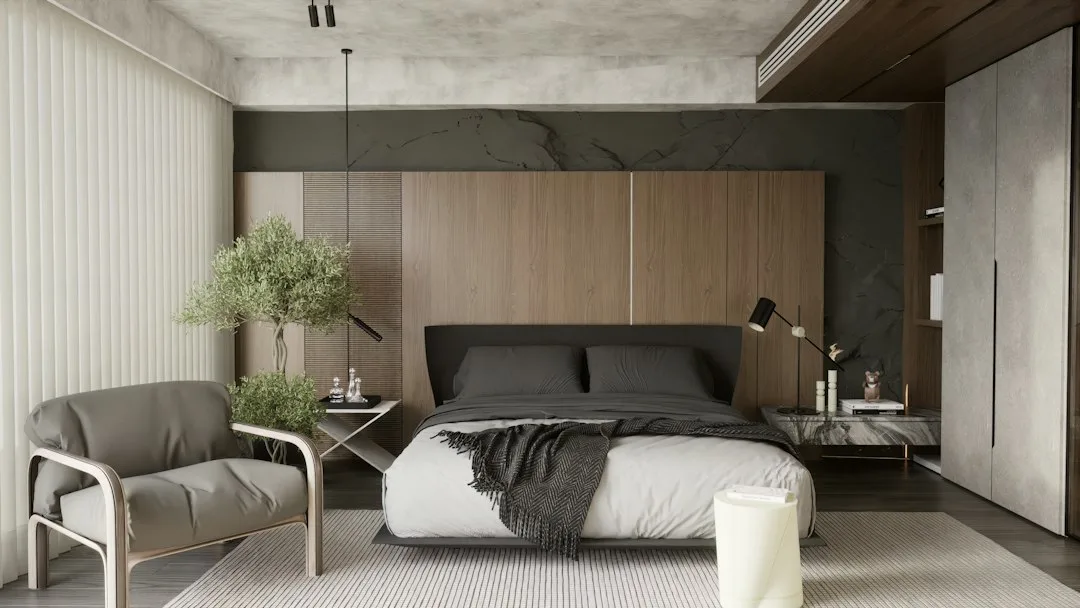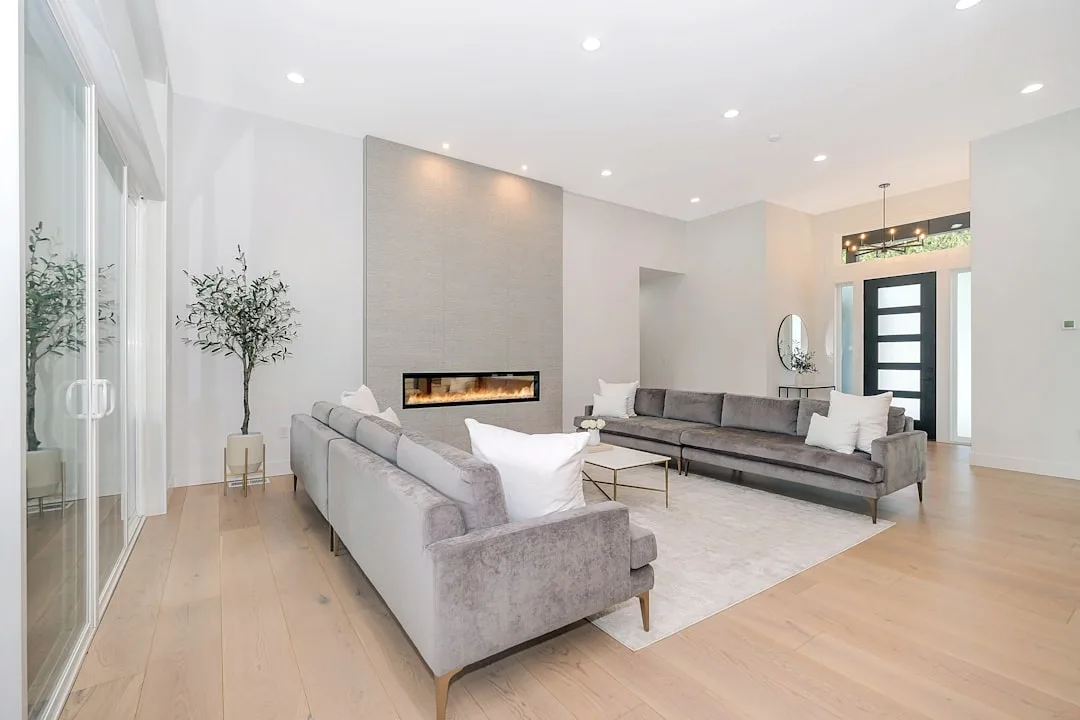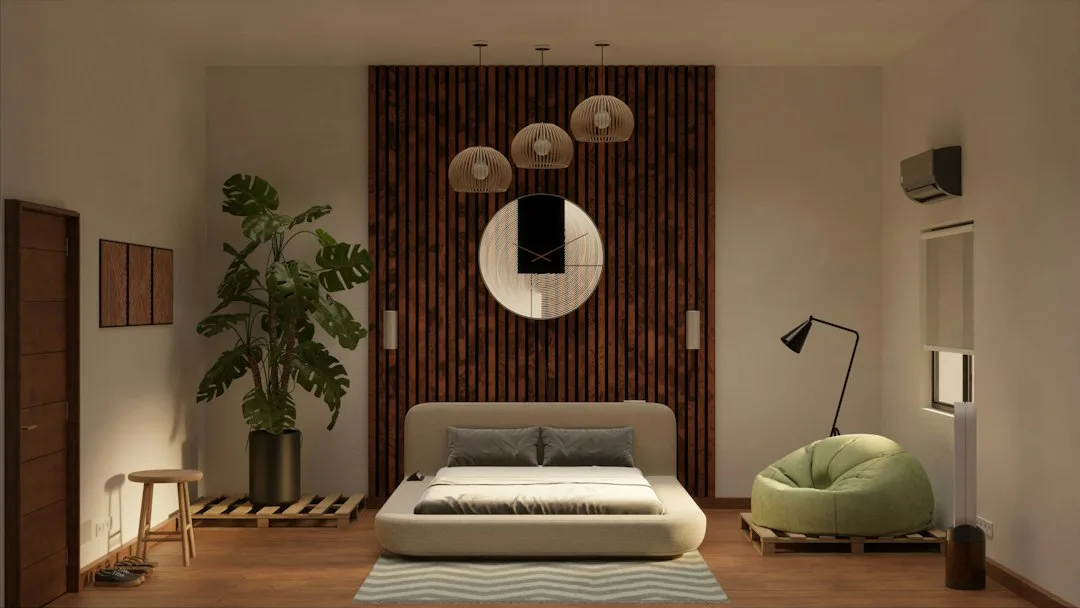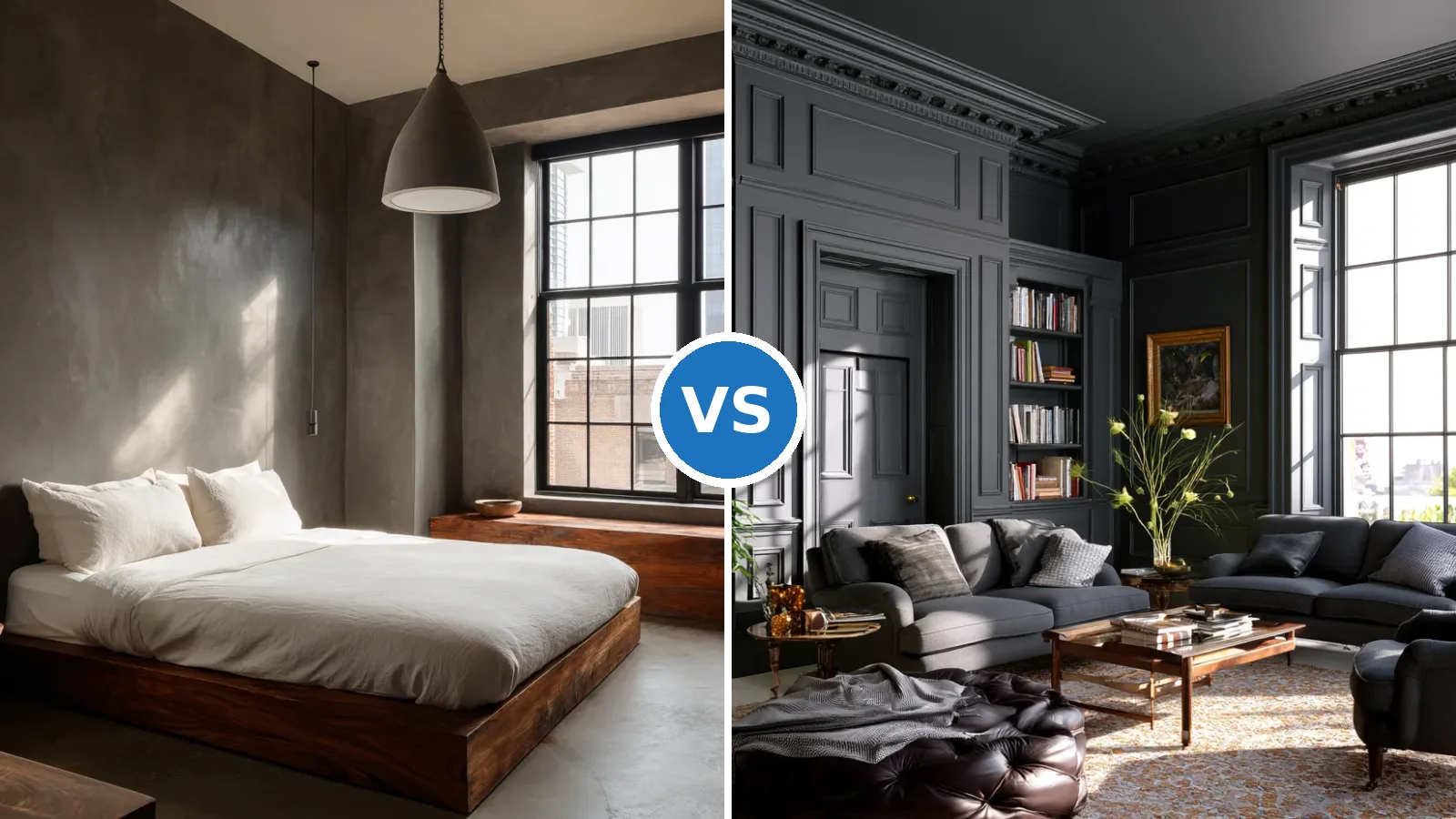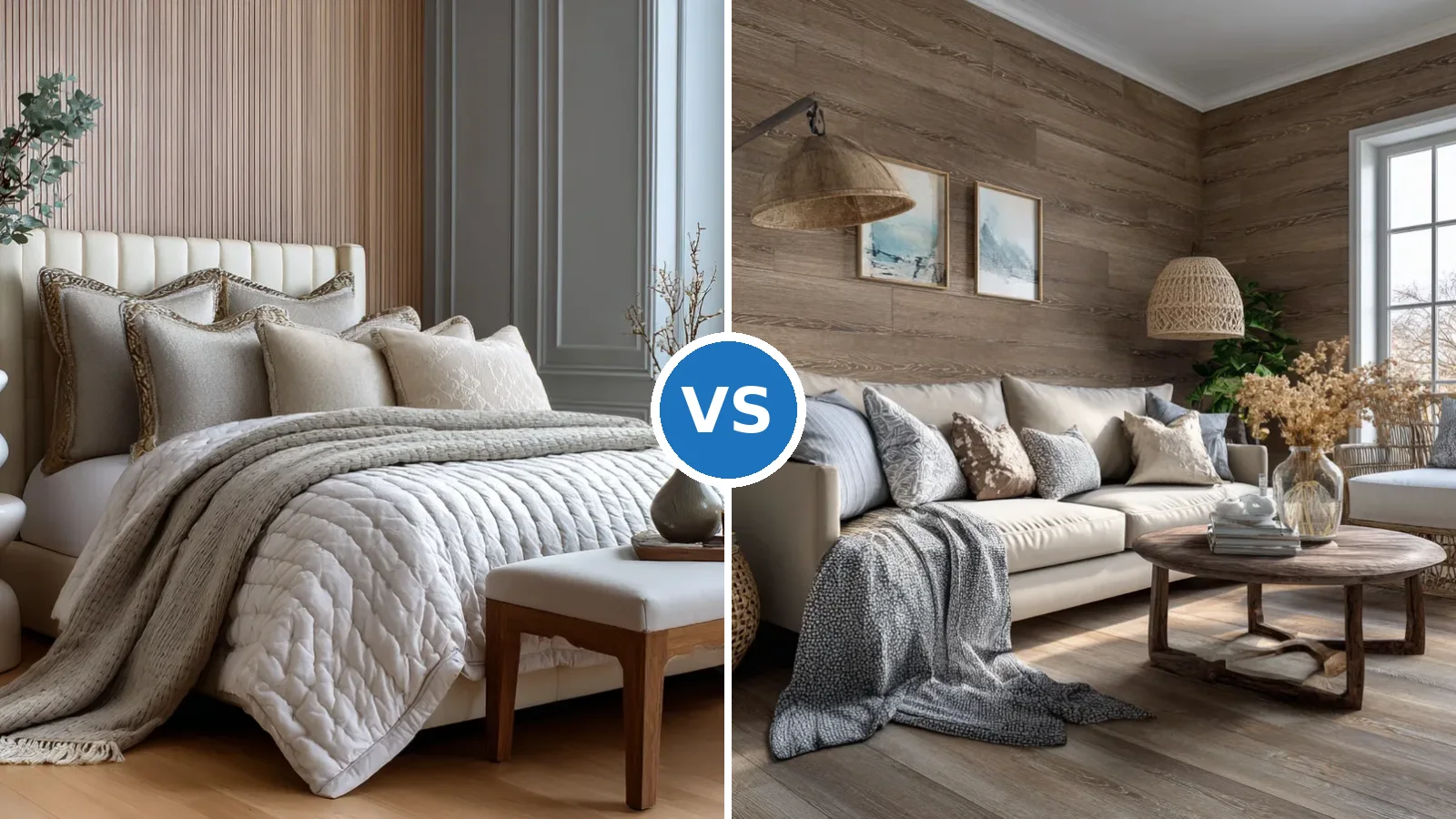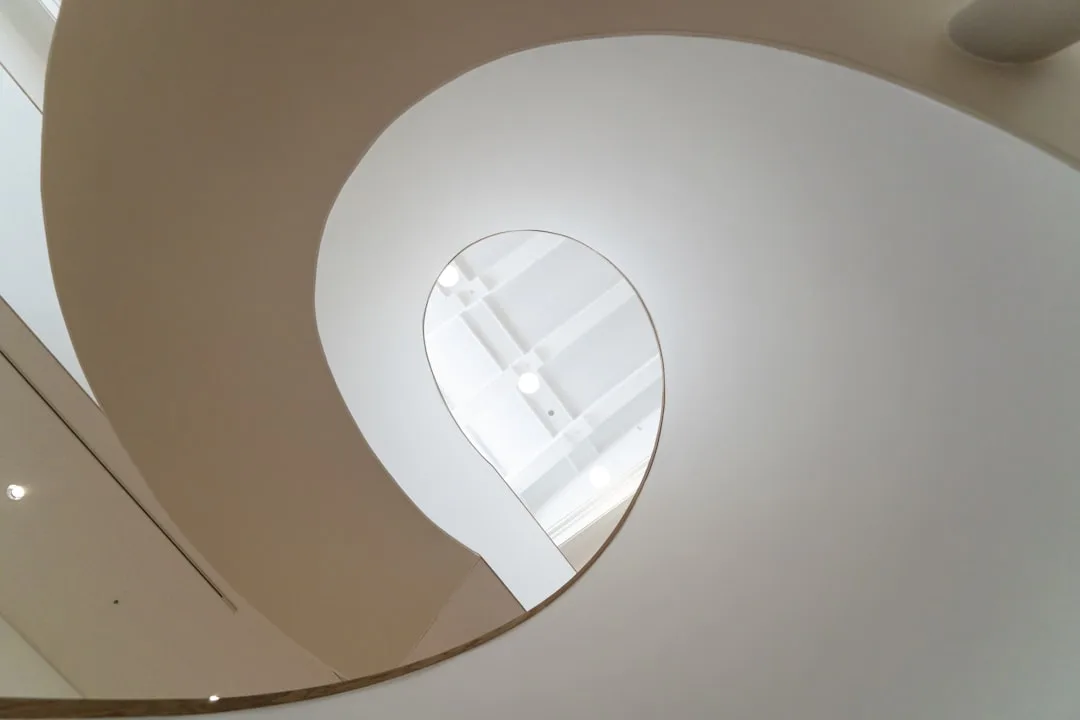
When you weigh drywall vs plaster wall options, the real decision is whether you want a smooth, precisely shaped surface or a textured one that shows the hand of its maker. Curved drywall suits open-plan homes that need soft zones and a crisp finish. Plaster suits owners who want character and will accept a wall that changes with light and age.
What each option actually is
Quick Verdict
- Choose plaster walls if you want a textured, hand-made surface and plan to stay put for years.
- Choose curved drywall if your open plan needs soft zones, archways or sculpted transitions.
- Choose plaster walls if your living room, bedroom or entryway is the main design gesture.
- Choose curved drywall if you want a predictable, clean finish and a manageable entry cost for a single feature.
Curved drywall is standard gypsum board bent into flowing arcs, arches and wave-like transitions. Instead of hard 90-degree corners, crews work over curved framing and tape the seams so the bend reads as one continuous surface. The idea is explored further in our curved drywall walls trend piece.
Plaster walls are a different material altogether. Lime, clay and tadelakt finishes are troweled onto the wall in layers, and they cure through carbonation rather than drying like paint. The result has depth and visible variation, which is why the trend is growing, as covered in our raw textured plaster walls article.
Drywall vs plaster wall on look, cost and care
| Criteria | Plaster Walls | Curved Drywall |
|---|---|---|
| Look | Textured, shifts with light and reveals the hand of the maker | Smooth, sculpted curves with a clean finish |
| Upfront cost | Higher per square foot than premium paint, materials and labor | Generally lower for a single archway |
| Shape options | Applied to a surface, not built as a curve | Built into framing, with 6-12 foot radii most practical |
| Care and repair | Scuffs blend in, and lime wash can be recoated in thin coats | Depends on skilled taping, and ripples show under changing light |
| Labor effort | Needs trained artisans for application | 40-60 labor hours per 100 linear feet, versus 12-15 for standard walls |
| Best setting | Living rooms, primary bedrooms, entryways | Open-plan zones, archways, feature walls |
Look is where the two diverge most. Plaster reads as warm and irregular, with color variation that is part of the design. Curved drywall reads as smooth and sculpted, closer to a clean painted surface.
Cost depends on what you are building. Plaster finishes typically cost more per square foot for materials and labor than premium paint. A single curved archway is usually a smaller line item than a full plaster wall. That makes curved drywall the cheaper starting point for one feature.
Care is where plaster earns its keep. Minor scuffs tend to blend into the surface. Curved drywall depends on skilled taping, and poor work shows ripples and uneven joints under side lighting.
Where plaster walls win
Plaster wins on character and on how a surface ages. It changes with light, develops patina over time, and suits owners who see visible texture as evidence of craft. Plaster will crack slightly as a building settles, and that is accepted as part of the finish.
It also holds up well in moisture-prone spaces. Tadelakt resists moisture naturally, so it can suit some shower applications. Lime and clay plasters breathe, help regulate humidity and contain zero VOCs.
Its repair story favors plaster too. A small mark rarely demands an immediate touch-up, so the wall stays looking intentional.
Where curved drywall wins
Curved drywall wins on shape. It creates arches, rounded room dividers and wave-like feature walls that plaster cannot build as structure. It also defines zones in an open plan without blocking sightlines.
Curves soften long straight walls in large rooms. That reduces the institutional feel many open floor plans develop. Smooth curves also suit a crisp, modern look.
Predictability and entry cost favor curved drywall for a single feature. The lightweight board used for curves bends without cracking when installed well. A single archway is a manageable line item in most budgets.

The biggest mistake is choosing by photos alone
A common error is picking a finish from a styled photo and never asking who will install it. A homeowner loves the curves in a magazine and hires a general crew for a feature archway. That crew has no curved-work experience, so ripples and uneven joints appear under side lighting.
Repainting will not hide those flaws. The archway has to be reworked, which costs more time than the original job should have taken. Always ask to see past curved projects before signing.
The same mistake hits plaster buyers. Choosing plaster for a rental or a home you may leave soon ignores that the surface is hard to change once applied. Ask for sample panels and confirm the applicator’s experience first.
Final verdict — who should choose which
Choose plaster walls if you own the home, plan to stay for years, and want texture in living rooms, primary bedrooms or entryways. Its character, forgiving repairs and moisture-friendly options suit owners who value a surface that ages well.
Choose curved drywall if your open plan needs soft zones, your project is new construction or a major renovation, and you want a crisp, sculpted look. Budget-minded buyers testing a single feature will also find it the more manageable starting point. Verify your installer first, because the curve is only as good as the taping.