Quick Scan
- Flexi plywood bends without cracking because all veneer grains run in one direction — the opposite of standard cross-grain plywood construction.
- Choose short-grain flexi for tight curves like cabinet ends and column wraps; use long-grain for sweeping headboards and wave-wall panels.
- Always fix the bent sheet with proper contact adhesive while held at the target radius — surface finishes do not hold the curve, adhesive does.
- True engineered flexi plywood handles radii between 150mm and 400mm; thin standard plywood masquerading as flexi will fracture at those ranges.
- Budget entry points are accessible: Gurjan Flexi Ply starts at ₹28/sq ft in India; UK sheets begin at £40.55 per sheet from Materials Market.
Sharp corners are disappearing from interiors faster than any other single design shift of this decade. Curved headboards, rounded kitchen islands, and sinuous shelving units have moved from architect showrooms into everyday homes — and the material making it structurally possible is flexi plywood. It bends. It holds. It finishes beautifully. Most people have never heard of it by name, yet it is already in more 2026 interiors than any other engineered wood product pushing the organic-form movement forward.
Flexi plywood is not a new gimmick. It is a precision-engineered sheet material built specifically to curve, and it has been quietly used in high-end commercial fit-outs for years. What changed in 2026 is demand volume — Pinterest save activity around ‘curved plywood furniture’ and ‘organic interior design’ has surged to levels that place this category above stone, concrete, and even rattan in furniture material searches. Designers are specifying it by name. Homeowners are asking suppliers for it directly. The market is responding.
Understanding how flexi plywood works — and where it fails when misused — is the difference between a sculptural interior that ages well and a project that buckles within a season.
Why Flexi Plywood Bends Without Cracking and What That Means for Furniture Design
Standard plywood is strong precisely because its veneer layers are stacked with alternating grain directions, each layer resisting the movement of the last. Flexi plywood inverts that logic entirely. All veneer grains run in the same direction — unidirectional layering — which eliminates the cross-grain resistance that would cause cracking under a bend. The result is a sheet that flexes along a controlled axis while still holding structural load once fixed in its curved position.
There are two primary flex orientations. Short-grain flexi bends along the width of the sheet, useful for tight-radius curves like column wraps and rounded cabinet ends. Long-grain flexi bends along the length, preferred for gradual sweeping forms like wave-wall panels and large curved headboards. Choosing the wrong grain orientation for your curve radius is the single most common mistake made by first-time users — it produces stress fractures at the bend point that no finish coat can hide.
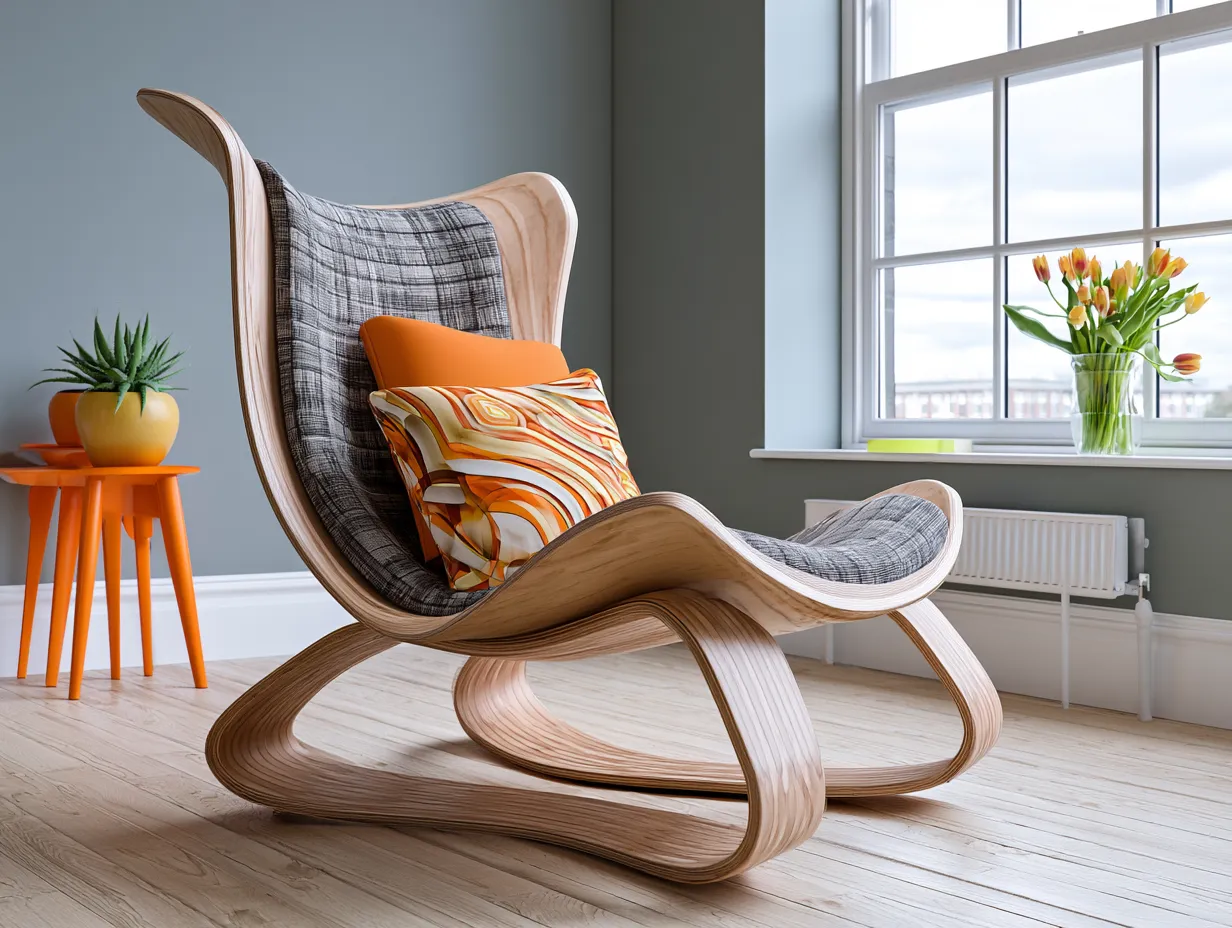
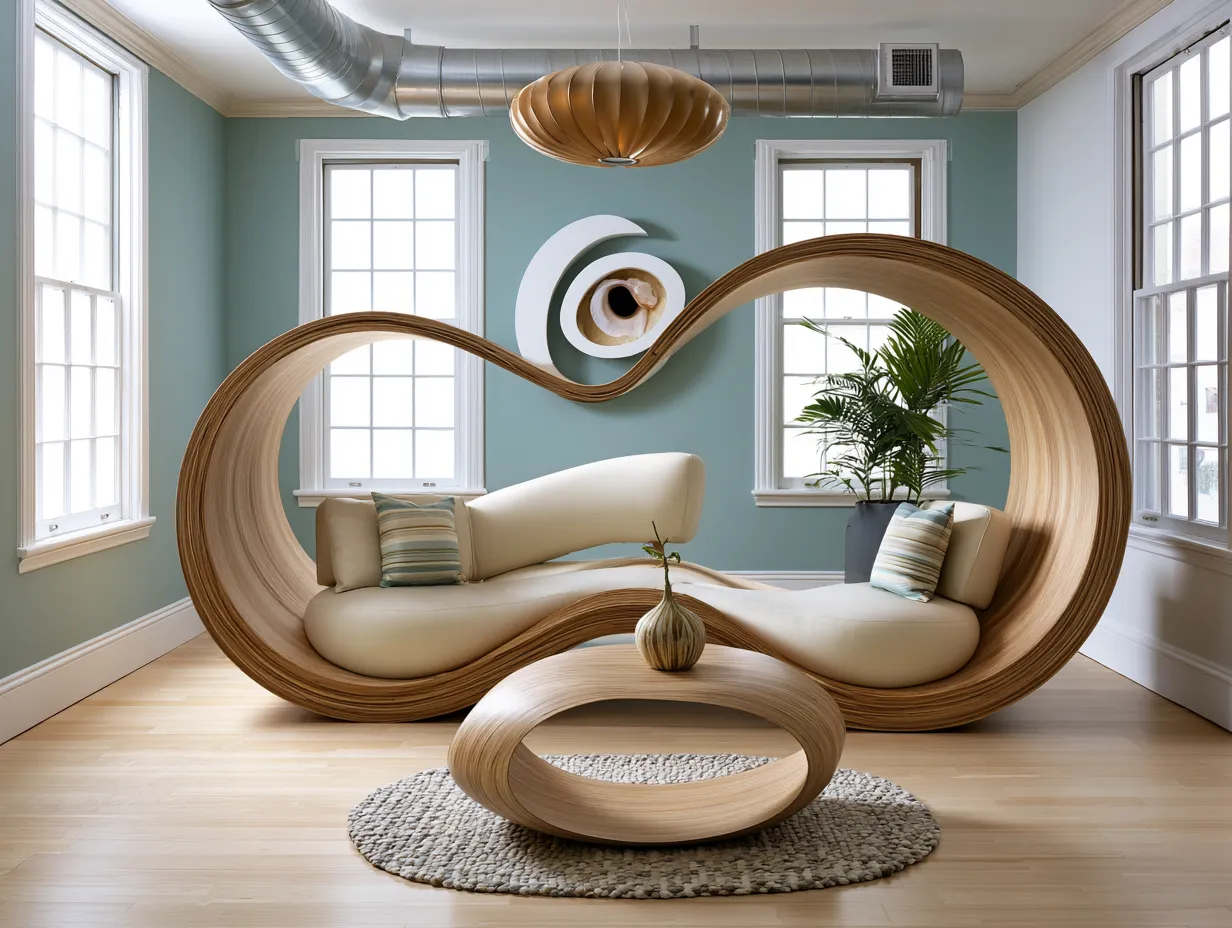
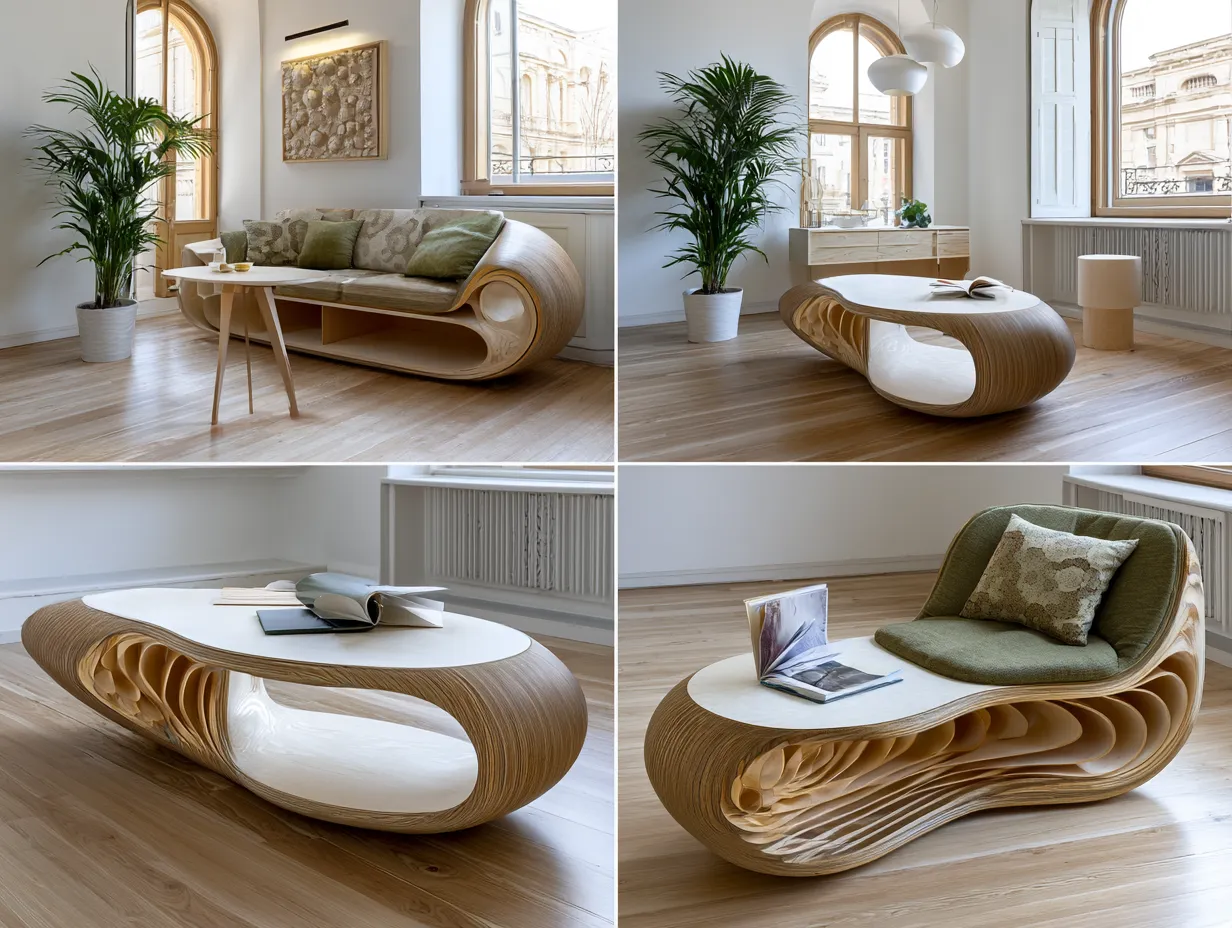
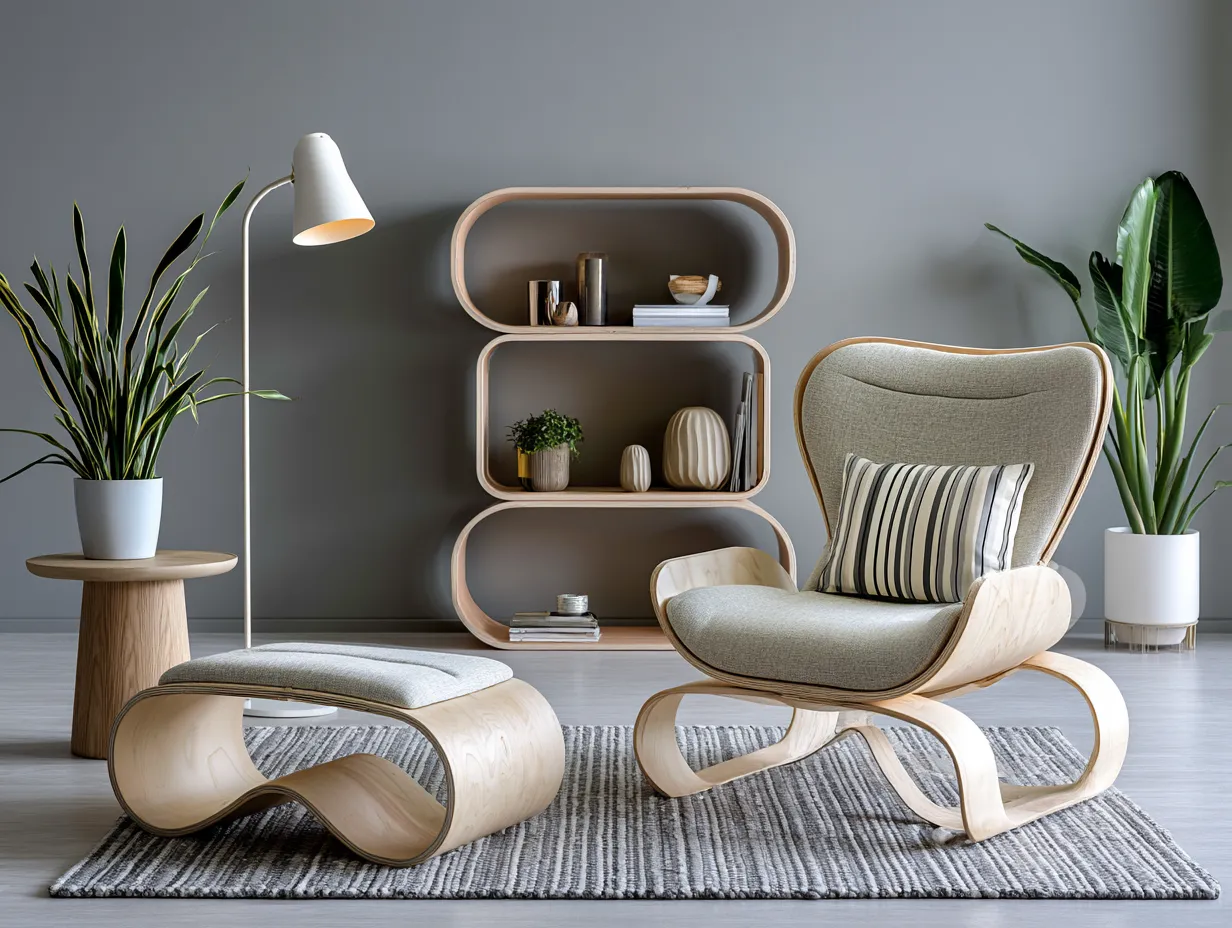
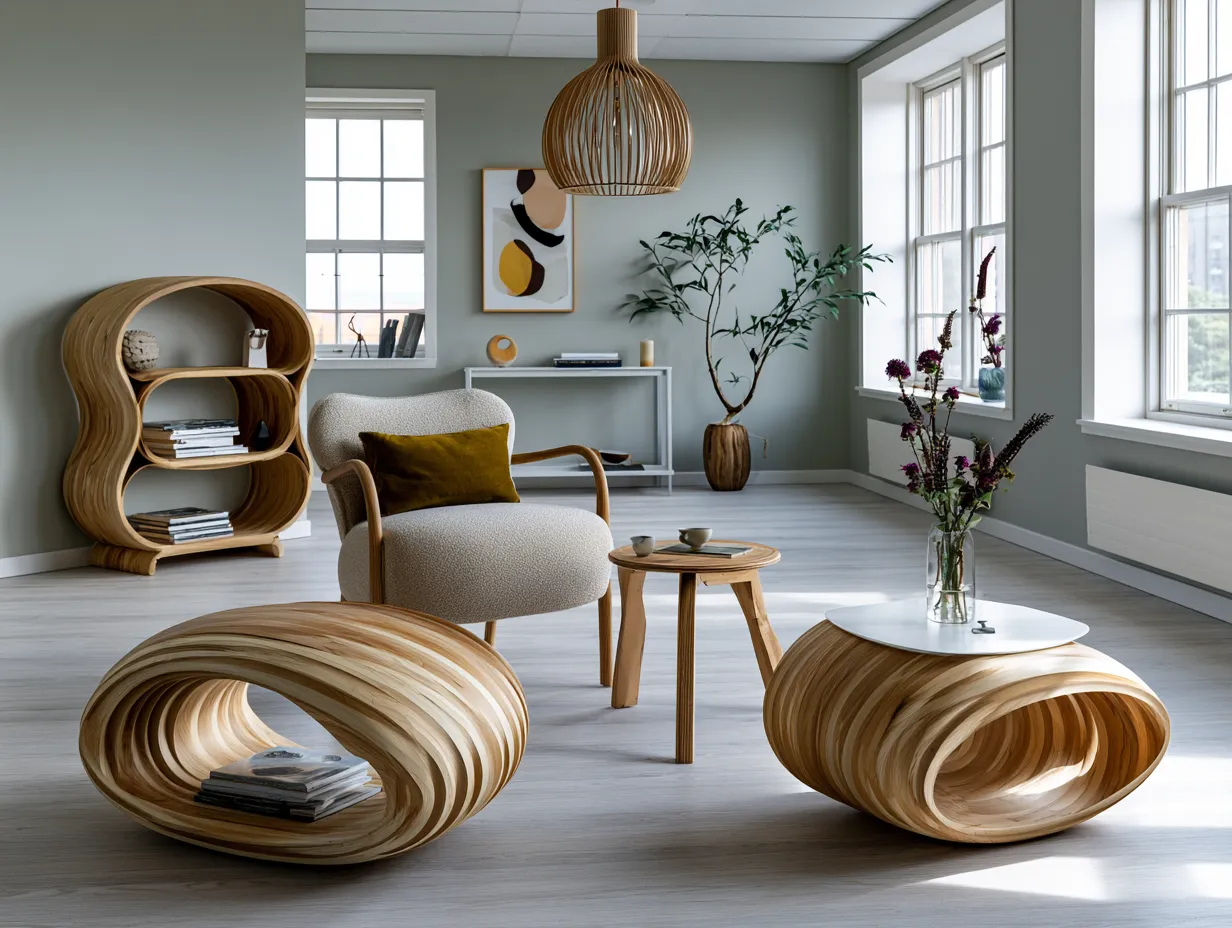
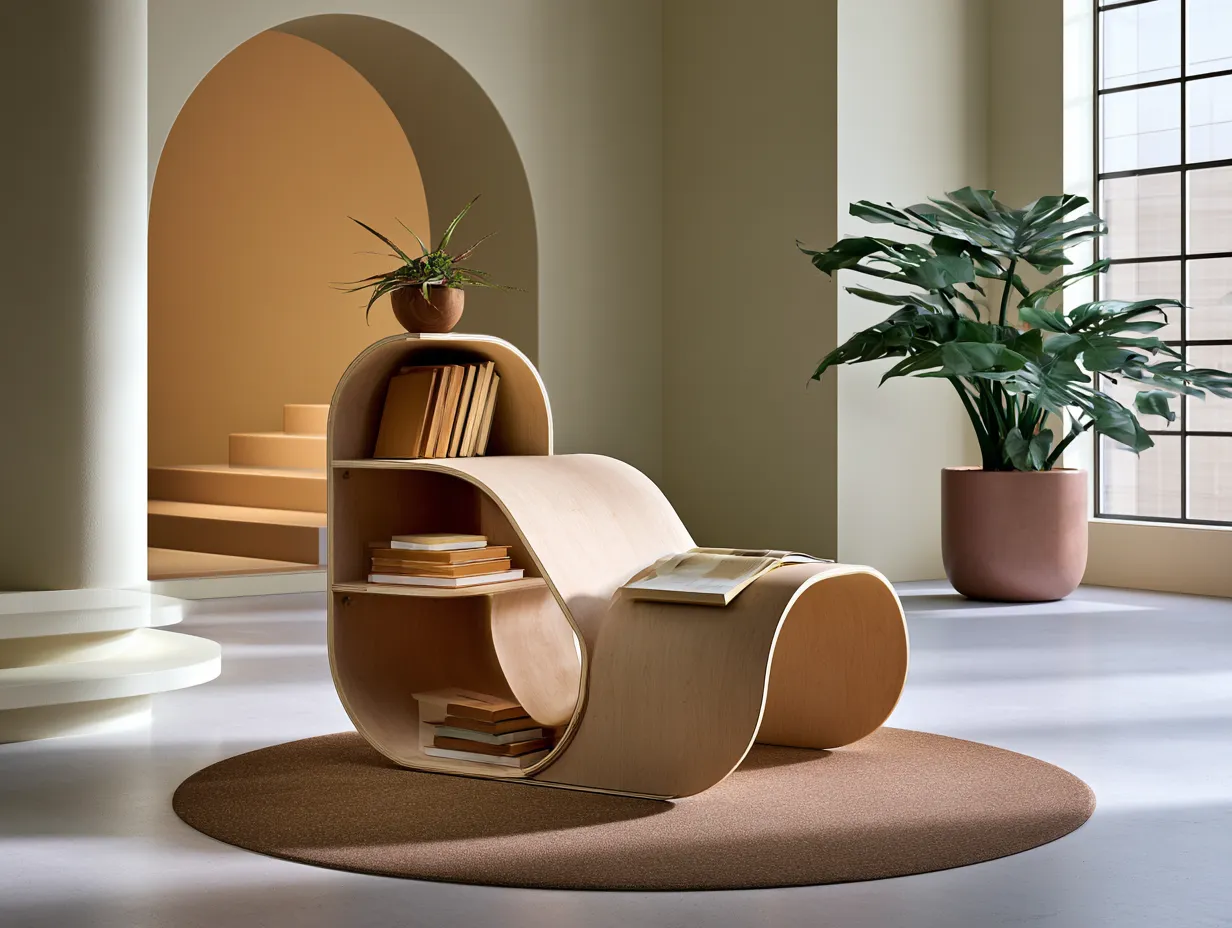
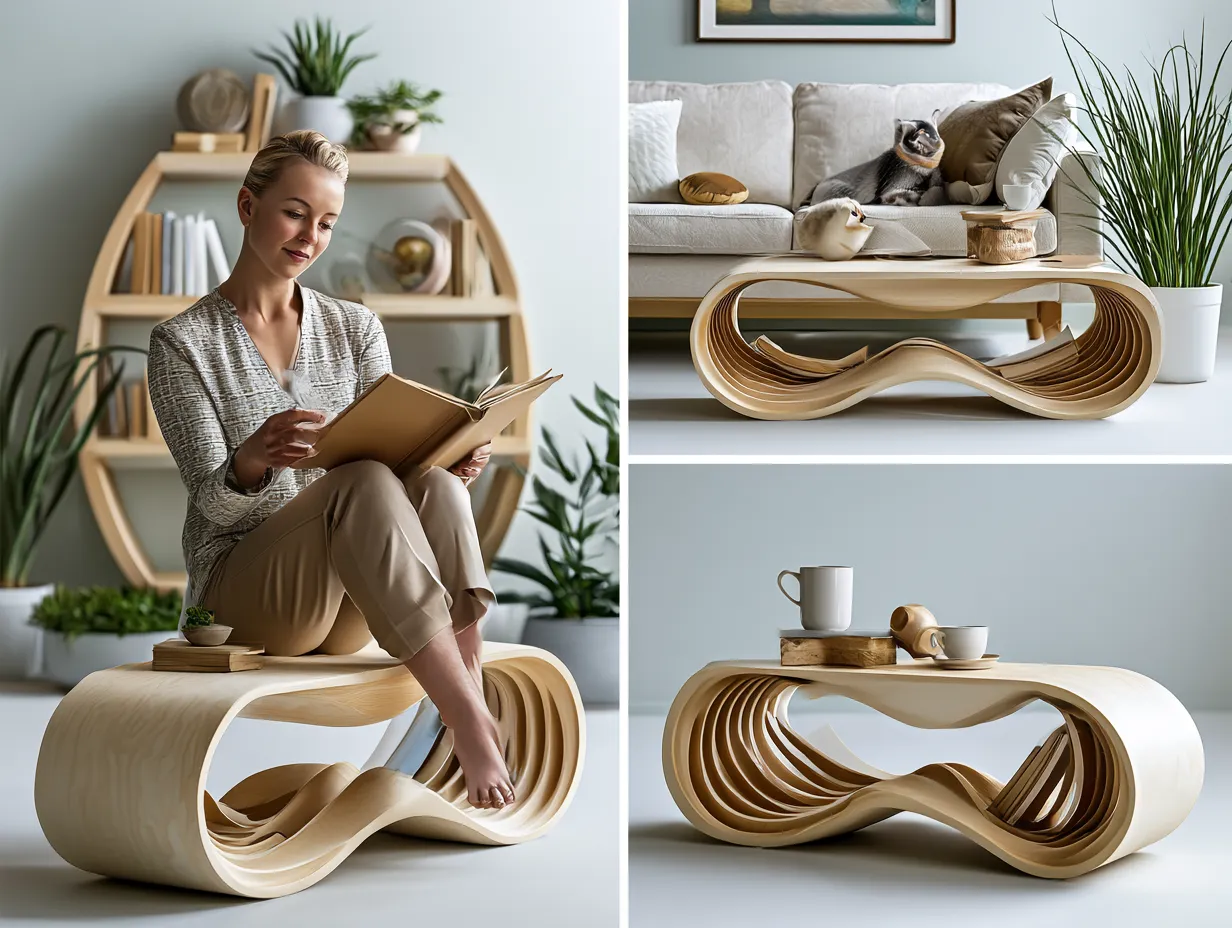
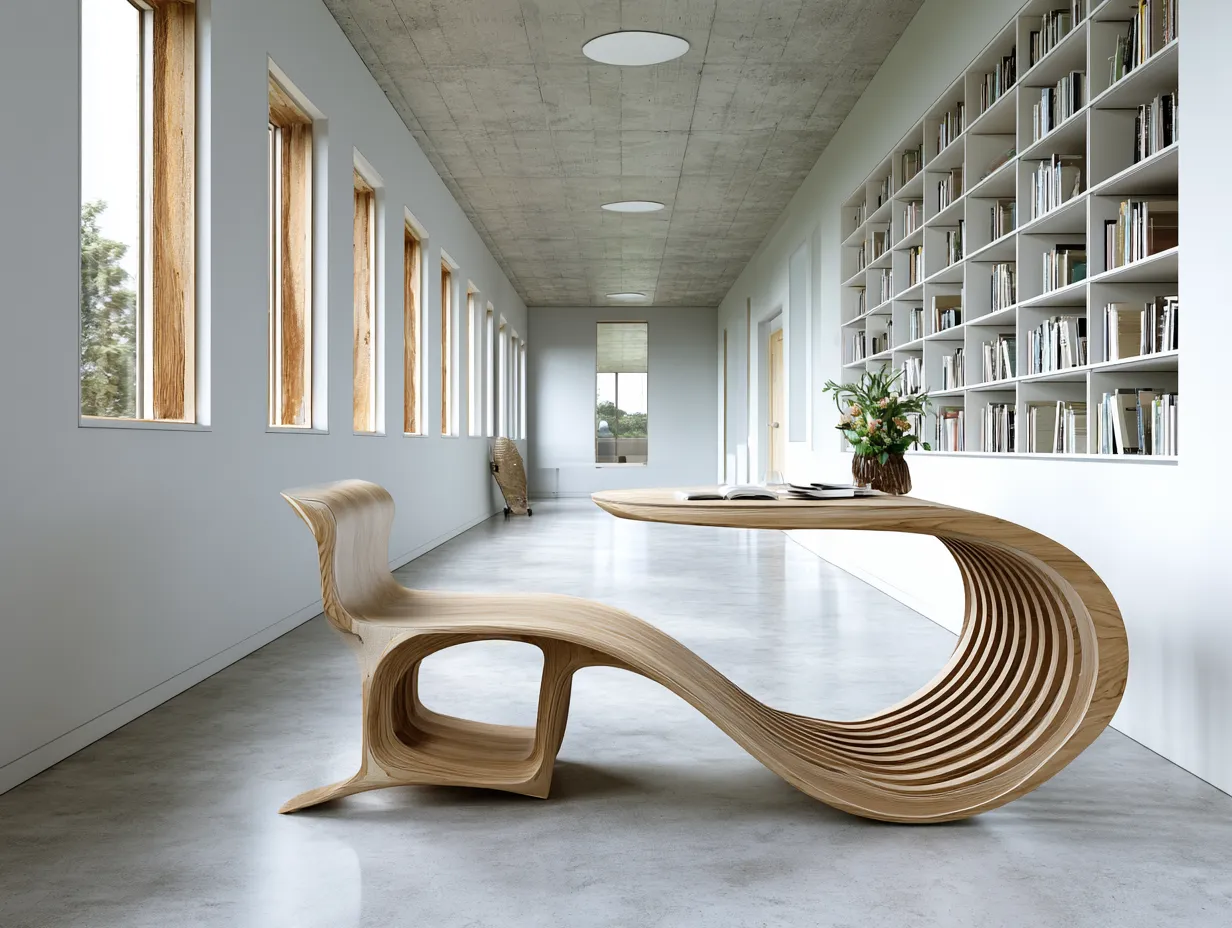
Columbia Forest Products in the USA markets its Radius® Bending Plywood specifically for this — a 2-ply rotary-peeled hardwood construction available in both grain orientations, with published specifications for minimum bend radius by thickness. For residential curved cabinetry and furniture arches, it is one of the most consistently specified products among North American millwork studios in 2026. The system works because the rotary-peeling process produces veneers with maximum flexibility before any layering adhesive is applied.
What does this mean practically for furniture? A curved headboard that once required steam-bent solid timber or expensive CNC-routed foam can now be constructed from a flexi plywood substrate bent over a simple MDF form, then laminated with your chosen surface finish. You can check out 2+ Stylish Plywood Ceiling Сladding Ideas to see how the same material logic — thin sheets, controlled layering — translates across surfaces in a room. The structural principle is identical whether you are bending a ceiling feature or a furniture back panel.
Does flexi plywood require special adhesive to hold its bent shape? Yes — and this is where many DIY projects fail. The sheet must be fixed into its curved form with contact adhesive or laminating glue applied while the sheet is held at the target radius, typically using a jig or mold. Releasing the sheet before the adhesive cures fully will cause spring-back, particularly in thicker gauges. In India, Plyneer Flexi Ply — available from Rs. 1,141.44 per sheet — explicitly recommends dual-coat contact cement with a minimum 20-minute open time before pressing for any radius under 300mm.
Do not attempt to cold-bend flexi plywood over a form and then expect it to hold shape with only paint or veneer on top. The surface finish is decorative. The structural hold comes entirely from the adhesive bond to the substrate or frame behind it. Skipping a proper jig to ‘eyeball’ the curve produces uneven radii that read as mistakes, not design decisions, in a finished room.
AK Apple Ply in India produces Gurjan Flexi Ply from 100% Gurjan hardwood, a dense tropical species that gives the finished sheet better surface hardness than softwood-core competitors. Pricing starts at approximately ₹28 per sq ft for standard grade, rising to ₹39 per sq ft for 6mm and ₹48 per sq ft for 9mm. The 9mm is the preferred thickness for freestanding curved furniture — rigid enough to resist deformation under load, flexible enough to achieve the broad organic curves dominating 2026 interior photography.
Don’t Do This
- Do not use flexi plywood as a structural load-bearing element without a steel or hardwood spine behind it — its unidirectional grain reduces cross-directional tensile strength significantly.
- Do not apply rigid gloss paint over bent flexi plywood; it delamitates at stress points as humidity fluctuates — use matte clay or limewash finishes instead.
- Do not order 'flexible plywood' from a general timber merchant without confirming engineered unidirectional grain construction — thin standard ply bends on large radii but fractures at furniture-scale curves.
- Do not install bent plywood surfaces near steam or moisture without sealing all edges and applying two coats of water-resistant finish — delamination of the veneer bond layers is permanent.
Curved Plywood Applications Taking Over 2026 Organic Interiors
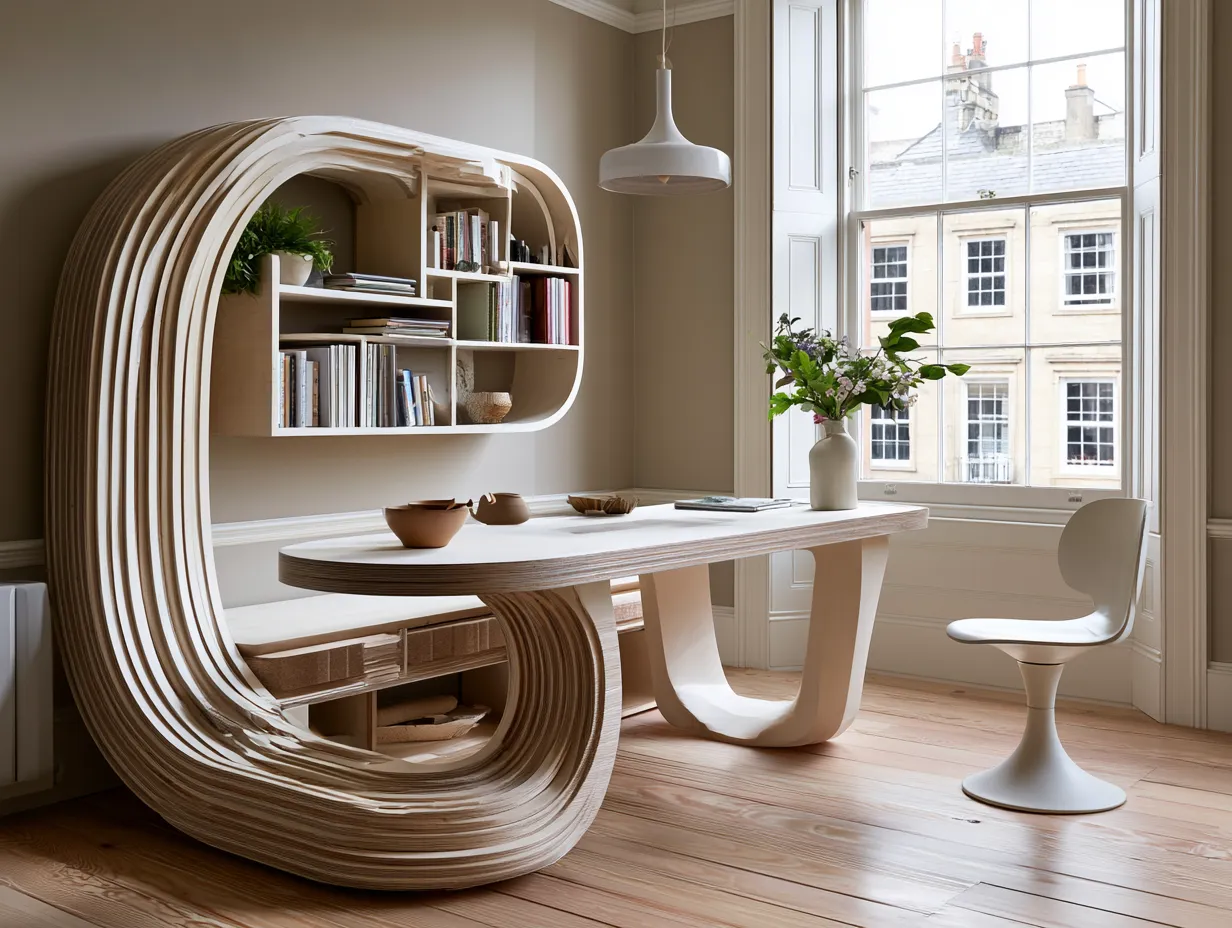
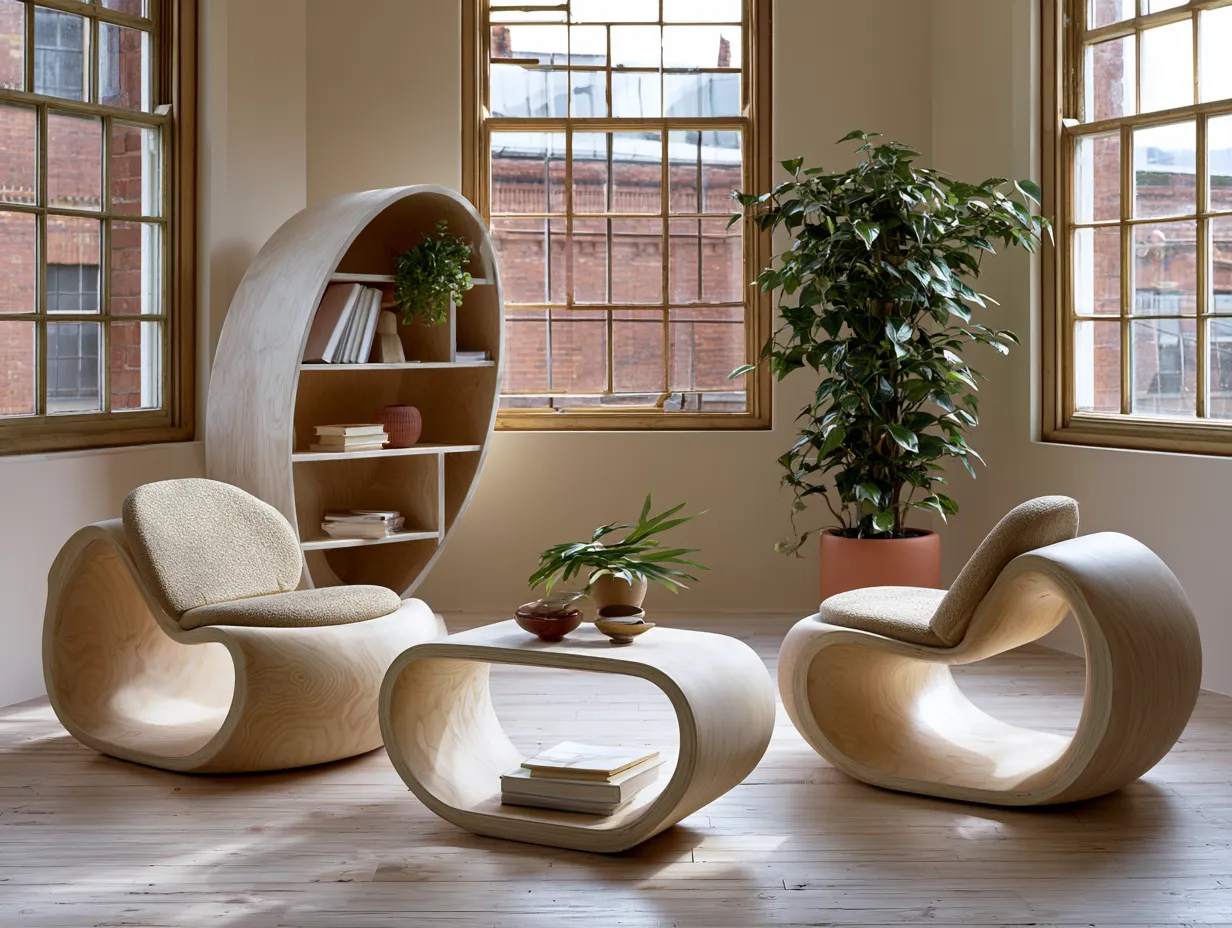
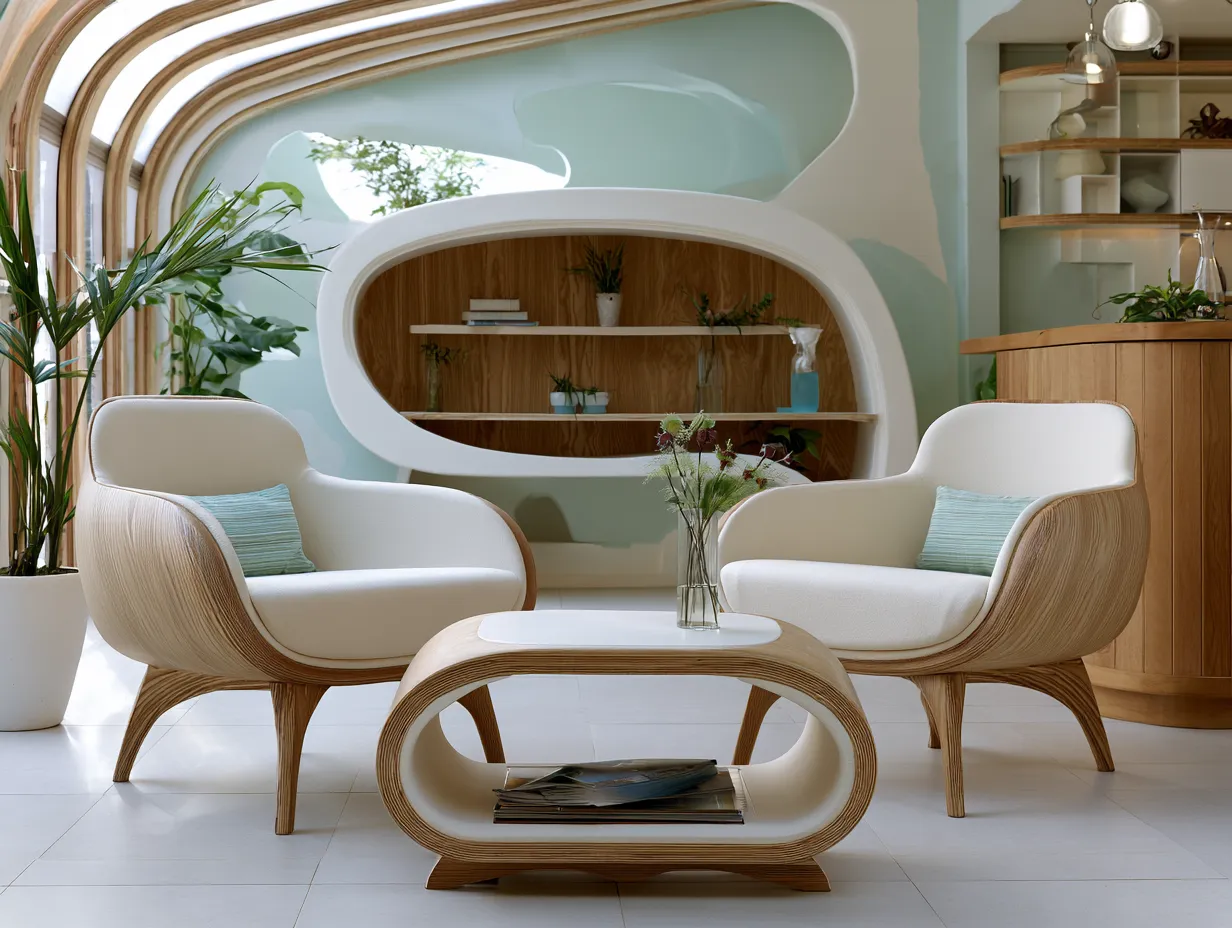
The organic interior movement of 2026 is not purely aesthetic preference — it is a documented pivot away from the grid. Dezeen’s editorial coverage through early 2026 consistently identifies soft silhouettes, absence of right angles, and biomorphic furniture forms as the defining visual language of the year. Flexi plywood sits at the center of this shift because it is the only sheet material that lets a furniture maker or interior architect achieve those forms without routing, laminating foam, or commissioning bespoke steam-bent timber at five times the cost.
Curved headboards are the most searched single application. A queen-size curved headboard typically requires two sheets of 4mm flexi plywood layered over a curved MDF or plywood frame, with the outer surface laminated in fabric, veneer, or a painted finish. The double-layer approach increases rigidity at the finished curve while keeping material cost manageable. Materials Market in the UK lists flexible plywood sheets from £40.55 per sheet across thicknesses from 3mm to 16mm — meaning a complete headboard substrate can be sourced for under £100 in materials before finishing.
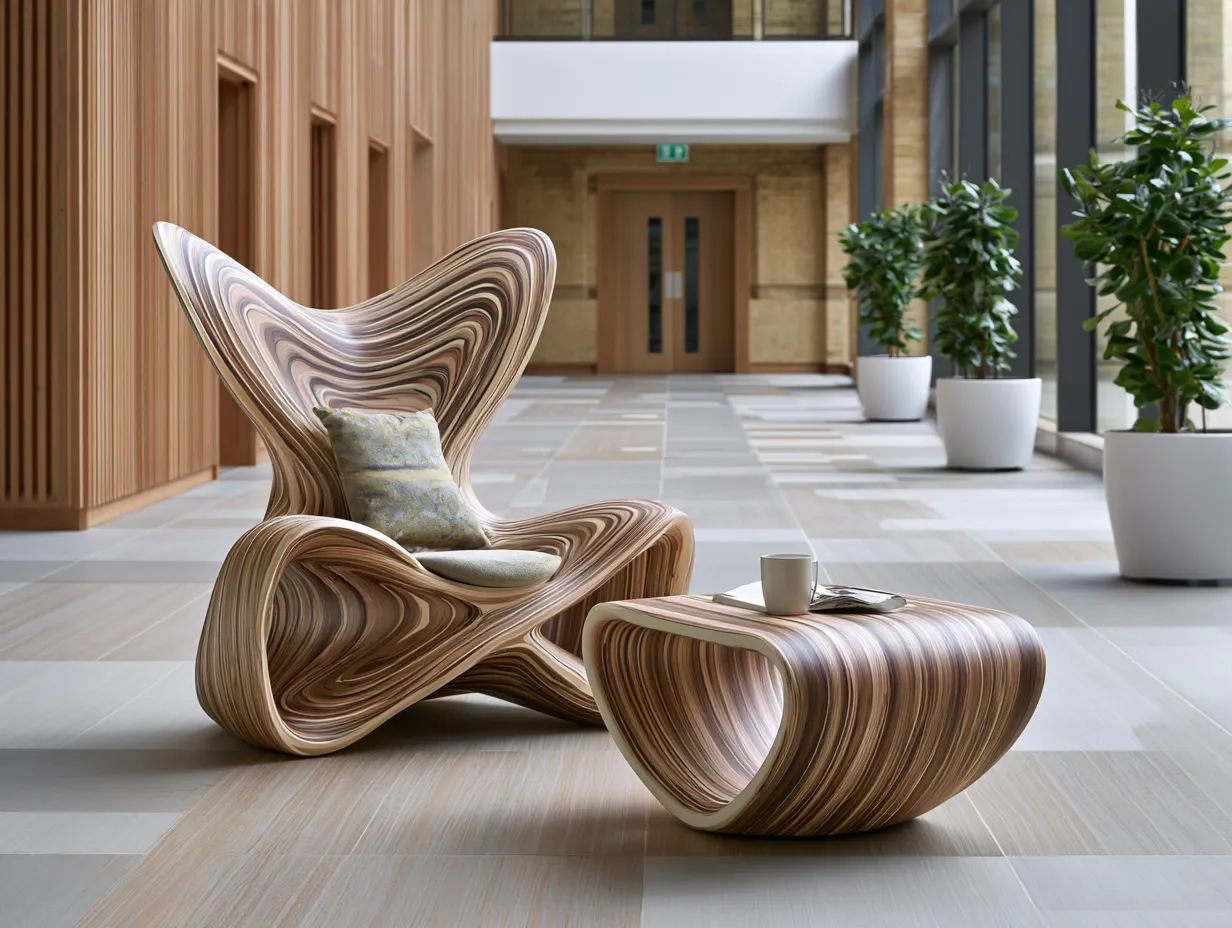
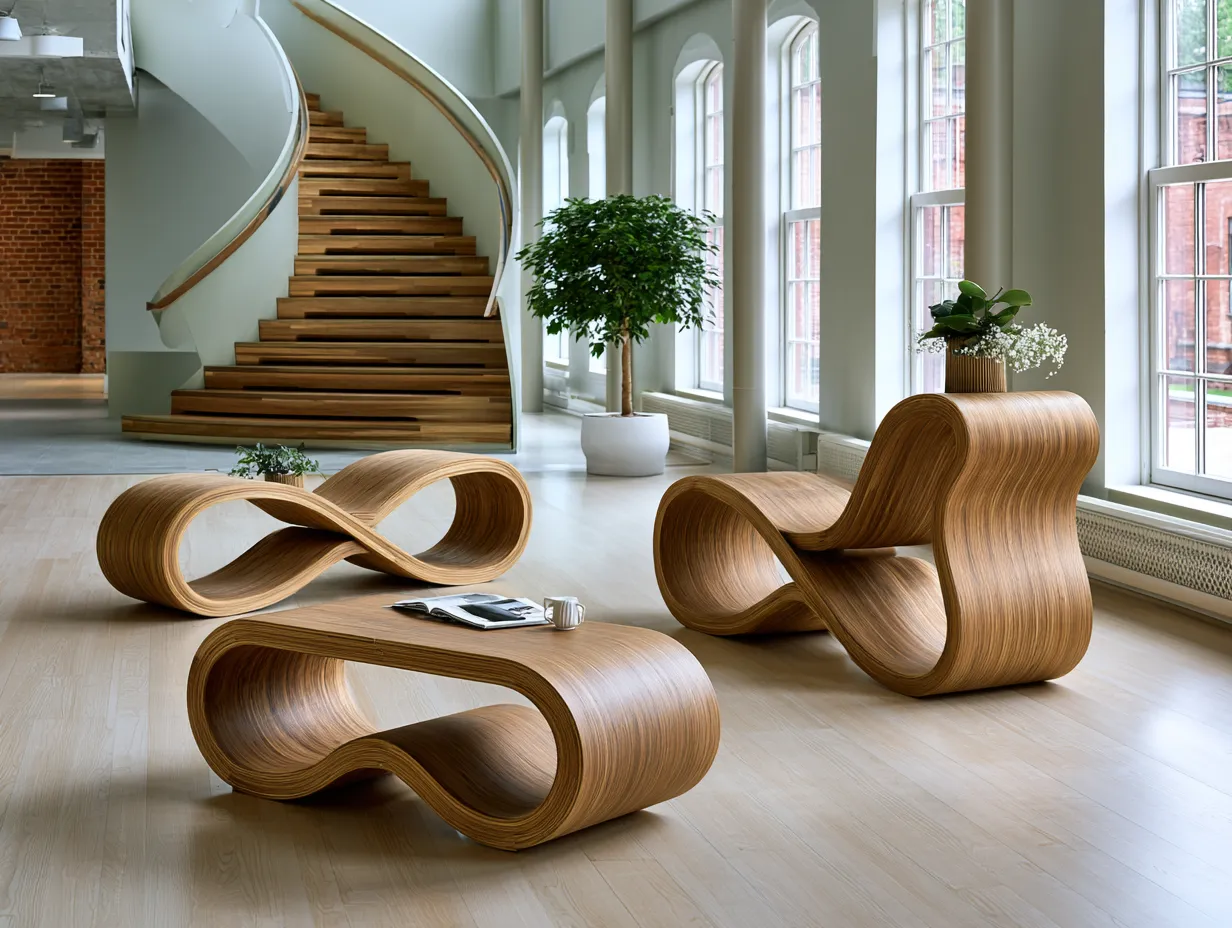
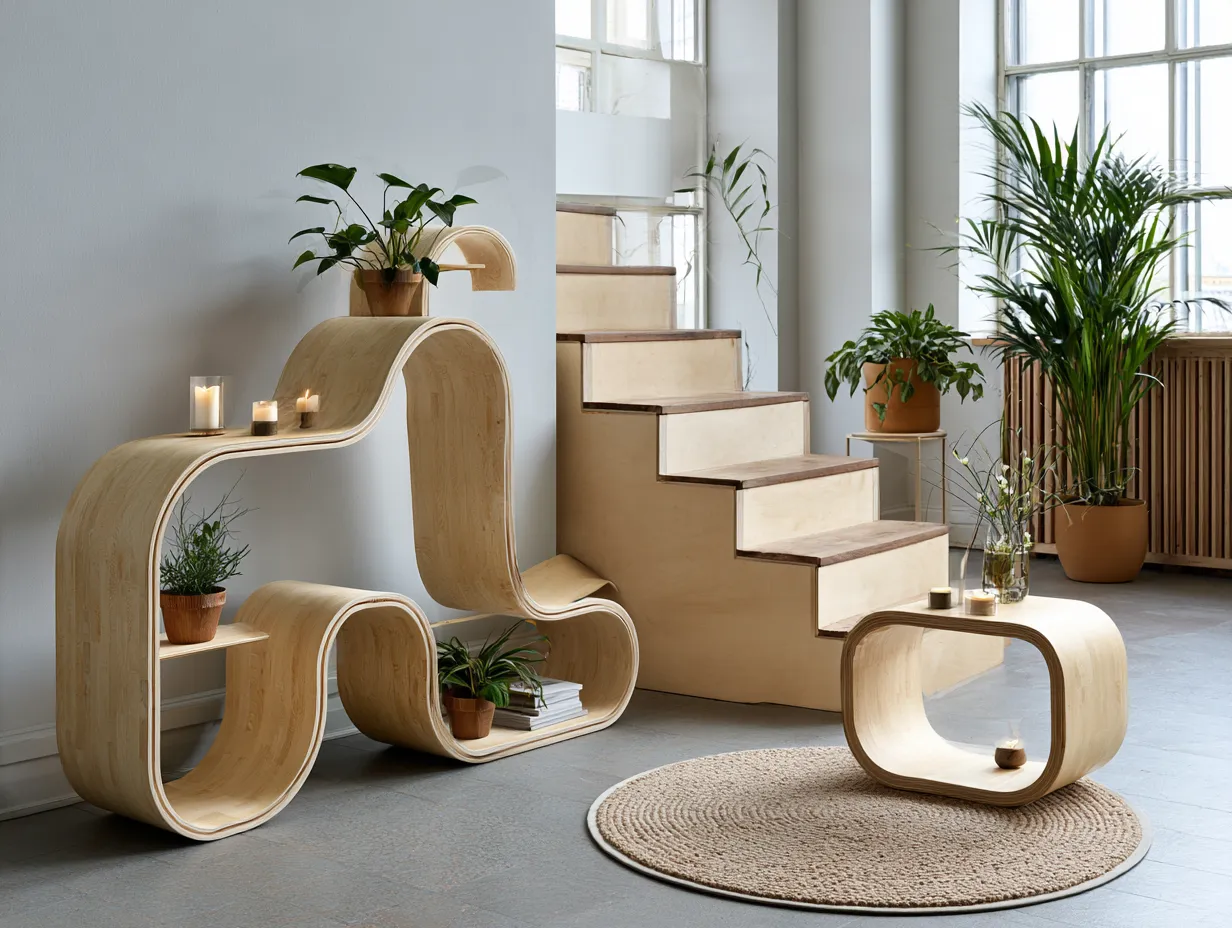
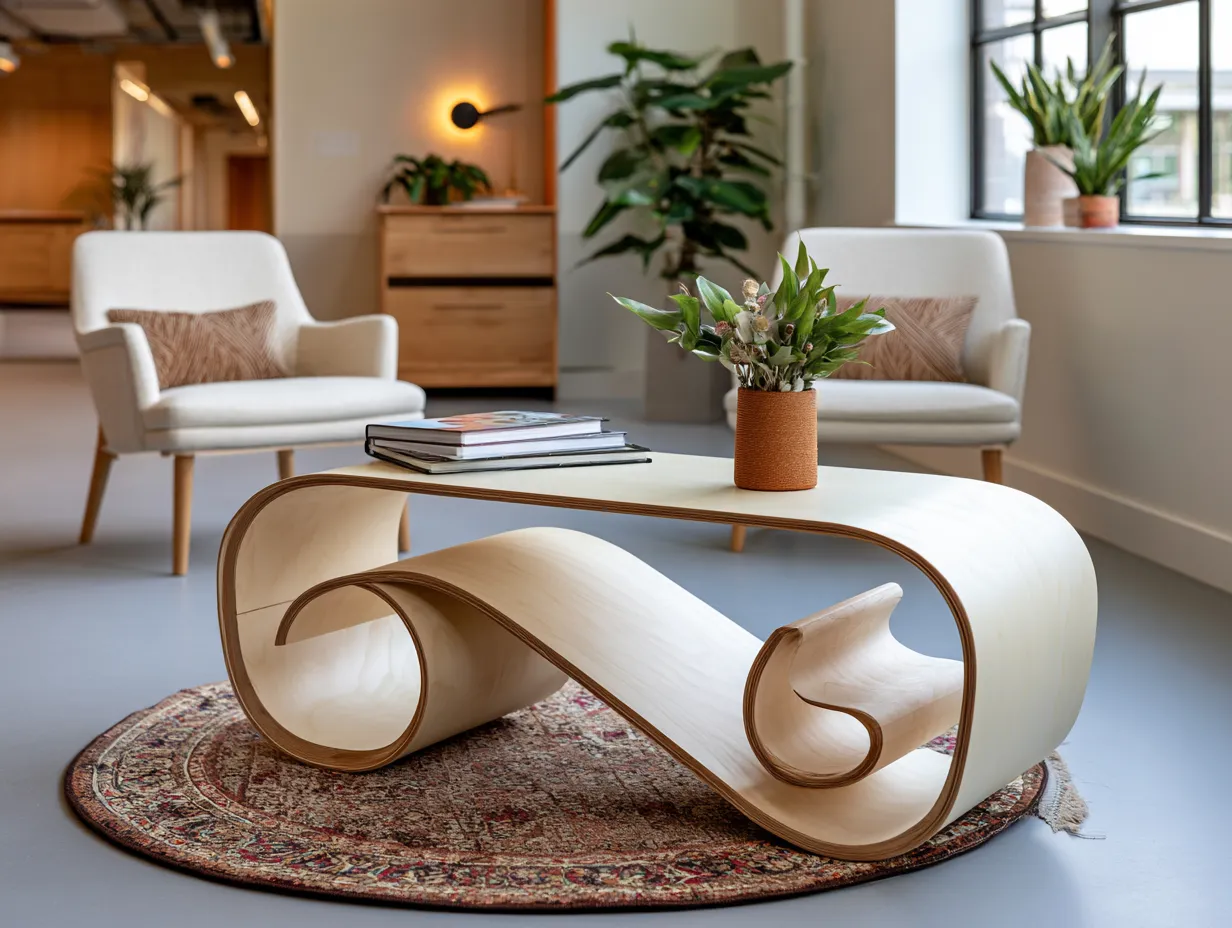
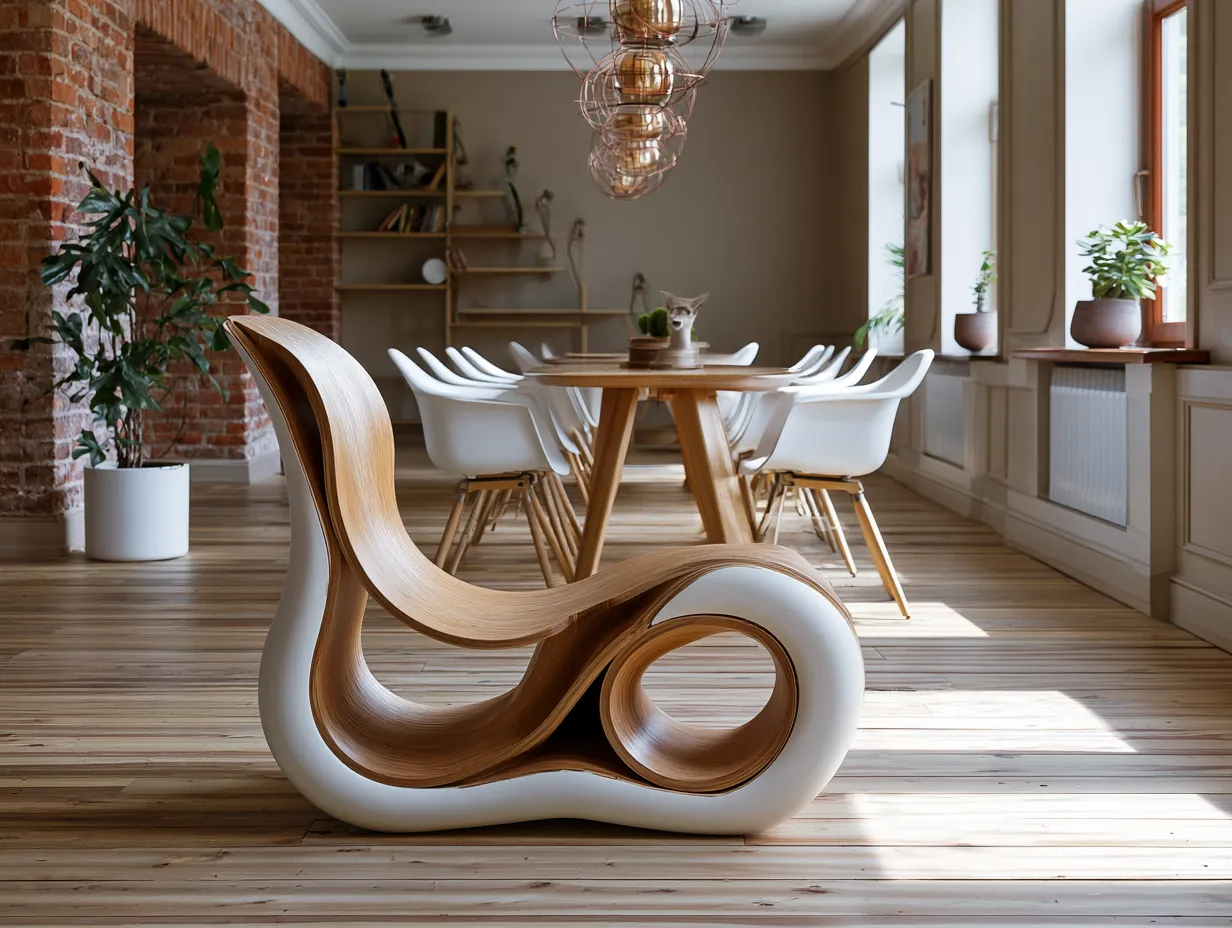
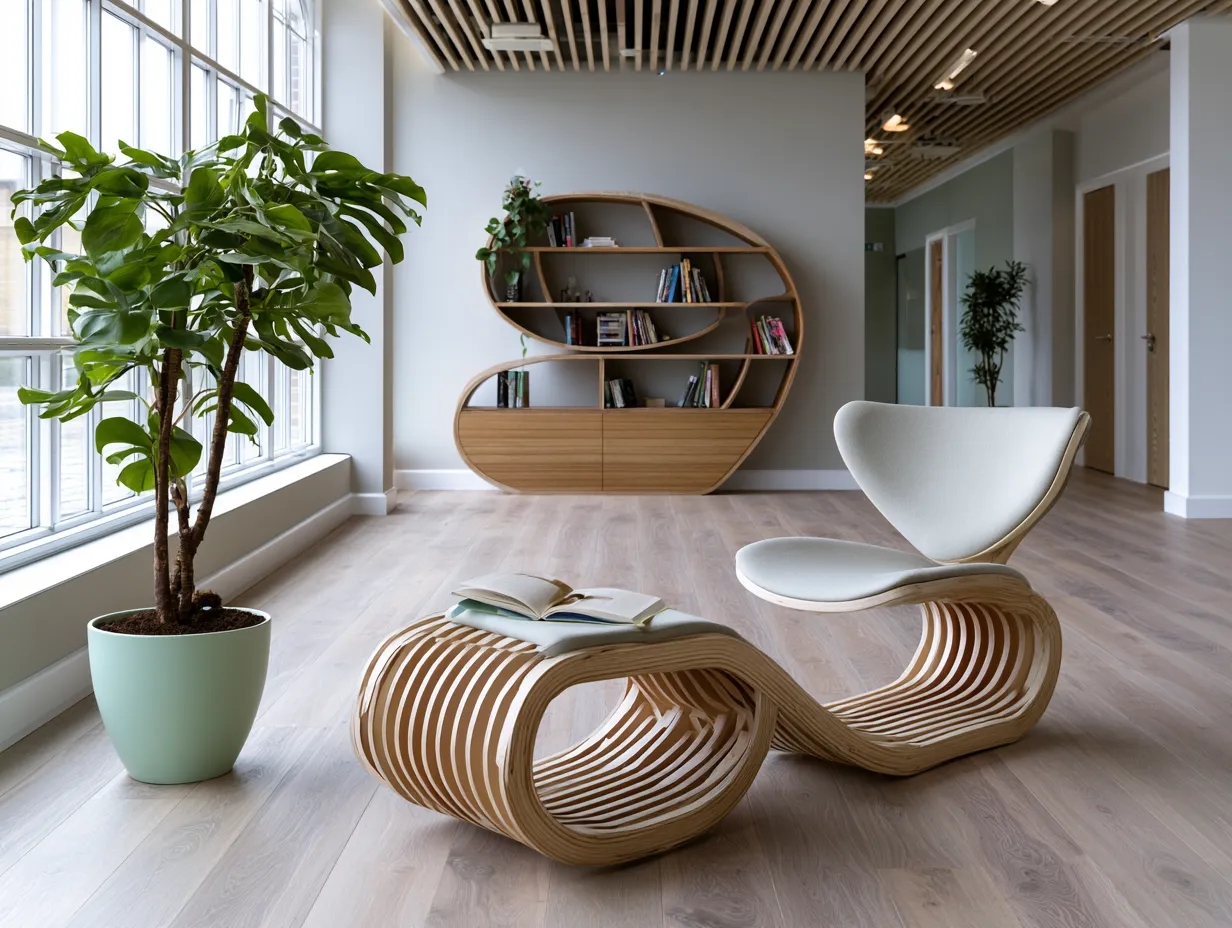
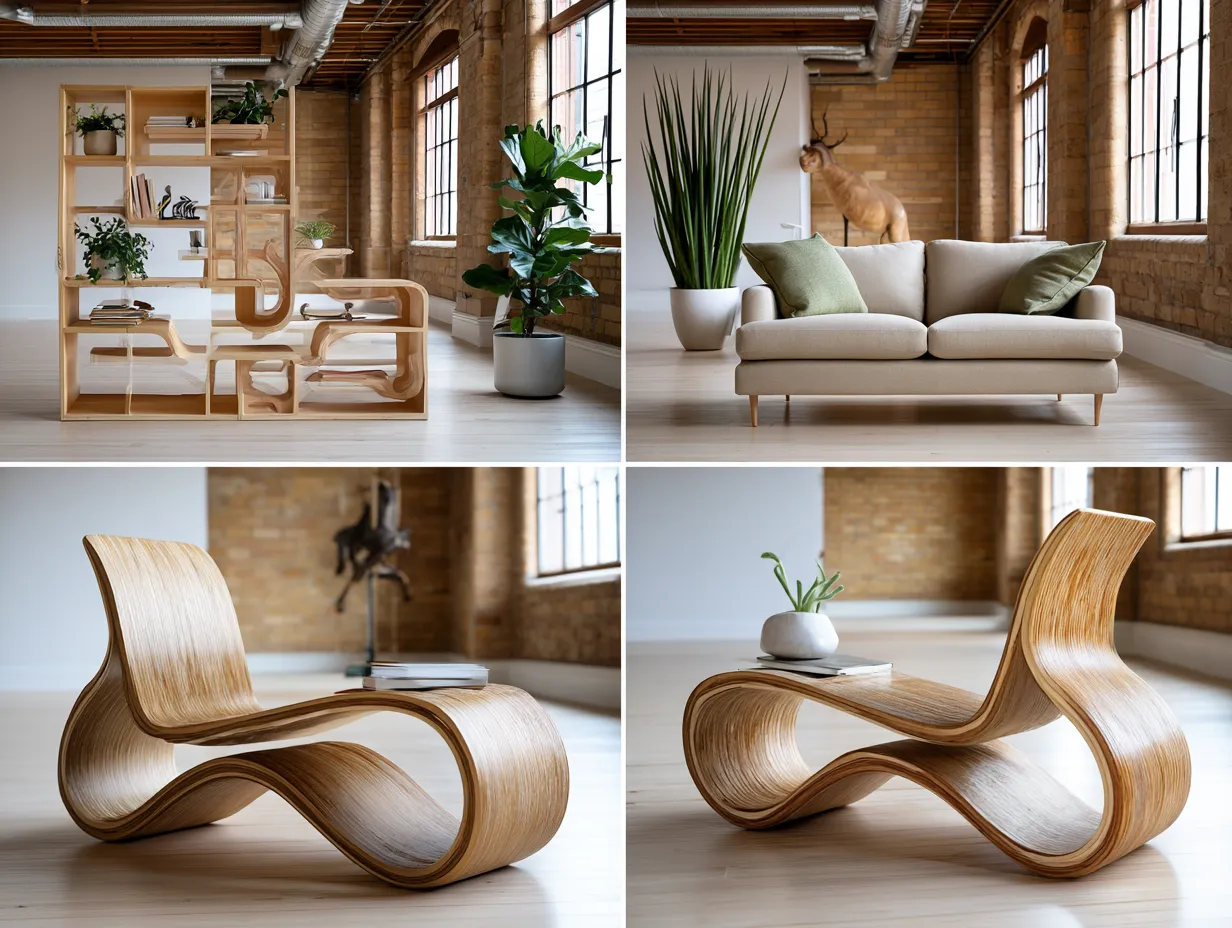
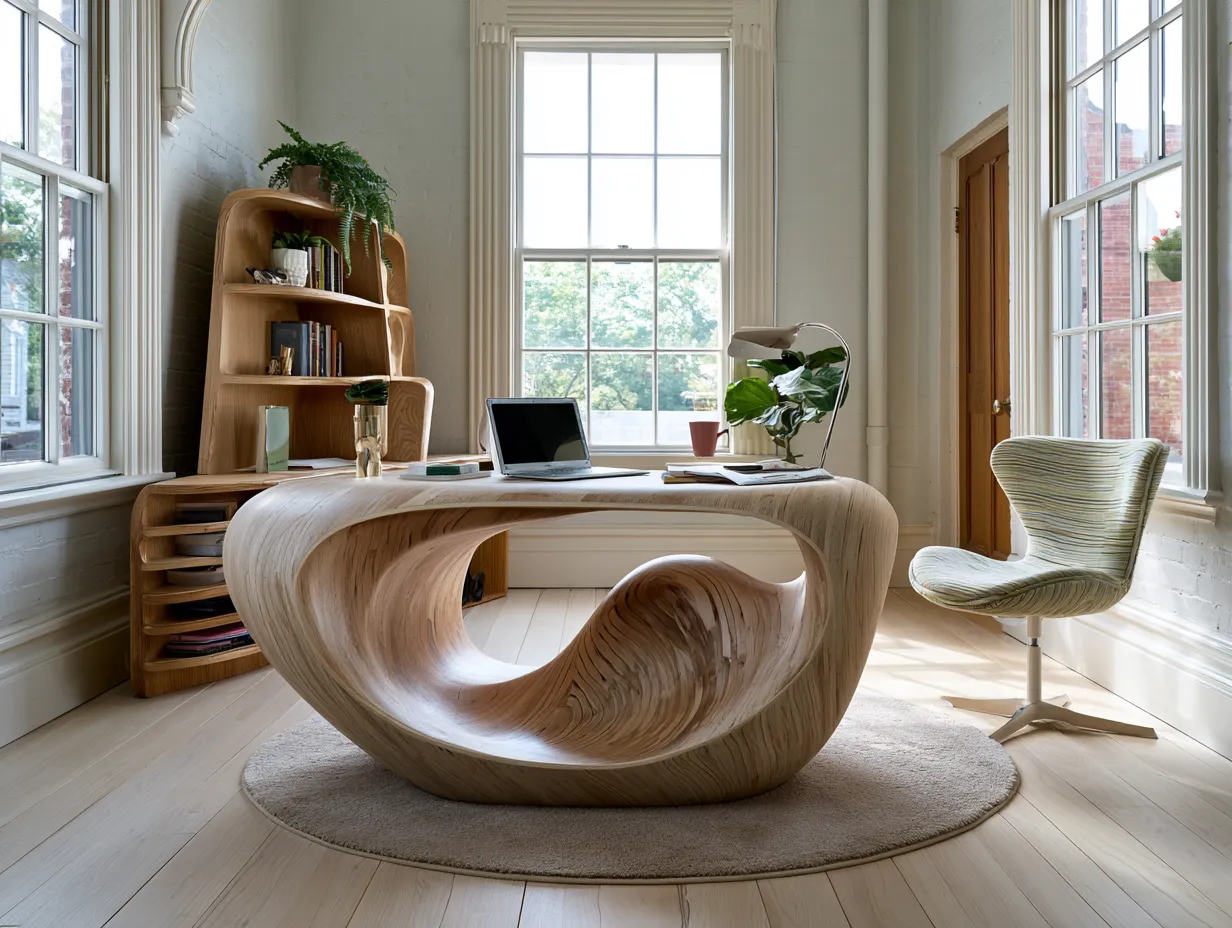
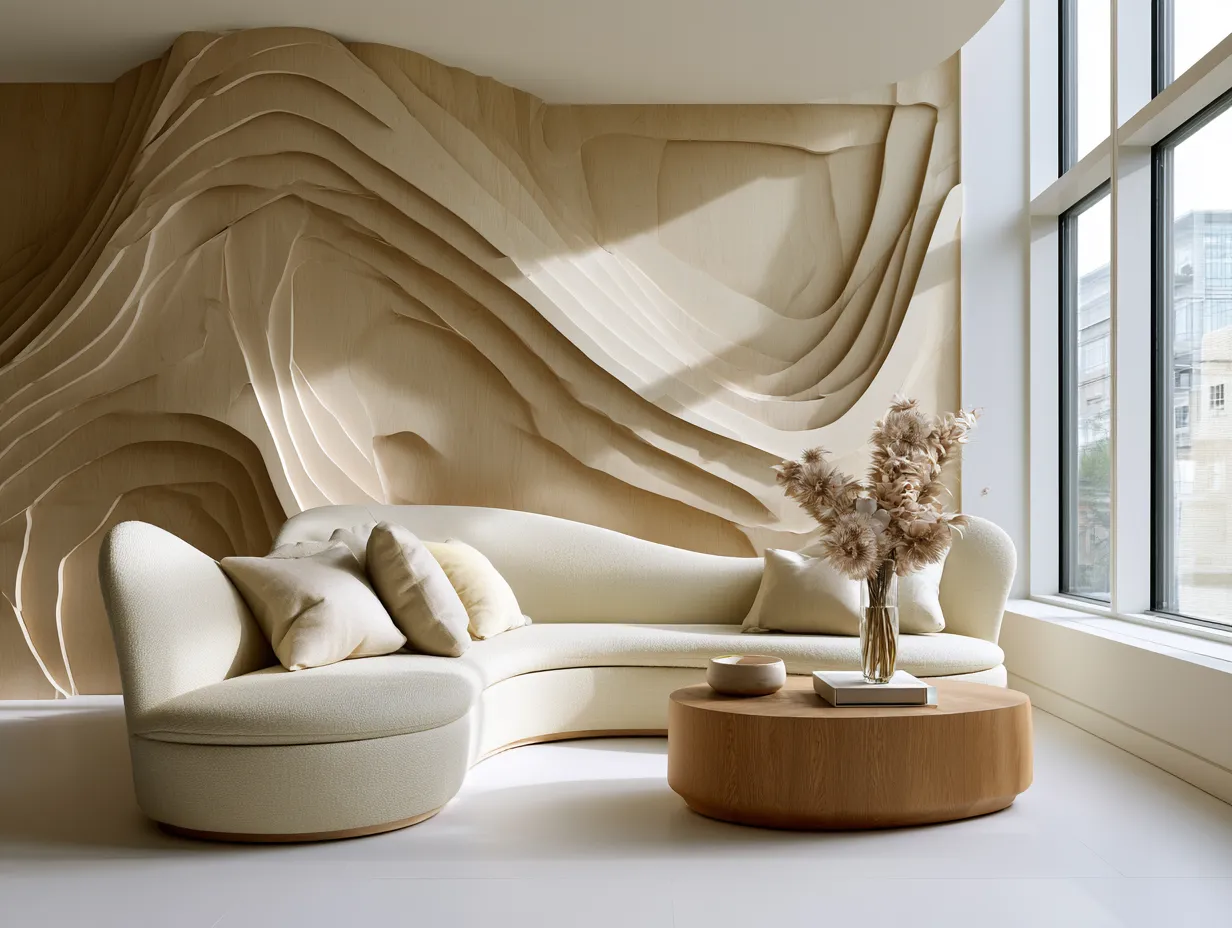
Wave-wall panels are accelerating faster than almost any other architectural application. A wave panel is essentially a flexi plywood sheet bent across multiple alternating radii and fixed to a timber batten framework — the undulation catches light differently at every hour of the day, functioning as both texture and shadow sculpture. Designers using this technique in 2026 are applying limewash, microcement, and natural clay finishes over the bent surface, which bonds without cracking because flexi plywood’s surface is stable once fixed. For inspiration on how layered wall surfaces interact with room atmosphere, 12+ Fashionable Plywood Interior Wall Cladding Design Ideas shows how flat plywood cladding already transforms spatial perception — curved applications amplify that effect dramatically.
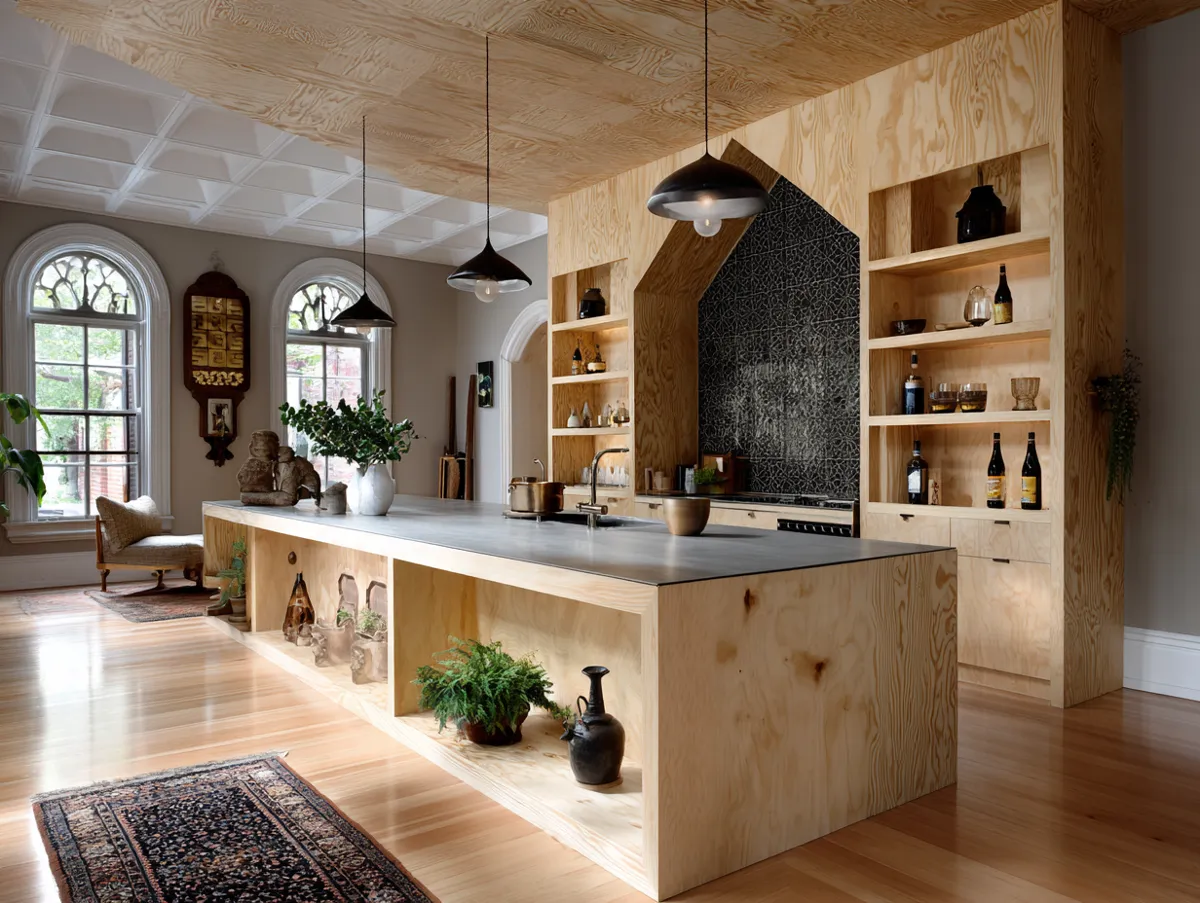
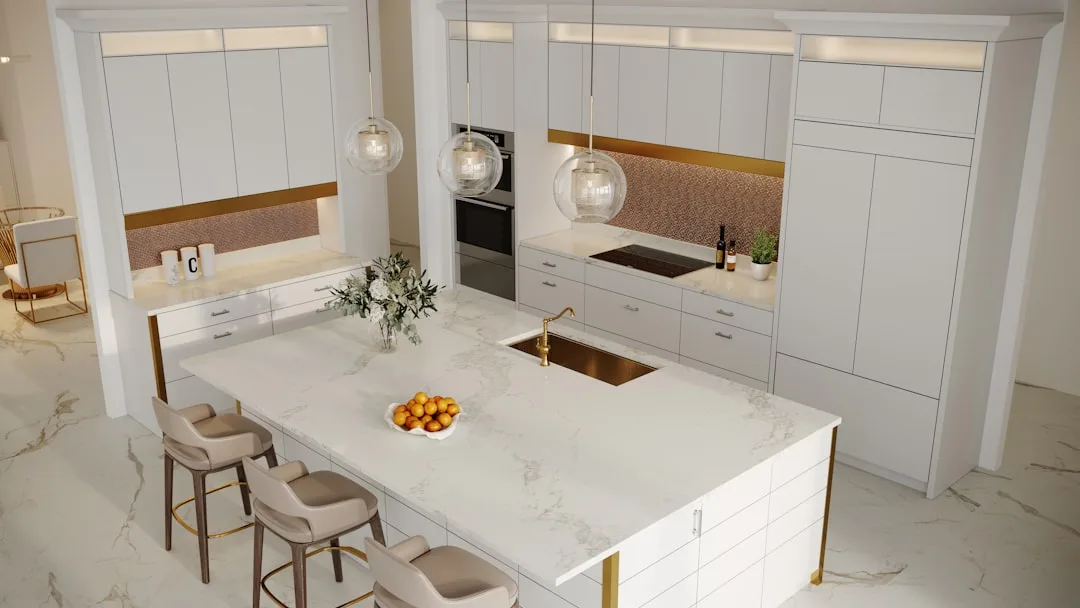
Rounded kitchen islands are the commercial application with the largest budget scale. A full-curve kitchen island using flexi plywood as the cabinet substrate, finished in a matte lacquer or natural veneer, now appears in residential projects at price points that were previously accessible only to commercial hospitality fit-outs. The reason is labor efficiency — a skilled cabinet maker can bend and fix a flexi plywood island carcass in a single day using a simple MDF mold, compared to three to four days of frame-and-fill work to achieve the same form in standard materials.
What makes flexi plywood genuinely eco-compatible — and why does that matter in 2026? The veneer-layer construction means less raw timber is consumed per square meter of finished surface compared to solid-wood curved furniture. When the adhesive used in bonding is formaldehyde-free (as increasingly mandated by European and North American green building standards), the finished sheet qualifies for E0 and E1 emissions classifications. Columbia Forest Products’ Radius® line uses PureBond® soy-based adhesive technology, making it one of the few bend-capable plywood products meeting CARB Phase 2 compliance without additional certification cost.
Modular curved shelving is the DIY-accessible entry point most homeowners are discovering first. A single 4mm flexi plywood sheet bent into a continuous S-curve and wall-mounted creates a floating shelf system with visual complexity that no flat-shelf alternative can replicate. The global plywood market is projected to grow from US$52.74 billion in 2025 to US$81.33 billion by 2034 at a CAGR of 4.93%, with modular and ready-to-assemble curved furniture demand cited as a key accelerant in Renub Research’s 2025 analysis — this shelf application is a direct expression of that consumer behavior shift.
Do not use flexi plywood as a structural load-bearing member without secondary support. Its unidirectional grain, which creates its flex, also means it has lower cross-directional tensile strength than standard plywood of the same thickness. A curved shelf carrying significant weight needs a steel or hardwood spine behind the bent plywood face — treating the flexi layer as structure rather than form will result in gradual sag that becomes visible within months.
| Product | Market / Price | Best Application |
|---|---|---|
| Columbia Forest Radius® Bending Ply | USA — specialty lumber yards | Curved cabinetry, arches, columns — CARB Phase 2 compliant |
| Materials Market Flexi Plywood (UK) | UK — from £40.55/sheet, 3mm–16mm | Wave-wall panels, headboards, curved island cladding |
| AK Apple Ply Gurjan Flexi Ply (India) | India — ₹28–₹48/sq ft by thickness | Freestanding curved furniture, hard-surface curved carcasses |
| Plyneer Flexi Ply (India) | India — from Rs. 1,141.44/sheet | Curved surface applications, modular furniture, decorative panels |
Finishing, Sourcing, and Common Failures With Bendable Plywood Projects
The surface finish you apply to bent flexi plywood determines whether the project reads as intentional design or unresolved construction. Flexi plywood can be laminated, veneered, painted, or polished after bending — each finish has a specific application sequence that must respect the geometry of the curve. Applying a rigid veneer over a tight-radius curve without pre-softening the veneer in warm water first will produce micro-cracking at the apex of the bend within weeks of installation, visible as hairline fractures that catch dust and worsen over time.
Natural wood veneer is the most requested finish for curved plywood furniture in 2026, because it maintains the organic material narrative through the entire piece. Flexible veneer backed with paper or fabric substrate is the correct product choice — standard raw veneer is too brittle for radii under 500mm. Many suppliers offer paper-backed flexible veneer in species including white oak, walnut, and ash, all of which complement the warm tonal palette dominating organic interiors this year. Apply with contact adhesive, working from the centerline of the curve outward to avoid trapped air bubbles.
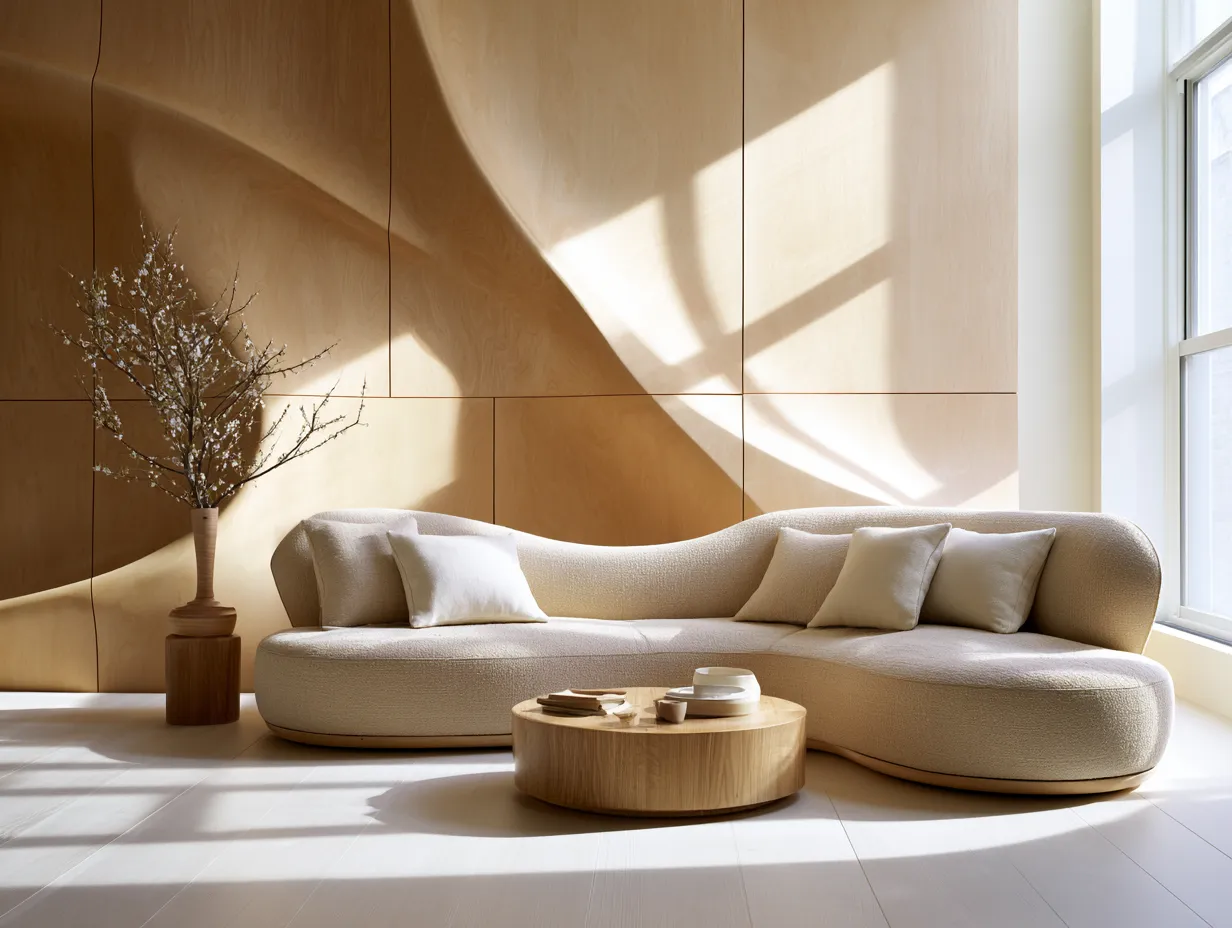
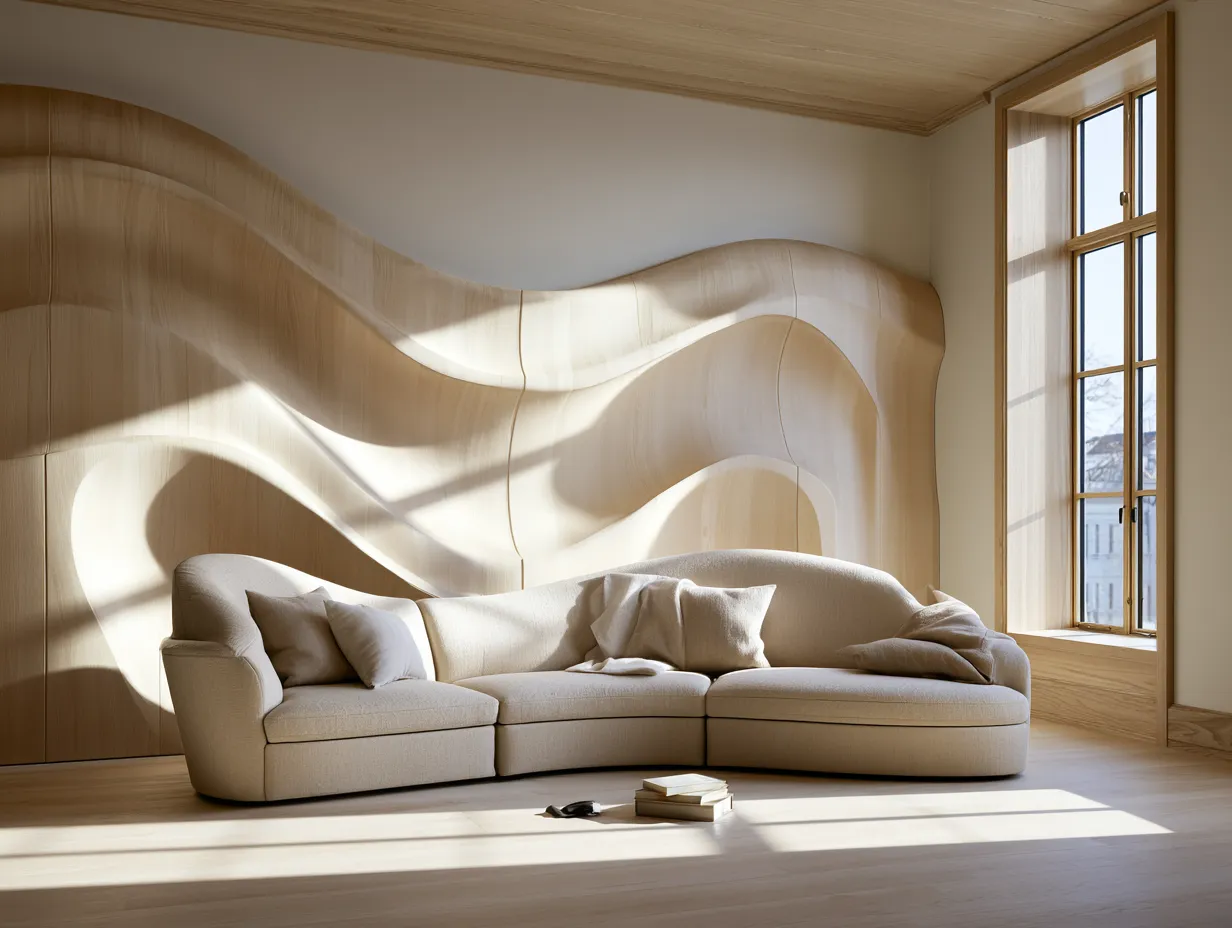
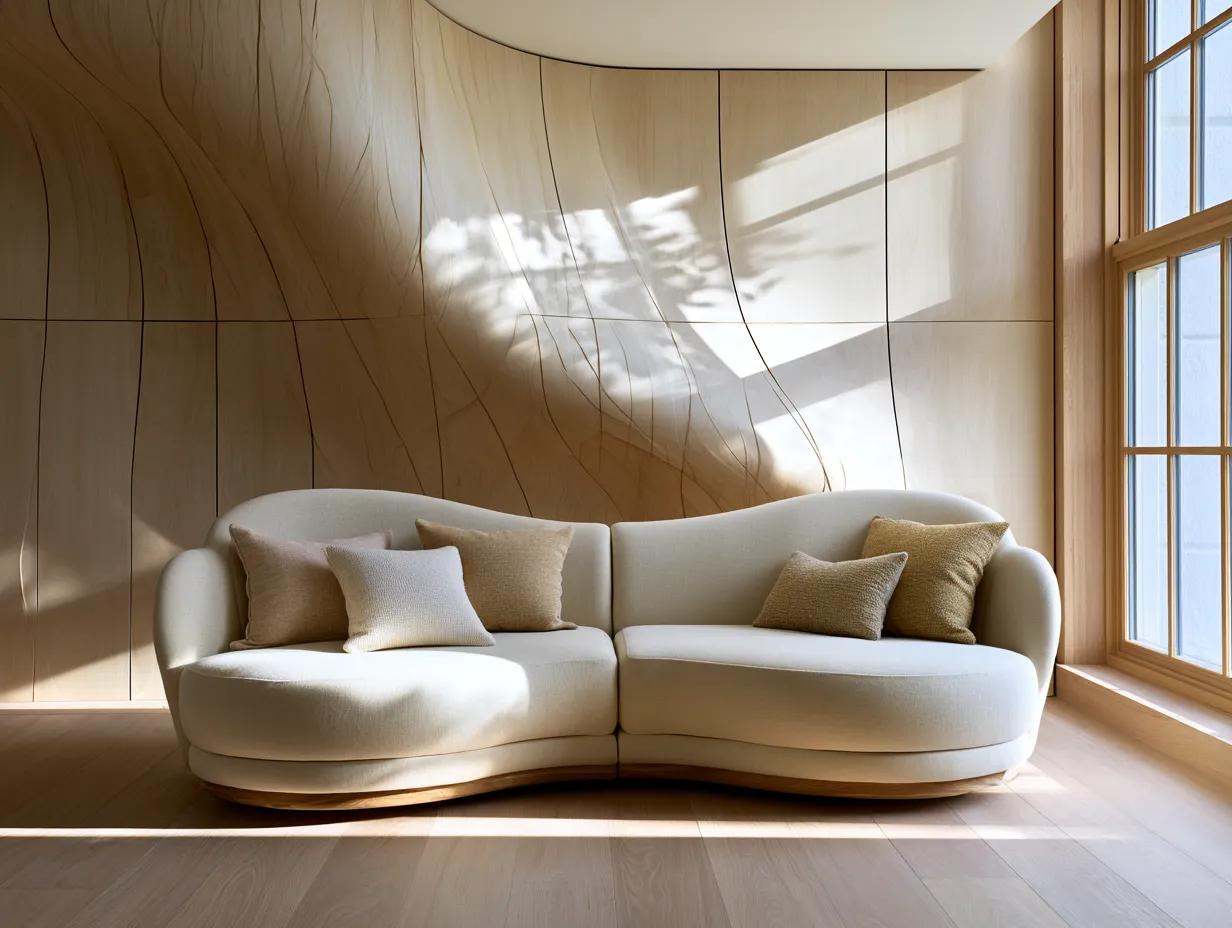
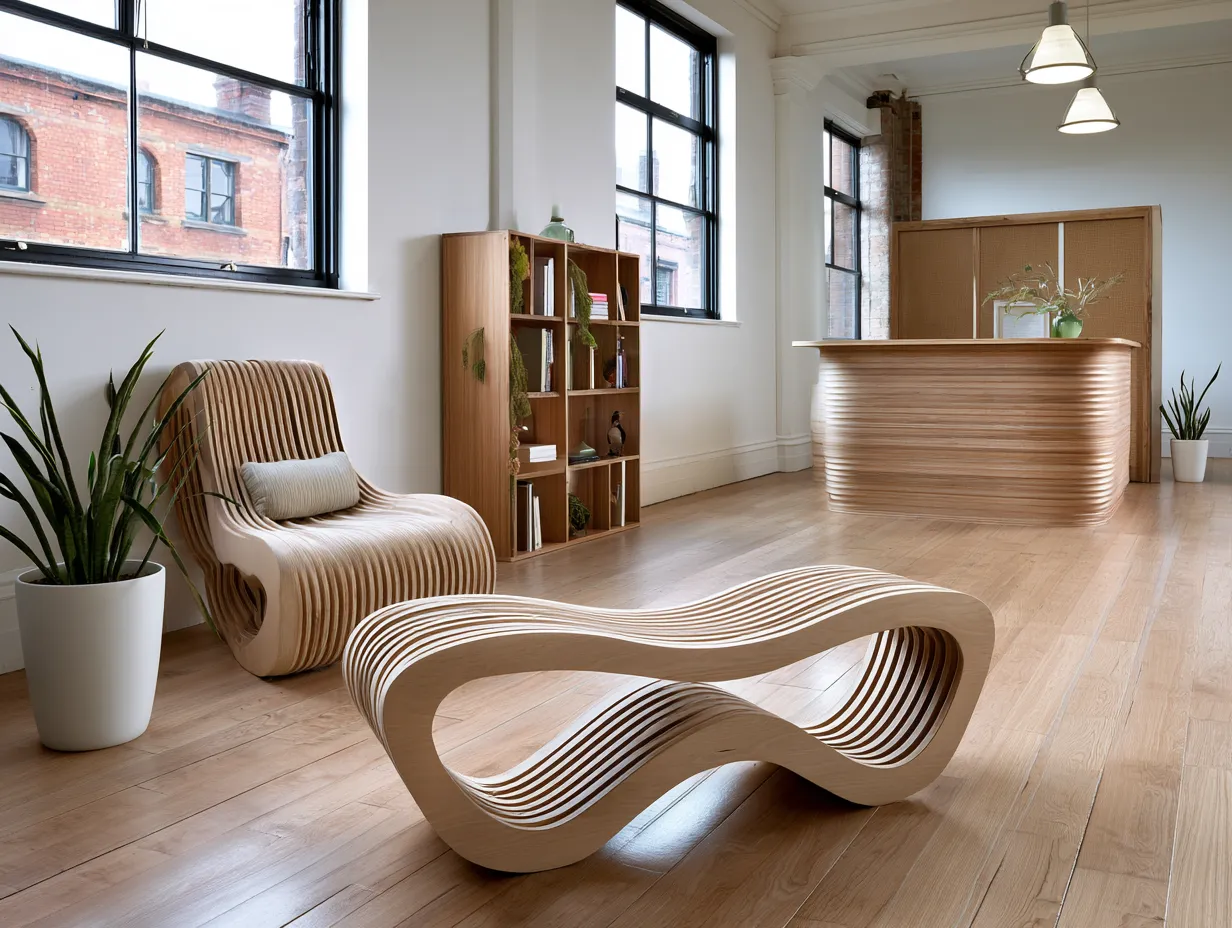
Paint is the most forgiving finish on curved flexi plywood, and matte clay-based or limewash paints are the aesthetic alignment for 2026. These finishes move slightly with humidity, which actually works in your favor on a bent substrate — rigid gloss paints can delaminate at stress points when the room environment fluctuates. Two coats of a quality primer formulated for MDF and plywood surfaces, sanded to 180 grit between coats, creates a base that accepts limewash without adhesion failure even at pronounced curves.
Where do you source flexi plywood outside India? In the UK, Materials Market carries 3mm through 16mm flexi sheets from £40.55, with next-day delivery to mainland addresses — practical for trade buyers and confident DIY users who have confirmed their radius requirements before ordering. In North America, Columbia Forest Products’ Radius® Bending Plywood is available through specialty lumber yards and architectural millwork suppliers rather than big-box retailers, which means lead time planning is essential for project schedules. Do not order from a general timber merchant without confirming the grain orientation of what you are receiving — ‘flexible plywood’ as a generic term sometimes refers to thin standard plywood that has some flex due to thinness rather than engineered unidirectional grain construction.
That last point is the sourcing failure most likely to derail a project. A 3mm standard plywood sheet will bend to a large radius without cracking, which can deceive a buyer into thinking they have flexi ply. Under the tighter radii required for furniture forms — curves between 150mm and 400mm radius — standard thin ply will fracture. True flexi plywood, whether Plyneer, Gurjan Flexi Ply, or Columbia Radius®, is engineered at the veneer-cutting stage for controlled directional flexibility. Ask your supplier to confirm the grain construction method, not just the thickness.
Humidity is the long-term enemy of any bent plywood installation. Flexi plywood fixed into a curve is stable under normal interior conditions, but prolonged exposure to moisture — bathrooms without adequate ventilation, kitchens near steam sources without sealed finishes — will cause the veneer layers to delaminate over time. Seal all edges with PVA or edge banding before installation, and apply at least two coats of water-resistant finish to any surface within 600mm of a water source. This is not optional maintenance — it is structural protection for the adhesive bond holding the bend.
Budget reality for a complete curved project: a pair of curved bedside tables using Gurjan Flexi Ply at ₹48/sq ft for 9mm, plus natural oak paper-backed veneer and contact adhesive, sits comfortably under ₹4,500 in raw materials for a skilled maker. A full curved kitchen island in the UK using Materials Market flexi sheets, steel internal support spine, and spray lacquer finish typically prices out between £800 and £1,400 in materials alone — still significantly below what the same form would cost in solid timber or CNC-routed alternatives. The value proposition is real, and it is why adoption is accelerating across price points simultaneously in 2026.
Related Topics
FAQ
what is the minimum bend radius for flexi plywood
Minimum bend radius depends on thickness and grain orientation. A 4mm long-grain flexi plywood sheet can typically achieve radii as tight as 100–150mm. At 9mm thickness, practical minimum radius for furniture applications is around 300–400mm. Always check the manufacturer's published bend radius specification — Plyneer and Columbia Forest Products both provide these figures by product line.
can you use flexi plywood outdoors
Standard flexi plywood is not rated for exterior use — the adhesive bonding the veneer layers is designed for interior humidity ranges and will degrade under direct weather exposure. Marine-grade or exterior-rated flexible plywood exists but is significantly more expensive and harder to source. For outdoor curved furniture, a fully sealed and painted flexi plywood piece in a covered exterior space is feasible, but unsealed outdoor use will cause delamination within one to two seasons.
how thick should flexi plywood be for a curved headboard
Most furniture makers use 4mm flexi plywood in two layers for a curved headboard substrate — the double layer creates adequate rigidity at the finished curve while remaining manageable during bending. A single 6mm sheet is usable for gentle curves over 500mm radius. The 9mm Gurjan Flexi Ply from AK Apple Ply is better suited to freestanding curved furniture that carries load rather than wall-mounted headboard applications.
is flexi plywood the same as bendy plywood or wiggle board
Yes — flexi plywood, bendy plywood, flexible plywood, and wiggle board all refer to the same engineered sheet product with unidirectional veneer grain construction. The terms are used interchangeably by different suppliers in different markets. When ordering, confirm the grain construction method rather than relying on the product name to ensure you are receiving a sheet engineered for true directional flexibility rather than a thin standard plywood.
how do you join two flexi plywood sheets on a continuous curve
The standard method is a scarf joint — the edges of adjacent sheets are cut at a shallow angle (typically 1:8 ratio) and glued together while both sheets are held against the form. This creates a join that is nearly invisible once the surface finish is applied. Butt joints on a curve create a visible ridge and are a weak point under lateral stress — avoid them on any finished surface that will be seen or touched.
what eco certifications should I look for when buying flexi plywood
Look for CARB Phase 2 compliance (North America), E0 or E1 formaldehyde emissions classification (Europe and international), and FSC or PEFC chain-of-custody certification for the timber source. Columbia Forest Products' Radius® line uses PureBond® soy-based adhesive and meets CARB Phase 2 without additional certification cost. In India, request the manufacturer's emissions test certificate — Gurjan Flexi Ply from AK Apple Ply is available with ISI-marked quality documentation.
How to Bend and Fix Flexi Plywood for a Curved Headboard
A step-by-step process for achieving a clean, stable curved headboard substrate using flexi plywood, an MDF mold, and contact adhesive.
-
1
Cut your MDF radius form
Build or cut an MDF form to your target headboard curve radius — typically 400–600mm for a comfortable visual sweep. The form must be rigid and at least as wide as your plywood sheet. Sand the form surface smooth so it does not imprint on the plywood face during pressing.
-
2
Score and dampen the flexi sheet lightly
Lightly mist the outer face of your 4mm flexi plywood sheet with water using a spray bottle. Allow two minutes for the moisture to relax the surface fibers slightly — this reduces surface cracking risk at the apex of the bend. Do not soak the sheet; surface moisture only.
-
3
Apply contact adhesive to both surfaces
Coat the inner face of the flexi sheet and the corresponding face of your backing frame or second ply layer with contact adhesive. Allow the adhesive to become touch-dry — typically 15 to 20 minutes — before bringing surfaces together. Rushing this step causes slippage before the bond sets.
-
4
Press and clamp over the form
Lay the flexi sheet over the MDF form and press firmly from the center outward, working toward both edges simultaneously to avoid air pockets. Clamp or strap the assembly tightly against the form. Allow full cure time — minimum 4 hours, overnight for load-bearing applications.
-
5
Release and finish the curved substrate
Remove clamps once fully cured. The sheet will hold its curve without the form. Sand the outer surface to 180 grit, apply two coats of primer, then finish with paper-backed flexible veneer, fabric, or matte paint as required. Seal all edges with PVA before any surface coating.
Save this
Flexi Plywood Curved Furniture Makes Organic Forms Finally Buildable at Home
The shift away from sharp edges in 2026 interiors is not a trend that reverses in a season — it reflects a deeper appetite for spaces that feel shaped rather than assembled. Flexi plywood is the material that makes those shapes structurally honest rather than decorative illusions over foam and filler. Whether you are planning a curved headboard, a wave-wall panel, or a rounded kitchen island, the engineering is now affordable, available, and finish-compatible with every surface direction the organic interior movement is taking.
Understanding grain orientation, adhesive sequencing, and finish compatibility separates projects that age into the room from ones that show their construction within a year. The brands are accessible, the price points are real, and the design payoff is immediate. Save this post.
📌 Save to PinterestComplete guide
Wood in Every Room — Floors, Walls, Facades and Furniture
Paneling, ceilings, kitchens, facades, plywood, timber houses — all in one place