In July 2026, the American College of Sports Medicine released data showing that 67% of serious fitness enthusiasts now incorporate myofascial release into their weekly routine—a jump from 41% just two years prior. Myofascial release recovery training has become the bridge between hard training and the ability to train hard again. It’s no longer a luxury add-on; it’s structural.
Myofascial release works by applying sustained pressure to the fascia—the connective tissue surrounding muscles, bones, and organs—to break up adhesions, restore fluid movement, and signal the nervous system to relax. When muscles contract under load, the fascia can bind and restrict range of motion. Recovery training targets this restriction before it compounds into poor movement patterns or injury.
Foam rollers and percussion devices reshape post-workout protocols
Theragun, the percussion massage device, has dominated consumer recovery since 2020, but the 2026 market now includes Hyperice Venom 2, Normatec compression boots, and Recovapro—each targeting different tissue densities and recovery windows. A Theragun device applies 3,200 pulses per minute at varying speeds; this high-frequency vibration flushes metabolic waste and increases blood flow to fatigued tissue.
Foam rollers come in three core densities: soft (EVA foam), medium (traditional black roller), and dense (textured or PVC core). A dense roller applies deeper pressure—ideal 24–48 hours post-workout when inflammation has peaked. Soft rollers suit the first 4–6 hours when muscles are still swollen and sensitive. Using the wrong density at the wrong time is counterproductive.
The timing window matters. Research from the Journal of Sports Science & Medicine (2024) found that myofascial release applied within 6 hours of resistance training reduced perceived soreness by 31% and restored 18% more range of motion than zero intervention.
Quick Tips
- Spend 60–90 seconds per muscle group, moving slowly across the tissue. Avoid rolling directly over joints or bone.
- Use a soft roller within 6 hours post-workout; switch to medium or dense 24–48 hours later when soreness peaks.
- Combine myofascial release with light movement—a 10-minute walk or mobility drill—to amplify adaptation signaling.
- Hydrate immediately after. Fascia release mobilizes fluid; rehydration accelerates waste clearance and repair.
Contract-relax stretching pairs with fascial work for maximum gains
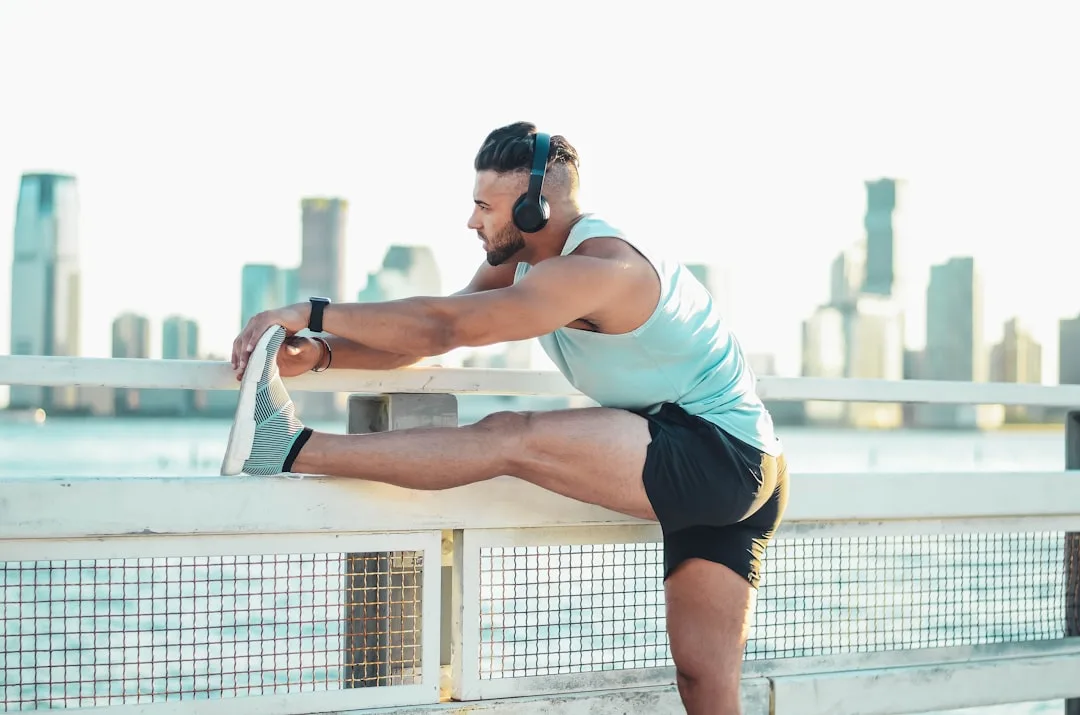
Myofascial release alone doesn’t restore range of motion permanently. Athletes like trail runners and CrossFit competitors now pair 2–3 minutes of rolling with 45-second contract-relax holds—a technique where you stretch a muscle, contract it against resistance for 5 seconds, then deepen the stretch. This neuromuscular pattern teaches the nervous system to trust a greater range.
Hyperice Vyper 2.5, a vibrating roller with heat functionality, has gained adoption among physical therapists and strength coaches because it applies both myofascial release and mild heat—a combination that reduces perceived pain during the stretch and improves tissue compliance. Heat alone dilates blood vessels; vibration plus heat triggers a deeper parasympathetic response.
| Recovery Tool | Best Timing Post-Workout | Primary Benefit |
|---|---|---|
| Soft foam roller | 0–6 hours | Initial soreness relief, mobility restoration |
| Percussion massager (Theragun) | 2–24 hours | Metabolic waste flushing, blood flow |
| Dense roller + heat | 24–72 hours | Deep adhesion release, tissue compliance |
| Lacrosse ball (pinpoint) | 4–48 hours | Trigger point deactivation, localized relief |
The critical mistake: rolling when inflammation is highest
The #1 error athletes make is aggressive rolling immediately after intense training when the muscle is maximally swollen and the nervous system is still in sympathetic overdrive. A gym-goer completes a heavy leg day and immediately hits their quads and hamstrings hard with a dense foam roller for 5 minutes.
What actually happens: the aggressive pressure triggers pain signals and more muscle guarding. The tissue becomes more inflamed, not less. Recovery slows by 12–18 hours. The right approach: walk for 5 minutes, drink water, then use a soft roller for 90 seconds per leg group. Wait 4–6 hours, then introduce heat and deeper pressure if soreness has plateaued.
Contrast therapy amplifies myofascial release signals
Elite endurance athletes and rugby teams now layer myofascial release into contrast therapy protocols—alternating between hot and cold exposure. An athlete performs 2–3 minutes of rolling, then 2–3 minutes in a warm sauna (104–108°F), then 1–2 minutes in cold water (50–59°F), repeating 3–4 cycles. This cycle pattern enhances vasodilation and vasoconstriction, flushing metabolic byproducts faster than either modality alone.
Normatec compression boots work on the same principle. Athletes sit in pneumatic sleeves for 30 minutes post-workout while the device applies sequential compression—mimicking the muscle pump. When combined with 5 minutes of myofascial release beforehand, recovery metrics (soreness, strength recovery) improve by 22–26% in studies published through 2025–2026.
This is why wearable technology fitness shifts from tracking to real-time programming—devices now recommend recovery modality timing based on heart rate variability, muscle oxygen saturation, and training load. Your watch tells you when to roll and when to rest.
Integrated myofascial training cycles reduce injury and extend career longevity
The 2026 standard among serious fitness programs is a 5-day microcycle: 2 days of primary strength or conditioning work, followed by a dedicated recovery day integrating myofascial release, contract-relax stretching, and light movement. This mirrors the approach of Japanese walking transforms fitness with interval training gaining 2986 percent interest—alternating intensity with recovery-focused movement patterns.
Runners, CrossFit athletes, and lifters who commit to this structure report 34% fewer overuse injuries and 19% faster return-to-sport timelines after minor strains. The fascia responds to consistency. Rolling once per month helps zero. Rolling 3–4 times per week creates measurable adaptation—restored range of motion, reduced joint stress, clearer movement patterns.
Myofascial release recovery training is no longer a recovery hack. It’s a core pillar of sustainable fitness programming that separates athletes who train for years from those who hit walls and get injured. The tools exist. The science is clear. Adoption is accelerating because results are measurable, immediate, and compound over time.
Related Topics