Walk through any residential neighborhood in mid-September and you’ll notice a striking shift: garden centers are moving spring annuals to clearance while autumn container displays command prime shelf space. This isn’t nostalgic trend-chasing. Autumn container gardens solve a real problem that seasonal replanting creates—wasted labor, material expense, and the awkward reality that most homeowners stop tending gardens entirely once summer fades. Smart gardeners now design containers in August with the understanding they’ll perform from September straight through November frost, eliminating the September panic-refresh cycle altogether.
The Three-Layer Autumn Planting Strategy
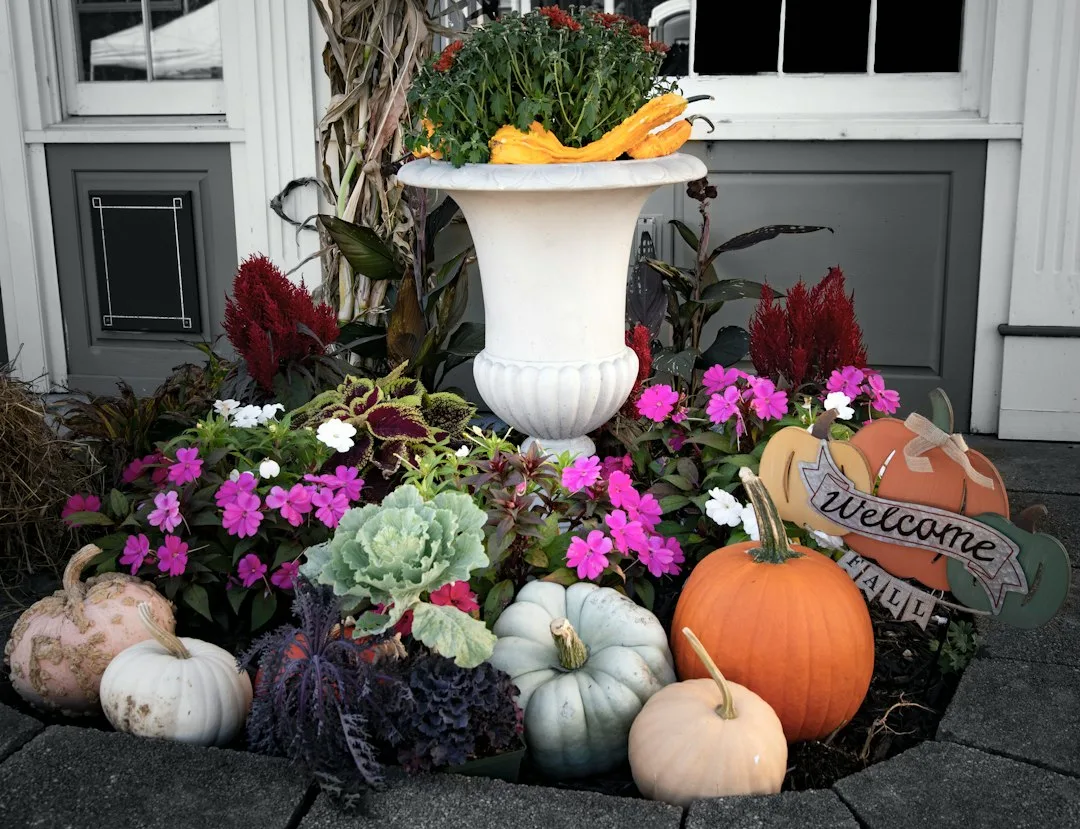
High-performing autumn containers follow a structural formula proven across USDA zones 4 through 9: a vertical focal plant, mid-tier filler material, and trailing edge softeners. The game-changer is selecting species rated for cold hardiness rather than heat tolerance. Think Proven Winners’ Luscious® Burgundy sedum (a true perennial that hardens off in cool weather, deepening color as temps drop) as your primary vertical anchor paired with trailing sedge or diascia that actually prefer autumn moisture to summer heat.
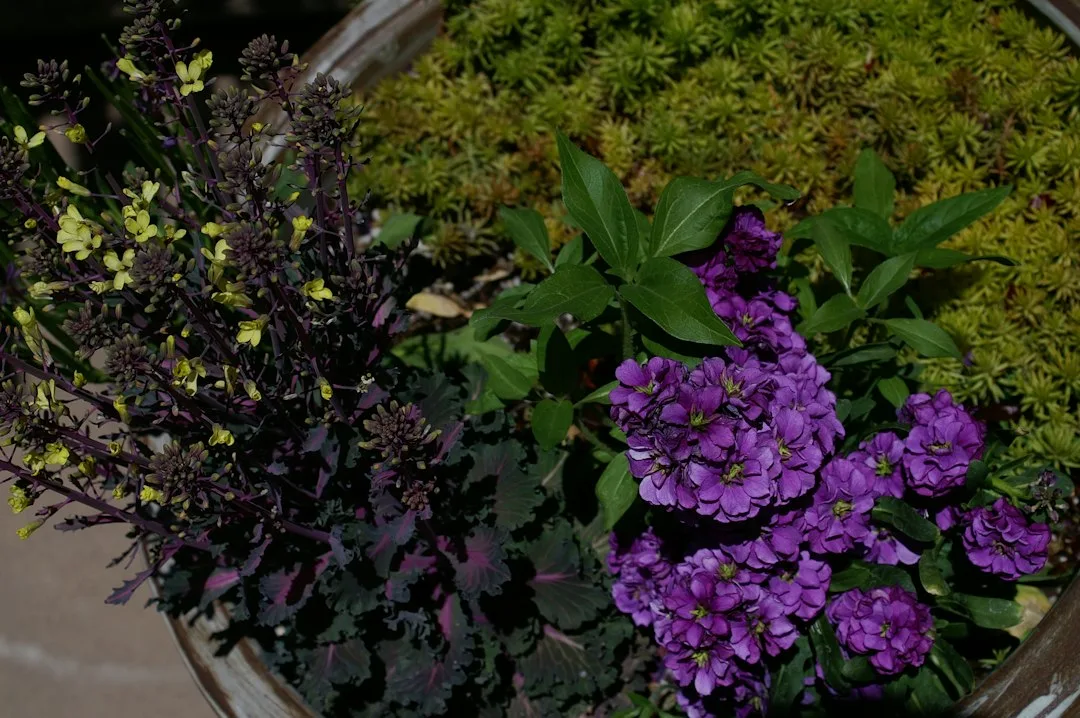
The mistake most gardeners make is treating autumn containers like scaled-down summer displays. They’ll grab a standard purple petunias-and-dusty-miller formula and expect it to hold through October frost. That combination looks wan by mid-October and completely collapses at first freeze. Better: pair a single focal shrub like a compact Ilex verticillata (winterberry) with cool-season annuals like ornamental kale varieties ‘Redbor’ or ‘Lacinato’, which actually taste better and develop richer color after cold exposure.
Quick Tips
- Plant autumn containers by late August so root systems establish before frost arrives
- Use soil with 40% compost to boost water retention as evaporation slows in fall
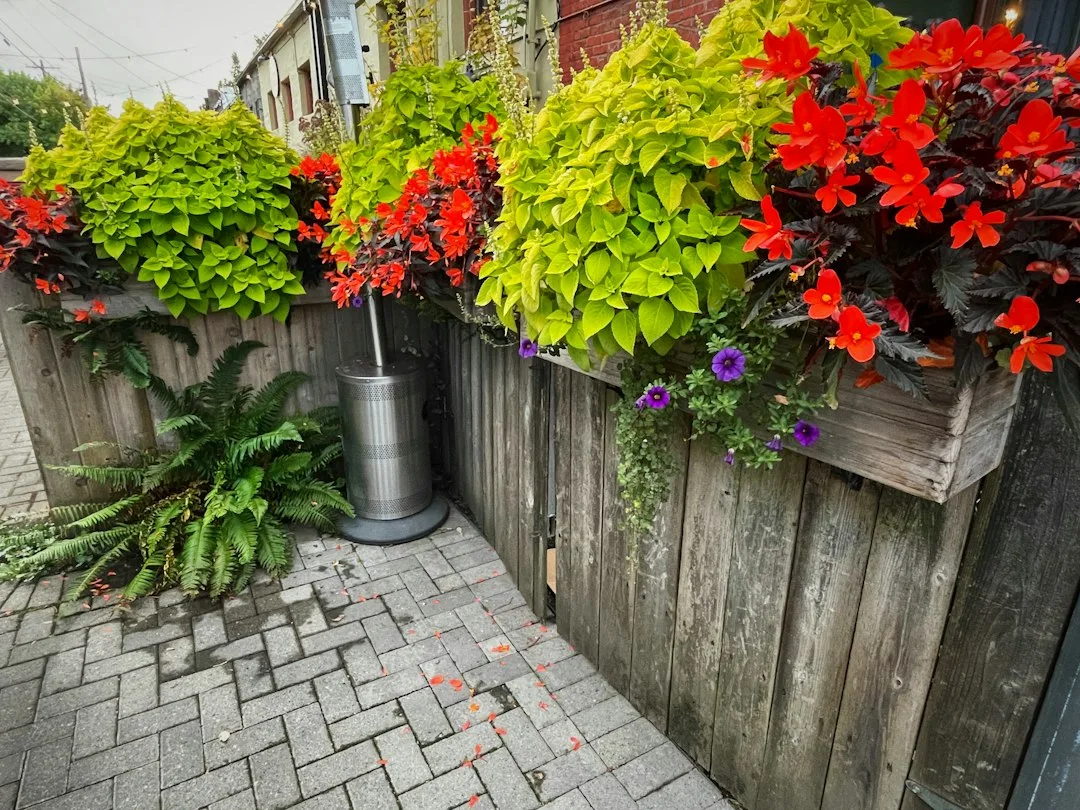
- Select at least one variegated foliage plant (ornamental sweet potato vine, coleus) to catch low-angle light
- Group odd numbers of containers (3, 5, 7) on patios—asymmetry reads more sophisticated than matched pairs
- Deadhead spent sedum flowers only after all color fades; mature seed heads extend visual interest through November
Cold-Hardy Perennials That Outperform Summer Annuals
Autumn’s real advantage isn’t chemistry—it’s plant selection. Ornamental grasses like Panicum virgatum ‘Shenandoah’ shift from green to wine red as nighttime temperatures drop below 50°F, creating color intensity no hybrid petunia can match. Carex oshimensis ‘Evergold’ (a sedge hardy to zone 5) maintains dense green foliage all winter, providing structure when deciduous plants fade. These aren’t novelties; they’re structural plants that harden off with cold, becoming more visually interesting as conditions worsen.
Chrysanthemums—yes, the garden center stalwart—function entirely differently in container systems than in-ground. Potted mums establish shallow root systems that benefit from consistent moisture as temps drop, extending bloom periods from September through November rather than collapsing after four weeks. Select mum varieties by flower form and foliage color rather than generic bloom shade: ‘Hillside Sheffield Pink’ maintains structural branching and fades to a sophisticated mauve, while ‘Mammoth Maroon’ offers dense double forms and deep burgundy foliage that reads as design intentionality rather than seasonal decoration.
| Plant Type | Cold Hardiness | Color Timeline |
|---|---|---|
| Ornamental Kale | Zone 3 | Intensifies after frost |
| Sedum ‘Autumn Joy’ | Zone 3 | Coral to russet through winter |
| Panicum ‘Shenandoah’ | Zone 4 | Green to deep wine red |
| Chrysanthemum mums | Zone 5 | Full color September-November |
| Carex oshimensis | Zone 5 | Evergreen year-round |
Textural Contrast Replaces Bright Color Dominance
Summer container logic emphasizes bold color saturation—hot pinks, electric oranges, vibrant purples. Autumn reverses this entirely. Successful autumn designs layer three to five distinct textures within single containers: feathery grass seed heads, waxy succulent leaves, delicate creeping stems, and deeply lobed foliage create visual depth that flat color cannot achieve. A Proven Winners ‘SuperBells® Pomegranate’ calibrachoa paired with burgundy ornamental sweet potato vine and silver-gray artemisia reads as sophisticated restraint, not limitation.
This textural approach solves a practical problem. As daylight shortens, lower sun angles cast deeper shadows across patios and entries. Matte finishes and delicate branching become visible in ways summer’s full sun never allows. A container with bold texture reads as intentional even under November’s flat grey light, while a container dependent on flower color disappears entirely as blooms fade and remaining plants look thin.
Container Material and Soil Depth Transform Performance
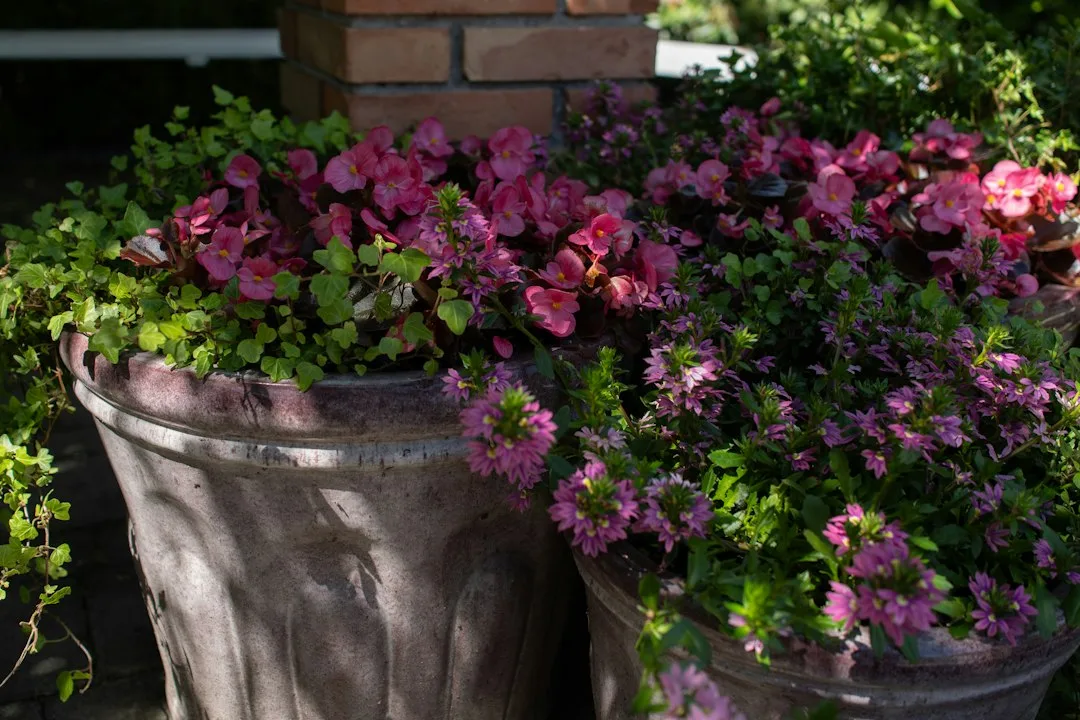
Ceramic and terracotta containers (typical choices for summer displays) absorb and rapidly release soil moisture as autumn temperatures fluctuate between 60°F days and 40°F nights. Smart designers shift to resin or glazed ceramic pots with interior moisture-sealing for autumn plantings. These hold consistent soil hydration through natural autumn rainfall without creating waterlogging that kills tender roots before first frost.
Soil depth matters more in autumn than summer because cooling soil supports root establishment before freezing prevents water uptake entirely. A 16-inch-deep container allows 10-12 inches of rooting depth, sufficient for sedums and ornamental grasses but insufficient for deep-rooted mums and ornamental kale. Upgrade to 18-22 inch containers for mixed combinations. See our guide on 7+ Modern Garden Ideas In A Narrow Courtyard for strategies when space constraints limit container sizing.
Extended Visual Interest Beyond Frost
The psychology of autumn container gardens shifts the entire purpose of seasonal planting. Rather than aiming for peak bloom impact, successful designs prioritize persistent structure and color that deepens or shifts with cooling temperatures. Ornamental grasses maintain architectural form through December. Evergreen sedges provide year-round backbone. Sedum flowers mature to bronze seed heads that catch frost and read as sculptural elements, not dead material.
This approach requires abandoning the tidiness impulse that governs summer gardening. Mature sedum flowers belong in autumn containers. Frost-blackened foliage on ornamental kale adds dimensional texture. Grasses that lodge under snow weight still provide winter architectural interest when other plantings have collapsed. The shift from spring-to-fall planting cycles means autumn containers often remain intact through December, eliminating the November cleanup panic and extending the active gardening season by two months.
Autumn container gardening gains traction because it acknowledges how people actually garden: in compressed seasonal windows with uneven attention. A well-designed autumn container tolerates neglect through October and November, develops richer color as conditions cool, and extends visual interest far beyond what traditional seasonal replanting achieves. That practical resilience, paired with increasing sophistication around foliage and texture, explains why garden centers now stock autumn displays with the same prominence they once reserved for spring annuals. For advanced multi-container strategies, explore 13+ Cool Vertical Wall Gardening Design Ideas to maximize small space impact.