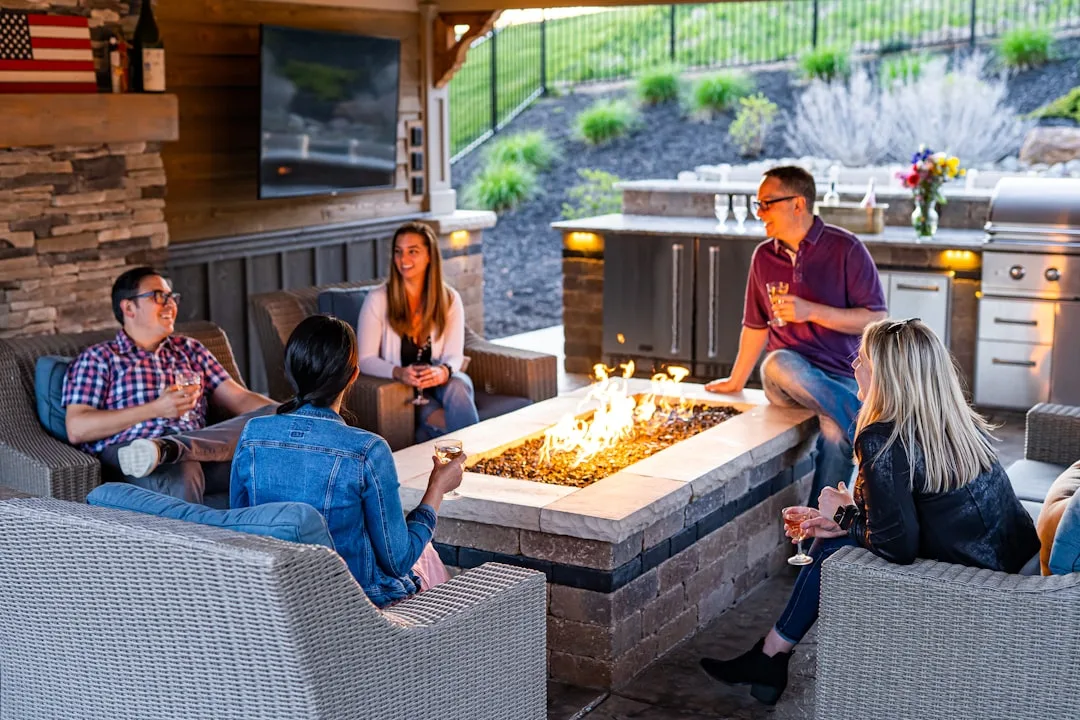
A family steps onto their patio at 2 p.m. on a 95-degree June afternoon. Without turning on the backyard cooler, they activate a fine mist overhead. Within seconds, the ambient temperature drops 12 degrees. They sit under a pergola that now feels like an oasis, not an oven. This is not science fiction—it’s the 2026 patio standard. Outdoor misting systems have moved from luxury resort amenities to essential residential cooling infrastructure, driven by rising heat waves, energy costs, and the simple fact that Americans now spend more time entertaining outdoors than indoors. Unlike traditional air conditioning, which can cost $150–$300 monthly during summer, outdoor misting systems operate on evaporative cooling physics and cost under $40 per month to run.
Why Outdoor Misting Systems Exploded in 2026
The average U.S. summer temperature has risen 1.8 degrees since 2010. Meanwhile, energy grid strain means homeowners want cooling options that don’t spike power bills. Outdoor misting systems solve both problems by using evaporative cooling—water atomized into fine droplets—which requires only a pump, a hose, and a control timer. High Desert Cooling reports that residential misting system installations grew 340% year-over-year in the Southwest, but adoption is now spreading to humid regions where people are discovering that even partial cooling relief matters.
Installation and Cost Considerations
A basic outdoor misting system costs between $300 and $800 for a DIY setup, while professional installations range from $1,500 to $5,000 depending on coverage area and system complexity. The most common configuration uses a high-pressure pump connected to copper or stainless steel tubing that runs along pergolas, patios, or deck railings. Misting nozzles are spaced 12 to 18 inches apart and spray water in a 360-degree pattern when activated.
Installation requires minimal plumbing knowledge if you’re connecting to an existing outdoor faucet. However, professional installers often recommend running lines through walls or under decking for a cleaner aesthetic. Maintenance is straightforward: winterization involves draining lines in freezing climates, and nozzles should be cleaned seasonally to prevent mineral buildup from hard water. Many homeowners pair misting systems with smart timers so the system runs during peak heat hours—typically 11 a.m. to 4 p.m.—without manual intervention.
Climate and Humidity: Where Misting Systems Work Best
Contrary to initial assumptions, outdoor misting systems perform well beyond arid regions. In dry climates like Arizona and Nevada, misting can lower ambient temperature by 15 to 20 degrees Fahrenheit. In more humid areas, the cooling effect is less dramatic—typically 5 to 10 degrees—but the psychological benefit of feeling moisture and airflow remains significant. Coastal regions and the Southeast have reported growing demand because even modest temperature reduction makes the difference between an enjoyable evening and one spent indoors.
The key variable is evaporation rate: systems work most efficiently when humidity is below 60 percent, though marketing claims sometimes overstate performance in tropical climates. Humidity above 80 percent significantly reduces cooling effectiveness, which has led manufacturers to develop hybrid systems that combine misting with fans to push moisture and air circulation. Understanding your local humidity profile helps set realistic expectations and prevents buyer disappointment in markets where misting is promoted as a cure-all.
Health and Safety: What Homeowners Should Know
Water quality matters more than most users realize. Hard water or mineral-rich well water can leave white residue on furniture and plants, requiring regular cleaning. Filtered systems that address mineral content cost more upfront but prevent costly damage to outdoor fabrics and finishes. Some homeowners report relief from pollen and dust irritation because misting settles airborne particles, though this benefit is anecdotal rather than scientifically proven.
Safety concerns are minimal if systems are properly installed and maintained. The main risk is electrical hazards if wiring runs near water sources; certified electricians should handle any timer or valve connections. Misting systems are safe around children and pets, though young children may slip on wet surfaces so supervision is recommended during operation. Mosquito concerns are often raised, but standing water only develops if drainage is poor—flowing mist does not create breeding grounds for insects.