Walk into any suburban neighborhood this August, and you’ll notice one shift taking over patios everywhere: privacy screens replacing open-air setups. Real estate agents in Austin, Denver, and Charlotte report that homes featuring privacy-defined outdoor zones now command an average 3 to 5 percent premium. Patio privacy screens have become the fastest-growing category in outdoor design—not because they’re new, but because homeowners finally understand what they solve.
How Privacy Screens Fix the Overlooked Patio Problem
Most patios suffer from one silent killer: visibility from neighboring yards, street-level eyes, and adjacent windows. You install expensive furniture, grow specimen plants, add lighting—but the space never feels truly yours. Privacy screens work because they redefine the visual boundary without consuming the footprint that a 6-foot fence demands.
Trex, the decking giant expanding into privacy solutions, released their modular privacy system in spring 2026. The frames accept composite or metal inserts, meaning you mix opaque sections with lattice cutouts for partial sight lines. One homeowner in Atlanta used the Trex system to create a 16-foot run that cost roughly 40 percent less than a full cedar fence, installed in a weekend, and accommodates future adjustments.
The real advantage: screens layer privacy without imprisoning the space. You control exactly what you hide and what you reveal. A street-facing panel can run full-height while a neighbor-side screen sits lower, creating asymmetrical privacy that maintains light and airflow.
Quick Tips
- Mount screens on posts set 8 to 12 feet apart to avoid sagging and wind stress
- Use composite or metal frames over wood if your climate has high humidity or salt spray
- Leave 2 to 4 inches of ground clearance to prevent moisture trapping and wood rot
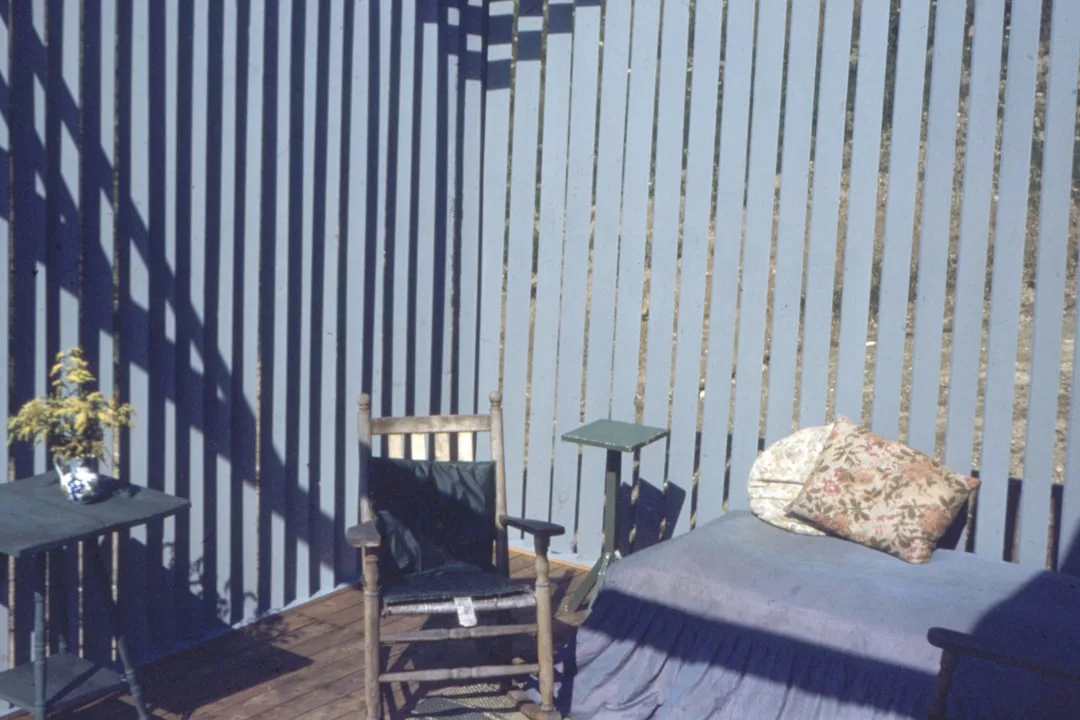
- Orient lattice or slatted patterns to block afternoon sun while allowing cooling cross-breeze
- Paint or stain screens in earthy tones (charcoal, sage, warm gray) rather than white—they recede visually
Five Installation Methods That Work on Every Yard Size
Not every patio can tolerate the same installation. Site conditions, lot lines, and budget each demand different approaches. Screening a tiny balcony requires a method completely different from securing a 30-foot residential boundary.
| Method | Best For | Key Detail |
|---|---|---|
| Post-mounted frames | Permanent installations, large runs | Concrete footings 3 feet deep; handles wind loads |
| Railing-integrated panels | Existing deck or patio edges | Bolts to existing structure; no ground digging |
| Planter-box bases | Rentals, balconies, rental properties | Heavy planters ground the frame; removable anytime |
| Tension cable systems | Minimalist look, tight spaces | Stainless steel cables with interchangeable panels; modern aesthetic |
| Bamboo or willow rolls | Quick projects, temporary layouts | Lasts 3 to 5 years; biodegradable but absorbs moisture |
The Material Choice That Separates Smart Buyers from Regretful Ones
This is where the biggest mistake happens. Homeowners see a cedar privacy screen at a local nursery, assume it’s the standard, and install it without understanding the maintenance reality.
Cedar looks beautiful for 18 months. After three seasons of sun, rain, and thermal cycling, it weathers to gray, develops surface cracks, and demands annual sealing or staining. A screen neglected for two years becomes a liability—splintering panels that trap moisture and invite rot.
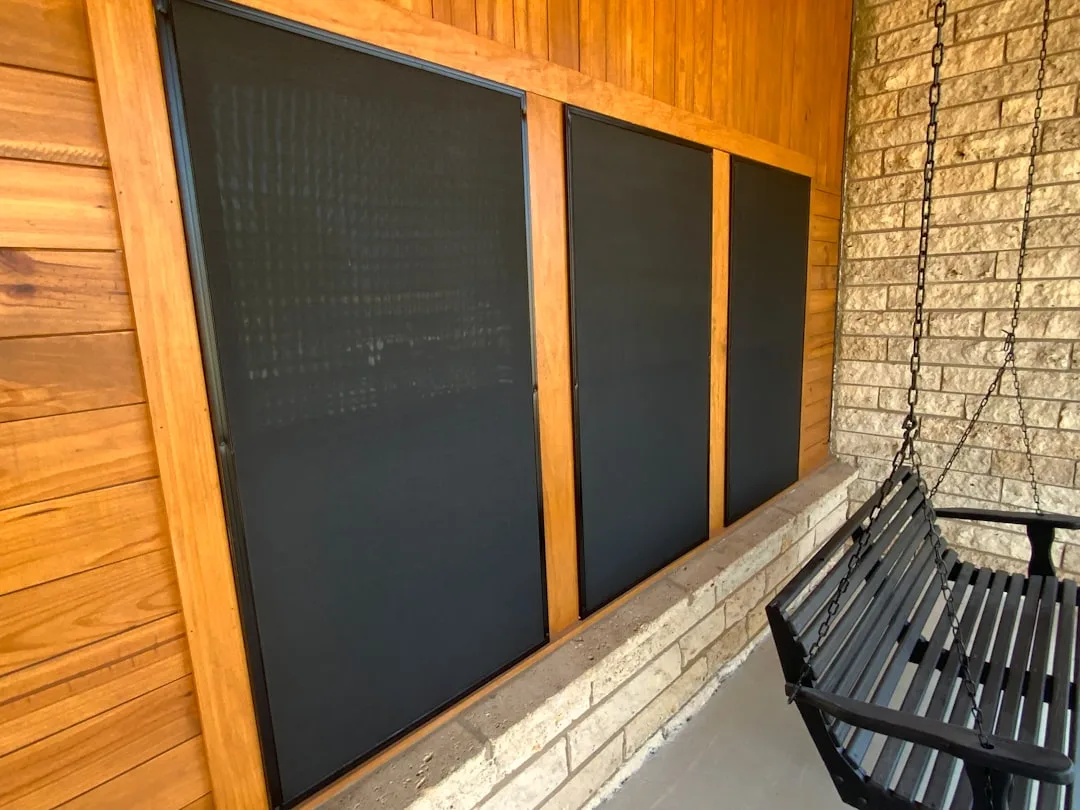
Composite privacy panels (like those from Timbertech or similar manufacturers) eliminate this burden entirely. They don’t warp, splinter, or fade as dramatically as wood. Yes, they cost 20 to 30 percent more upfront—but over 10 years, they eliminate four to six rounds of restaining and repairs. That’s money and weekends recovered.
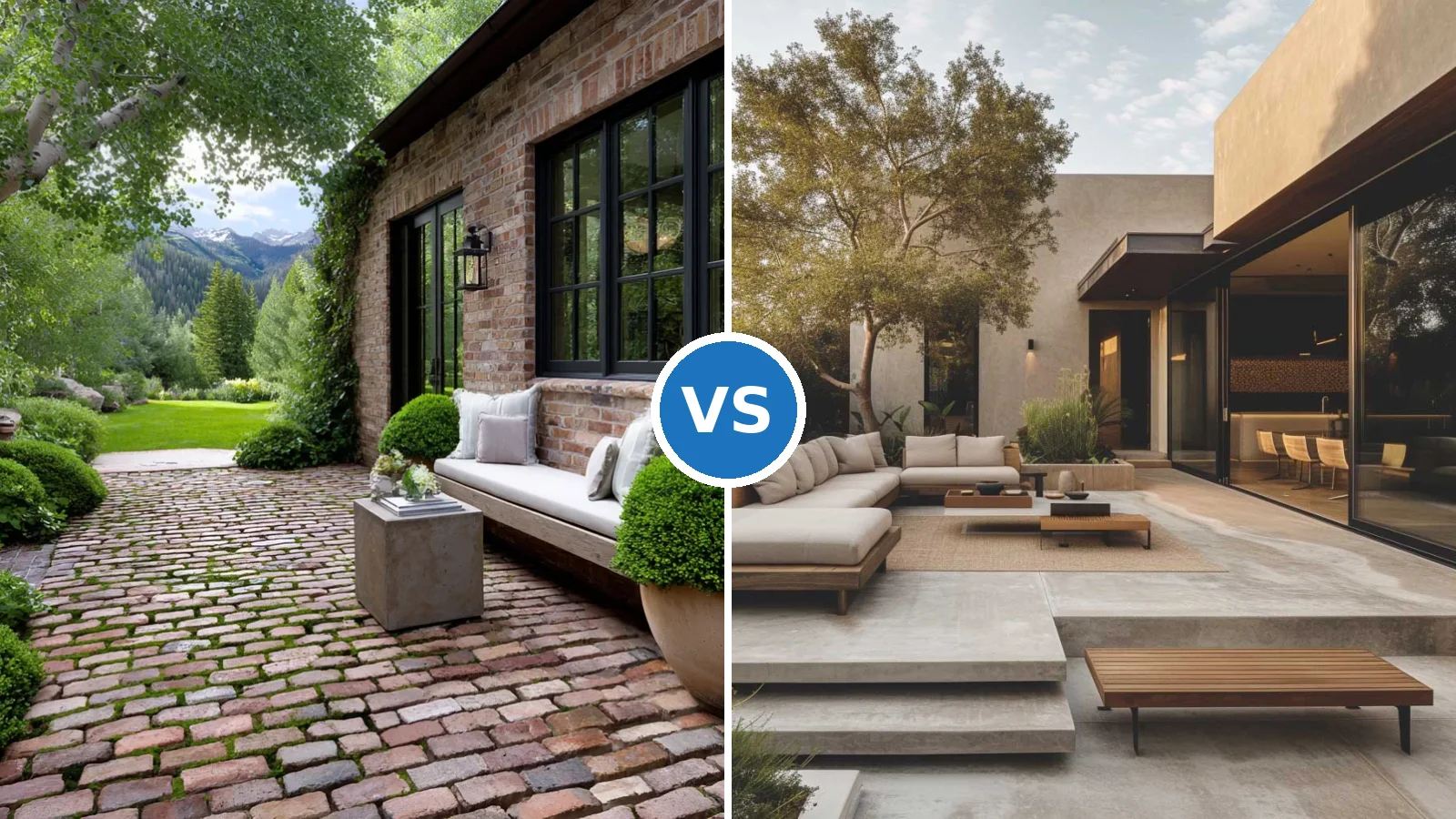
Metal screens in powder-coated aluminum or Cor-Ten steel suit modern homes and coastal properties best. Aluminum resists corrosion near salt water; Cor-Ten develops a protective rust patina and requires no maintenance. Both run thin and light, creating that Concrete House Idea With Patio Style Courtyard aesthetic that defines 2026 architecture.

How Privacy Screens Reshape Patio Functionality
Beyond aesthetics, screens solve practical problems. Wind that whipped through your open patio now channels predictably around installed screens, making seating areas usable on breezy days. Afternoon sun that overheated your dining furniture now filters through lattice, dropping temperatures by 8 to 12 degrees without blocking all light.
Pools and hot tubs benefit massively. Wind-sheltered water stays warmer longer, reducing heating costs. Privacy screens positioned on the downwind side of a pool create a windbreak that extends the usable season by weeks.
Sound travels differently too. A screen doesn’t eliminate street noise, but it disrupts the direct line from traffic to your seating area, lowering perceived volume by 3 to 5 decibels. For urban and suburban properties where noise leaks from adjacent lots, this matters.
Why Real Estate Values Jump When Privacy Gets Right
Appraisers notice specific things. A patio that looks like an extension of the public street stays priced as basic outdoor space. A patio that feels like a defined room—bounded by thoughtful privacy elements, furnished with intention, and visually distinct from neighbors—appraises as a lifestyle amenity worth real money.
A Beautiful Single Story House with Patio Yard featuring privacy-defined zones consistently sees 3 to 5 percent value lift, especially in markets like Phoenix, San Diego, and Miami where outdoor living is non-negotiable year-round.
Buyers walk into such spaces and immediately imagine themselves using them. That emotional connection translates to offer premiums. Builders in Denver report that model homes with privacy screens installed outsell identical floor plans without them by 12 to 18 days faster.
Installation Mistakes That Cost Time and Money
The most common error: installing screens too high or too continuous across the entire perimeter. Homeowners think more coverage equals more privacy, but they sacrifice airflow, light, and the sense of openness that makes outdoor spaces worth spending time in.
A Denver contractor shared a real example. Clients installed a full 6-foot privacy screen around three sides of their patio. The space immediately felt enclosed and dark—more like a holding pen than a living room. They ended up removing the screen on one side, creating an asymmetrical layout that provided privacy where it mattered (from the street and one neighbor) while keeping sight lines open toward their garden and distant views.
Another failure: ignoring drainage and wind load calculations. Screens act as sails in high wind. Posts set in shallow footings or improperly braced fail spectacularly. A $400 screen installation becomes a $2,000+ rebuild when wind topples poorly anchored frames and damages adjacent structures.
Planning Your Privacy Screen: Practical Resources
Three tools to use before you buy or install: one to check whether your project needs a permit, and two manufacturer pages with exact panel dimensions and specifications so you can size your run accurately.
Do I need to call anyone before I dig post holes in my yard?
What do aluminum privacy screen panels actually look like, and what sizes are available?
Is there a slat-style system that integrates with an existing deck railing instead of adding standalone posts?
Related Topics
FAQ
How much does a patio privacy screen cost to install?
Do privacy screens require maintenance?
Can I install a privacy screen on a rental patio?
Will a privacy screen block wind completely?
What's the best material for a coastal property?
How tall should a privacy screen be?
Complete guide
Patio and Yard Ideas That Turn Any Backyard Into a Living Room Outside
Flooring, furniture, shade, pools, kitchens, fire pits, courtyards — all in one place