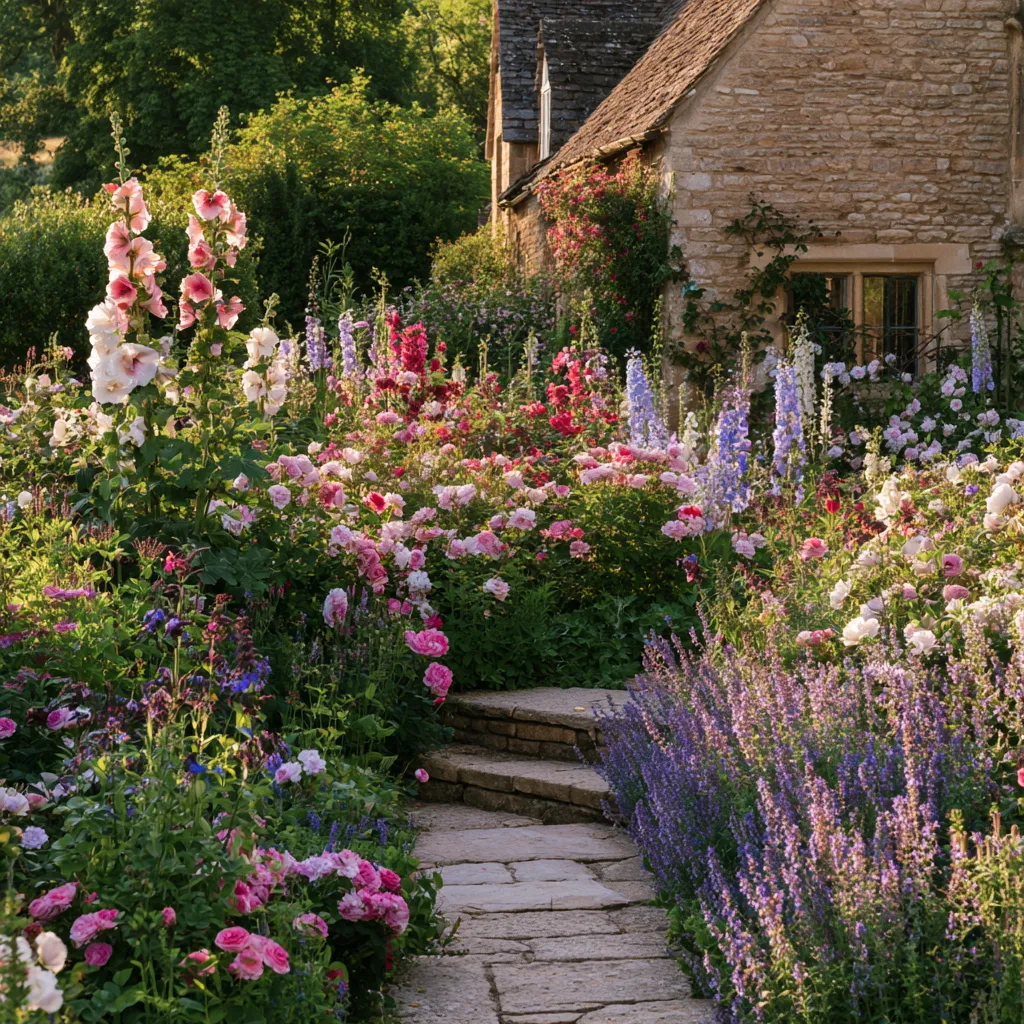
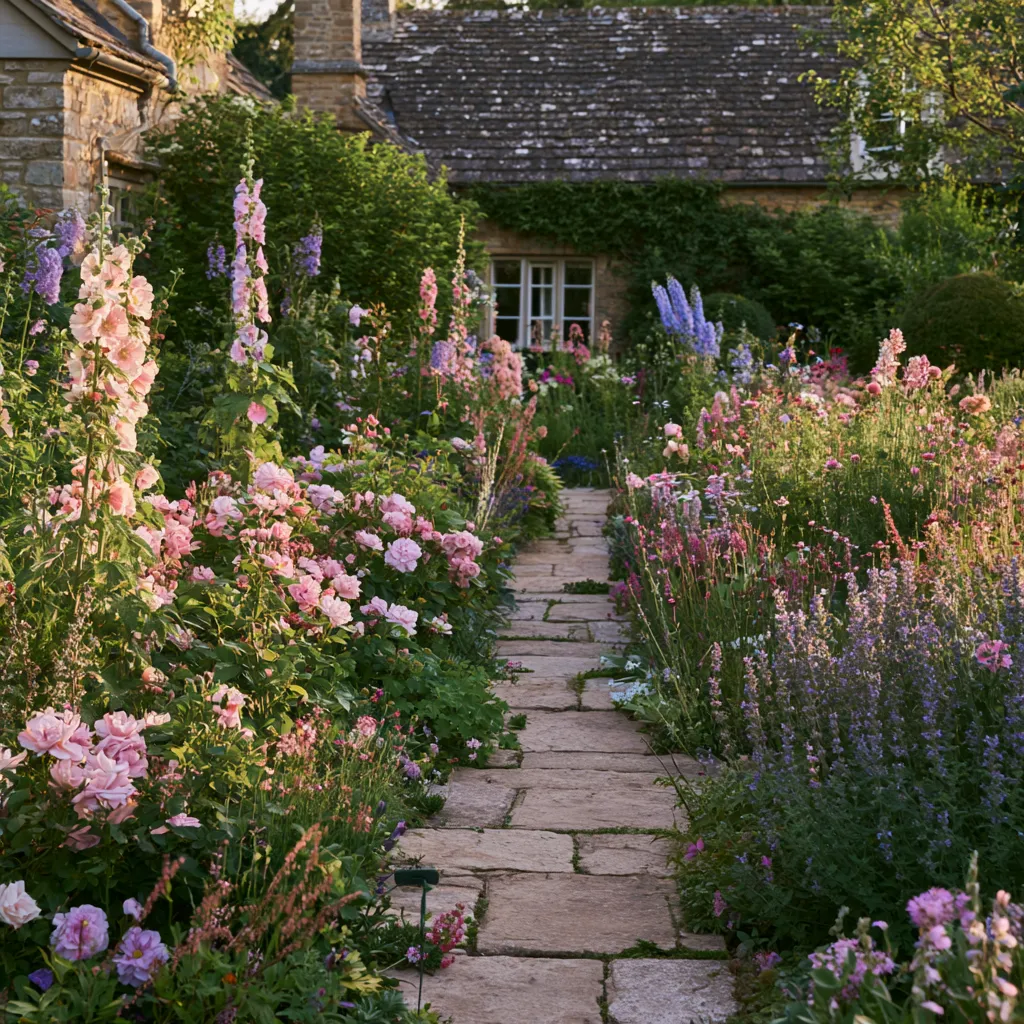
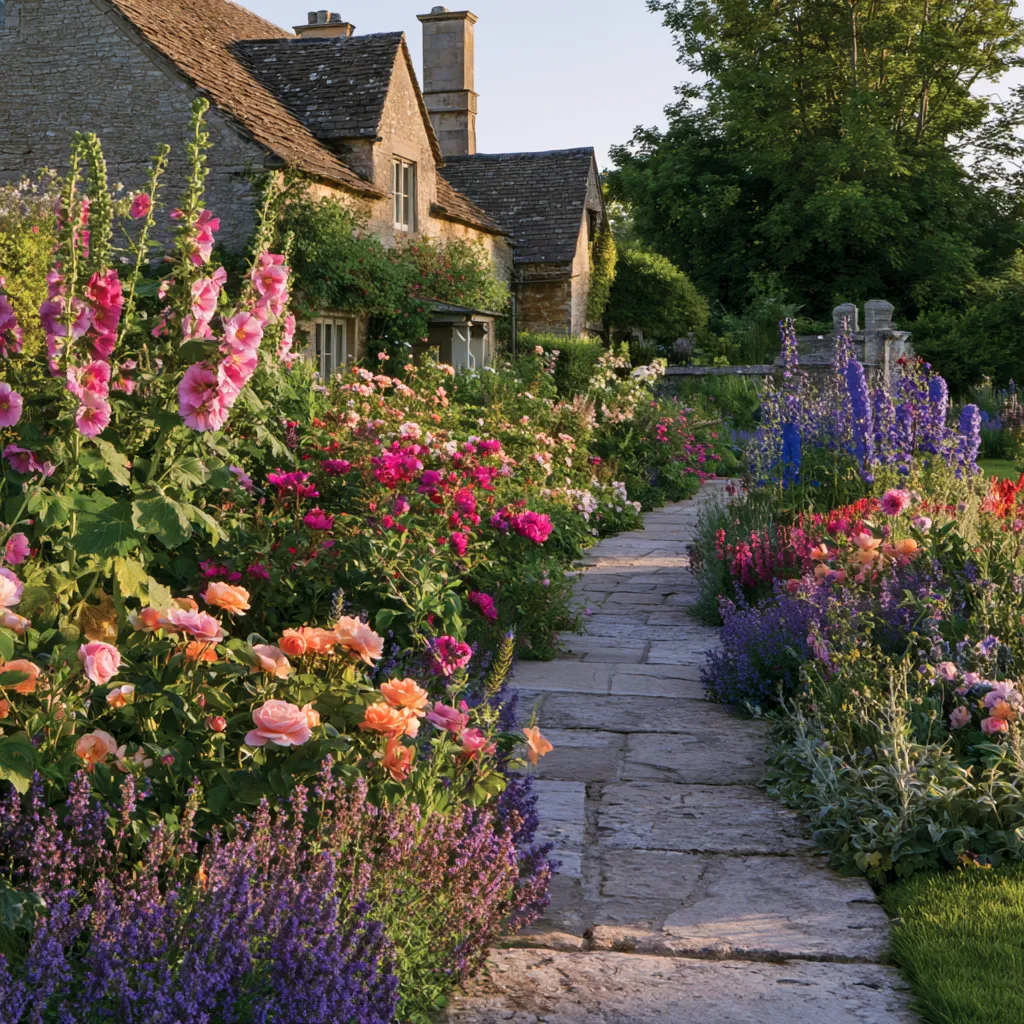
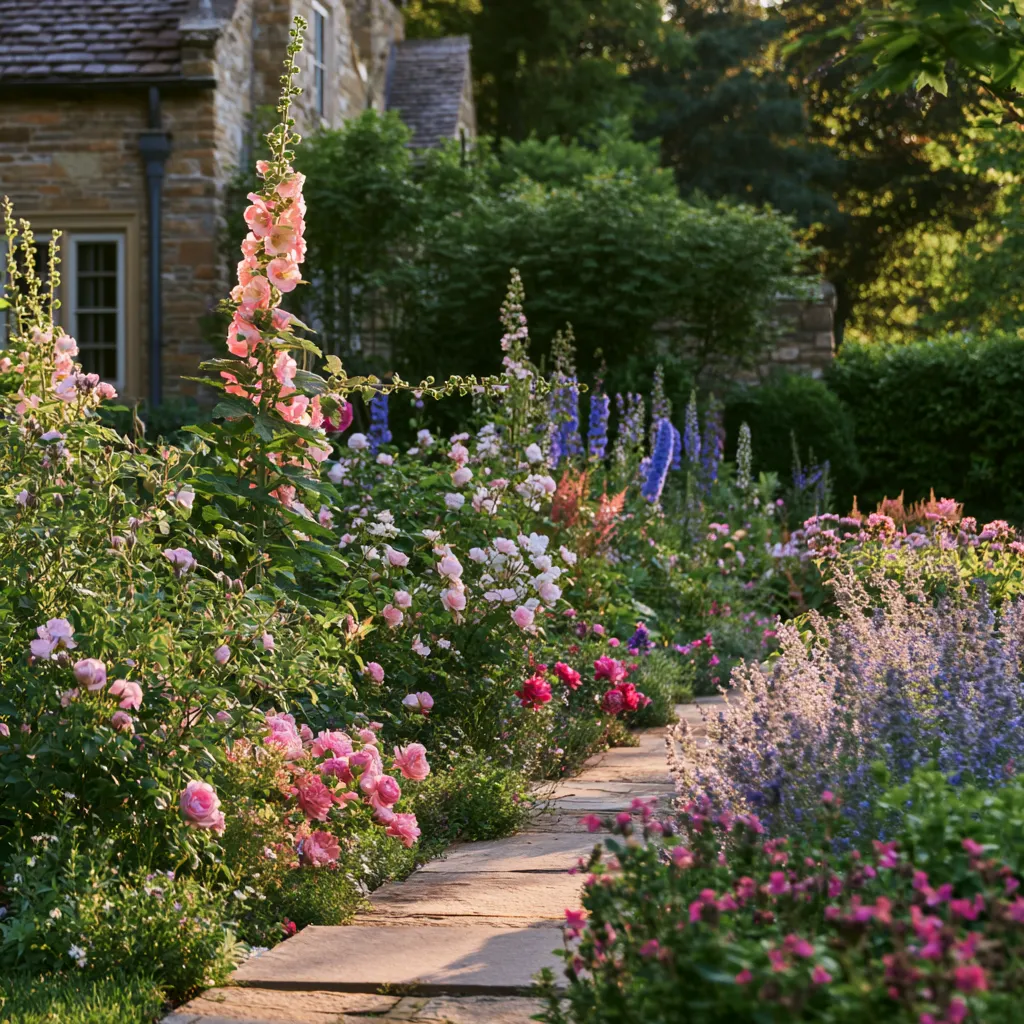
No garden style in the world has been imitated more persistently, misunderstood more completely, or executed less successfully than the English cottage garden. The photographs that inspire it — overflowing borders of hollyhocks and roses, foxgloves leaning over mossy stone paths, sweet peas scrambling up weathered timber arches — suggest a kind of beautiful disorder that arrived by itself and requires nothing to maintain. The reality is almost exactly the opposite. The English cottage garden is the result of sustained, intelligent design: a careful orchestration of plant heights, bloom sequences, colour relationships, and structural anchors that creates the impression of abundance without tipping into chaos.
Understanding this distinction — between the look of a cottage garden and the design logic that produces it — is the foundation of every successful cottage garden design idea and planting plan. The style was not invented by accident. It was shaped over decades by gardeners including Gertrude Jekyll, William Robinson, and Vita Sackville-West, each of whom brought rigorous horticultural knowledge and compositional intelligence to what appeared on the surface to be effortless naturalism. Jekyll alone published over a thousand articles and thirteen books on planting design between 1881 and 1932, and her colour border theories — warm tones at the centre, cool tones at the ends, silver foliage as a transitional buffer — remain the most consistently referenced framework in cottage garden planting plan design to this day.
Global interest in cottage garden design has increased substantially in recent years. Google Trends data shows that searches for “cottage garden” reached a ten-year high in 2023, with a 67% year-on-year increase in the United Kingdom and a 43% increase in the United States. The Royal Horticultural Society’s Chelsea Flower Show reported that cottage and naturalistic planting styles featured in 58% of Show Gardens in 2024 — the highest proportion since records began. This resurgence reflects a broader cultural shift toward gardens as ecological habitats and sensory experiences rather than status displays — values that the English cottage garden tradition has always embodied, even if that was not the language used to describe them at the time.
This guide provides complete English cottage garden design ideas and planting plans for gardens of different sizes, orientations, and soil conditions — with specific plant lists, border sequences, colour palette frameworks, and maintenance approaches that translate the visual ambition of the cottage garden style into practically achievable results.
The Core Design Principles Behind Every English Cottage Garden Planting Plan
Before any plant is chosen or any border mapped, the English cottage garden design operates on a set of spatial and structural principles that determine whether the final result reads as composed abundance or unmanaged neglect. These principles are rarely stated explicitly in the popular press coverage of cottage gardens — which tends to focus on plant lists rather than design logic — but they are present in every successfully resolved cottage garden from Sissinghurst to the most modest suburban border.
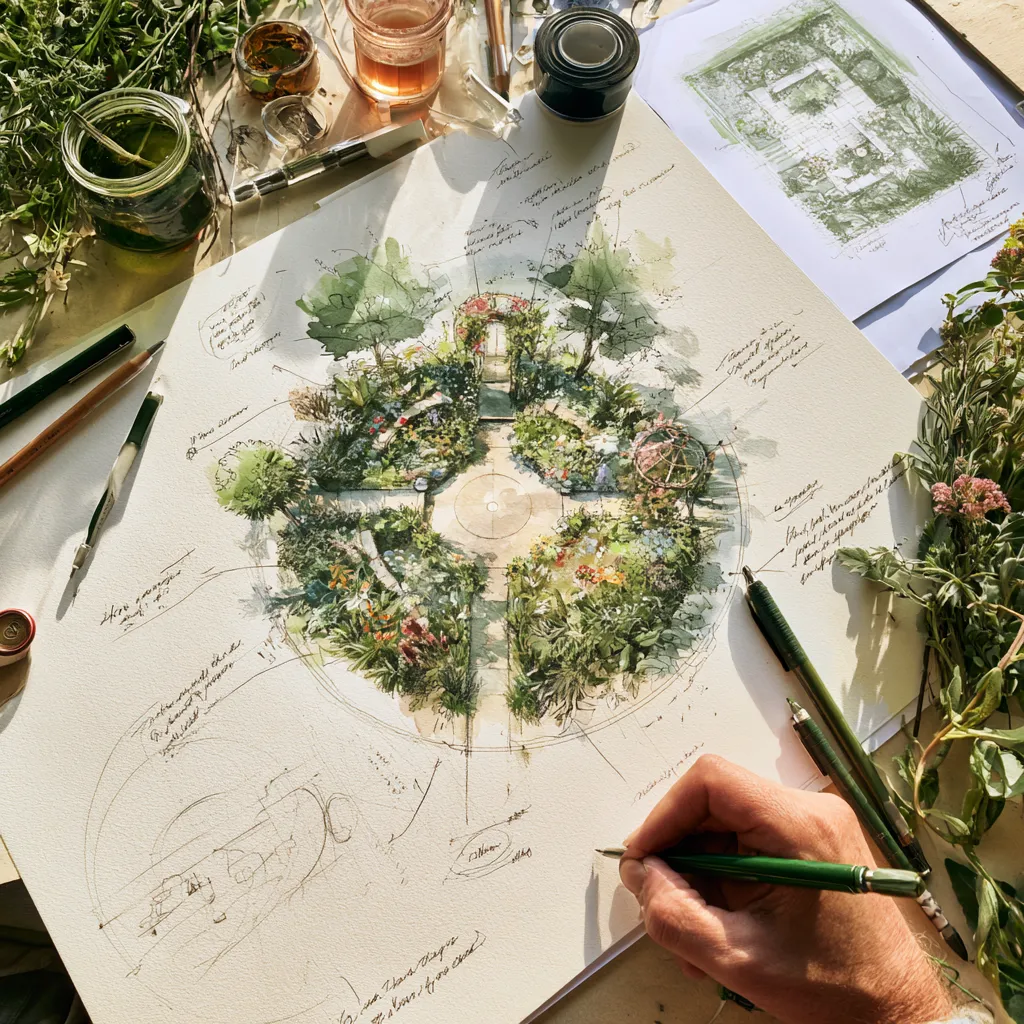
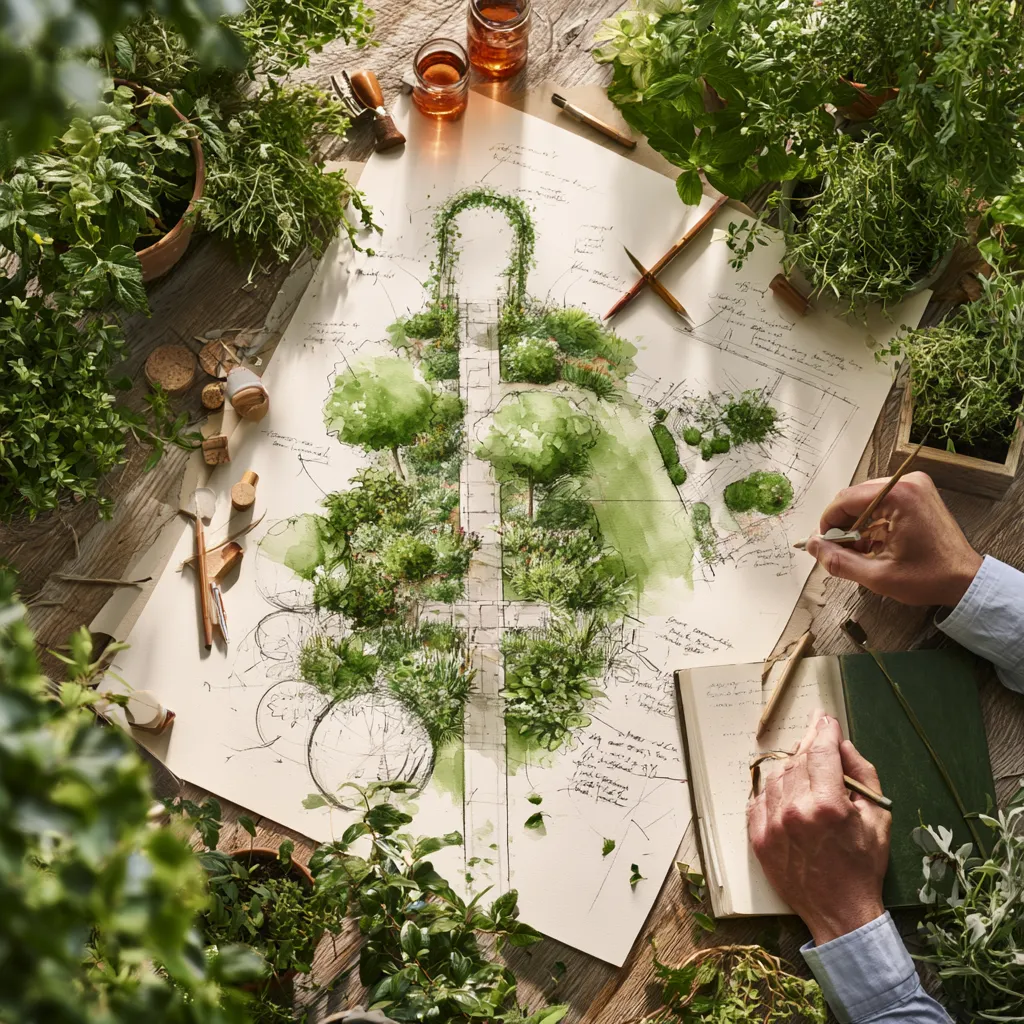
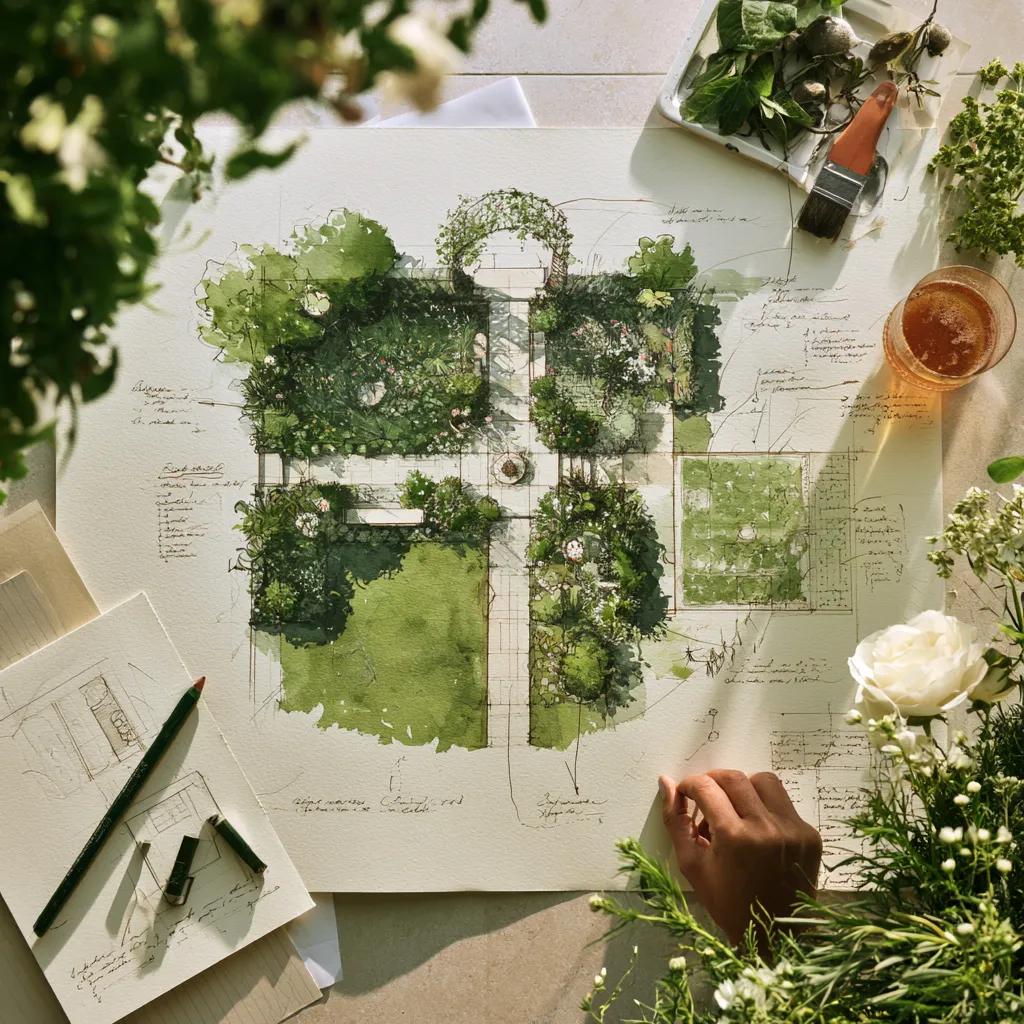
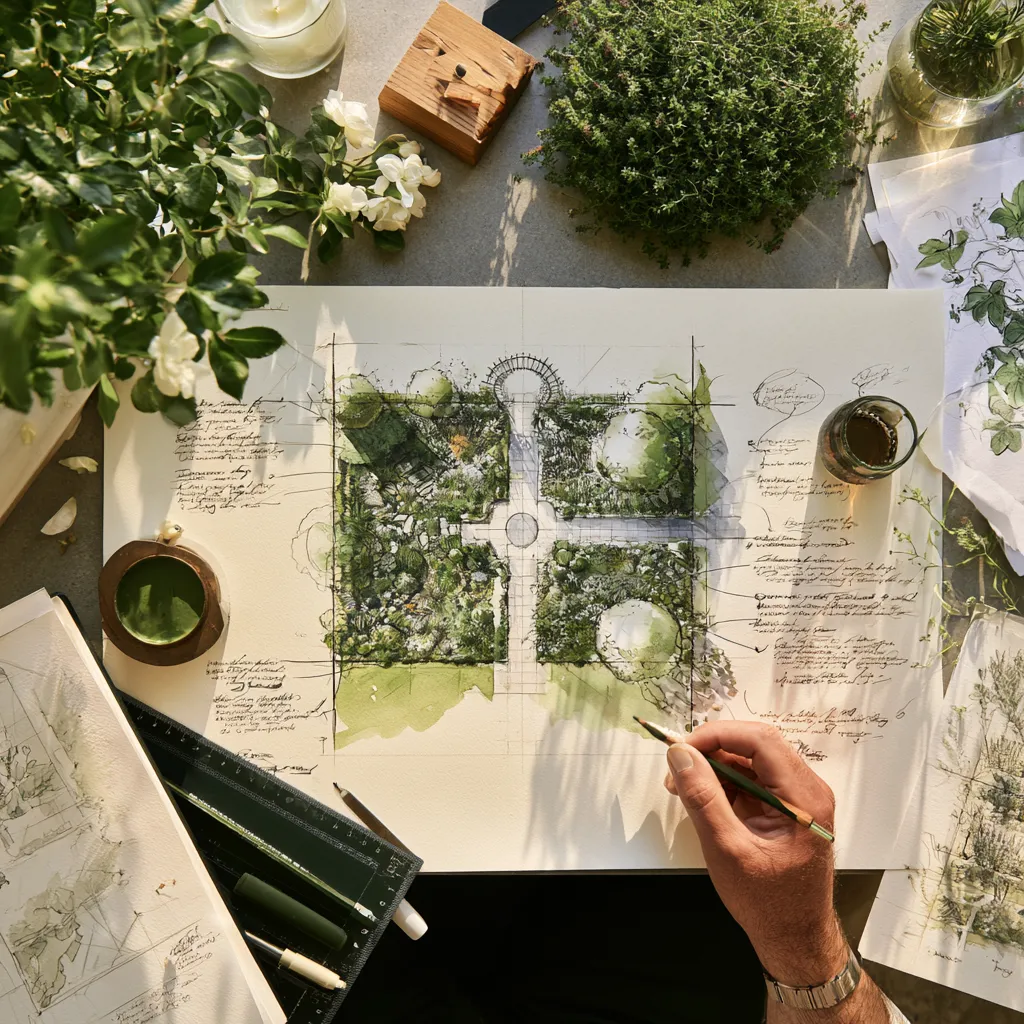
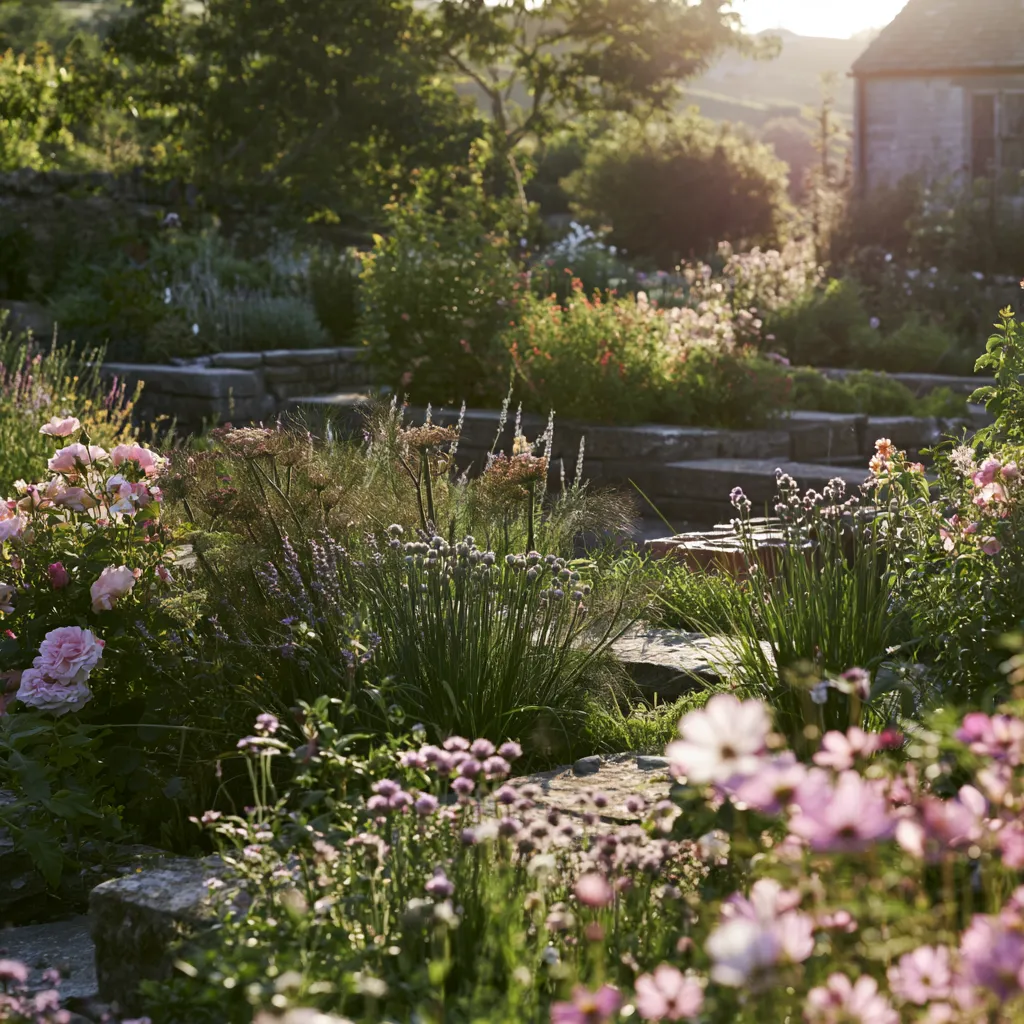
The first principle is the distinction between the formal garden structure and the informal planting within it. Every great cottage garden has a clear underlying geometry — a straight or gently curved central path, defined border edges, clipped hedges or walls that create enclosure, and a sense of purposeful arrival and destination. It is this formal skeleton that allows the planting within it to be as exuberant as it likes: the loose abundance of the planting reads as controlled because the hard structure around it is precise. A cottage garden without structural definition — no clear path, no defined border edges, no enclosing element — reads as neglected rather than romantic. This is the most common failure in attempted cottage garden design, and it is avoidable by resolving the structural layout before a single plant is chosen.
The second principle is layered height. Traditional English cottage garden planting plans operate across three height zones simultaneously: tall background planting at 1.2–2 metres (delphiniums, hollyhocks, thalictrum, Verbena bonariensis), mid-border planting at 0.6–1.2 metres (roses, peonies, achillea, geranium, salvia), and front-edge planting at 0–0.6 metres (alchemilla, dianthus, catmint, viola, lamb’s ears). This layering is not rigid — in cottage garden design, it is more effective to think of height as a general tendency rather than a strict rule, with occasional tall plants brought forward in the border and occasional low ones placed deeper for visual surprise. But the principle of having all three height zones consistently represented throughout the border is what creates the sense of depth and abundance that defines the cottage garden aesthetic.
The third principle is bloom sequence: no more than 60% of the border should be in peak flower at any one time. A cottage garden that peaks entirely in June and July and offers nothing from August to October has failed as a planting plan. Successful cottage garden planting plans distribute flowering across the full growing season from April through October, with a minimum of three distinct flowering waves — spring, midsummer, and late summer — each carried by different species while the others are in foliage or transition. This requires deliberate planning rather than simply planting whatever is available at the garden centre in spring.
English Cottage Garden Design Ideas for Different Garden Sizes
One of the most persistent myths about the English cottage garden is that it requires a large garden to be effective. In practice, cottage garden design ideas scale down more successfully than almost any other garden style. The density and verticality of cottage planting mean that a 3-metre border can contain as much visual information as a 10-metre border in a differently styled garden. The key is adjusting species selection to suit the available space — replacing 2-metre delphiniums with 0.8-metre Salvia nemorosa, substituting climbing roses on a full arch with a wall-trained climbing rose on a single post-and-wire support — rather than attempting to reproduce a large cottage garden at reduced scale.
Small Cottage Garden Design Plan (Under 25 m²)
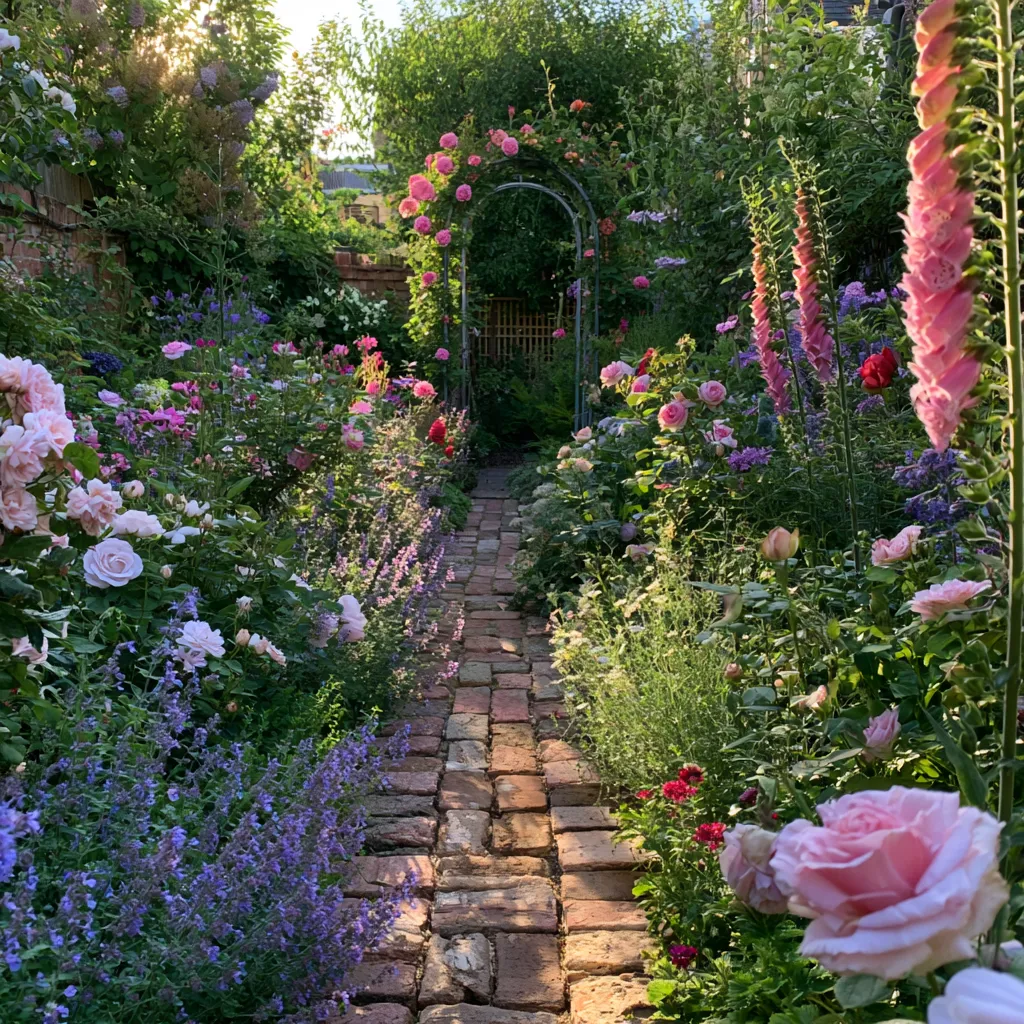
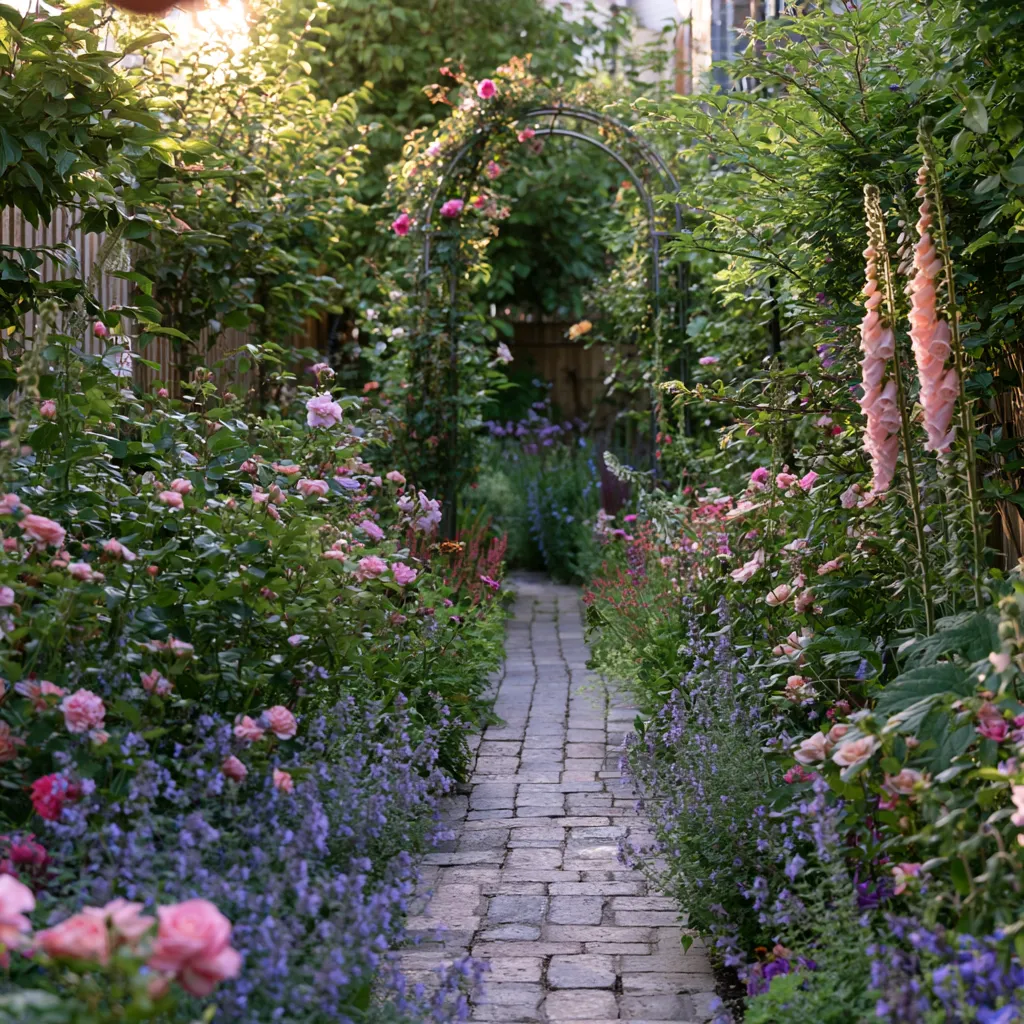
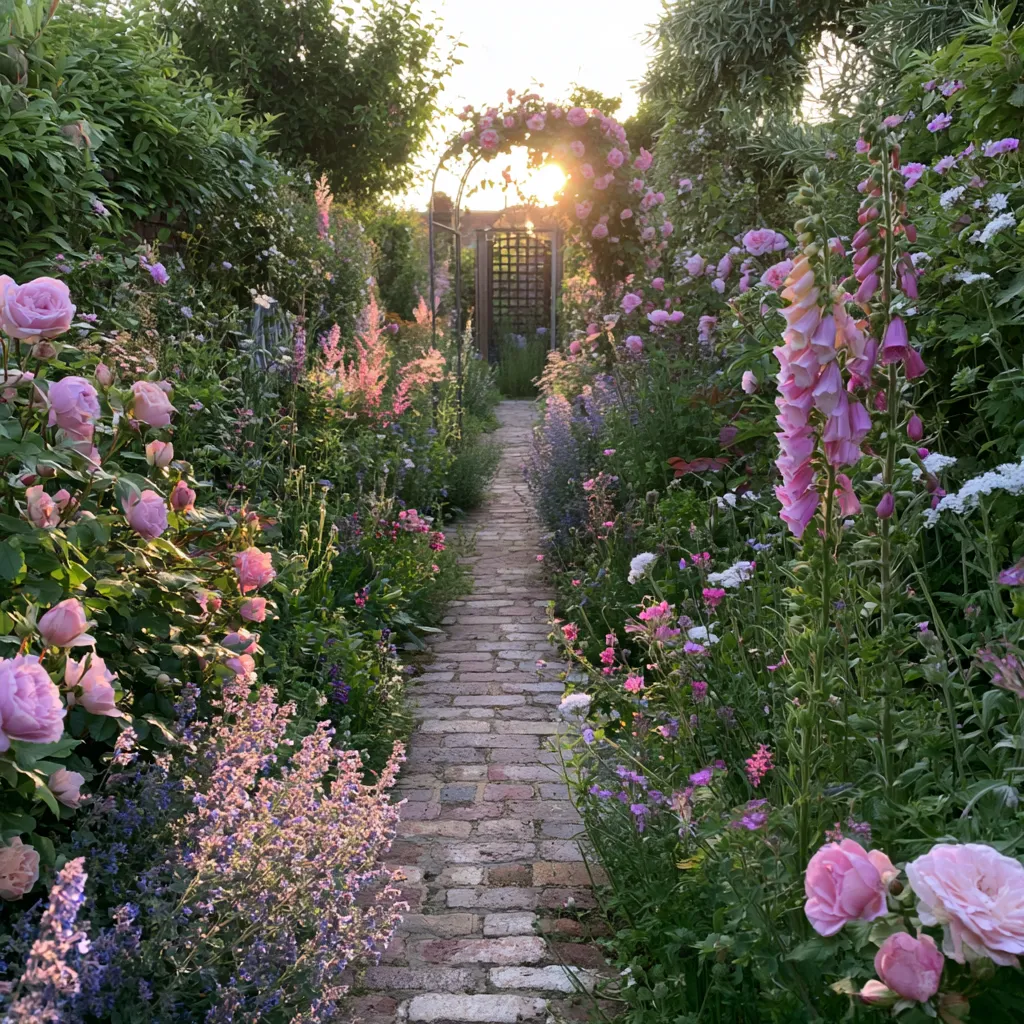
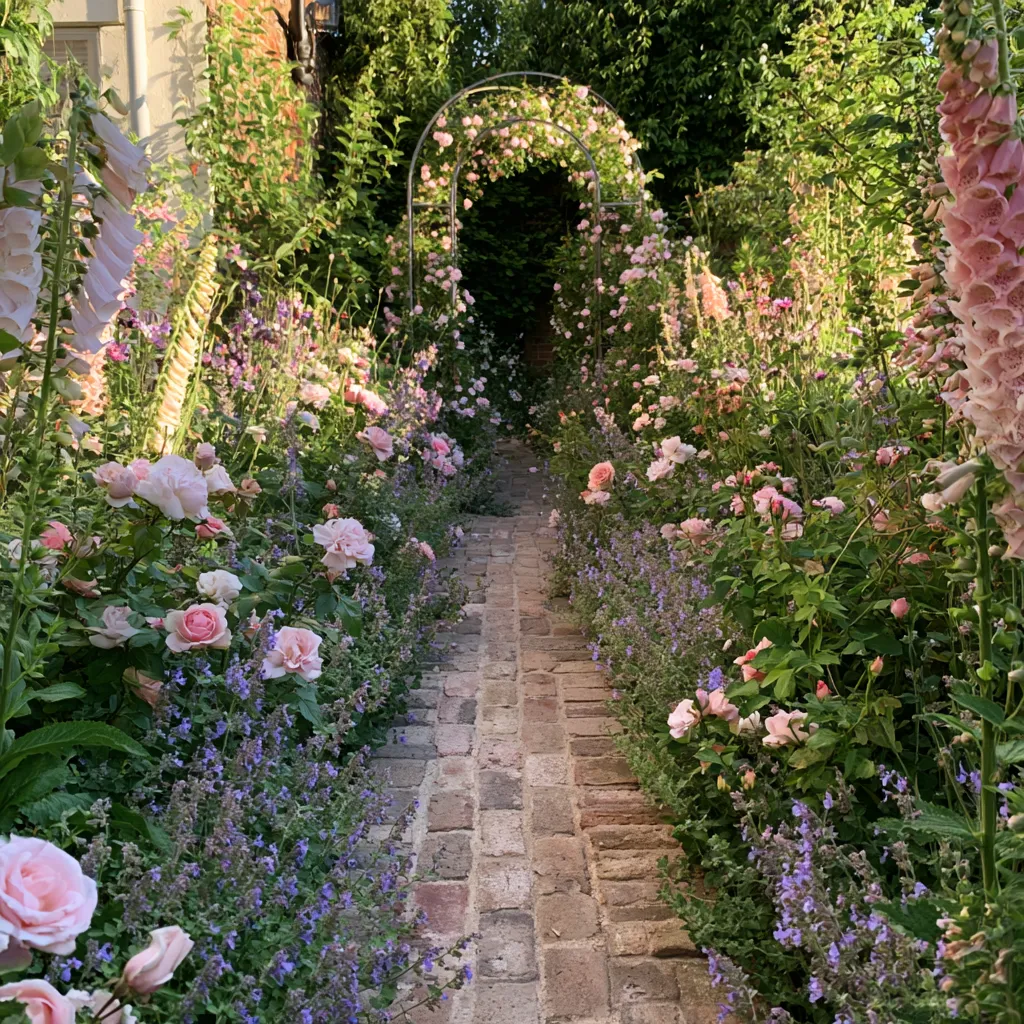
For a small urban or suburban cottage garden of 15–25 square metres, the most effective design approach is a single central path of 0.6–0.8 metres width running the full length of the garden, with two mixed borders occupying the full available width on either side. A simple metal or timber arch at the mid-point or far end of the path, clothed with a climbing rose or clematis, provides the vertical drama that delphiniums and hollyhocks provide in larger gardens without the space they require. The borders themselves should be a minimum of 1 metre deep — preferably 1.5 metres — with the rear planted with climbing or tall self-supporting species against the boundary fence or wall, and the front edge softened with sprawling groundcover species that allow plants to overflow onto the path surface.
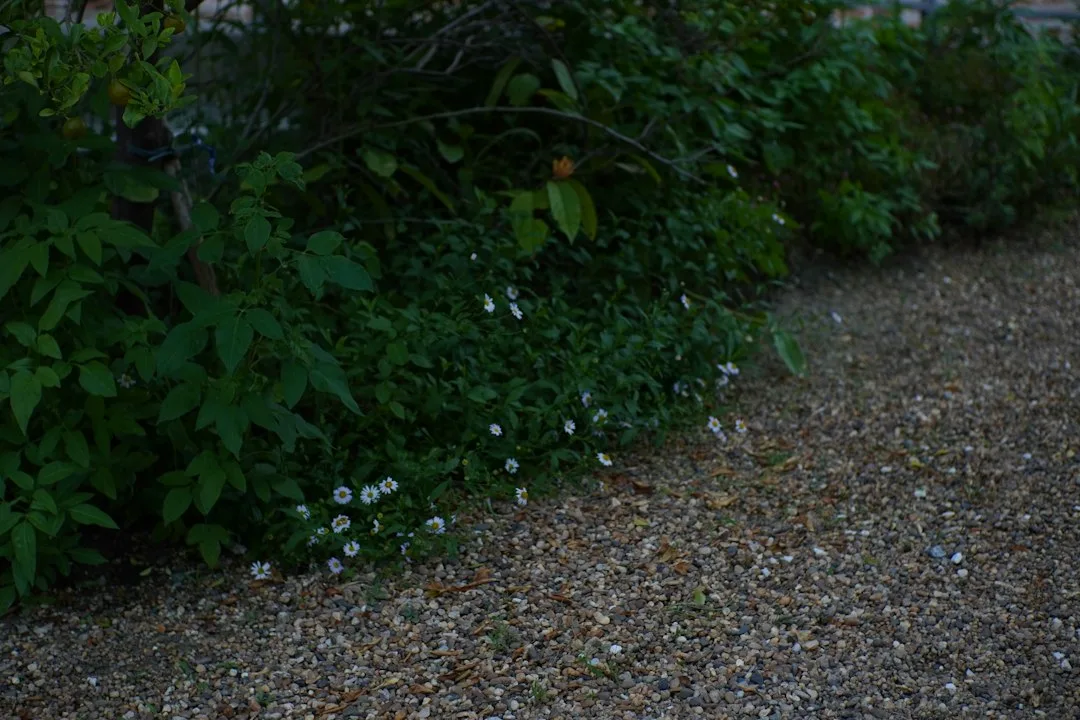
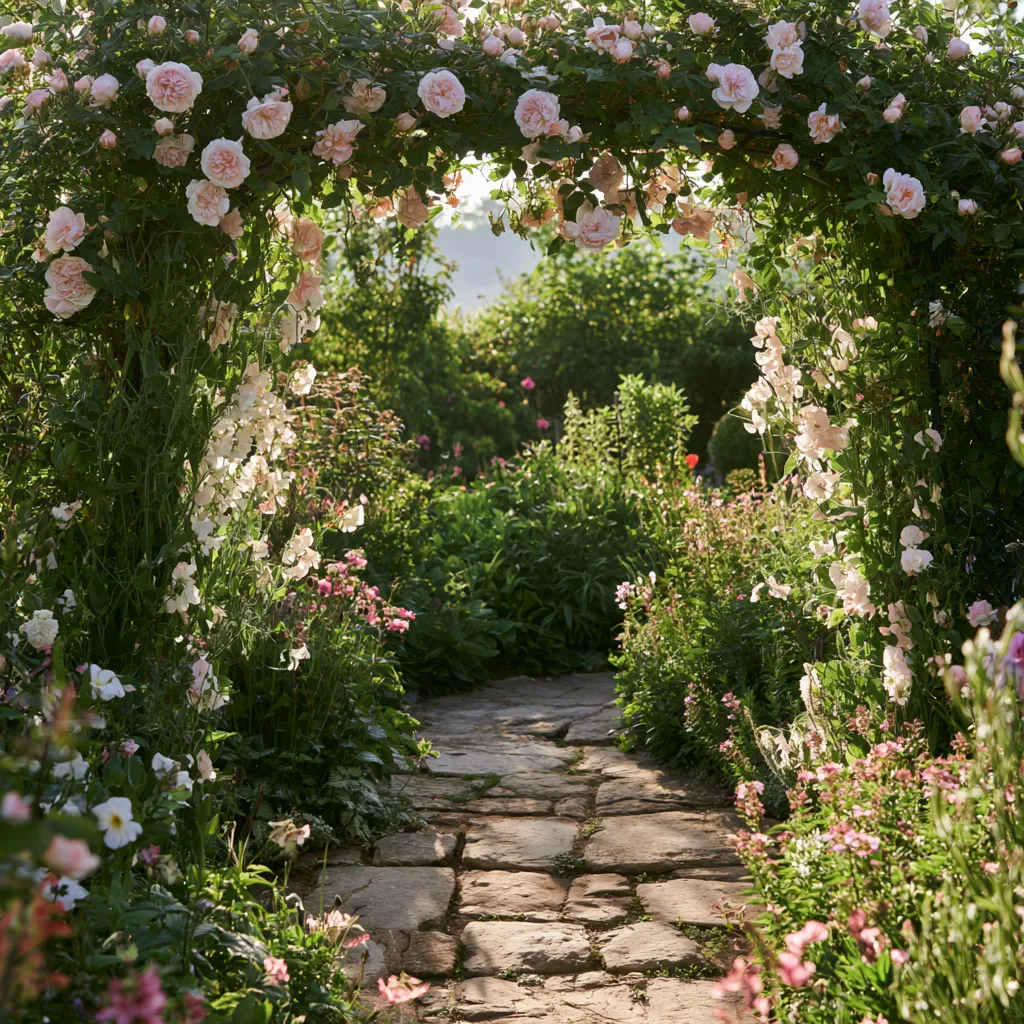
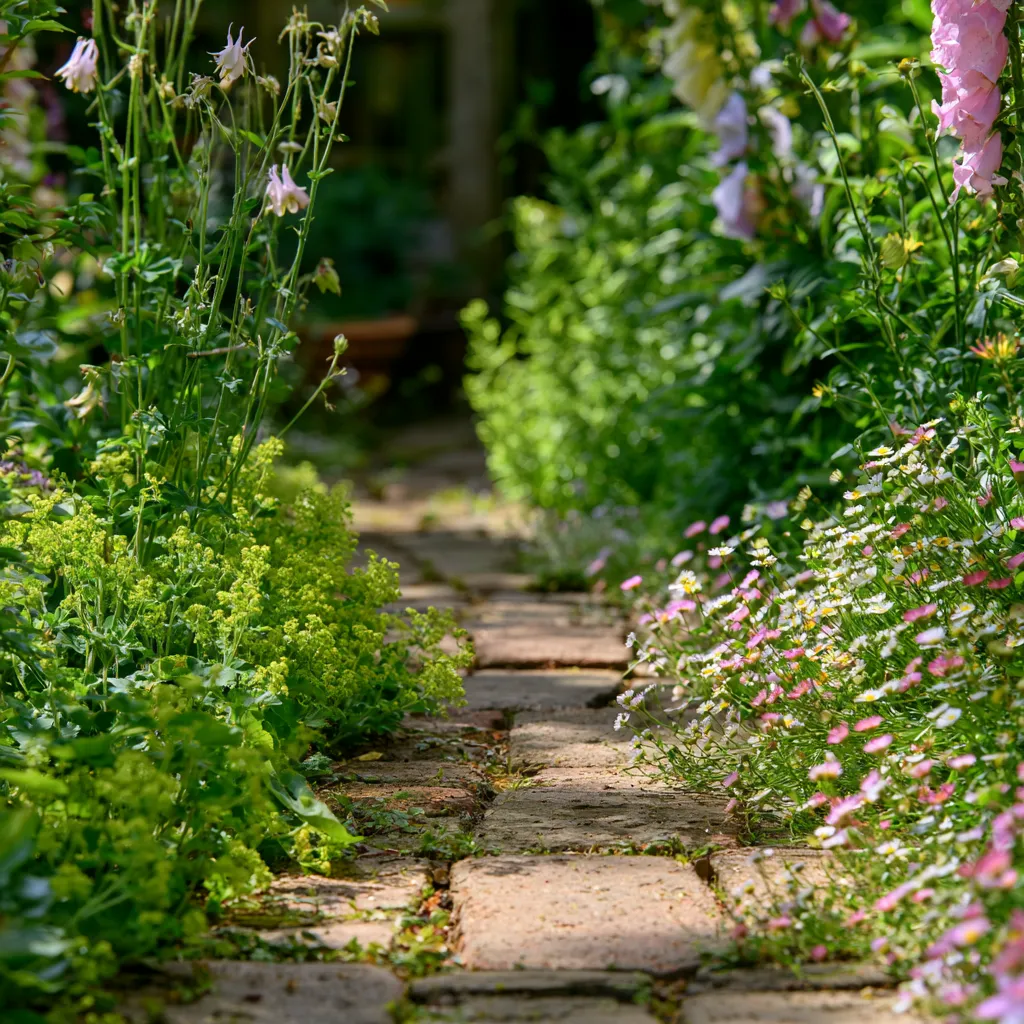
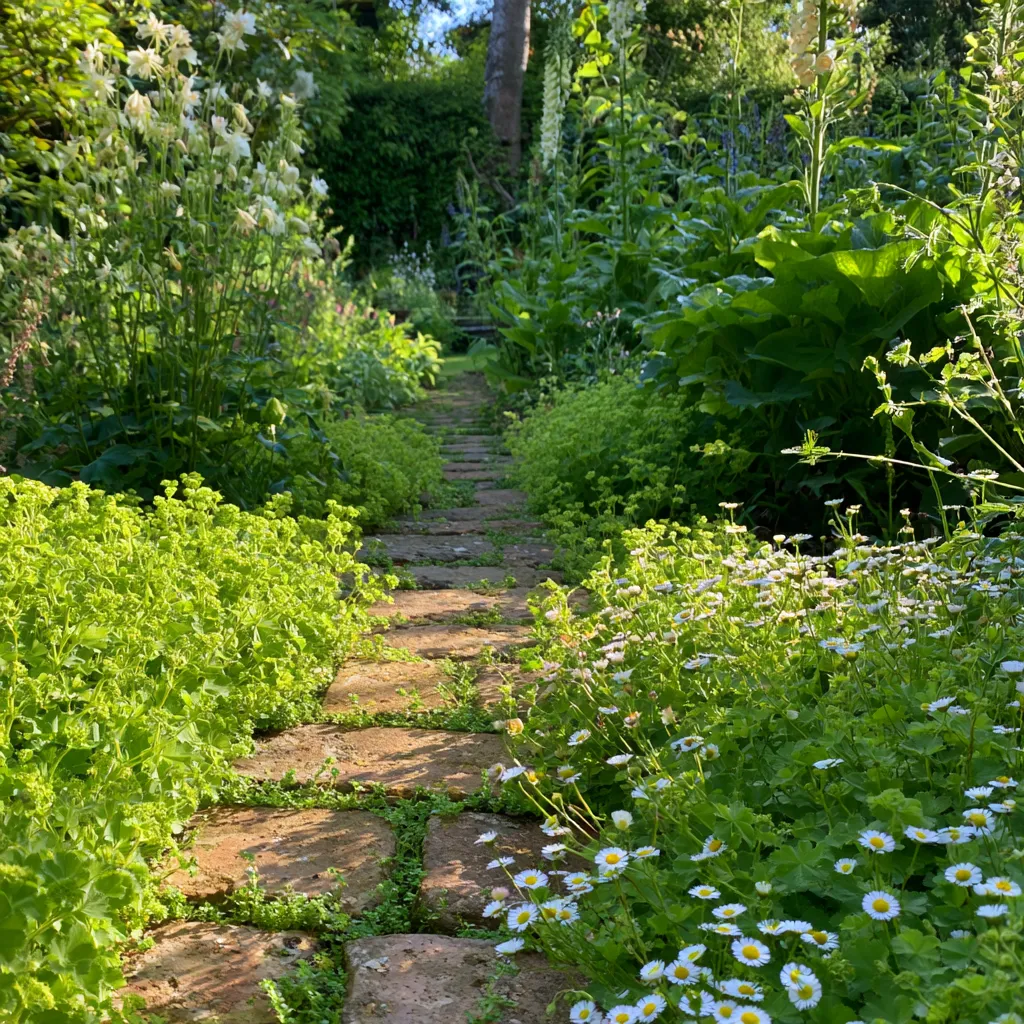
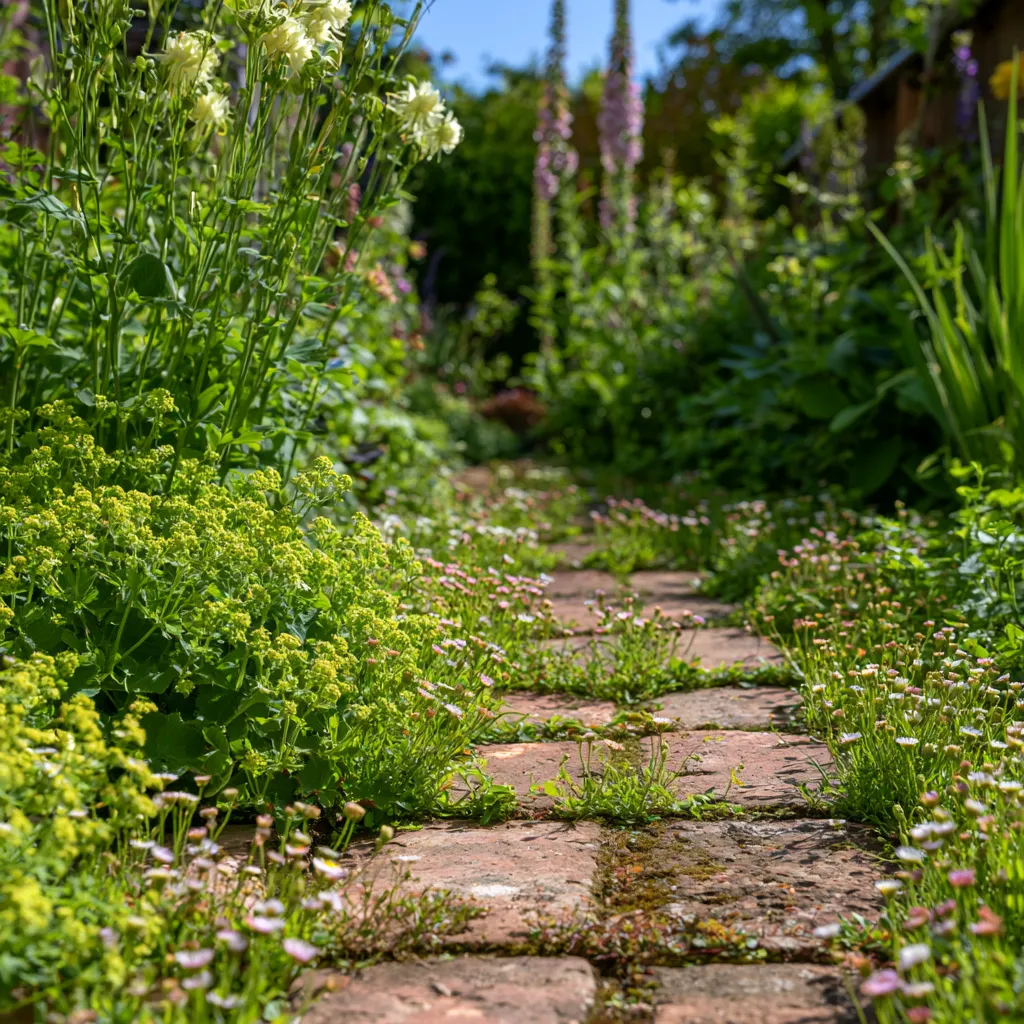
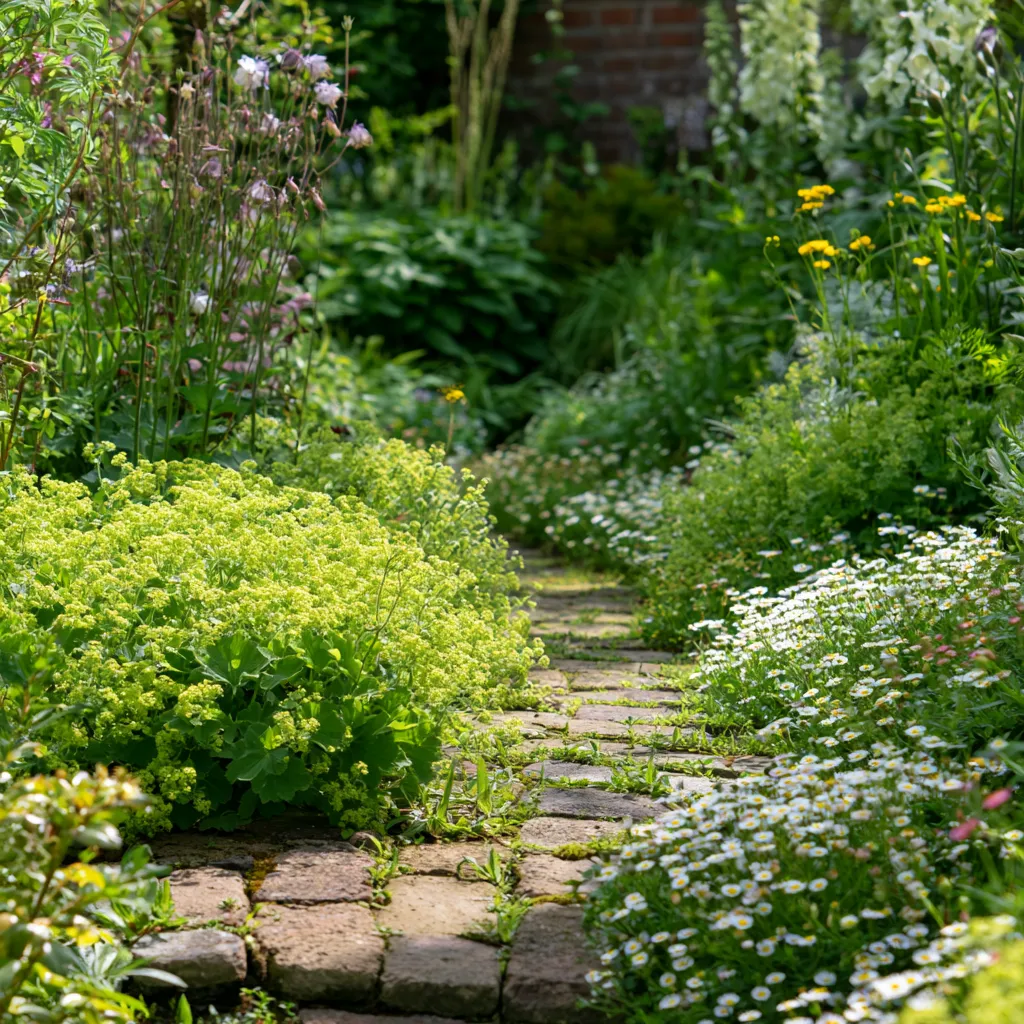
In a small cottage garden, the path material deserves particular attention because it occupies a proportionally larger share of the overall space. Reclaimed brick in a herringbone or stretcher-bond pattern, natural stone flags of irregular size, or gravel bound with log rounds are all authentic to the cottage tradition and read as warm and aged in a way that concrete paving cannot. The path itself should be slightly uneven and allow plants to self-seed into its edges — this self-seeding quality, where plants such as Alchemilla mollis, Viola, and Erigeron karvinskianus grow between path stones, is one of the most immediately recognisable visual characteristics of the cottage garden style.
Medium Cottage Garden Design Plan (25–80 m²)
A medium-sized cottage garden of 25–80 square metres allows the introduction of additional design zones beyond the central border pair: a rose garden section, a kitchen garden corner with vegetables and herbs integrated among flowers, a lawn panel that serves as a visual rest between planted areas, or a seating area enclosed by clipped box or yew hedging that references the formal structure within which cottage planting traditionally operates. In this size range, the discipline of defining distinct zones — each with its own character and planting emphasis — prevents the design from becoming a single large undifferentiated border that reads as busy rather than abundant. The transition between zones is best managed with low structural plants (clipped lavender, box balls, standard roses) rather than hard landscaping, which reads as too architectural against cottage-style planting.
Large Cottage Garden Design Plan (Over 80 m²)
In a garden above 80 square metres, the cottage garden design tradition offers its fullest vocabulary: double-sided herbaceous borders of 2–3 metres depth on either side of a central grass or stone path 10–20 metres long, a walled garden section, an orchard underplanted with spring bulbs and wildflowers, a kitchen garden with trained fruit trees on a warm wall, and a cutting garden for flowers brought into the house. At this scale, the design challenge shifts from fitting the cottage vocabulary into available space to sequencing the zones so that each is visible and accessible from the next, and so that the garden offers a clear progression of discovery — enclosure giving way to openness, shaded paths opening into sunny clearings — that makes it a destination to walk through rather than a composition to view from one fixed point.
The Classic English Cottage Garden Colour Palette and Planting Plan Logic
Colour management is where most cottage garden planting plans succeed or fail. The visual character of a successful cottage garden — that sense of controlled richness rather than visual noise — is almost entirely a product of colour decision-making at the planting plan stage. There are several proven approaches, each associated with a distinct tradition within English cottage garden design history.
Gertrude Jekyll’s hot-to-cool colour progression remains the most influential framework for long herbaceous borders. A Jekyll-inspired planting plan begins one end of the border with the warmest colours — deep scarlet Crocosmia, orange Helenium, golden Rudbeckia, tawny Kniphofia — transitions through yellows to the white and pale blue centre of the border, and cools progressively toward the other end through pale blues (Delphinium ‘Faust’, Salvia nemorosa ‘Caradonna’), purples (Allium ‘Purple Sensation’, Verbena bonariensis), and deep blues (Agapanthus ‘Black Buddhist’, Echinops ritro). Silver-grey foliage — Artemisia, Stachys byzantina, Eryngium — is deployed throughout as a transitional element that prevents colour clashing at the boundaries between zones. This approach requires a border of at least 6–8 metres length to develop the full colour sequence without rushing the transitions.
For shorter borders or gardens where a single-theme approach is preferred, the white and silver cottage garden — associated with Vita Sackville-West’s White Garden at Sissinghurst — is the most sophisticated and seasonally consistent option. An all-white planting plan for a cottage border includes Rosa ‘Iceberg’, Cosmos bipinnatus ‘Purity’, Phlox paniculata ‘White Admiral’, Digitalis purpurea ‘Alba’, Anthriscus sylvestris ‘Ravenswing’ (dark foliage with white umbels), Geranium phaeum ‘Album’, and Stachys byzantina as a silver groundcover. This palette reads as luminous in evening light — a quality that warm-coloured planting plans cannot replicate — and maintains visual coherence from May through September with minimal intervention.
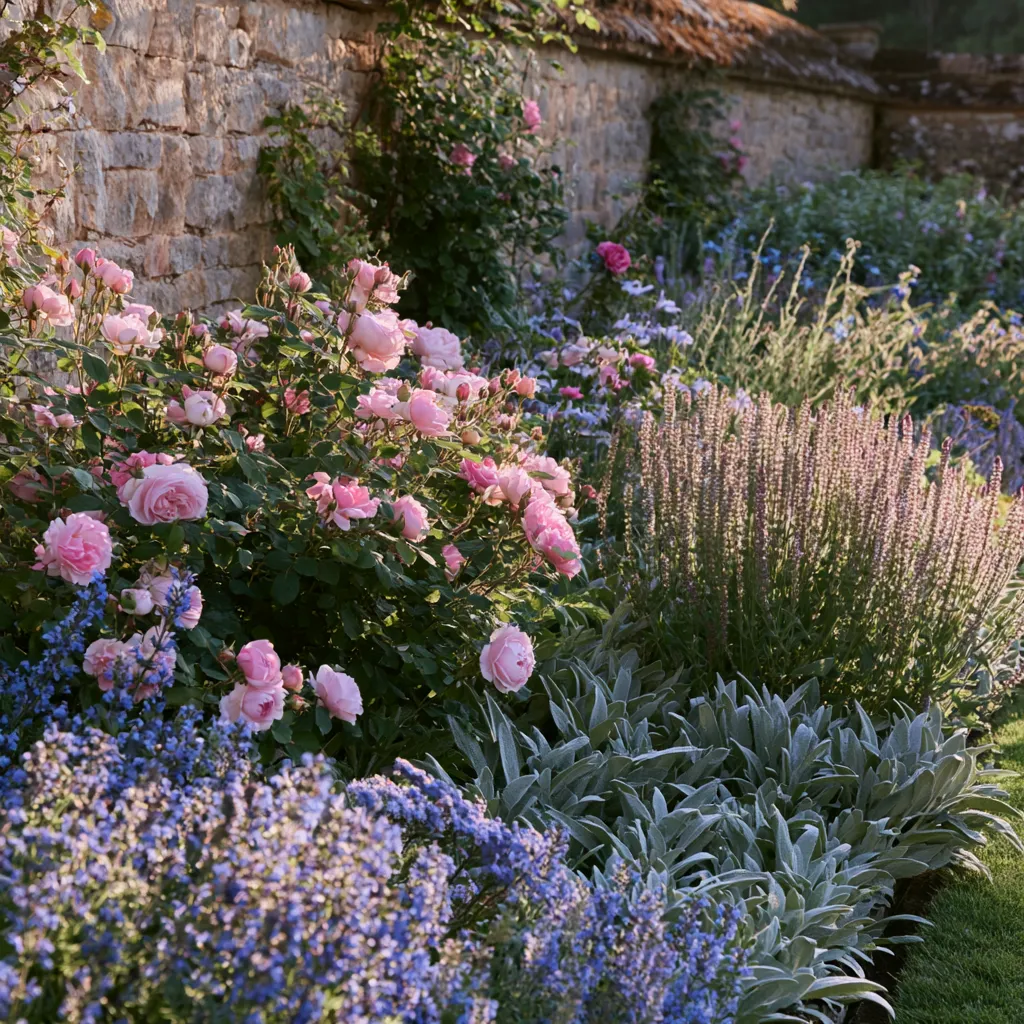
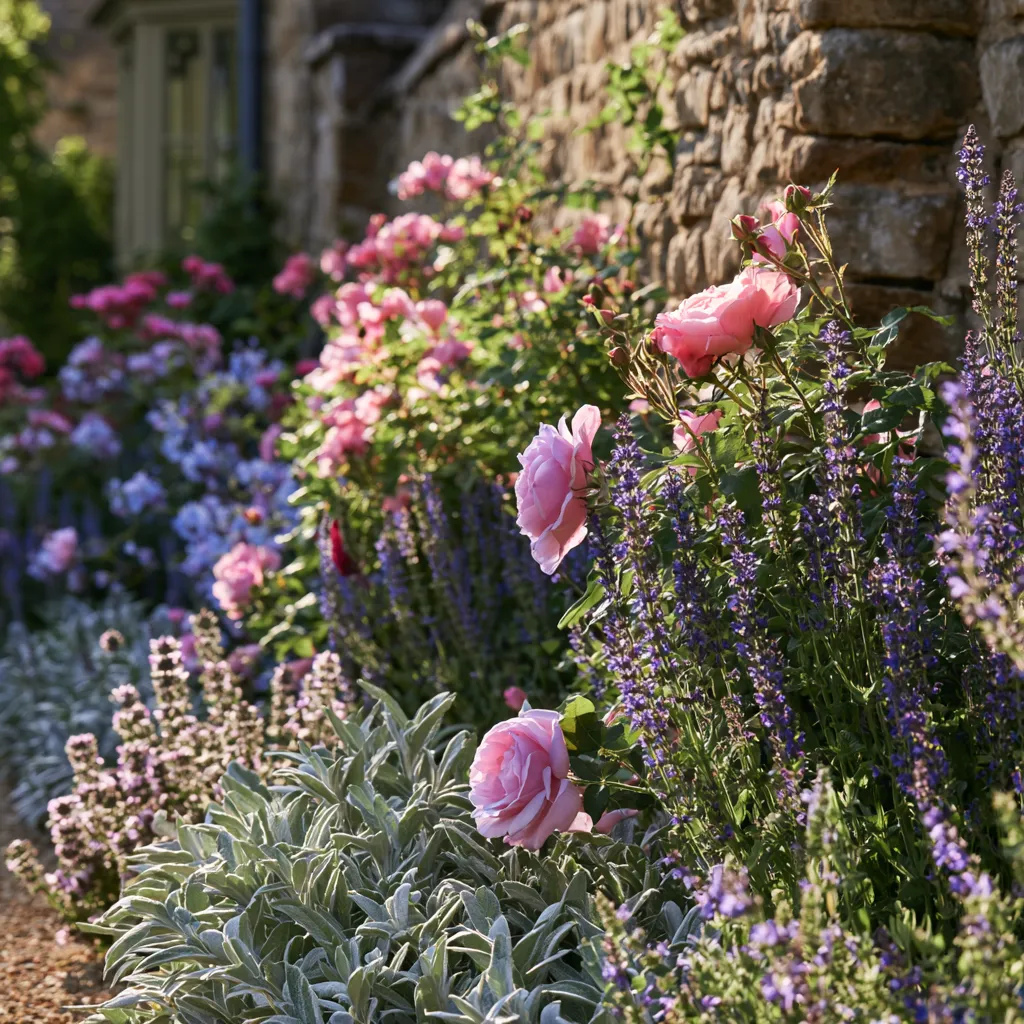
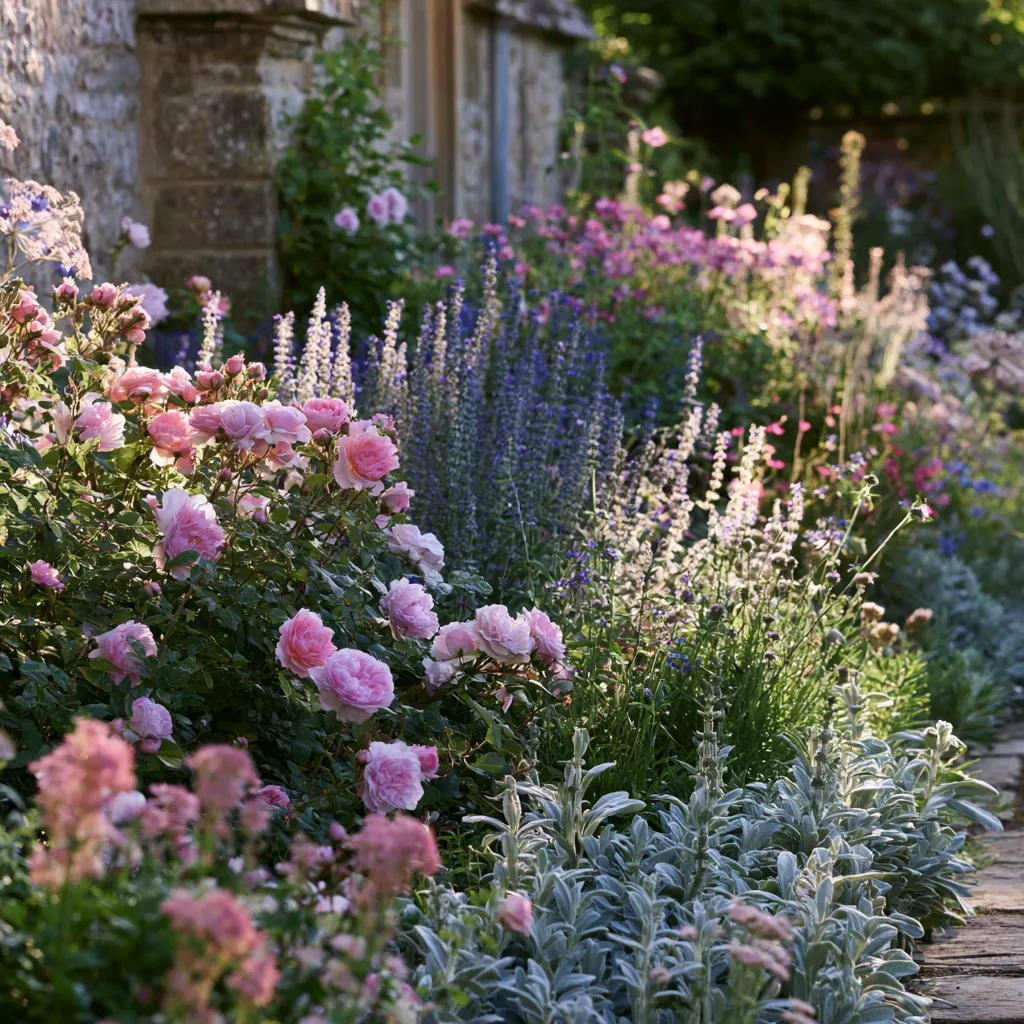
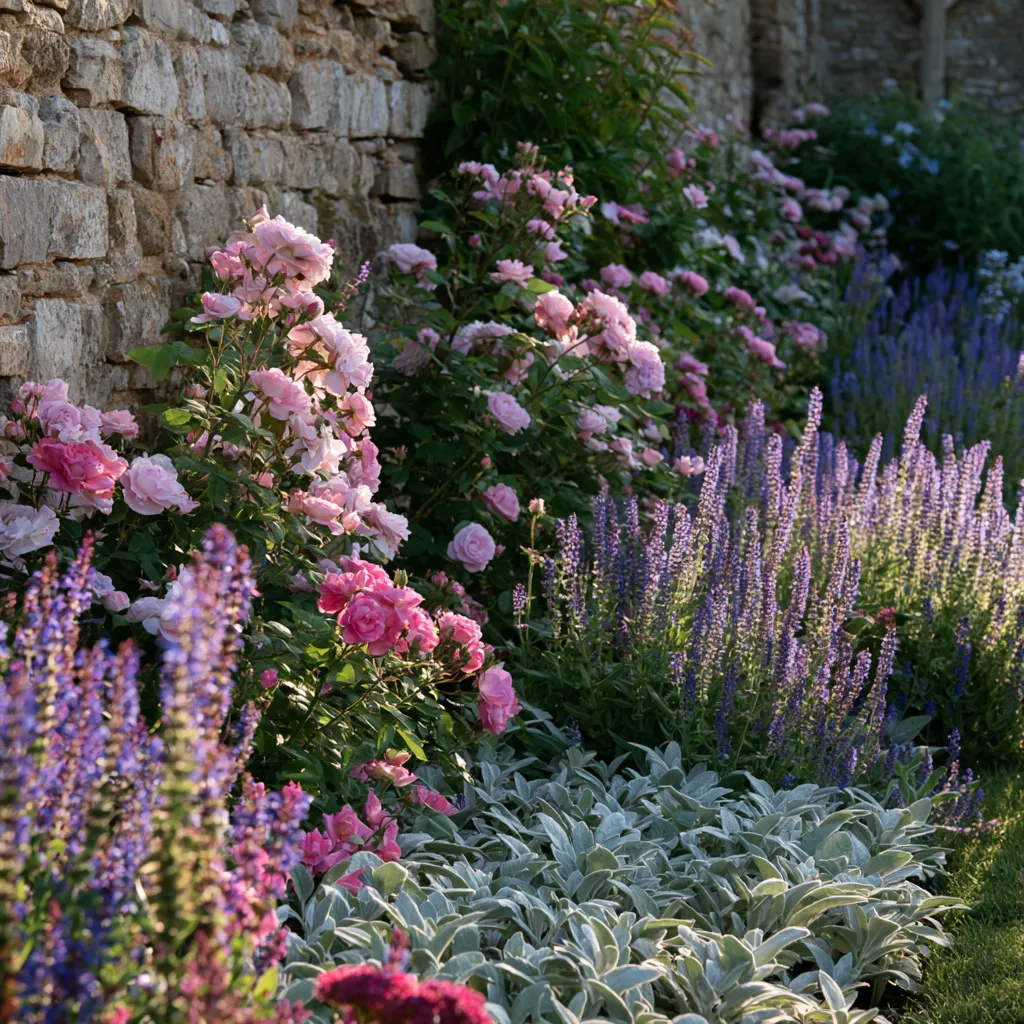
The pink, blue, and silver palette — perhaps the most widely specified English cottage garden colour scheme in contemporary garden design — takes the cooling end of Jekyll’s spectrum and develops it as a complete planting plan. Rosa ‘Gertrude Jekyll’ (deep pink), Rosa ‘The Generous Gardener’ (pale blush), Salvia nemorosa ‘Caradonna’ (blue-purple), Penstemon ‘Hidcote Pink’, Geranium pratense ‘Mrs Kendall Clark’ (pale blue-white), Agastache ‘Blue Fortune’, and Stachys byzantina form the structural planting framework, with Alchemilla mollis, Viola cornuta, and Erigeron karvinskianus as the path-edge overflow species. This palette reads as simultaneously romantic and resolved — exactly the qualities that define the best cottage garden design outcomes. The broader principles of colour coordination in garden planting are explored in depth in the article on the impact of colour in landscape works, where the visual psychology of palette selection is applied to garden design at multiple scales.
Essential Plants for an English Cottage Garden Planting Plan by Season
A functioning English cottage garden planting plan distributes visual interest across the full growing season rather than concentrating it in a single summer peak. The following species selection, organised by flowering period and height, forms the basis of a seasonally continuous cottage garden border for a temperate climate. Hardiness zones are noted using USDA codes for international applicability; most of the species listed are reliably hardy to USDA Zone 5 unless otherwise noted.
| Plant | Height | Flowering Season | Border Position | Colour | Notable Quality |
|---|---|---|---|---|---|
| Viola odorata | 10–15 cm | March–May | Front edge / path overflow | Purple, white, pink | Fragrant, self-seeds freely |
| Tulipa (species and garden tulips) | 30–60 cm | April–May | Mid-border, planted in groups of 7–15 | All colours | Spring structural colour before perennials establish |
| Allium hollandicum ‘Purple Sensation’ | 80–100 cm | May–June | Mid-border, dotted through planting | Deep purple | Architectural seed heads extend season into autumn |
| Geranium ‘Rozanne’ | 40–50 cm | May–October | Front and mid-border | Blue-violet | Longest flowering season of any hardy geranium |
| Alchemilla mollis | 30–45 cm | May–July | Front edge, path overflow | Chartreuse yellow | Iconic cottage garden self-seeder and foliage plant |
| Rosa ‘Gertrude Jekyll’ | 120–150 cm | June–October | Mid-rear border or pillar | Deep pink | Outstanding fragrance, repeat-flowering |
| Digitalis purpurea (foxglove) | 100–180 cm | June–July | Rear border, self-seeds freely | Purple, pink, white | Biennial; self-perpetuating once established |
| Delphinium ‘Pacific Hybrid’ | 150–200 cm | June–July | Rear border, requires staking | Blue, purple, white | Iconic cottage garden vertical; may rebloom if cut |
| Phlox paniculata | 80–120 cm | July–September | Mid-rear border | Pink, white, purple | Fragrant, bridges the midsummer to late summer gap |
| Echinacea purpurea | 70–100 cm | July–September | Mid-border | Pink-purple | Wildlife value; architectural seed heads persist winter |
| Salvia nemorosa ‘Caradonna’ | 50–70 cm | June–September | Mid-front border | Purple-blue | Dark stems contrast; repeat-flowers if deadheaded |
| Verbena bonariensis | 100–180 cm | July–October | Mid-rear, transparent see-through plant | Purple | Self-seeds, allows views through its stems to plants behind |
| Rudbeckia fulgida ‘Goldsturm’ | 60–70 cm | August–October | Mid-border | Golden yellow | Late-season colour, persistent seed heads for birds |
| Aster x frikartii ‘Mönch’ | 70–90 cm | August–October | Mid-border | Lavender-blue | Mildew-resistant, long-season late performer |
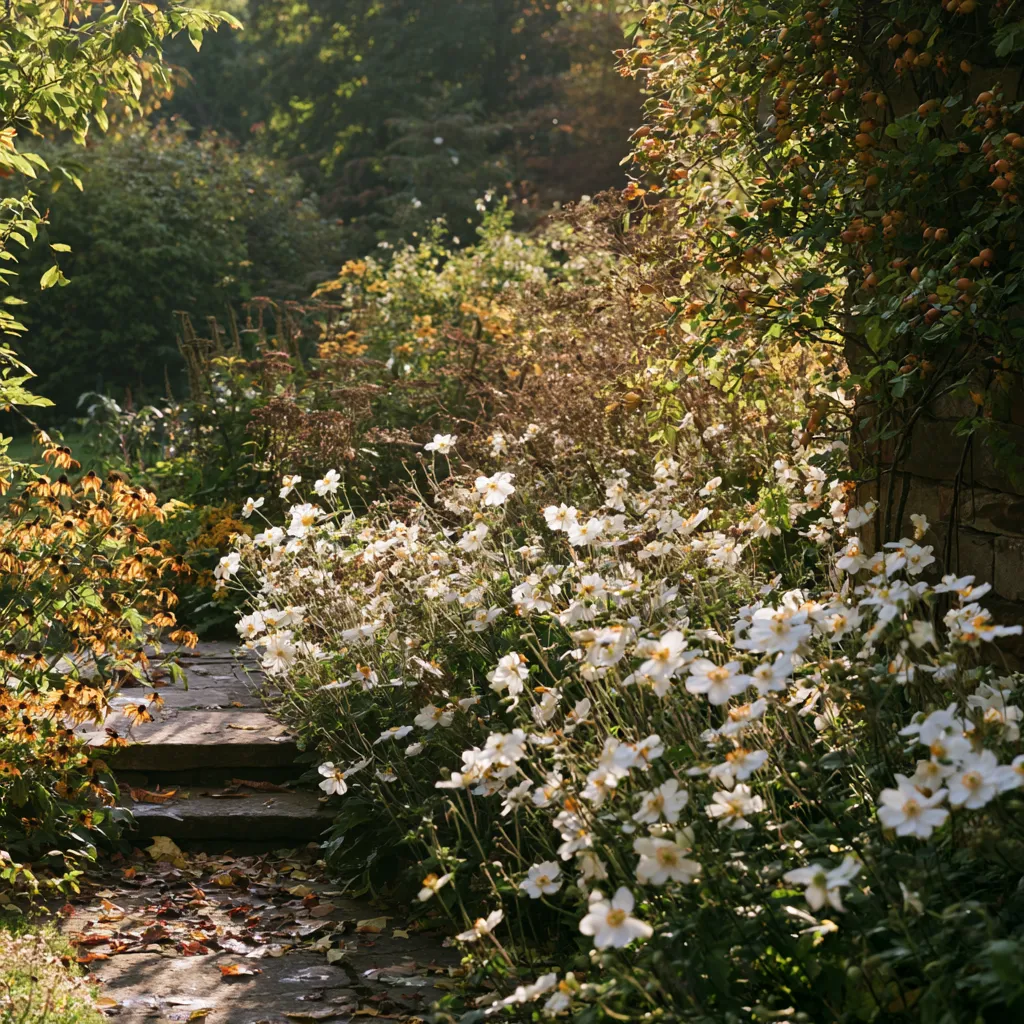
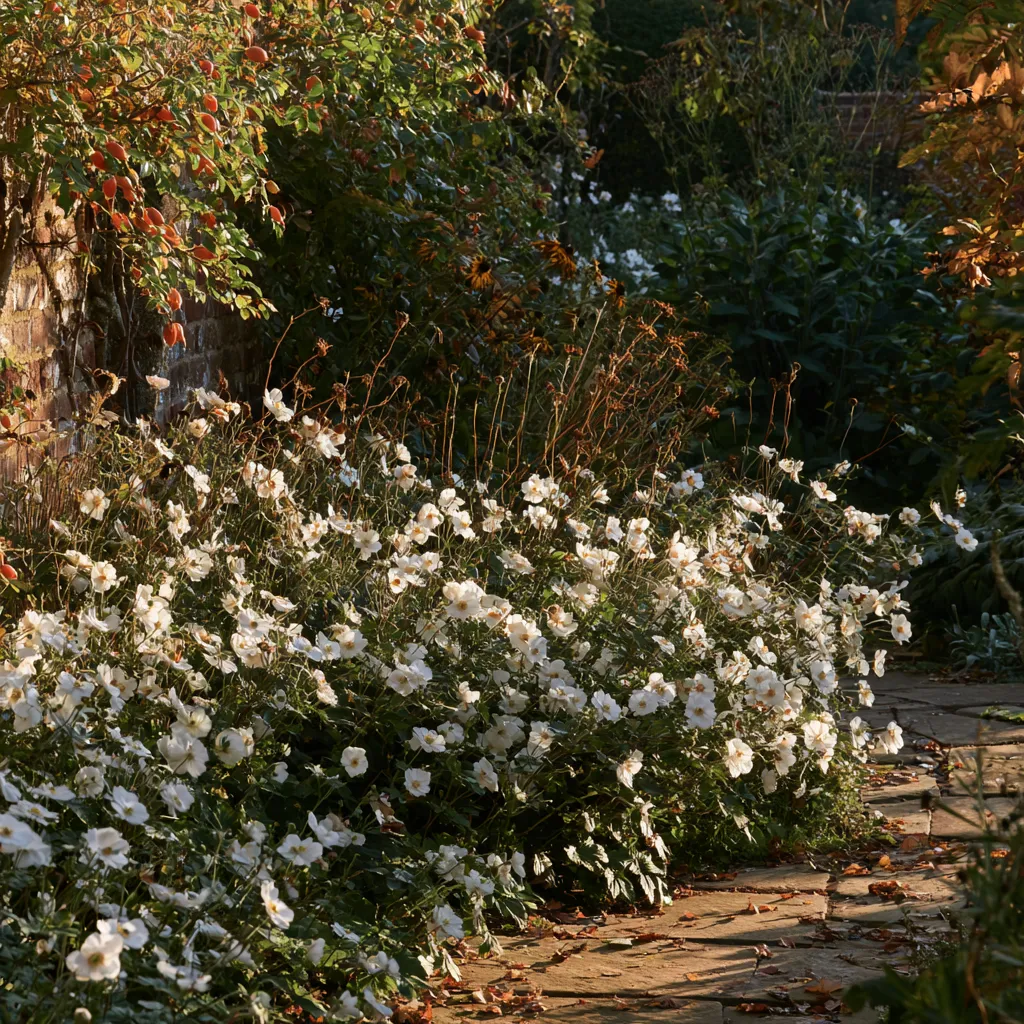
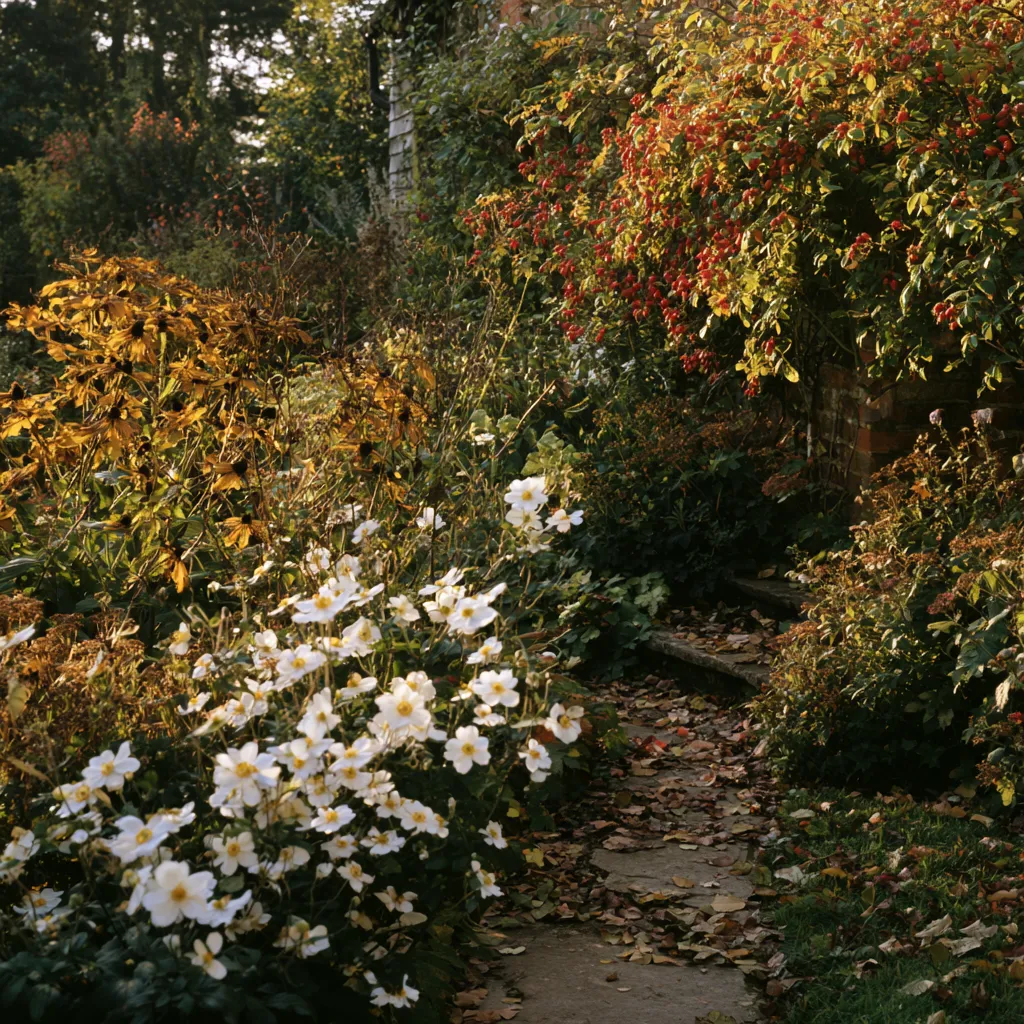
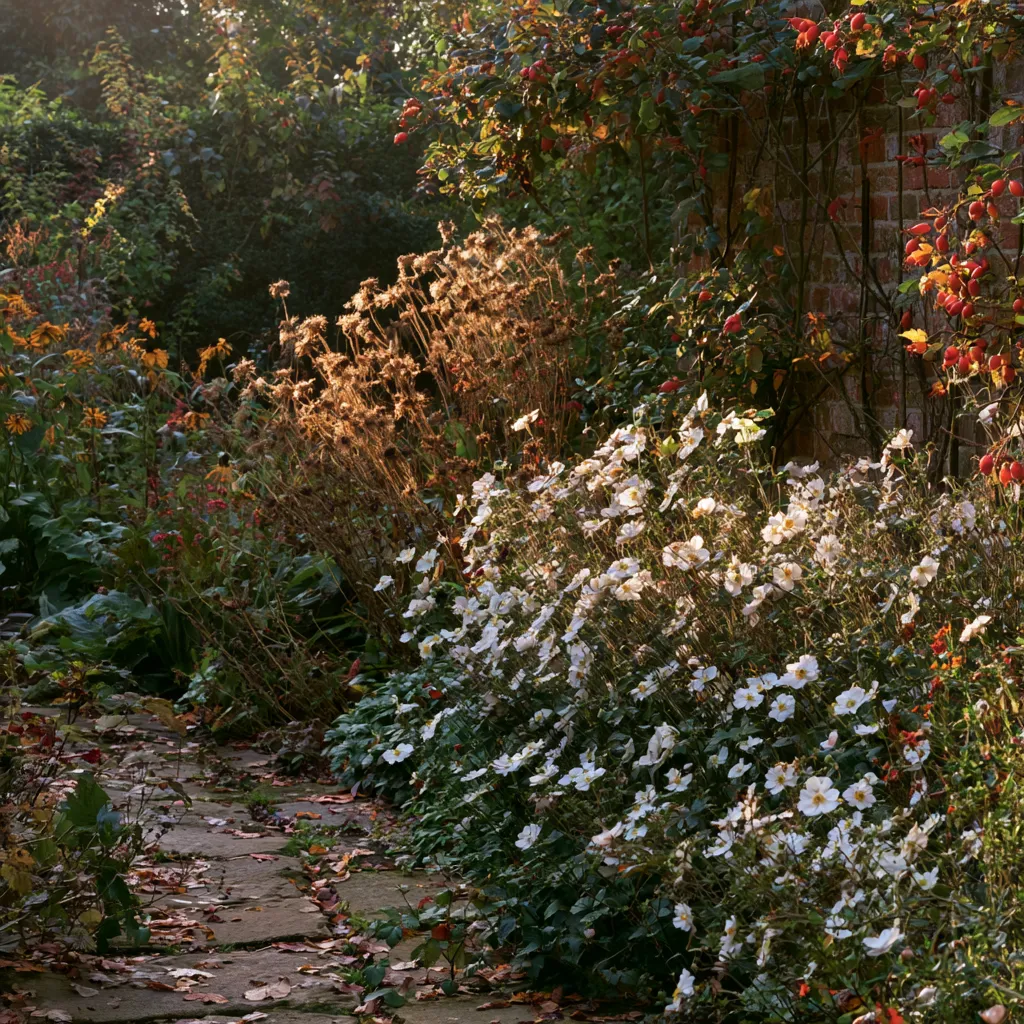
| Anemone x hybrida ‘Honorine Jobert’ | 100–130 cm | August–October | Mid-rear border | White with yellow centre | Spreads gently, provides September–October presence |
This selection provides continuous flowering from March through October — the full viable outdoor growing season in a temperate climate — with at least three species in active flower at any point between May and September. For a border of 6 metres length and 1.5 metres depth, quantities of three to five plants per species (planted in irregular groups rather than rows) produce the cottage garden density that makes the style recognisable. The total plant count for a border of this dimension runs to approximately 60–90 individual plants, representing an initial planting investment of £200–£450 at typical UK garden centre pricing or $240–$540 at US nursery rates for garden-ready perennial stock.
Climbing Plants and Vertical Structure in Cottage Garden Design
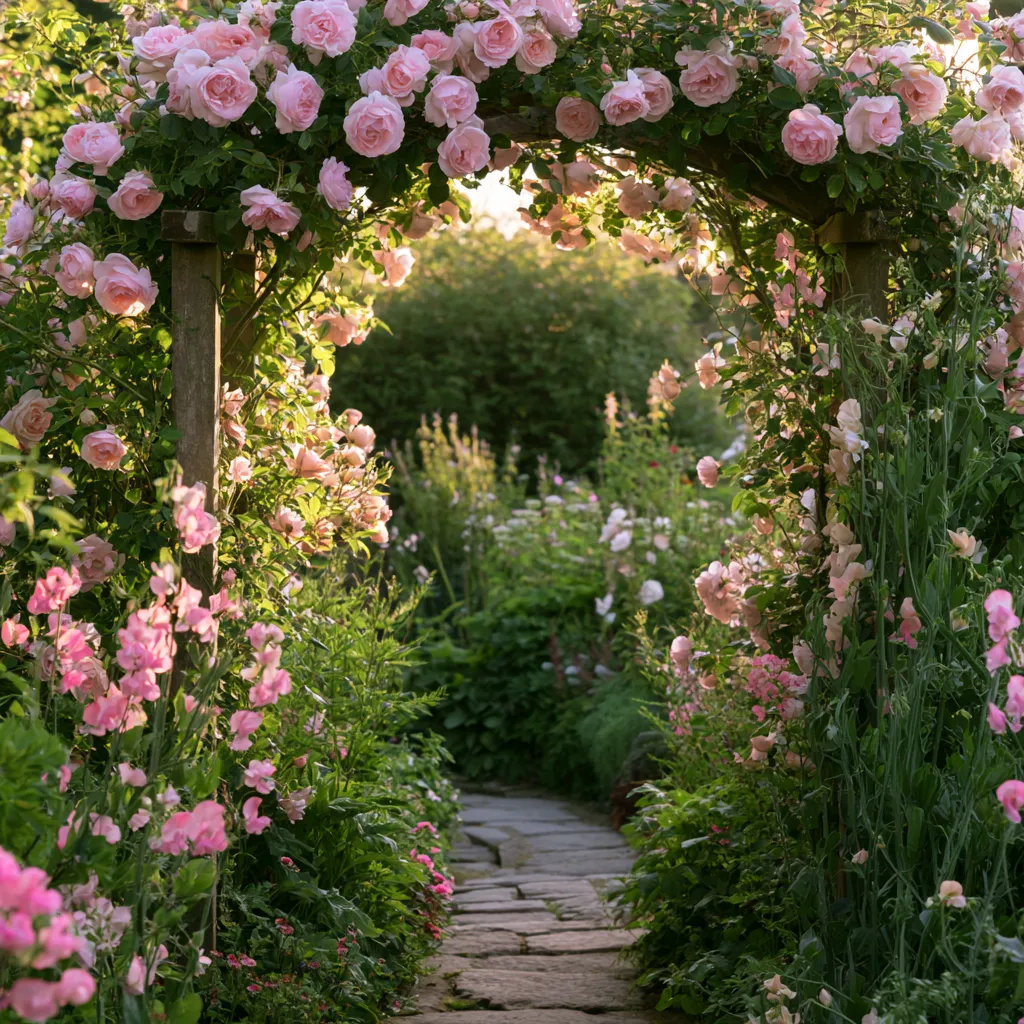
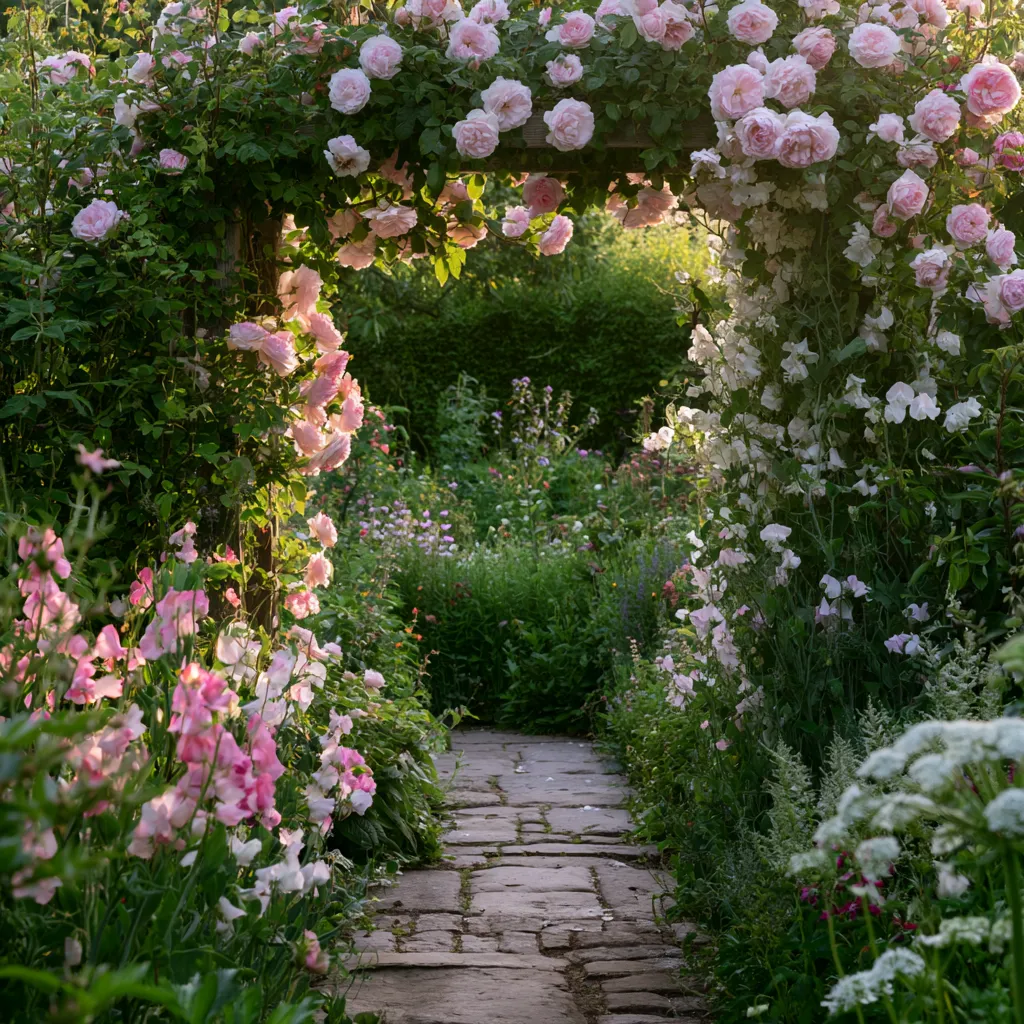
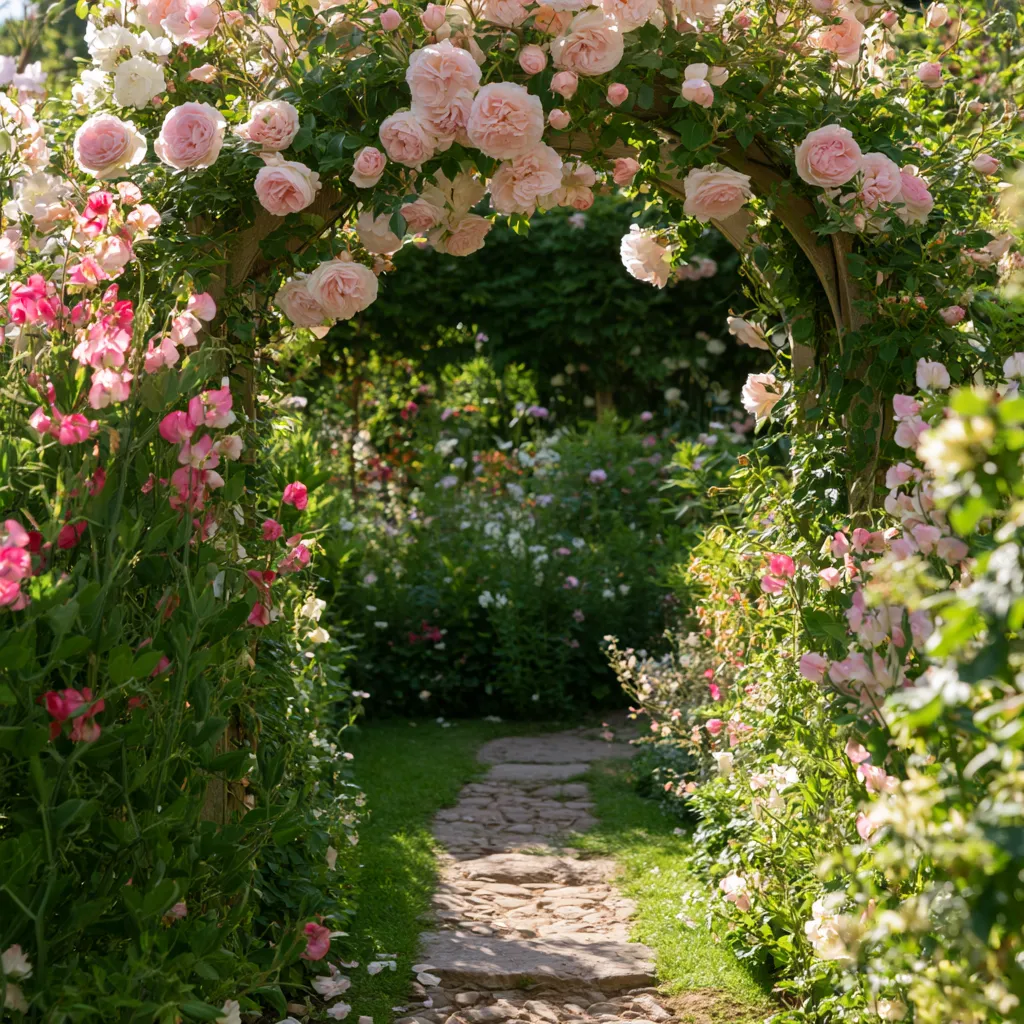
The vertical dimension is perhaps the most underestimated element in English cottage garden design ideas — and its absence is often what prevents a promising planting plan from achieving the romantic depth of the style’s best examples. Climbing plants on arches, pergolas, walls, and obelisks add height, fragrance, and movement that no amount of border planting can replicate at ground level. They also perform a structural function: a rose arch at the end of a path creates a framed destination that draws the visitor through the garden, creating the sense of discovery that distinguishes a designed cottage garden from a planted border.
The most enduring cottage garden climbers are the old rose varieties and their modern descendants, the David Austin English roses with climbing habits. Rosa ‘The Generous Gardener’ — a pale blush pink with outstanding fragrance, trained as a climber to 3–4 metres — is widely regarded as one of the finest arching climbers for cottage garden use. Rosa ‘Mortimer Saunders’ (apricot-pink), Rosa ‘Generous Gardener’, and Rosa ‘The Pilgrim’ (clear yellow, fading to cream) cover the warm-to-cool transition of a cottage garden colour progression at vertical level while providing fragrance from June through October in good conditions. Climbing roses require training — tying individual stems horizontally along wire or trellis supports rather than allowing them to grow vertically — because horizontal or angled stems produce far more flowering side shoots than upright growth.
Clematis is the natural companion for roses on structures throughout the cottage garden. The combination of late-flowering large-flowered clematis threading through an established climbing rose — blooming where the rose’s main flush has finished — is one of the most celebrated combinations in cottage garden planting. Clematis ‘Perle d’Azur’ (pale blue) through Rosa ‘Gertrude Jekyll’, or Clematis ‘Etoile Violette’ (deep purple) through Rosa ‘The Generous Gardener’, are among the most enduringly effective. For cottage garden walls and fences, Clematis viticella cultivars — which are cut back hard each February and thus never develop the congested base growth that causes problems in clematis wilt — are the most reliable and lowest-maintenance choice.
Annual climbers — sweet peas (Lathyrus odoratus), morning glory (Ipomoea purpurea), and nasturtium (Tropaeolum majus) climbing through the support of taller perennials — add the element of seasonal variation and extreme fragrance that perennial climbers alone cannot deliver. Sweet peas in particular are inseparable from the English cottage garden tradition: their fragrance on a warm June morning is one of the most distinctive and evocative sensory signatures of the style, and their flower production — 60–80 blooms per plant over a 10-week season when picked regularly — makes them among the highest-value plants in the cottage garden per square metre of growing space occupied.
Roses in the English Cottage Garden Planting Plan — Selection and Placement
No English cottage garden planting plan is complete without roses — but the selection of varieties appropriate to the cottage garden tradition is where many garden owners make choices that undermine the planting design rather than completing it. Hybrid tea roses — the high-centred, stiff-stemmed varieties that dominated twentieth-century rose breeding — are generally incompatible with cottage garden planting because their upright, formal habit and single annual flush of flowers create a different visual language from the loose, repeat-flowering, informally shaped roses that characterise the style.
The David Austin English roses — bred to combine the flower form and fragrance of old garden roses with the repeat-flowering habit of modern roses — are the near-universal choice in contemporary English cottage garden design. David Austin Roses, the Albrighton-based nursery that originated the breeding programme, reports selling over 4 million English rose plants annually to customers in over 40 countries, with ‘Gertrude Jekyll’, ‘The Generous Gardener’, ‘Olivia Rose’, and ‘Darcey Bussell’ consistently among the top five selling varieties worldwide.
For planting plan purposes, roses in cottage gardens occupy three distinct positions. Shrub roses planted in the middle of the border (60–90 cm from the front edge) contribute flower and foliage at mid-height through the growing season. Standard roses — trained on a single stem to 90–120 cm before a grafted head — function as vertical accent points that provide height at specific positions in the border without the footprint of a full shrub. Climbers and ramblers, as discussed above, occupy the vertical plane on structures and walls. A balanced cottage garden rose planting plan typically incorporates all three positions, with two to four shrub varieties forming the rose backbone, one or two standards as structural punctuation, and one or two climbers providing vertical and structural presence.
Rose health in cottage garden conditions — planted close to other perennials, potentially crowded, and receiving irregular attention — depends primarily on variety selection rather than intervention. Resistance to black spot, rose rust, and powdery mildew is the most important selection criterion for low-maintenance cottage garden rose planting plans. Current RHS Award of Garden Merit-holding disease-resistant varieties include Rosa ‘Harlow Carr’ (deep pink, AGM), Rosa ‘Olivia Rose Austin’ (warm pink, AGM), Rosa ‘The Lark Ascending’ (apricot, AGM), and Rosa ‘Tottering-by-Gently’ (lilac-pink, AGM). All are suitable for garden conditions without routine fungicide treatment in a temperate UK or mild US climate.
Herbs and Edibles in the English Cottage Garden Design Tradition
The integration of edible plants — herbs, vegetables, fruit, and salad crops — within an ornamental planting plan is not a modern trend in English cottage garden design. It is the original condition of the style. The cottage gardens of the seventeenth and eighteenth centuries that provided the aesthetic template for later Jekyllian formalism were fundamentally productive gardens: medicinal herbs, culinary plants, and vegetables grown alongside flowers for cutting and fragrance, all within the same small enclosed garden.
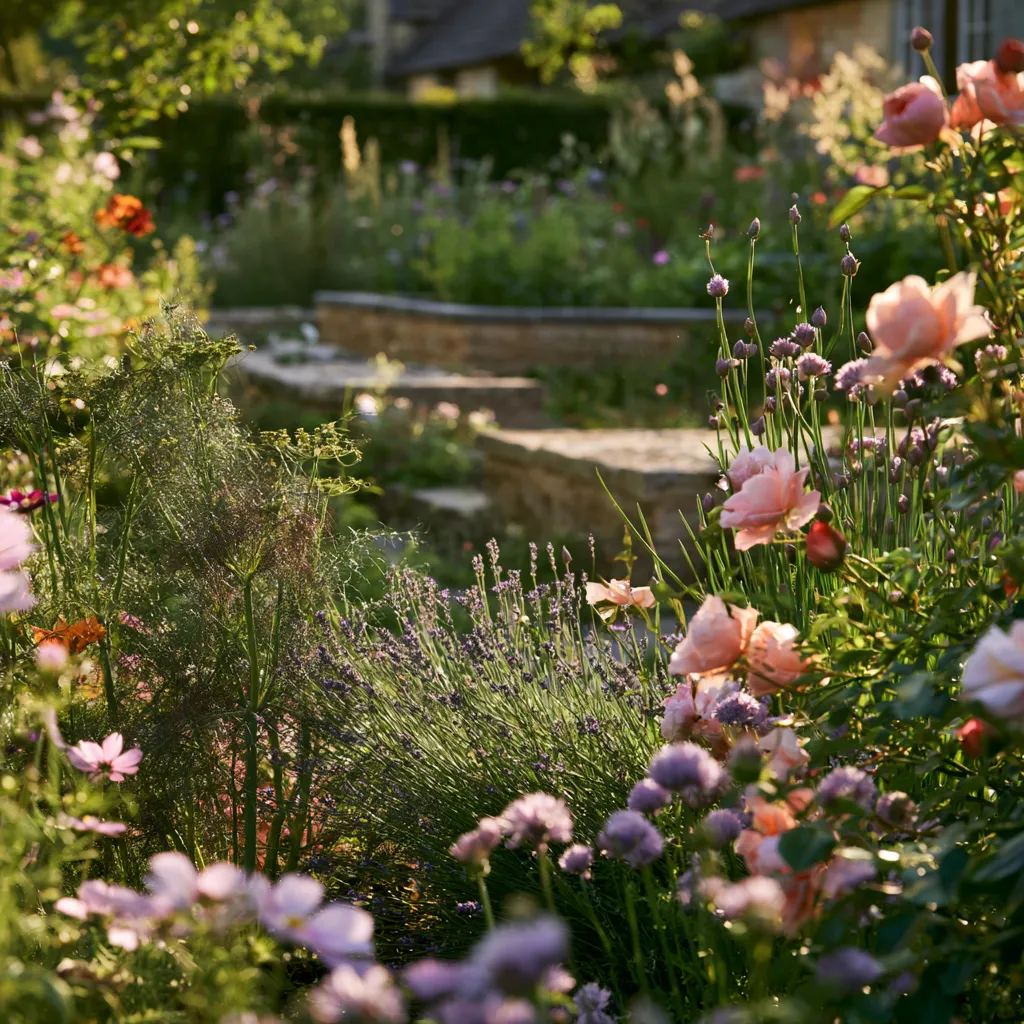
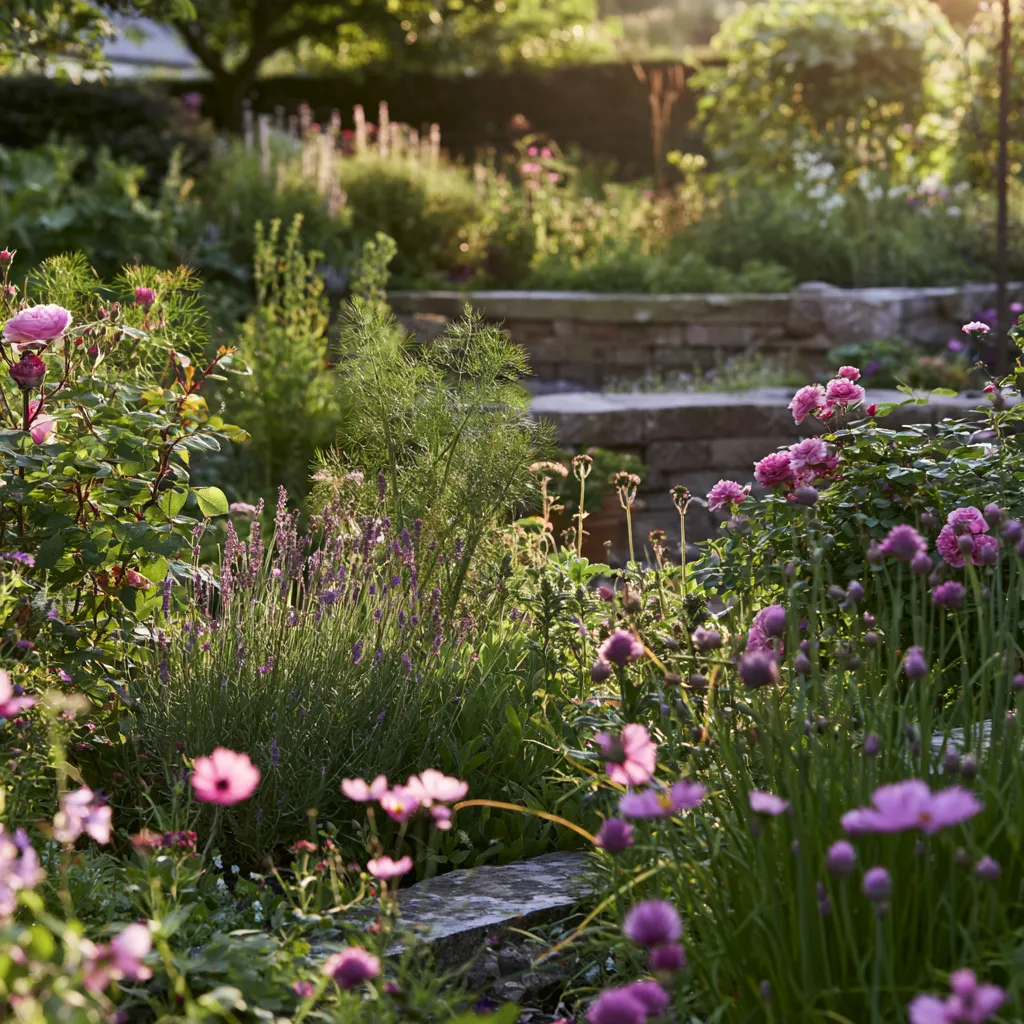
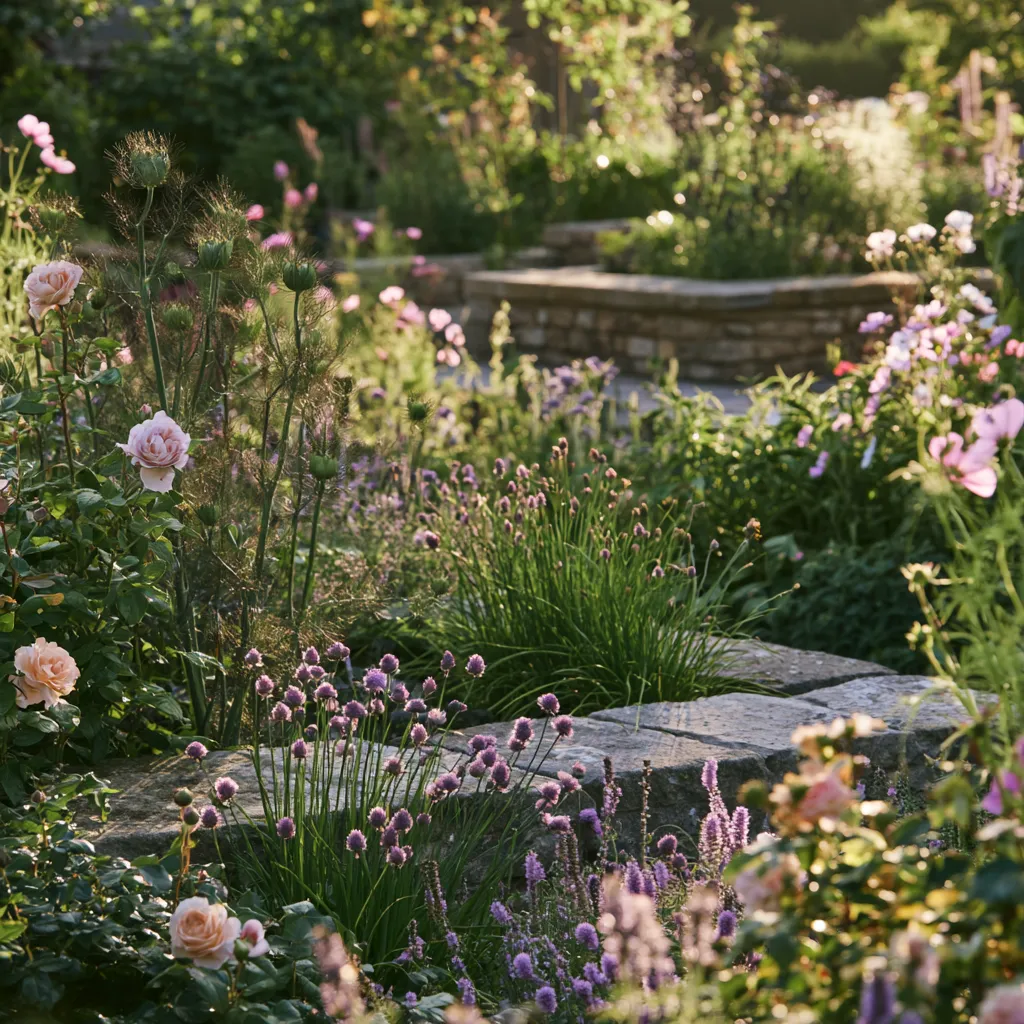
Reintegrating edibles into the contemporary English cottage garden planting plan is both historically authentic and practically valuable. Herbs in particular are among the most visually compatible edibles with traditional cottage garden planting: lavender (Lavandula angustifolia), rosemary (Salvia rosmarinus), fennel (Foeniculum vulgare), chives (Allium schoenoprasum), borage (Borago officinalis), and sweet cicely (Myrrhis odorata) all have the flower form, fragrance, or foliage character that integrates naturally with ornamental cottage garden plants. Fennel in particular — with its feathery bronze or green foliage and flat-topped yellow umbel flowers — is one of the most structurally interesting plants available for mid-border use in a cottage garden, providing a transparent haze of texture through which other plants are visible.
The cottage kitchen garden tradition — where vegetables are grown in the same space as flowers, with leeks flanked by marigolds and beans climbing beside sweet peas — is experiencing significant revival. A 2023 report from the UK Garden Retail Association found that vegetable seed sales had increased by 89% over five years, with the largest growth category being “heritage vegetables grown for ornamental and culinary value simultaneously” — exactly the tradition that English cottage garden design embodies. For practical guidance on integrating herbs and edibles into a garden planting design that performs both ornamentally and productively, the approach documented in the context of pollinator-friendly herb gardens offers specific design strategies for herb planting that supports beneficial insects while contributing to the overall visual quality of the cottage garden border.
Self-Seeding Plants and the Living Cottage Garden Planting Plan
One of the most distinctive and most misunderstood qualities of the English cottage garden is its relationship with self-seeding plants. In most garden design traditions, self-seeding is managed as a nuisance — unwanted plants appearing in unprogrammed positions, disturbing the intended composition. In the cottage garden tradition, controlled self-seeding is a design tool: the mechanism by which the planting plan remains dynamic, self-renewing, and perpetually slightly surprising without requiring annual replanting.
The difference between productive and destructive self-seeding is species selection and management approach. Productive cottage garden self-seeders — species whose offspring can be allowed to establish where they germinate, or easily moved before they become established — include Alchemilla mollis, Viola cornuta, Foxglove (Digitalis purpurea), Aquilegia vulgaris, Erigeron karvinskianus, Verbena bonariensis, Nigella damascena, Borago officinalis, and Anthriscus sylvestris. Destructive self-seeders — species that produce too many offspring, are difficult to remove, or outcompete their neighbours — include Lysimachia punctata, Tanacetum vulgare, and (in mild climates) Crocosmia ‘Lucifer’. Understanding which species to encourage and which to remove is the practical intelligence that makes cottage garden management sustainable rather than exhausting.
The key management principle for self-seeders is to hoe the border shallowly (2–3 cm depth, no more) in early spring when seedlings are at the cotyledon stage, removing the majority but leaving a selection in positions where they are visually useful. This twice-per-year hoeing — once in early spring and once in early summer after the first germination flush — takes approximately 30 minutes per 6-metre border length and is the difference between a cottage garden that manages itself and one that is overwhelmed by its own productivity. The broader principle of designing garden planting systems that are genuinely self-sustaining over multiple growing seasons — rather than requiring annual replanting and intensive management — is addressed in the detailed guide to low-maintenance perennial gardens, where species selection, establishment strategies, and long-term management are covered for garden styles including the cottage and naturalistic planting traditions.
Soil Preparation and Establishment for English Cottage Garden Planting
The long-term success of an English cottage garden planting plan depends as much on soil preparation before planting as on plant selection itself. Cottage garden plants — perennials, biennials, bulbs, and shrub roses — are permanent or semi-permanent residents of the border that will be disturbed as rarely as possible once established. This means that the soil they are planted into must be prepared to support healthy root development, adequate drainage, and nutrient retention for at least three to five years before any significant intervention is required.
The ideal soil for English cottage garden planting is a well-drained loam with good organic matter content — a soil that holds moisture without waterlogging and releases nutrients steadily over the growing season. Heavy clay soils can be improved significantly by incorporating 50–75mm of well-rotted garden compost or mushroom compost per square metre, forked to a depth of 30 cm, in the autumn before planting. Sandy soils benefit from the same organic matter addition to improve water retention, with the process repeated annually until the organic matter content is sufficient to sustain moisture between rain events in summer. On waterlogged soils, raised border construction — raising the planting surface by 20–30 cm above the surrounding ground level using retained edging — is more reliable than attempting drainage improvement alone.
Weed control before planting is the most important and most frequently underinvested stage of cottage garden establishment. Perennial weeds — bindweed, ground elder, couch grass, and creeping thistle — are impossible to control by hoeing once cottage garden planting is established at full density, because the dense root systems of perennial weeds become entangled with those of desirable plants within two to three seasons. A clear, weed-free start — achieved either by repeated rotavating and hand-weeding over one growing season, or by applying an opaque weed-suppressing membrane for one full year prior to planting — repays the investment many times over in reduced maintenance burden through the first decade of the garden’s life.
Cottage Garden Design Ideas for Wildlife and Pollinator Support
The English cottage garden is, by its nature, one of the most ecologically productive garden styles available to residential gardeners. Its diversity of plant species, its preference for single and semi-double flower forms over fully double cultivars that deny access to pollen and nectar, its integration of herbs, its tolerance of self-seeding and naturalised growth, and its use of materials that provide habitat (old stone walls, timber structures, dense hedging) combine to create gardens that support biodiversity at a level that formal or minimalist garden styles rarely match.
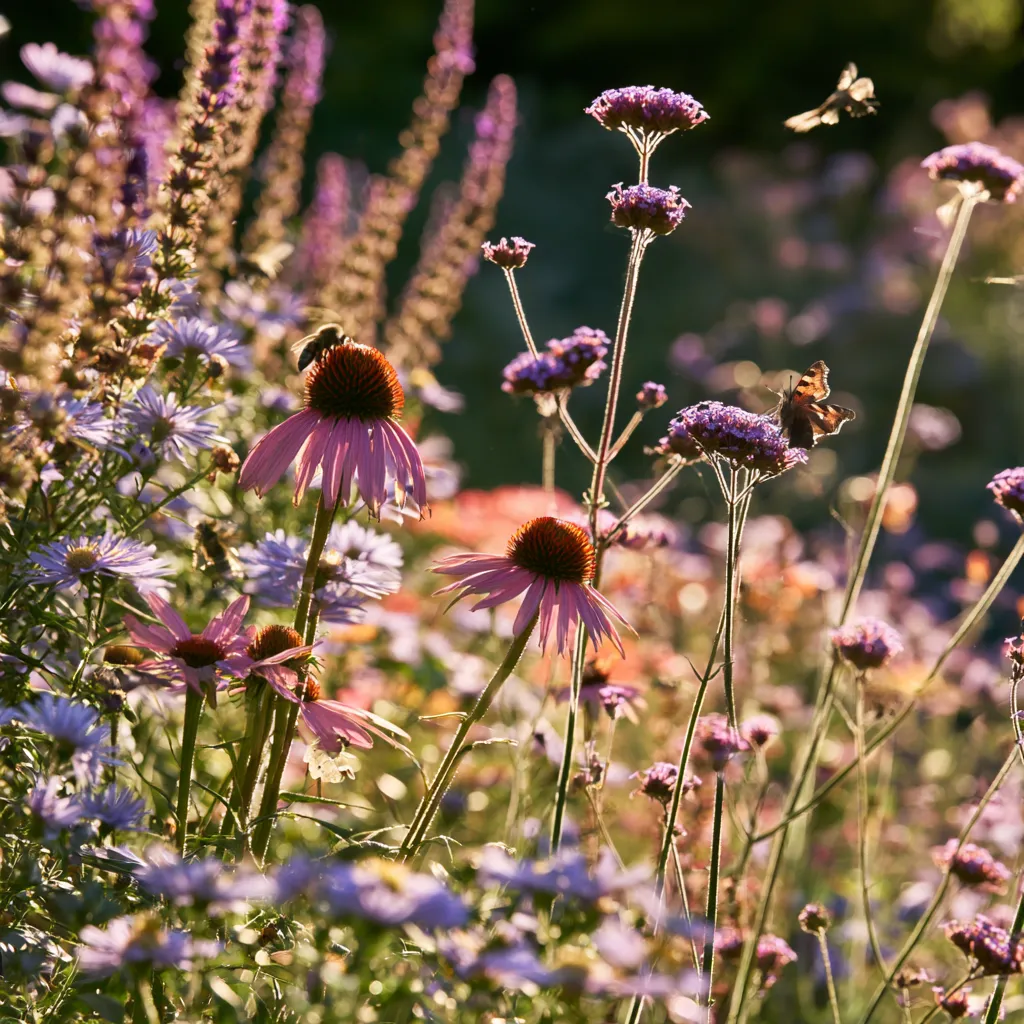
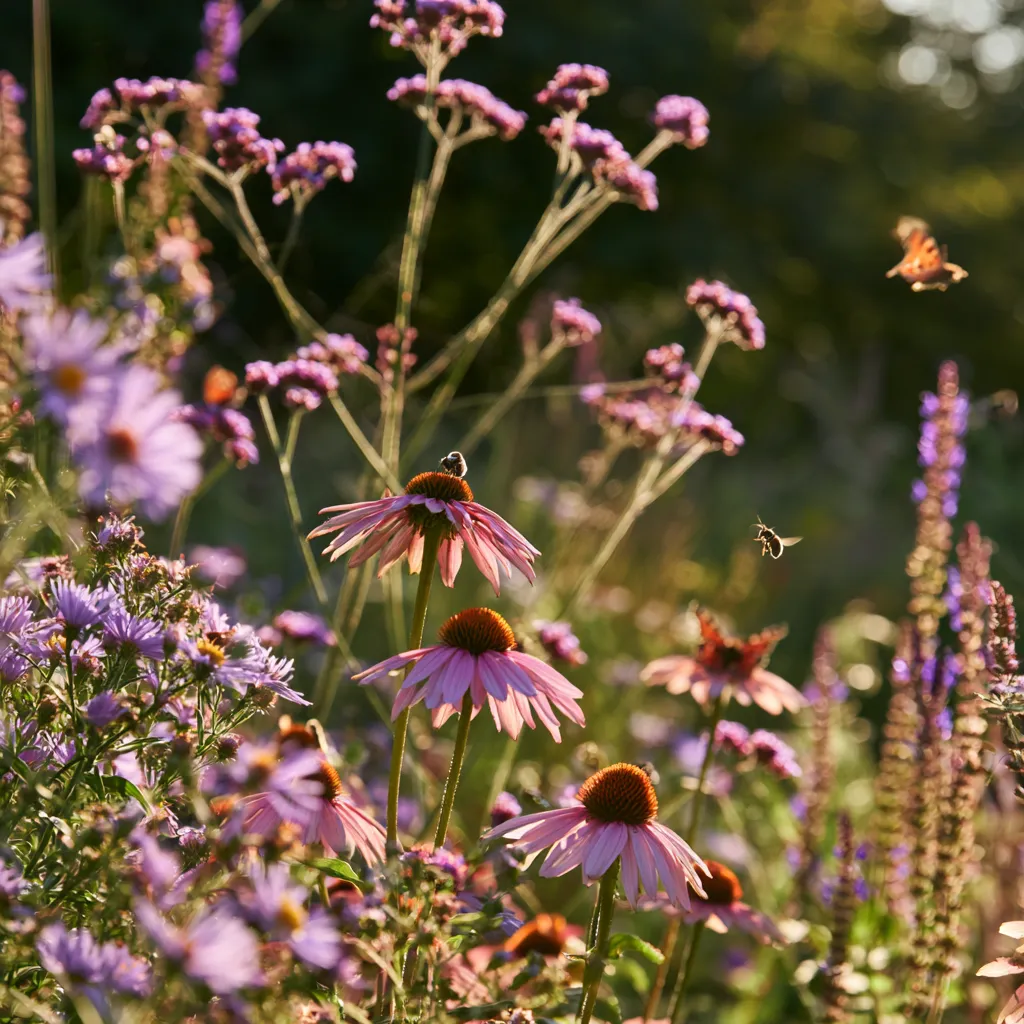
Research from the Royal Horticultural Society’s Plants for Pollinators programme, published in 2021, found that gardens planted with a diverse mix of traditional cottage garden species — including Salvia, Geranium, Lavandula, Digitalis, Allium, Echinacea, and Aster — supported a mean of 5.3 different bee species per hour of observation, compared to 1.1 species per hour in gardens planted with double-flowered cultivars that block pollen and nectar access. The cottage garden planting plan, when it includes an appropriate proportion of single-flowered species, is essentially a continuous pollinator feeding station from April through October.
Specific pollinator-optimised additions to an English cottage garden planting plan include: Lavandula angustifolia (supported 47 bee species in RHS trials, more than any other single species tested), Nepeta x faassenii ‘Six Hills Giant’ (catmint, outstanding for bumblebees and honeybees throughout summer), Salvia nemorosa cultivars (long-tongued bees and solitary bees from June to September), Echinacea purpurea (bees and butterflies from July to September), Verbena bonariensis (small tortoiseshell and peacock butterflies from July to October), and Helenium autumnale (social bumblebees from August to October). The principle of designing garden planting plans that serve both aesthetic and ecological functions simultaneously is central to the approach documented in the pollinator garden design guide, which covers species selection, habitat provision, and seasonal continuity for gardens where biodiversity performance is a primary design objective alongside visual quality.


Seasonal Maintenance Plan for an English Cottage Garden
The maintenance reputation of the English cottage garden — that it demands constant attention and rewards only the most dedicated gardeners — is partly a function of poor initial planting design. A cottage garden established with the right species in the right conditions, with structural plants forming the backbone and self-seeders managed intelligently, can be maintained in approximately 4–6 hours per month through the growing season: modest for a garden that provides the visual richness, fragrance, and ecological value that the cottage garden style delivers.
The following seasonal maintenance sequence applies to an established English cottage garden border of 12–18 square metres, representing a garden that has been in place for at least two full growing seasons.
- February–March: Cut back all ornamental grasses and seed-head perennials left standing for winter interest and bird food. Divide any overcrowded perennial clumps (geranium, aster, salvia) before growth begins. Apply a 5 cm layer of well-rotted compost as a mulch over the full border surface, working around emerging shoots. Plant any bare-root roses ordered through winter catalogs.
- April–May: Hoe shallowly to remove unwanted self-seeders while retaining selected foxgloves, aquilegias, and alchemilla in useful positions. Stake tall border plants — delphiniums, tall phlox, helenium — with pea sticks or grow-through metal supports before they reach 40 cm height. Plant out sweet pea seedlings at arch and obelisk bases. Deadhead tulips as they finish.
- June–July: Deadhead roses regularly — removing finished flowers to the first five-leaflet leaf — to stimulate repeat flowering. Cut back catmint (Nepeta) by one-third after its first flush to encourage a second wave of flower from August. Tie in climbing rose and clematis new growth to training supports. Thin overcrowded border plants by removing weak stems at the base to improve air circulation and reduce mildew risk.
- August–September: Allow seed heads to develop on Allium, Echinacea, Rudbeckia, and Verbena bonariensis for bird food and visual winter interest. Continue deadheading repeat-flowering roses. Cut phlox stems to the ground after flowering to prevent mildew spread. Collect sweet pea seeds from pods if saving for next year.
- October–November: Plant spring bulbs — tulips, alliums, and early narcissus — between established perennials for the following April and May. Leave most border material standing through winter to protect crowns from frost and provide habitat for overwintering insects. Plant any new bare-root roses or shrubs purchased for autumn establishment.
- December–January: Review planting plan against photographs taken through the growing season — identify gaps in flowering sequence, note colour combinations that succeeded or clashed, plan additions for the following year. Order seeds and bare-root plants for February delivery.
The English cottage garden rewards a long-term relationship. Its characteristic depth and richness — the sense of a garden that has been tended and loved over many seasons — does not arrive in the first or even the second year. Most cottage gardens reach their first fully resolved expression in year three or four, when self-seeding plants have established their own positions, climbing roses have covered their structures, and perennials have developed the root systems that allow them to perform at full potential. Designing the planting plan with this three-to-five-year horizon in mind — spacing plants generously enough to allow development, using short-term annuals and biennials to fill gaps in the early years, and resisting the temptation to intervene with replanting before the planting has settled — is what separates patient, successful cottage garden establishment from the repeated restarts that leave many cottage garden aspirants frustrated. For further guidance on selecting perennial plants that establish quickly and provide strong value in the early years of a new planting plan, the curated selection in the article on classic perennial garden ideas offers species recommendations specifically chosen for reliable establishment performance and long-term contribution to mixed border designs.
Adapting English Cottage Garden Design Ideas for Different Climates
The English cottage garden originated in and was developed for the specific climatic conditions of temperate Britain — cool, moist summers, mild winters, reliably overcast light that suits the rich, slightly faded colour palette of the traditional cottage border. Adapting English cottage garden design ideas and planting plans for other climates requires thoughtful species substitution rather than wholesale abandonment of the style’s design principles, which are universal.
For hot, dry climates (Mediterranean, California, parts of Australia and South Africa), the cottage garden planting vocabulary shifts toward species with greater drought tolerance while maintaining the same layered height structure, loose flowering habit, and mixed colour approach that defines the style. Lavandula stoechas and Lavandula dentata replace Lavandula angustifolia; Salvia greggii, Salvia leucantha, and Agastache rugosa replace Salvia nemorosa; Gaura lindheimeri (Oenothera lindheimeri) provides the same floating, airy quality as Verbena bonariensis; and Penstemon, Cistus, and Zauschneria perform the mid-border role of Geranium and Phlox. Roses in hot dry climates require careful variety selection — David Austin varieties with modern disease resistance (The Lady of Shalott, Olivia Rose Austin, Darcey Bussell) perform acceptably in temperatures up to 35°C with morning irrigation.
For colder climates — USDA Zones 3 to 5, including much of Canada, the northern United States, and Scandinavia — the key adaptation is replacing marginally hardy species with cold-hardy equivalents: Baptisia australis for Delphinium, Siberian iris for bearded iris, Rudbeckia and Echinacea in place of more tender late-season perennials, and cold-hardy shrub roses such as the Canadian Explorer series or Kordes ‘Oso Easy’ for David Austin varieties that may not reliably survive Zone 4 winters. The structural bones of the cottage garden design — the path, the arch, the layered border — are climate-neutral and transfer without adaptation to any geography. The plants that clothe that structure must be chosen for the conditions they will actually experience.
An English cottage garden, wherever it is planted and whatever climate adaptations its planting plan requires, is ultimately a statement about how a garden should relate to the person who tends it. It is intimate rather than monumental, seasonal rather than static, gradually revealed rather than immediately legible. These qualities are available to any gardener in any climate who commits to the design principles — structure before planting, layered height, sequential flowering, species diversity, and a willingness to let the garden develop over the years it needs to become itself. The exploration of how different cultural traditions influence garden design outcomes around the world, and how the cottage garden aesthetic relates to other great planting traditions, is examined further in crafting outdoor sanctuaries inspired by worldly gardens, where the cross-cultural exchange of garden design ideas is traced from its historical origins to its contemporary residential applications.