The most wasted square footage in residential gardens sits between the full-sun patio and the shaded tree line—a harsh, in-between zone where nothing thrives. In September 2026, landscape designers and serious home gardeners are reframing this problem entirely by designing hybrid shade-sun garden zones. Instead of fighting the transition, they’re mapping microclimates and planting strategically to turn what was a dead zone into the most resilient and visually rich part of the garden.
Hybrid shade-sun garden zones exist wherever light quality shifts throughout the day. These aren’t static full-shade or full-sun beds; they’re dynamic spaces that receive 3–6 hours of direct sun, often morning or late-afternoon light, combined with afternoon protection.
Why Light Quality Matters More Than Hours
A zone receiving 4 hours of dappled morning sun plays by completely different rules than 4 hours of blasting afternoon heat. Horticulturists at universities like North Carolina State distinguish between direct sun (6+ uninterrupted hours), part sun (4–6 hours of filtered or angled light), and part shade (2–4 hours, often morning light).
The game-changer: recognizing that a plant labeled part-shade tolerant can thrive in a hybrid zone if that light arrives before 11 a.m. or after 4 p.m. Afternoon shade is cooler and less intense than noon sun. This single insight opens up 30–40% more planting options.
Most gardeners make the fatal mistake of treating all 4-hour-light zones identically. They’ll plant a hellebore in a spot receiving intense 2–4 p.m. western sun, then wonder why it scorches, even though hellebore technically tolerates part shade. The hellebore needed morning light, not afternoon furnace-blast.
Quick Tips
- Photograph your garden at 9 a.m., 1 p.m., and 4 p.m. to map true light patterns, not assumptions.
- Use colored tape to mark shadow edges during the actual month you’re designing (tree leaf cover shifts 2–3 weeks between spring and fall).
- Position tall or intermediate plants to filter afternoon heat for lower understory plantings—let structure do the work.
- Test one new plant species in a hybrid zone before committing 5–10 specimens to that location.
Mapping Microclimates and Setting Zone Boundaries
The Soil3 app and simple smartphone light meters (priced in the $30–50 range) let gardeners measure foot-candles or lux levels at different spots. A measurement beats guesswork.
Practical mapping works like this: mark zones with garden stakes, record light duration daily for one week, note whether it’s direct, filtered, or reflected. Morning light (often cooler, better for delicate foliage) is distinct from evening light (warm, lengthens flowering). A hybrid zone receiving 6 a.m.–11 a.m. eastern sun differs drastically from one getting 3 p.m.–6 p.m. western sun, even at identical hour counts.
Many homeowners skip this step and plant blindly. They place a partial-shade perennial in what they assume is a safe middle ground, only to discover the spot fries under 5 hours of July afternoon heat. Zone mapping takes 4–6 hours of observation. Replanting a failed bed costs 10× that effort.
| Zone Type | Light Profile | Best Plant Examples |
|---|---|---|
| Morning-Light Hybrid | 6 a.m.–11 a.m. direct + afternoon dapple | Astilbe, coral bells, bleeding heart |
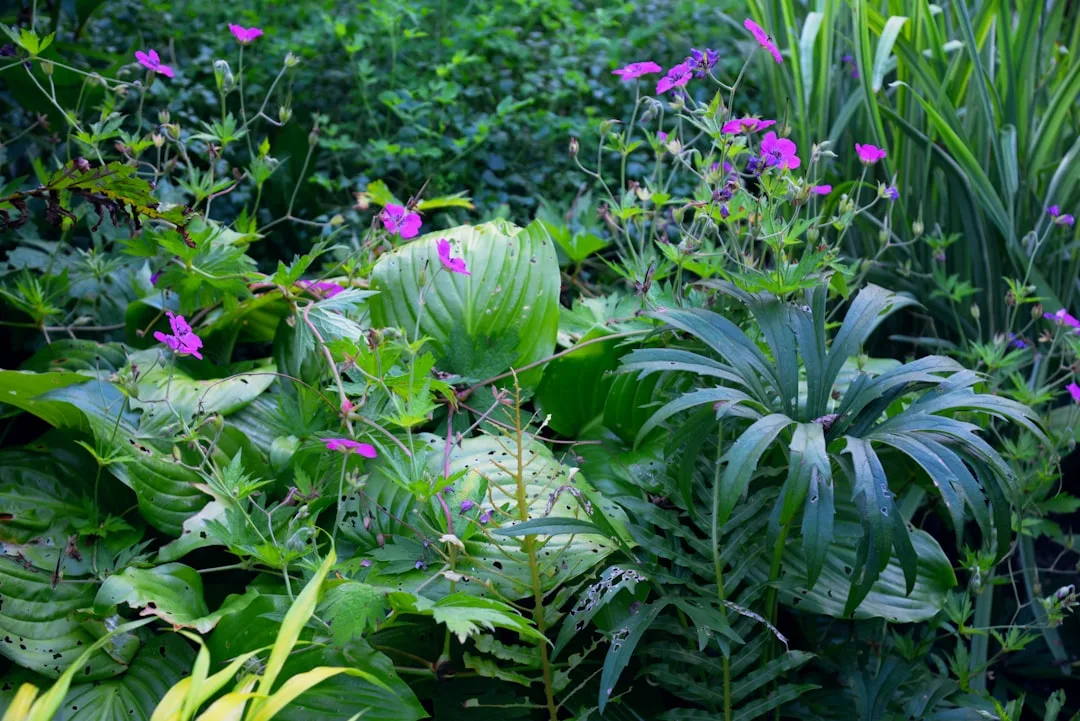
| Dappled-Sun Hybrid | Filtered light all day under canopy | Japanese maple understory, hellebore, fern blends |
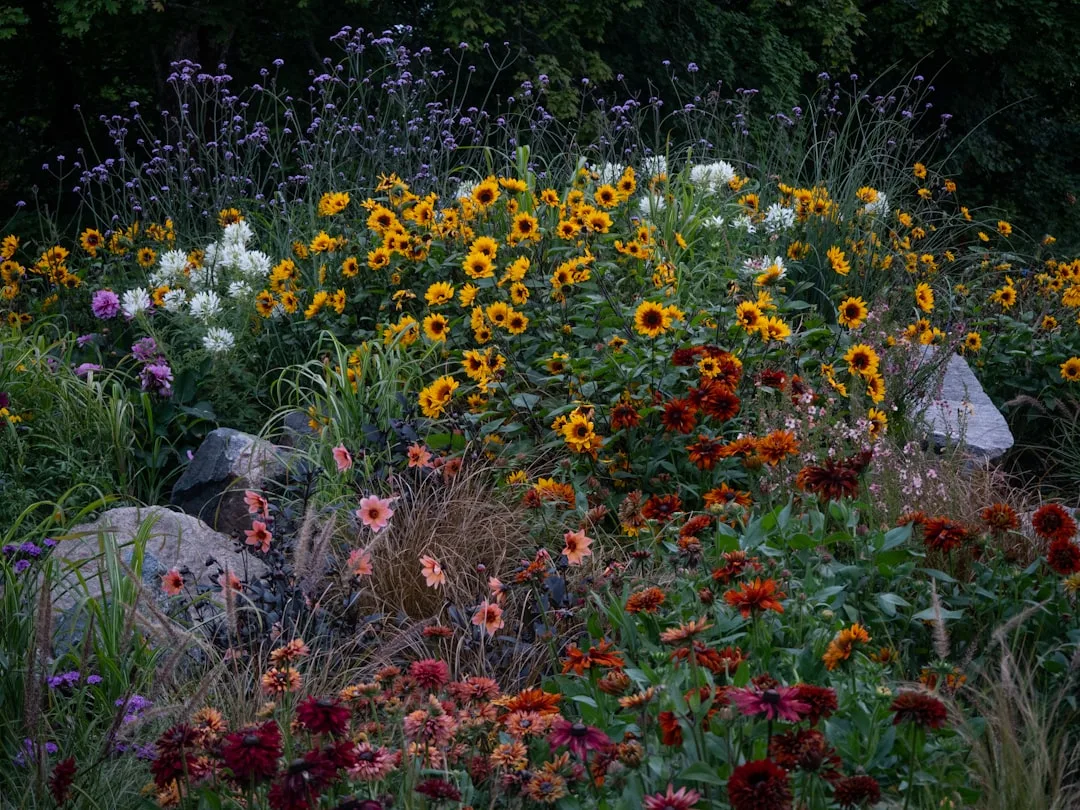
| Evening-Light Hybrid | 3 p.m.–6 p.m. western sun + morning shade | Coneflower, black-eyed Susan, rudbeckia |
| Reflected-Heat Hybrid | Bright, warm, bounced from hardscape | Sedum, salvia, gaura (heat-lovers) |
The Five-Layer Planting Strategy for Hybrid Zones
Japanese garden designers have mastered shade-sun transitions for centuries. A modern hybrid zone borrows their stratified approach: tall deciduous shrubs or multi-stem trees as the canopy, mid-layer shrubs, upright perennials, groundcovers, and soil amendments.
A Japanese maple in a hybrid zone does triple duty. Its spring canopy is airy (more morning light penetrates), midsummer leaf cover darkens the zone (afternoon cooling), and autumn drop reopens the space to lower-angle sun. This is active design, not passive hope.
Mid-layer shrubs—viburnum, deutzia, or rhododendron (in acidic soil)—create a buffer. The top layer’s dappled light reaches deep enough for herbaceous perennials to photosynthesize without scorching. Underplanting with woodland ferns, epimedium, or ajuga fills bare ground and stabilizes soil moisture in a transitional microclimate.
Most gardeners plant only one or two layers and leave vast gaps. A hybrid zone with bare soil between widely spaced specimens fails because exposed earth bakes in afternoon sun, stressing roots and evaporating soil moisture. Layering solves it.
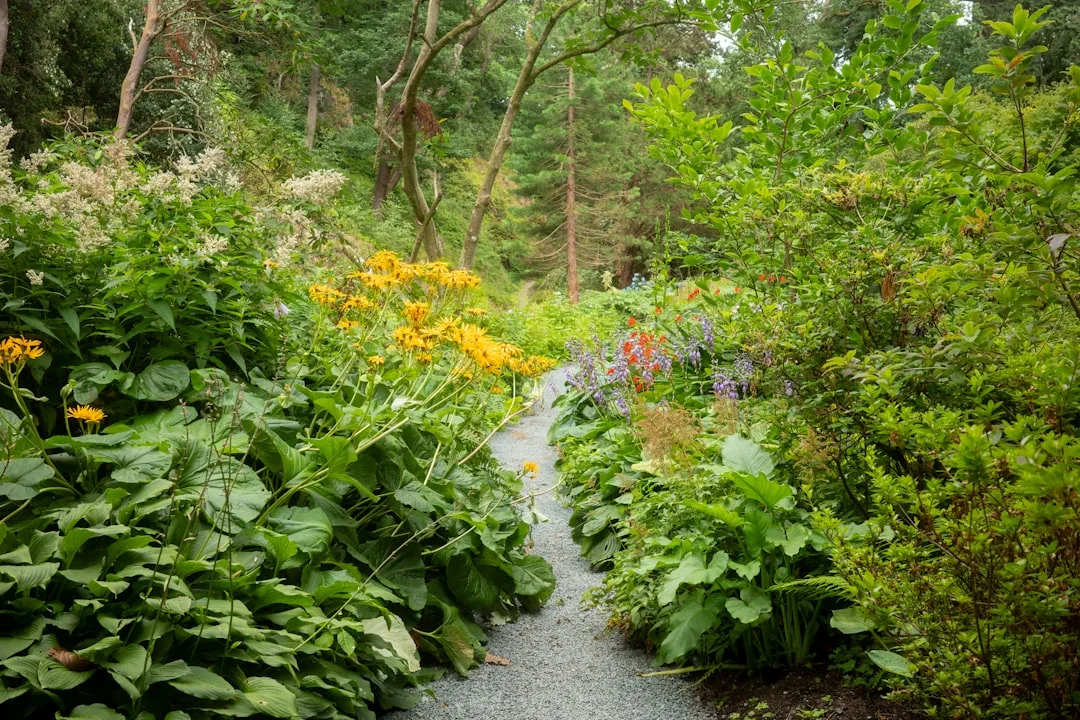
Hybrid Zones Transform Difficult Real-Estate Transitions
A north-facing foundation bed receiving only 2–3 hours of reflected morning light can’t support sun-lovers. A sunny south-facing slope bakes anything shade-adapted by July. But the zone between them—where a side path runs along a partial canopy—becomes workable with hybrid-zone logic.
Corten steel raised planters, positioned at zone edges, let gardeners fine-tune microclimates. A 12–18 inch raised bed warms faster in spring, dries faster (useful if afternoon light is intense), and lets tall perennials backlight shorter plants in front. The metal reflects warmth but also conducts it, creating a thermal buffer—useful for protecting morning bloomers from late-frost shock.
Architects and landscape firms report that hybrid-zone strategies reduce plant loss by 40–60% in transitional areas. One replaced installation by a major residential builder in the Midwest incorporated mapped hybrid zones into all 25 new model homes, reducing post-construction replanting costs and improving landscape longevity year-round.
Soil, Moisture, and Amendment Timing in Hybrid Zones
Hybrid shade-sun zones experience variable soil moisture because morning sun dries the surface while afternoon shade keeps the deeper zone cooler. Amendment strategy must account for both conditions.
Compost and mulch (2–3 inch depth) moderate temperature swings and retain moisture during dry afternoon hours. Permeable landscape fabric prevents drying while letting roots establish. Adding peat moss or coconut coir to clay-heavy soils improves drainage and root penetration—critical where part-shade plants need oxygen in dappled-light zones.
The common mistake: amending only once during installation. Hybrid zones need spring top-dressing (organic compost) before the growth surge and late-summer mulch refresh before heat stress. A hybrid zone in a subtropical or warm temperate climate (USDA zones 7–10) may need three amendments yearly.
Modern garden ideas in narrow courtyards often employ hybrid zone strategies to maximize the small spaces where urban plots receive shifting light all day. The principle scales from a 20×20 suburban lot to a compact townhouse patio.
Seasonal Shifts and Year-Round Structure
Hybrid zones shine for extending the visual and functional season. Deciduous understory shrubs (like serviceberry or viburnum) leaf out as spring sun intensity rises, then drop in autumn to let weaker winter sun reach roots and nearby beds below.
Evergreen structure—small conifers, ornamental grasses with persistent seed heads, or broadleaf foliage plants like carex or Japanese forest grass—maintains form and texture when deciduous layers sleep. A hybrid zone with no evergreen backbone collapses into visual emptiness by November.
Perennials with extended senescence (ornamental grasses, tall sedums, structural seed heads on coneflowers and rudbeckia) perform better in hybrid zones than fast-fading bloomers. They reward the dappled light with long-lasting presence, not a 2–3 week flash.
Hybrid shade-sun zones represent a fundamental shift in how gardeners think about difficult transitions. By mapping light, stratifying plantings, and amending thoughtfully, the awkward in-between becomes the garden’s most rewarding section—adaptable, sustainable, and beautiful across all seasons.