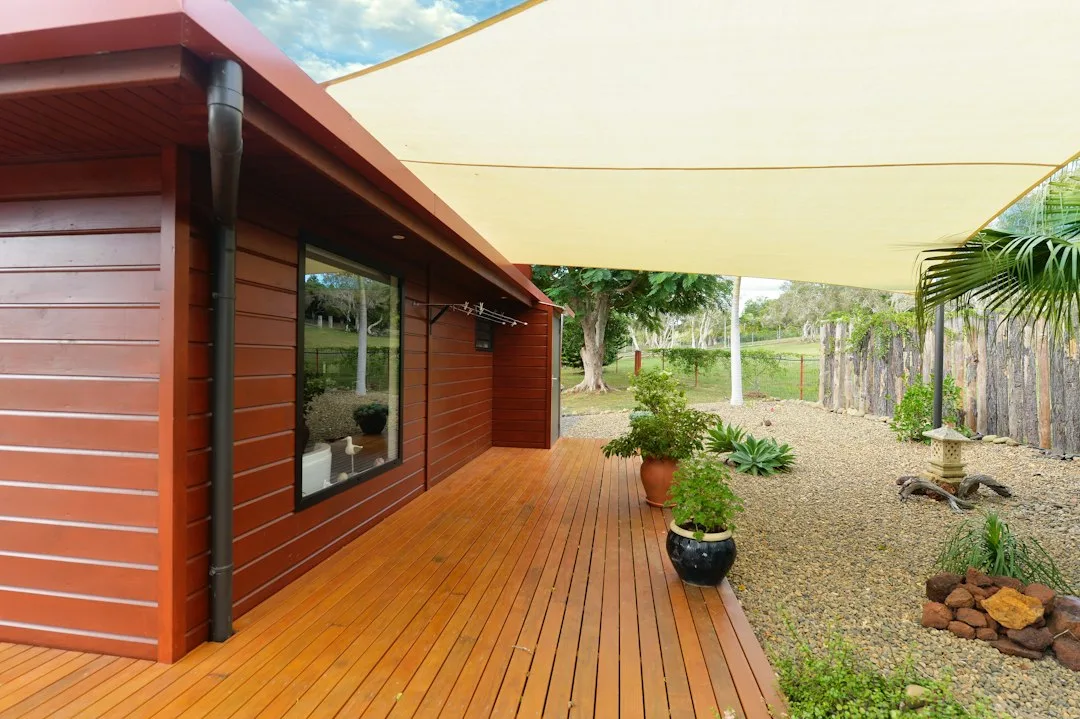
Homeowners are ditching permanent shade structures in favor of shade sail installation—a tensioned fabric system that delivers coverage without the construction weight or visual bulk of fixed pergolas and arbors. Unlike rigid overhead frameworks, shade sails use high-tension marine-grade fabric anchored at strategic points, creating adjustable sun protection that adapts to seasonal light patterns and storm risk. This shift reflects a broader move toward flexible outdoor design that doesn’t demand foundation work, long installation timelines, or permanent commitment to a single structural footprint.
Why Shade Sail Installation Outpaces Fixed Pergolas
Coolaroo, an Australian manufacturer specializing in shade cloth systems, reports that residential shade sail demand has increased 40% year-over-year as homeowners recognize the installation speed advantage. A typical shade sail installation takes 2–4 hours once anchor points are set, whereas a wooden pergola requires concrete footings, framing, and finishing work spread across several days or weeks. Fixed structures also occupy permanent visual real estate; sails can be partially retracted or angled to shift with the sun throughout the day and across seasons.
The cost difference is significant. Shade sail installation typically ranges between $1,200 and $3,500 for a residential backyard, depending on sail size and anchor complexity. This undercuts custom pergolas by 30–50%, especially when you factor in the labor, materials, and foundation reinforcement that pergolas demand.
Installation flexibility matters most in compact yards or properties with underground utilities. Because shade sails use lightweight cable anchors rather than deep concrete piers, you avoid the permits and utility marking delays that fixed structures trigger.
Quick Tips
- Measure your anchor points before ordering—asymmetrical installations create more dramatic visual angles.
- Choose HDPE or polyester fabric rated for UV exposure; cheaper materials degrade in 3–4 years instead of 10+.
- Mount sails at least 8 feet above seating areas to prevent heat entrapment and allow air circulation.
- Install tensioning hardware on the sunny side to avoid hardware glint during peak afternoon light.
- Plan for seasonal angle adjustment—summer sails benefit from 30° forward tilt, winter installations sit flatter.
Shade Sail Installation Materials and Tensioning Systems
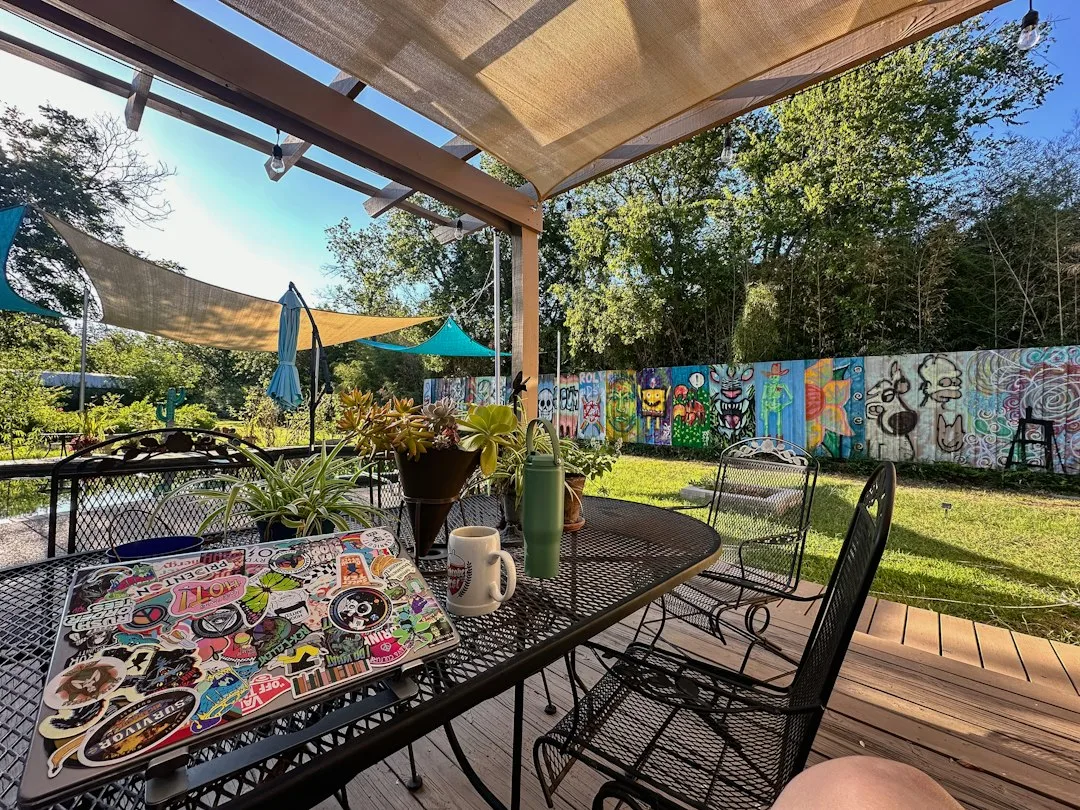
Shade sail fabric typically comes in HDPE (high-density polyethylene) or solution-dyed polyester, both rated for 85% UV blockage. HDPE sails cost less upfront but degrade faster under intense UV exposure; polyester costs 15–25% more but maintains color and strength for 10–12 years. Sunbrella, a performance fabric brand owned by Glen Raven, produces dyed polyester specifically engineered for outdoor sail systems and offers warranties extending to 10 years against color fade and fabric degradation.
Tensioning hardware—stainless steel eye bolts, turnbuckles, and cable—determines whether a shade sail installation remains taut or sags under wind and weather. Undersized hardware or improper tensioning is the #1 failure point homeowners encounter. A 300-square-foot sail sagging just 12 inches creates water pooling during rain, accelerating mildew growth and fabric breakdown. The correct approach requires turnbuckles tightened to manufacturer spec—usually 1/4 turn past hand-tight—then verified quarterly.
| Sail Material | UV Durability | Typical Lifespan |
|---|---|---|
| HDPE (Polyethylene) | 85% blockage, fades in 4–6 years | 5–7 years |
| Polyester (Sunbrella) | 85% blockage, holds color 10+ years | 10–12 years |
| Stainless Steel Hardware | Corrosion-resistant in all climates | 15–20 years |
| Galvanized Steel Hardware | Rust-prone in coastal or humid areas | 8–10 years |
Anchor Point Strategies for Shade Sail Installation
The most common mistake in shade sail installation is anchoring to inadequate structures—undersized fence posts, roof eaves without reinforcement, or deck ledgers that can’t handle lateral tension. A 400-square-foot sail under full tension exerts 2,000+ pounds of force outward on each corner anchor point. Anchoring to a standard 4×4 fence post without internal bracing will cause the post to lean and fail within 2–3 years.
Professional installers use dedicated shade sail posts—8×8 timber or engineered aluminum posts set in concrete to 24–36 inches depth, depending on soil type and wind zone. Roof-mounted sails require structural assessment by a licensed engineer to verify rafter spacing, load capacity, and flashing requirements. Wall-mounted anchors must secure to house framing, not just surface cladding.
Ground-level anchors—helical anchors or concrete pads sunk below the frost line—cost $300–600 per point but eliminate settling and tilt issues that plague budget installations.
Design and Angle Considerations for Maximum Shade Coverage
Shade sail installation angle matters as much as size. A sail pitched at 15–20° forward captures morning and evening light while blocking midday sun; a flat or rear-tilted sail maximizes afternoon coverage but looks less dynamic from the home’s interior. Triangular sails create stronger visual lines than rectangles or asymmetrical shapes, though curves and organic layouts suit contemporary and cottage-style yards.
Positioning sails 8–12 feet above seating allows air circulation underneath, preventing heat entrapment that can make outdoor spaces feel hotter than open air. Multiple overlapping sails layered at different angles create more dramatic shadow patterns and reduce glare—a technique popular in Mediterranean and French-style outdoor designs where dappled light enhances spatial depth.
Color selection influences both function and aesthetic. Light grays, creams, and sand tones reduce heat absorption and suit warm beige and taupe exterior color schemes; darker blues and charcoals create stronger visual contrast in minimalist or modern landscapes. Darker fabric blocks slightly more UV but runs 5–10 degrees hotter underneath than light colors during peak summer hours.
Wind, Drainage, and Climate Factors in Shade Sail Installation
Wind resistance is non-negotiable in shade sail installation design. Sails rated for 75+ mph wind speeds use reinforced corner patches and higher-gauge cable; budget sails rated for only 35–50 mph will fail catastrophically in coastal zones, storm-prone regions, or areas with severe seasonal wind shifts. Fabric tears under wind load are not covered by most warranties and require full sail replacement—a $1,500–2,500 expense that proper initial sizing prevents entirely.
Water drainage is the second critical factor. Sails must have negative slope (sagging slightly forward or to one side) to shed rain; level or backward-tilted sails collect standing water that strains fabric, promotes mildew, and accelerates degradation. A 400-square-foot sail with improper drainage can hold 200+ gallons of standing water after rain, creating both maintenance burden and material stress.
Coastal properties require stainless steel hardware throughout—galvanized bolts and eye hooks corrode within 3–4 years in salt spray environments, compromising structural integrity silently before failure occurs. Inland humid climates benefit from stainless fasteners but tolerate galvanized options with annual corrosion inspection.
Climate-adapted shade sail placement considers local sun angle and seasonal variation. In northern climates (40°+ latitude), winter sun sits lower on the horizon, so sails mounted at steeper angles (25–30°) maintain visibility into homes during colder months while still blocking summer overhead heat. Southern installations benefit from shallow angles (10–15°) that prioritize year-round coverage over winter light penetration.
Cost Comparison and Installation Timelines
A basic shade sail installation—single 300-square-foot polyester sail with four ground-mounted posts and stainless steel hardware—typically costs $2,500–3,500 delivered and installed. This includes labor, post installation, and hardware tensioning. Multi-sail systems or roof-integrated installations run $4,000–7,000, while high-end custom polyester with architectural anchoring can exceed $8,000.
Installation timeline averages 2–4 hours for straightforward ground-mounted systems; roof and wall-integrated systems require permitting and structural assessment, extending timelines to 2–3 weeks. Labor represents 40–50% of total cost in residential markets.
Compared to a custom wooden pergola ($3,500–8,000 for 300 square feet) or motorized retractable shade structure ($5,000–12,000), shade sail installation offers faster deployment and lower upfront investment. Removal and relocation are also simpler—sails can be unbolted and reinstalled at a new property, whereas pergolas demand demolition and site restoration.