
Bay window treatment ideas solve the classic problem of awkward angles and uneven light while keeping the view open. The best solutions use separate panels on each facet so light control stays precise and the architecture remains the star. Sheer layers or roller shades handle daytime glow; heavier drapery or lined Romans take over for privacy and insulation after dark.
Most homeowners start with one functional layer mounted inside each section, then add side panels only if the room needs softness. This approach works in living rooms, dining spaces, and bedrooms without fighting the bay’s geometry. Ready-made options rarely fit cleanly, so custom or made-to-measure pieces deliver the cleanest result.
Budget three-pane bays often land between $150 and $400 for basic roller or cellular shades, while mid-range custom sets run $300–$800 and motorized premium packages reach $900–$1,800 according to retailer ranges. Choose fabric weight and lining first—the rest follows from light needs and room style.
- Mount treatments on each bay section separately for clean angles and independent light control.
- Layer sheers or rollers inside with side drapery outside when you want both function and softness.
- Roman shades add texture and fold neatly; roller shades disappear when raised.
- Expect $70–$450 per roller shade and $100–$600 per Roman shade installed, higher for custom bay sizes.
- Avoid single continuous rods that force fabric into the corners—they create gaps and uneven hangs.
- Neutral or tone-on-tone fabrics keep the view dominant while still filtering glare.
Layered Curtains Soften Bay Window Angles


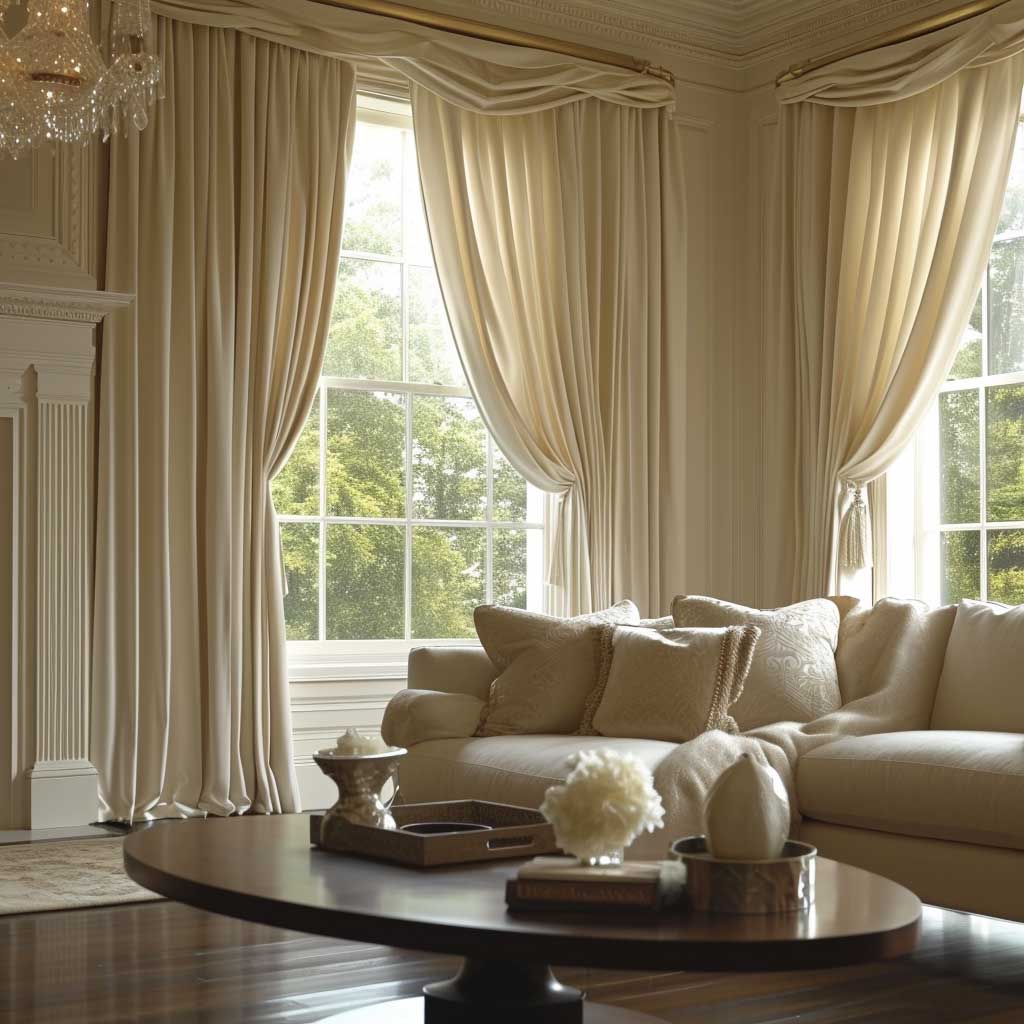
Bay window dressing with layered curtains starts by treating each angled section as its own panel. Sheer fabric sits closest to the glass and softens harsh midday sun the way a sheer scarf softens a strong lightbulb. Opaque outer panels pull across only when privacy or insulation is required. Why does this work better than a single heavy drape? Separate tracks or rods prevent fabric from bunching in the corners.
Neutral linen or cotton keeps the treatment from competing with the view. Avoid thick velvet on south-facing bays—it traps heat and feels heavy by afternoon. Average ready-to-hang panels start around $40–$90 each; custom lengths for tall bays push higher. Hang the outer rod several inches beyond the outer edges so open panels clear the glass completely.


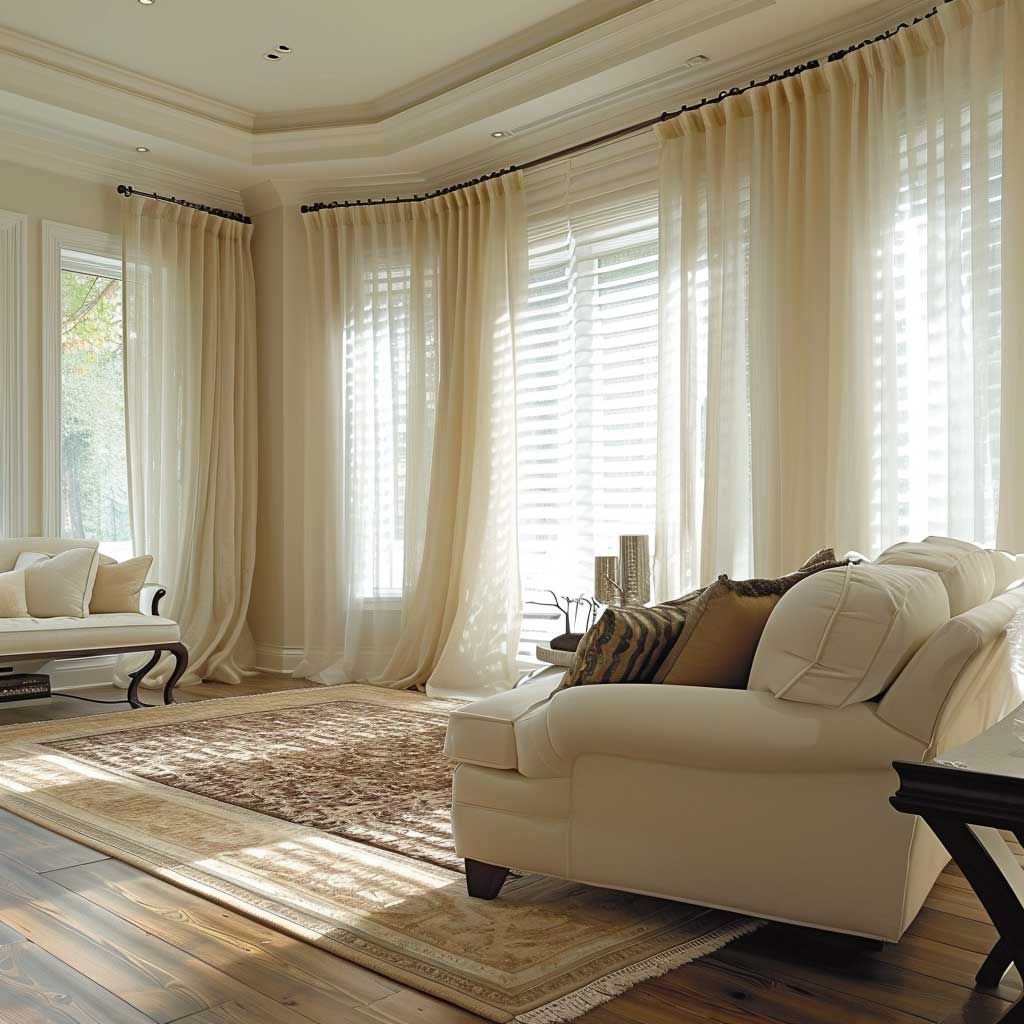

The combination gives living rooms the flexibility they need throughout the day. Pull the sheers alone for a soft glow; close both layers when evening traffic passes outside. One anti-move: never force a single continuous rod around the angles—it creates permanent gaps and uneven folds. Measure each pane separately and order panels that stack cleanly off the glass when open.
Modern Roller Shades Keep Bay Windows Clean
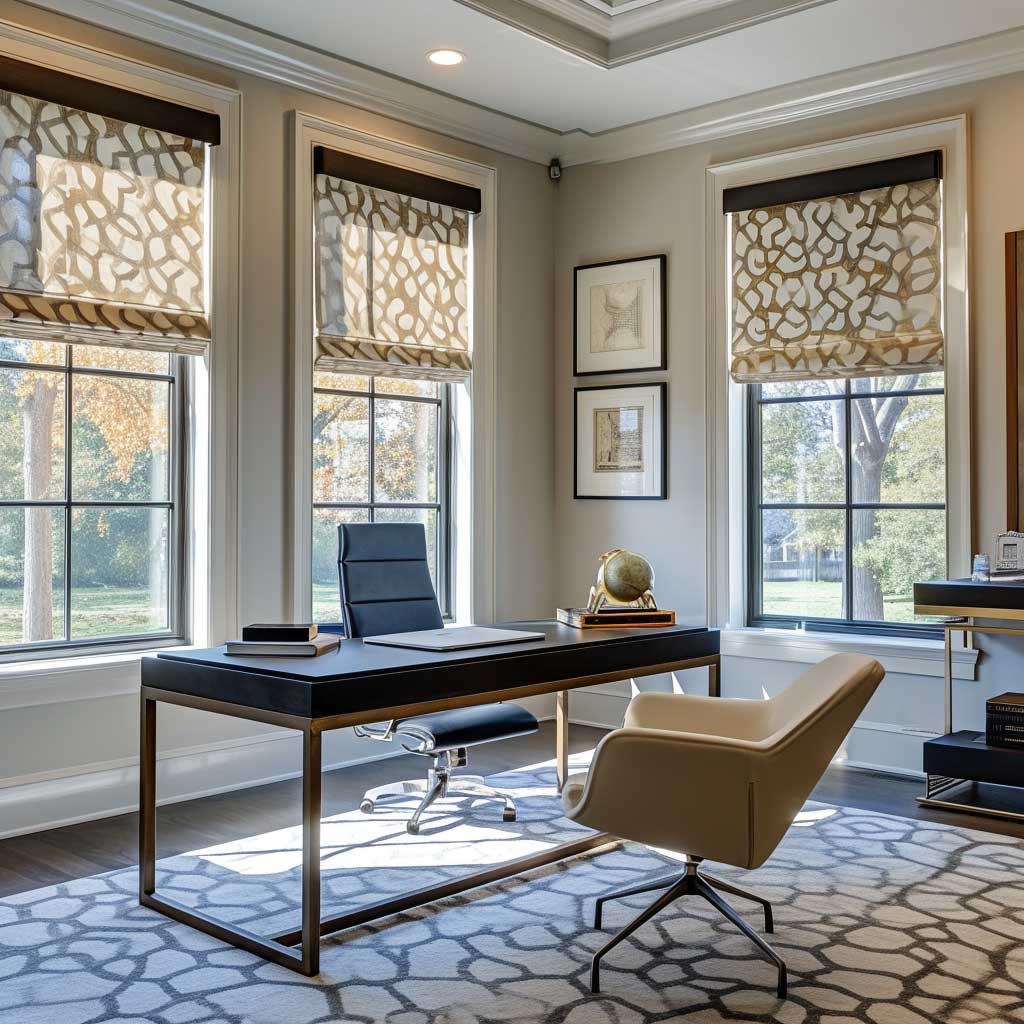


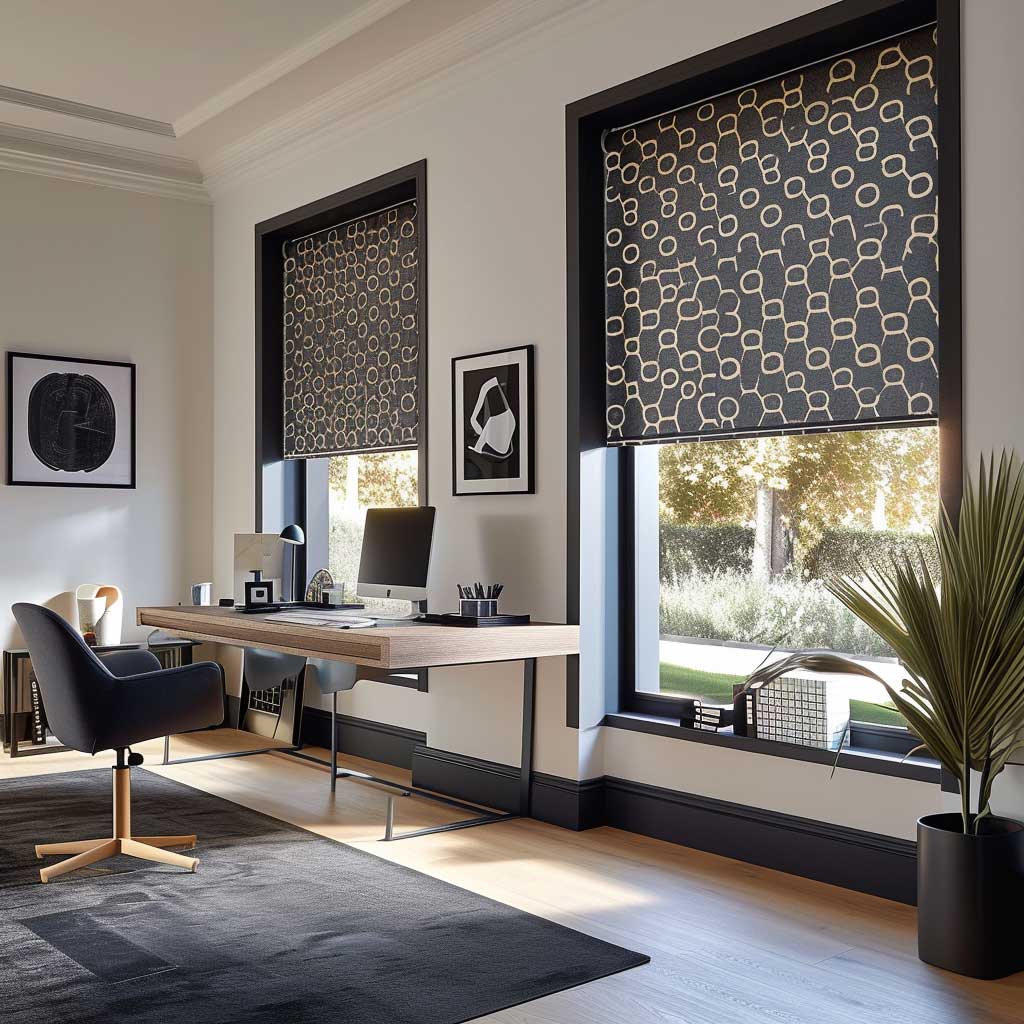
Modern bay window treatments favor roller shades because they roll into a slim cassette and leave the architecture unobstructed. Geometric or solid fabrics work especially well in home offices where glare on screens must stop on demand. Install one shade per pane so each section adjusts independently—exactly the precision a bay needs.
Light-filtering rollers average $70–$450 installed depending on size and fabric; blackout versions sit at the higher end. Choose a color that matches the wall or trim so the raised shade nearly disappears. Skip cheap vinyl that yellows in strong sun within a year. For deeper options on material performance, explore bay window blinds ideas that maximize natural light.
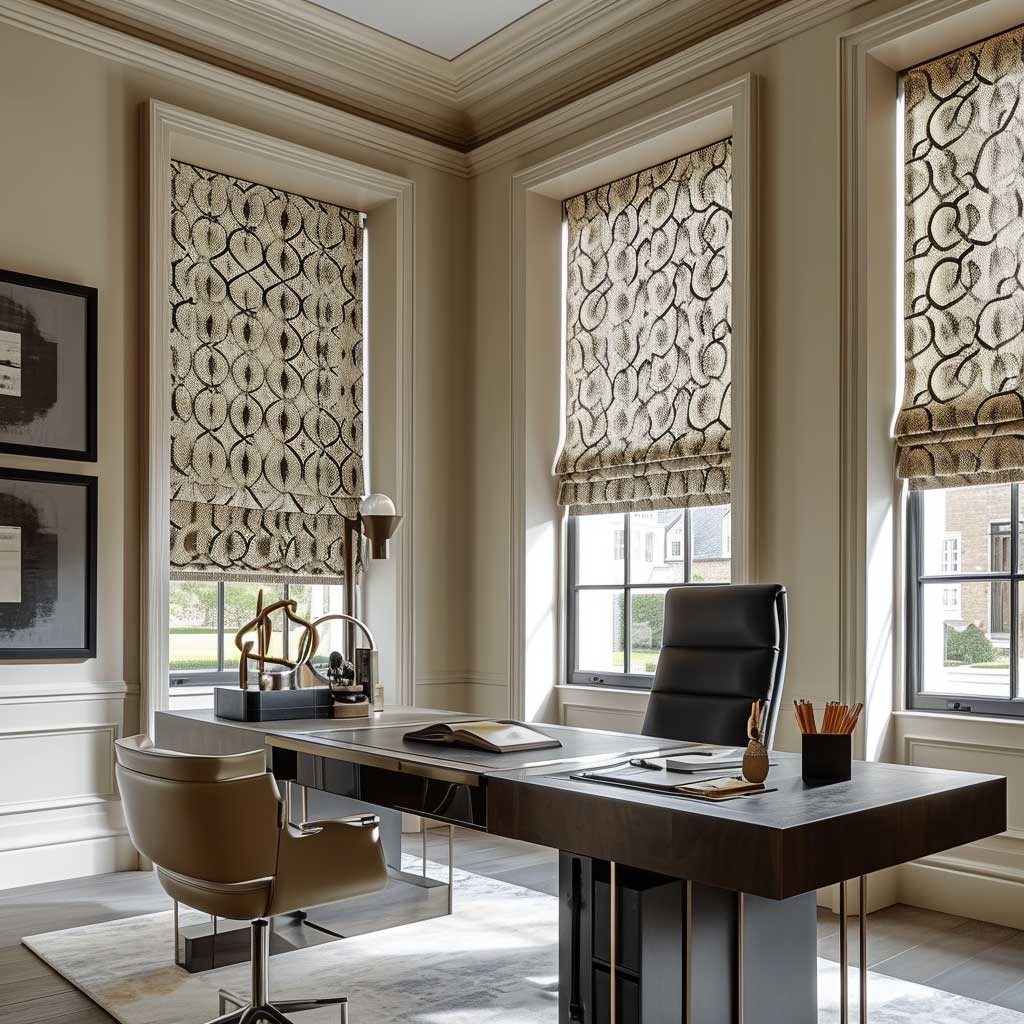
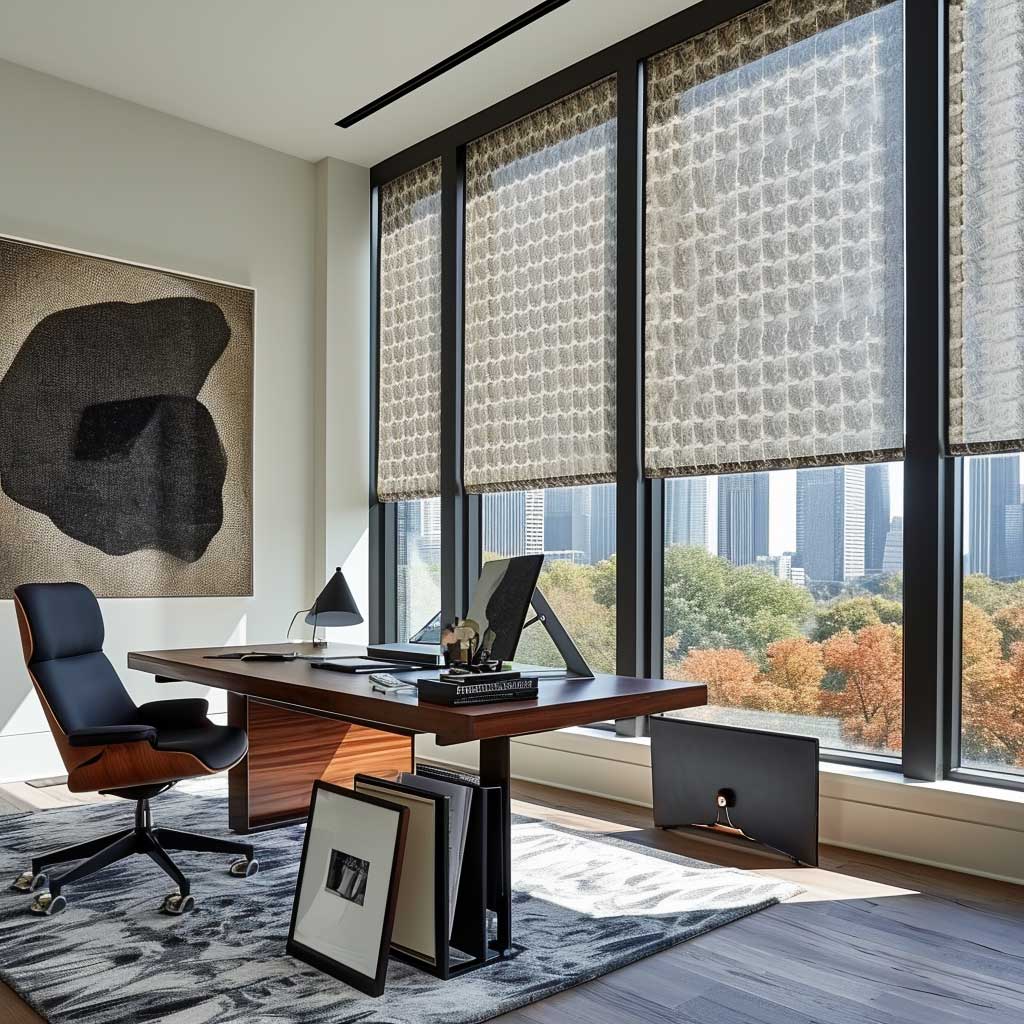
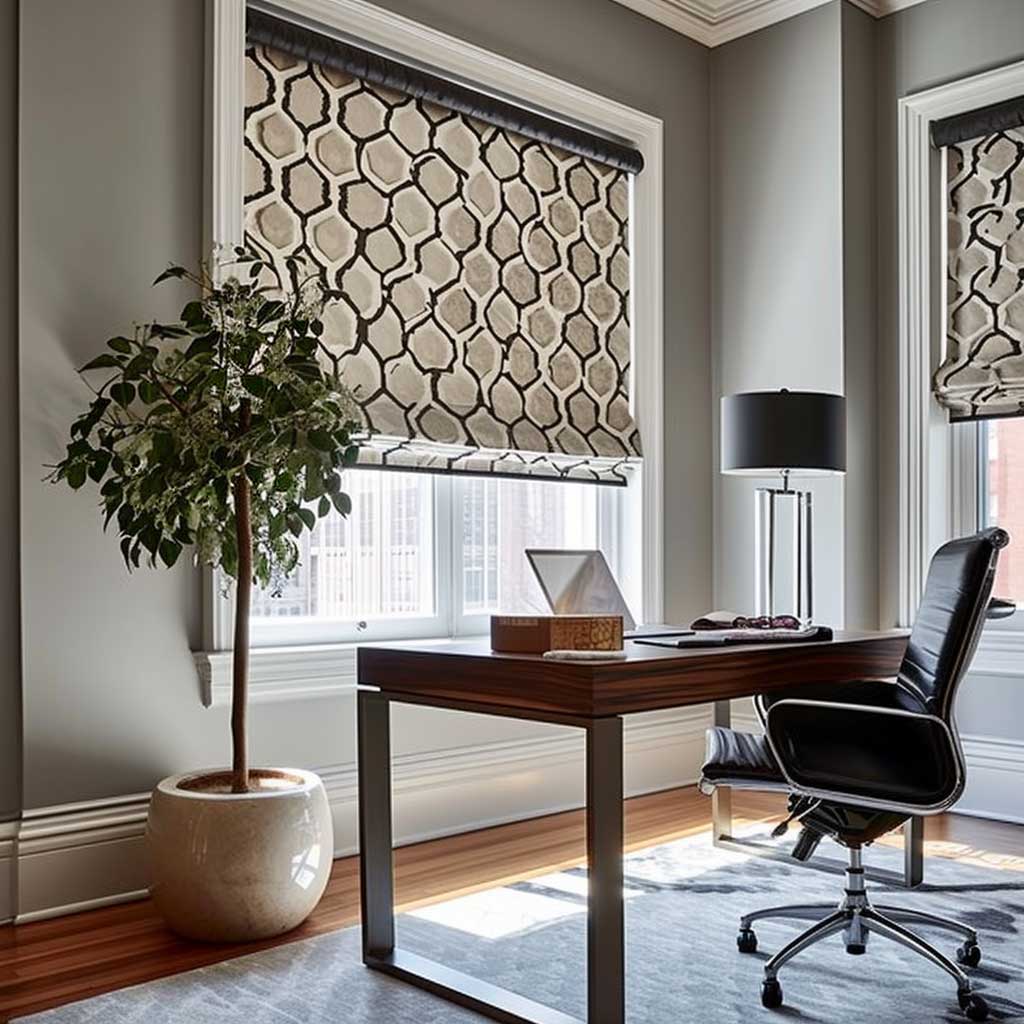
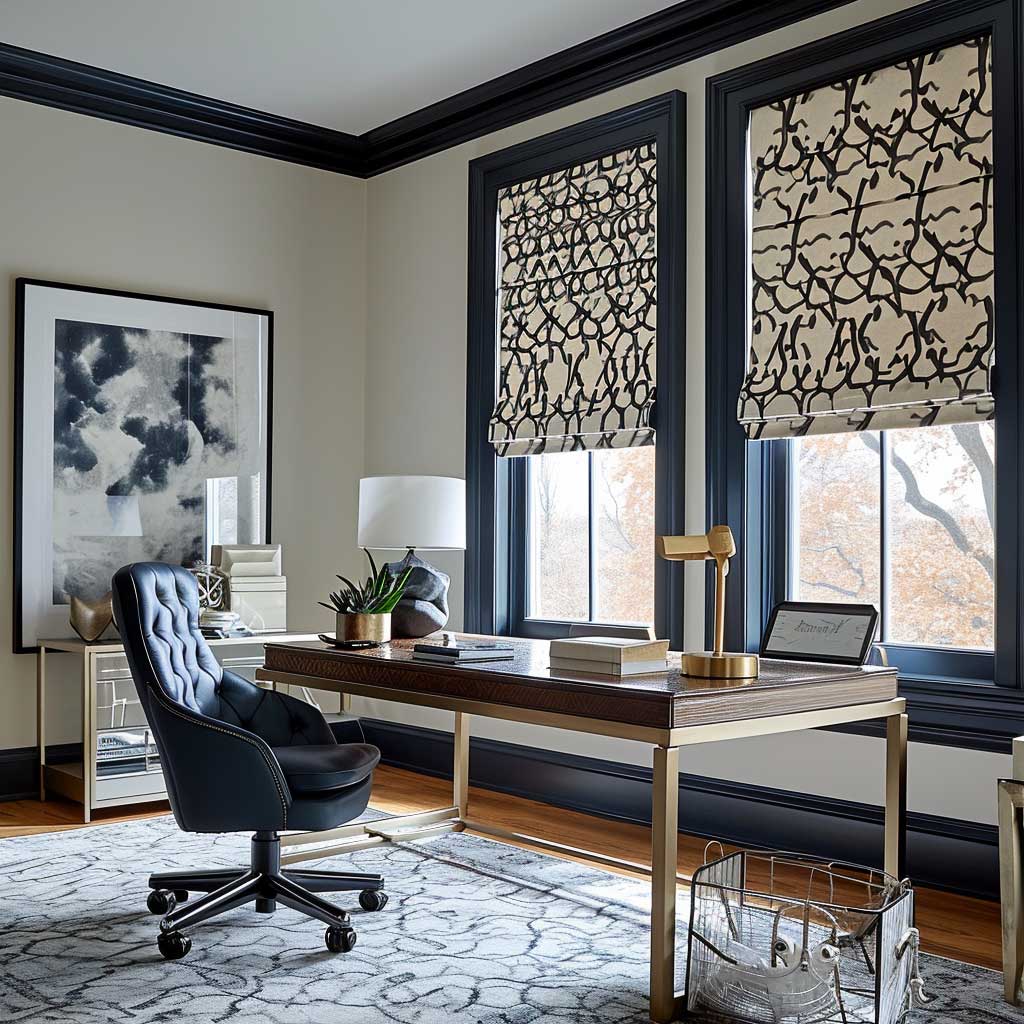
Operation stays simple: a continuous chain or motorized lift raises the fabric fully out of sight. That space-saving quality matters in smaller rooms where bulky stacked fabric would crowd furniture. Pair rollers with a narrow valance only if the hardware needs camouflage. Otherwise leave the cassette exposed for the cleanest modern line.
Classic Drapery Brings Formal Weight to Bay Windows
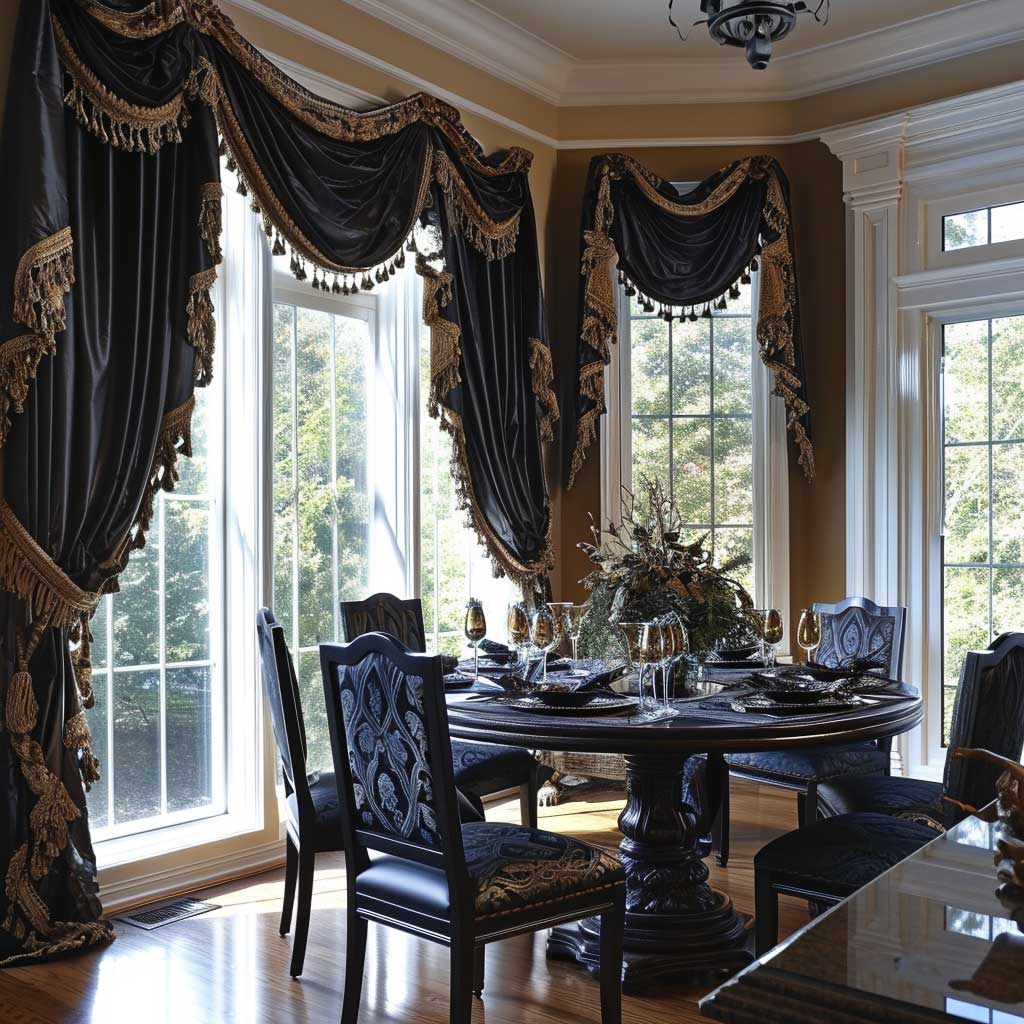


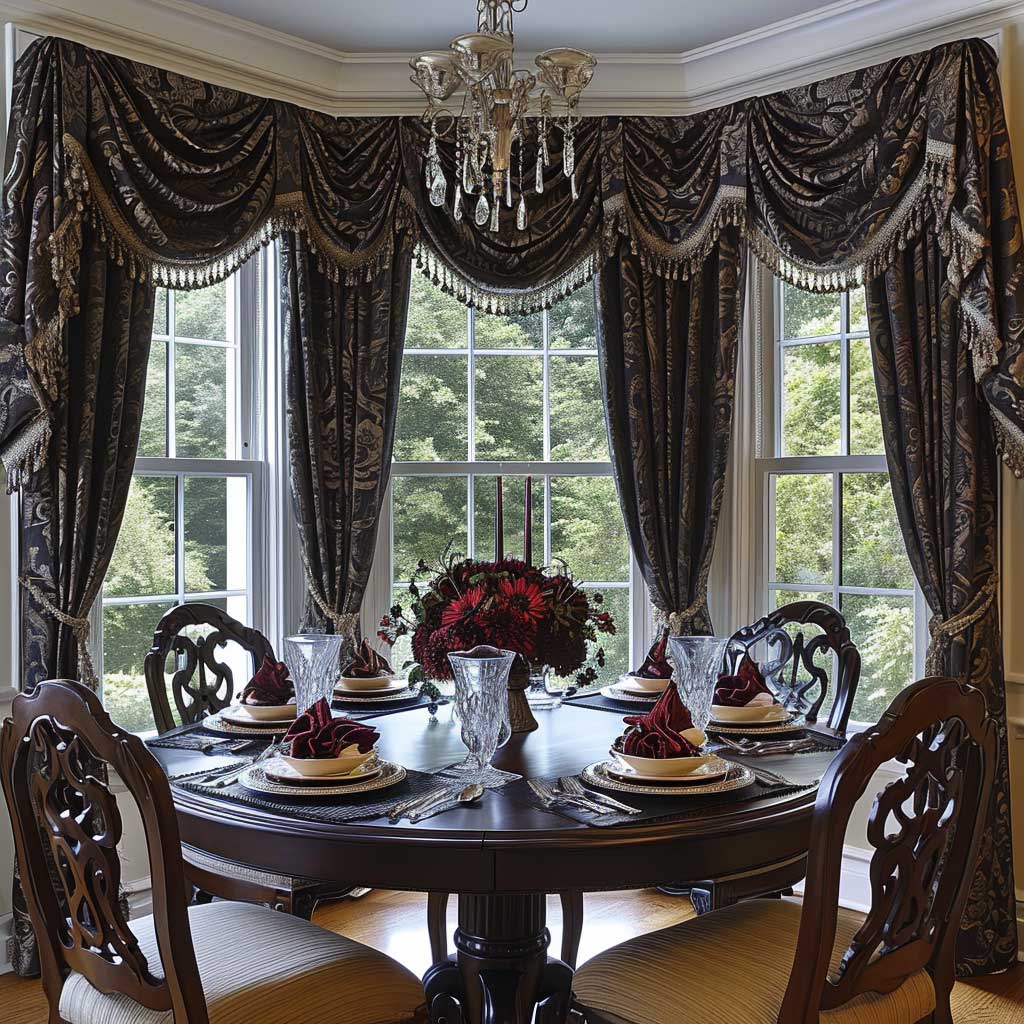
Classic bay window treatments lean on full-length drapery in dining rooms and formal living areas. Heavy fabrics such as velvet or brocade absorb sound and create the quiet weight those rooms need. Mount individual panels on each facet or place longer panels only on the outer returns so the center view stays clear.
Deep jewel tones or warm neutrals complement wood furniture without fighting it. Ornate metal or crystal tie-backs hold the fabric open and add a small decorative accent. Expect custom drapery for a three-section bay to start near $200–$300 in materials alone before hardware and labor. Skip lightweight polyester that looks thin against substantial architecture—it never carries the same presence.
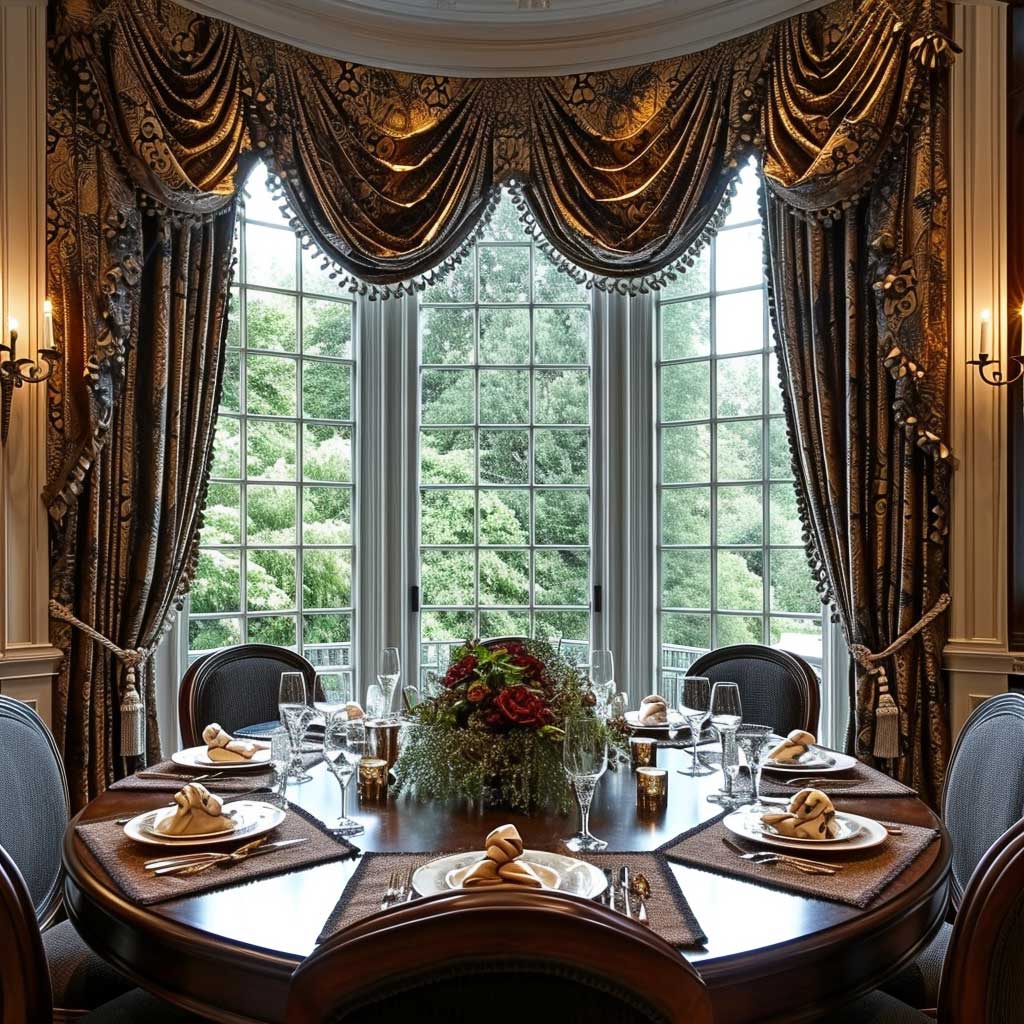


The result turns everyday meals into occasions without blocking the architecture. When the panels close they also improve winter insulation by trapping a layer of air against the glass. Measure the full height from ceiling or high rod to floor and add a slight break for a polished finish. One common misstep is hanging the rod too low—raise it several inches above the frame to stretch the perceived height of the room.
Roman Shades Add Texture to Bay Window Treatments
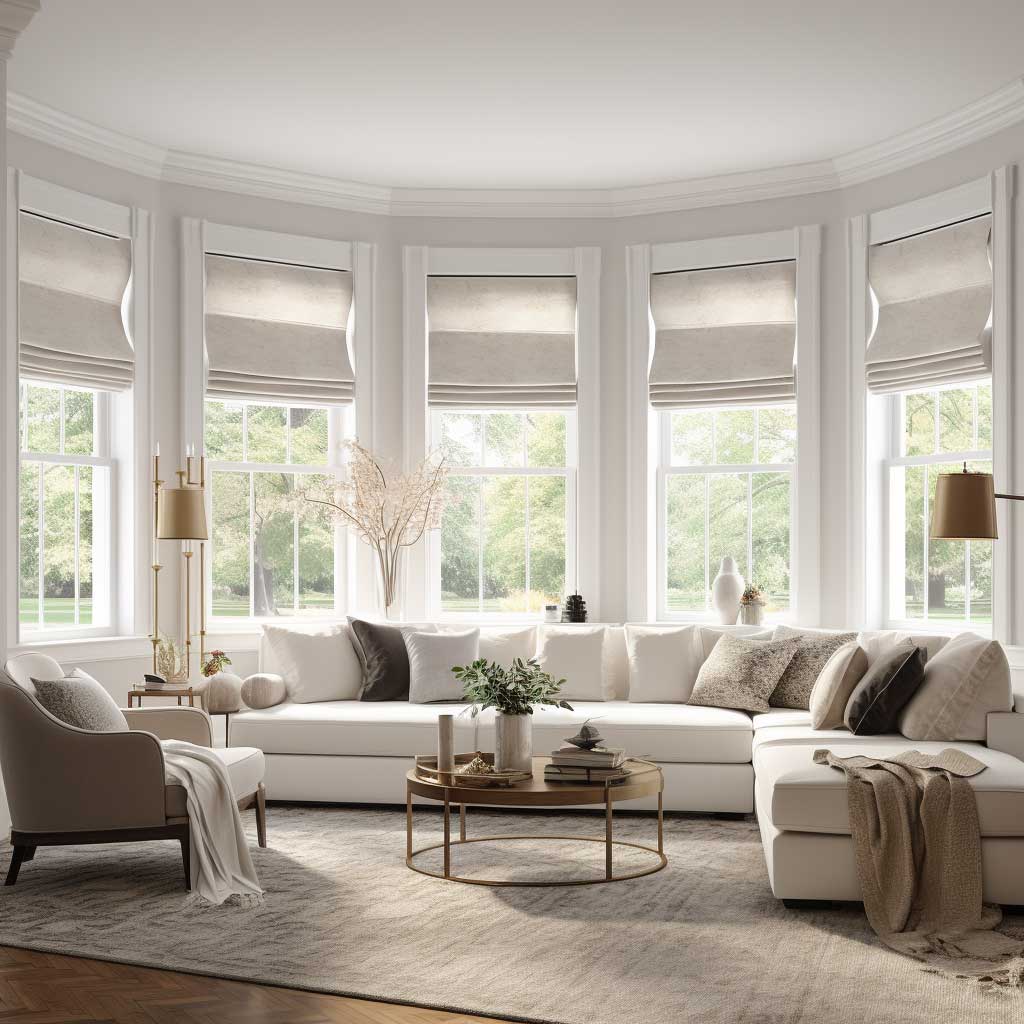


Roman shades rank high among bay window treatment ideas because they fold into neat horizontal stacks and introduce fabric texture without the bulk of full drapery. Flat or relaxed folds both suit individual panes; the fabric rises cleanly and stops at any height for partial light. Thicker weaves add a modest insulation layer that thinner rollers lack.
Installed prices commonly fall between $100 and $600 per shade depending on fabric and lining. Blackout liners push the upper range and work well in bedrooms. Neutral solids or subtle patterns keep the focus on the view rather than the shade itself. Avoid loosely woven fabrics that sag between the ribs—they look tired within a season.
How much light do they actually stop? With a quality liner they can darken a room enough for daytime naps while still allowing a soft glow when partially raised. Mount them inside the frame for a built-in appearance. Outside mounts hide imperfect trim but project farther into the room. Either way, order each shade to the exact width of its pane so gaps never appear at the edges.
Floor-Length Draperies Frame Expansive Bay Views


Floor-to-ceiling draperies turn bay windows into a framed panorama. Hang the rod high and wide so the panels stack completely off the glass when open. Light airy fabrics keep the mood relaxed; heavier weaves add evening drama. Individual panels on each section follow the angles more cleanly than one continuous run of fabric.
This approach answers the common question of how to dress a bay window without hiding its shape. The vertical lines draw the eye upward and make ceilings feel taller. Average panel prices start near $50 and climb with fabric quality and length. Choose a color close to the wall so the treatment supports rather than competes with the outdoor scene.
One practical limit: full drapery alone rarely gives precise light control on sunny days. Pair it with an inner roller or Roman shade when glare becomes an issue. Never let the panels drag on the floor in high-traffic rooms—they collect dust and fray at the hems. A half-inch break or slight hover keeps the finish crisp.
Sleek Roller Shades Deliver Modern Bay Window Style
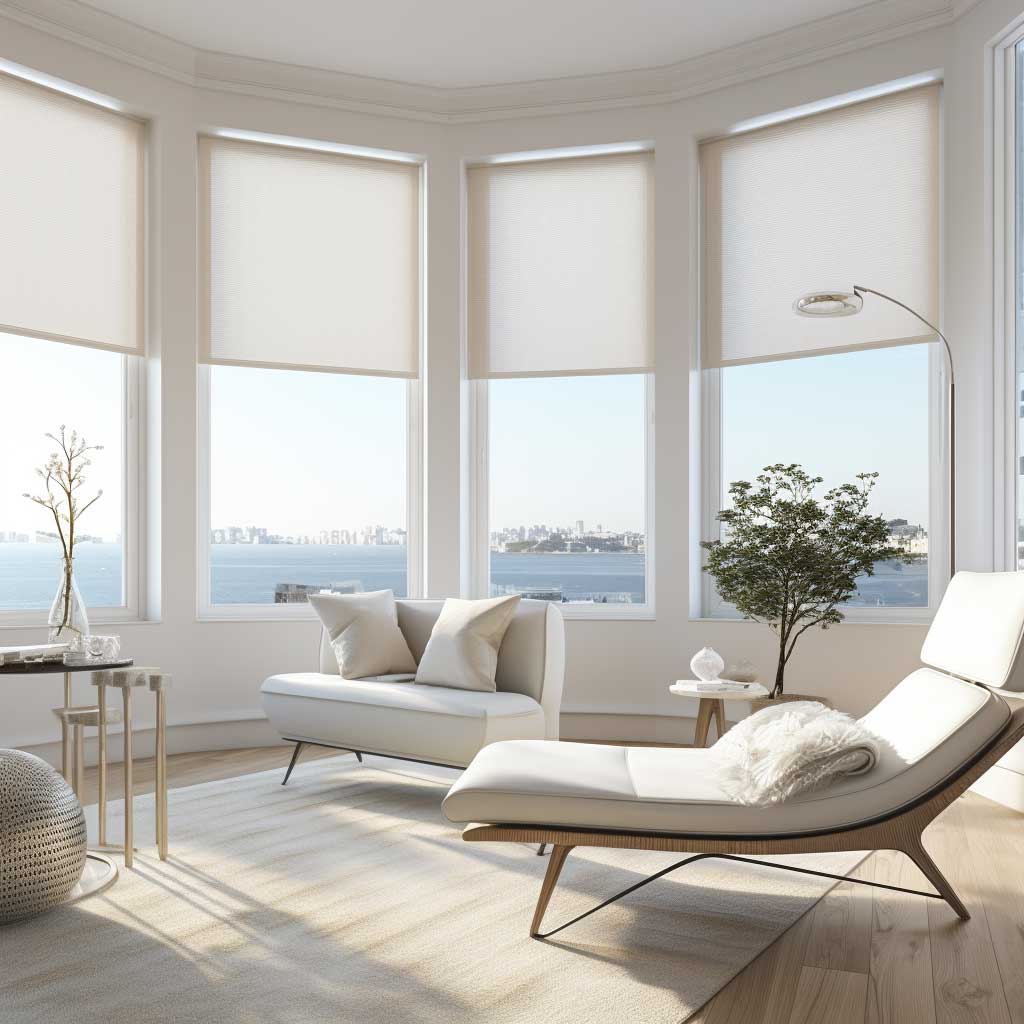


Sleek roller shades remain one of the most practical bay window treatment options for contemporary rooms. The fabric rolls tightly into a cassette that sits almost flush with the frame, leaving the glass fully exposed when raised. Custom sizing for each angled pane eliminates the light gaps that plague standard blinds.
Colors that match the surrounding trim make the hardware vanish. Light-filtering fabrics cut glare while preserving outdoor views; blackout versions suit media rooms or bedrooms. Installed costs typically range from $70 to $450 per shade, with motorized lifts adding further expense. For seating ideas that pair well with this clean look, see minimalist bay window furniture with Scandinavian simplicity.
Do not choose overly wide single shades that span multiple panes—they roll unevenly and stress the mechanism. One shade per section keeps operation smooth and appearance tailored. Cordless or motorized lifts improve safety in homes with children or pets and remove the visual clutter of dangling chains.
Comparing Popular Bay Window Treatments
| Treatment | Best For | Approx. Installed Cost per Shade/Panel | Light Control | Key Limitation |
|---|---|---|---|---|
| Roller shades | Modern rooms, offices | $70–$450 | Excellent, full range | Minimal texture |
| Roman shades | Living rooms, bedrooms | $100–$600 | Good with liner | Higher fabric cost |
| Layered curtains | Living rooms, formal spaces | $40–$200+ per panel | Flexible by layer | Requires careful rod placement |
| Heavy drapery | Dining rooms, formal areas | $100–$300+ per panel | Strong when closed | Can feel bulky if overdone |
Cellular shades offer an additional energy edge. According to Department of Energy research, properly installed cellular window coverings can reduce heating needs by nearly 25 percent in some homes. That figure makes them worth considering for drafty older bays even when style favors another look. Layer them under drapery if both insulation and softness matter.
Don’t do this
- Force a single continuous rod around every angle—fabric bunches and light gaps appear.
- Choose ready-made sizes that leave edges exposed; custom or made-to-measure wins for bays.
- Hang heavy drapery without an inner functional layer if precise light control is needed.
- Ignore insulation value in cold climates—thin sheers alone waste heat.
Choosing Treatments That Last
The strongest bay window treatment ideas start with the room’s actual light pattern and privacy needs rather than a single style photo. Measure every pane, decide whether the view or the fabric should dominate, then select materials that match both. Neutral tones and clean mounts keep the architecture visible; richer fabrics and layered setups add warmth when the room calls for it.
Install functional shades first for daily control, then add side drapery only if softness is missing. Budget realistically: basic three-pane sets start under $400 while fully custom motorized packages climb past $1,000. Check manufacturer warranties and cleaning instructions before purchase—some fabrics require professional care.
Test the operation after installation. Shades should raise and lower smoothly; curtains should stack clear of the glass. Small adjustments in rod height or shade length often fix the final look. When the treatment disappears into the architecture instead of fighting it, the bay window finally works as intended.
For energy performance details on cellular and insulating shades, the U.S. Department of Energy provides clear guidance at interior cellular shades research.
Final Selection Tips
Bay windows reward precision. Treat each angled section as its own window and the rest of the decisions become simpler. Match fabric weight to climate and room use, keep hardware minimal, and let the view remain the main feature.
Start with light-filtering rollers or Romans for daily control, then decide whether side panels add the softness the space needs. Measure twice, order custom when possible, and avoid anything that forces fabric into the corners.
Neutral or tone-matched colors almost always look more intentional than bold statements that compete with daylight. Once the treatments operate smoothly and the light feels balanced throughout the day, the bay stops being a challenge and becomes the room’s quiet strength.
Complete guide
Window Treatments That Actually Transform a Room
Curtains, blinds, shades, valances, bay windows, doors — all in one place
You Might Also Like
Related Topics