
Burgundy kitchen cabinets deliver depth and quiet drama when balanced with soft cream. The pairing works because the deep wine tone anchors the room while cream lifts light and softens edges. Homeowners choose this combination when they want color without chaos—rich enough to feel special, light enough to stay practical for daily cooking.
Professional painting of an average kitchen typically runs $2,000 to $6,500, or $30–$70 per linear foot, according to current market data. DIY materials stay under $600. The finish lasts 8–15 years with proper prep. Skip thin wall paint; cabinet-grade enamel holds up to grease and frequent opening.
Two-tone layouts—burgundy below, cream above—keep smaller kitchens open. Full-wrap burgundy suits larger spaces with strong natural light. Hardware in brass or bronze completes the look without competing.
- Burgundy grounds the room; cream prevents heaviness and reflects light.
- Professional cost averages $2,000–$6,500; DIY supplies stay under $600.
- Two-tone (dark lowers, light uppers) works best in compact kitchens.
- Cabinet-grade enamel and thorough degreasing decide longevity.
- Gold or bronze hardware warms the palette without overpowering.
- Avoid pure cool whites next to burgundy—choose cream with a warm lean.
Elegant Full-Wrap Cabinets in Deep Burgundy


Full-wrap burgundy kitchen cabinets turn the entire perimeter into a continuous statement. The color behaves like a tailored suit—structured, intentional, and hard to ignore. Cream appears on walls, trim, or open shelves so the dark faces never close the room in. Think of it as night sky meeting soft dawn light.
Why does this approach succeed where pure red fails? Burgundy carries brown and plum undertones that ground the space instead of shouting. Test chips of Benjamin Moore Classic Burgundy or Sherwin-Williams Sommelier against your actual lighting for a full week. Cool white walls fight the warmth; cream with a yellow lean cooperates. Skip high-gloss if fingerprints already frustrate you—satin hides daily marks better.
Marble or quartz with subtle veining pairs cleanly. Gold hardware adds a quiet gleam without competing. Under-cabinet lighting at 2700K keeps the color rich after dark. One practical rule: if midday overcast light makes the sample look flat, choose a lighter cream ratio or move to two-tone.
Two-Tone Layouts That Keep Kitchens Open


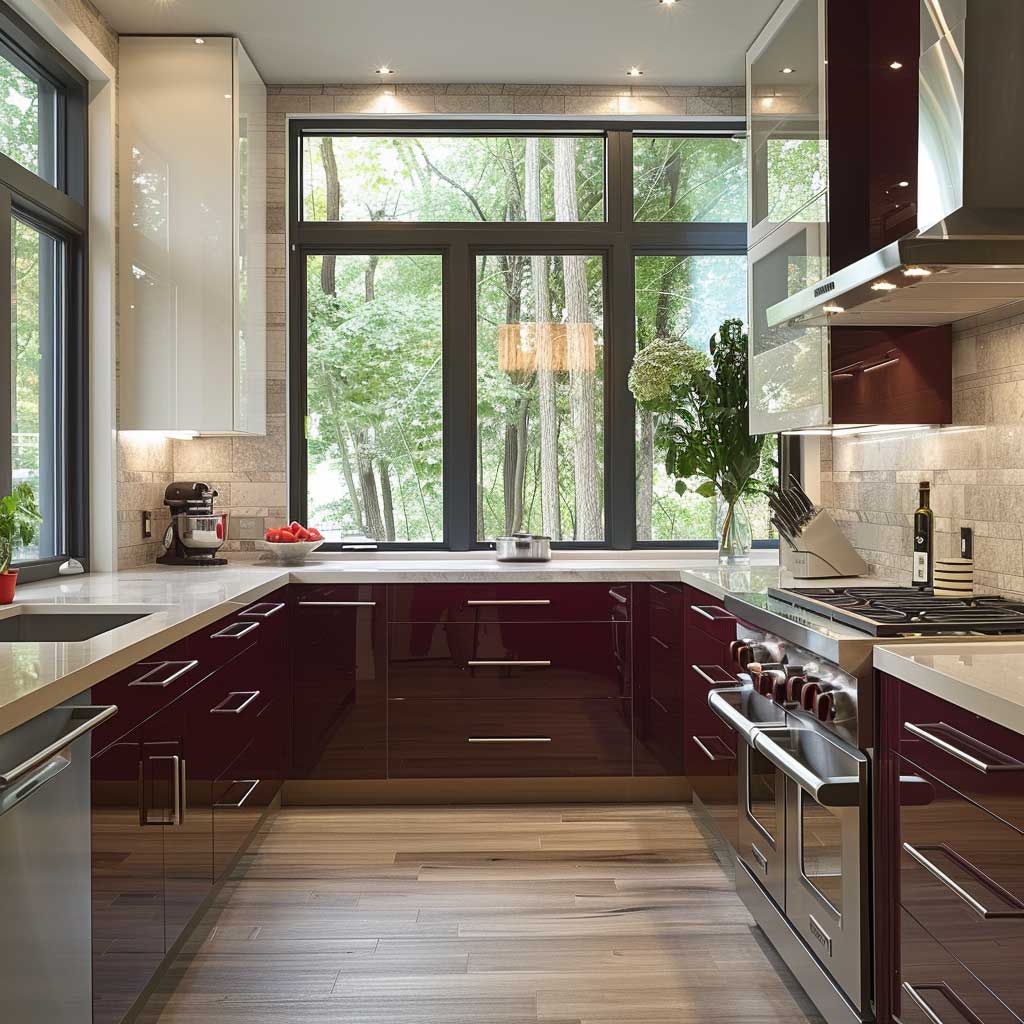

Two-tone burgundy kitchen cabinets solve the light problem that full dark runs create. Lower doors take the deep color; upper doors stay cream so the eye travels upward. The result feels grounded yet airy, like a well-cut jacket over a light shirt.
Stainless appliances and quartz counters sit comfortably against the contrast. Natural light from large windows multiplies the cream surfaces and keeps the burgundy from reading heavy. What happens if you reverse the colors? Upper dark cabinets can feel top-heavy in rooms under 150 square feet—stick with dark below unless ceilings run high and windows face south.
For a step-by-step process that protects the finish, follow this beginner guide to painting kitchen cabinets. Proper degreasing and bonding primer prevent the peeling that shows up within 18 months on rushed jobs. Satin sheen on both colors keeps cleaning simple.
Classic Island Focus With Vintage Warmth


A classic burgundy island acts as the room’s anchor while surrounding cream cabinets stay light. The island becomes the conversation piece—solid, useful, and impossible to miss. Dark wood floors deepen the warmth; bronze fixtures add the quiet age that feels collected rather than staged.
Bar seating in cream or natural wood continues the balance. Pendant lights with warm bulbs pull the palette together after sunset. Avoid chrome here; it cools the burgundy and breaks the vintage thread. One anti-advice: do not paint the island a brighter red hoping for more energy—true burgundy holds its dignity longer and photographs better.
Refinishing an existing island instead of replacing it typically costs a fraction of new cabinetry. Compare approaches and realistic budgets in this overview of kitchen cabinet refinishing that restores value. The structure stays; only the color changes.
Materials Finishes and Hardware That Hold
Marble or quartz counters with soft veining respect the burgundy without competing. Gold or unlacquered brass hardware warms the scheme the way honey warms tea. Dark wood floors or herringbone patterns ground everything. These choices turn paint into a complete design rather than a single layer.
Cabinet-grade waterborne alkyd or urethane enamel resists kitchen grease better than standard latex. Average material cost for a full kitchen sits between $400 and $1,000. Labor still drives the total. What fails first on cheap jobs? Edges and high-touch corners. Extra sanding and a quality primer extend the life past the typical 8–15 year window.
Lighting decides whether the color feels rich or muddy. Warm ambient sources and under-cabinet strips at 2700–3000K keep the burgundy lively. Cool LEDs flatten it. Test the final paint under both daylight and evening lamps before committing the whole room.
Cost Reality Check for Burgundy Projects
Professional work on an average kitchen lands between $2,000 and $6,500, or roughly $30–$70 per linear foot. Small kitchens start near $1,000; large open plans with islands climb past $7,000. DIY materials stay in the $200–$600 range but demand 30–60 hours of careful prep.
| Approach | Typical Cost | Best For |
|---|---|---|
| DIY paint and supplies | $200–$600 | Patient owners with solid prep skills |
| Professional painting | $2,000–$6,500 | Most average kitchens seeking durability |
| Full refinishing package | $3,000–$8,000 | Cabinets needing structural refresh |
| New cabinetry | $15,000–$40,000 | Layout changes or damaged boxes |
Numbers come from current national averages reported by cost guides. Local labor rates and cabinet count shift the final figure. Dark colors show surface flaws more clearly, so thorough sanding becomes non-negotiable. Skipping primer is the single fastest route to peeling within a year.
For detailed breakdowns by kitchen size and charge method, see this independent cost guide on painting kitchen cabinets. Use it to compare bids rather than as a fixed quote.
Practical Rules That Protect the Finish
Degrease every surface with a proper cleaner before sanding. Kitchen cabinets collect invisible oils that defeat even good paint. Bonding primer seals the surface and blocks tannin bleed. Two thin topcoats of cabinet enamel outperform one heavy coat every time.
Do not rush dry times. Latex needs at least 24 hours between coats; oil-based formulas often need longer. Lay doors flat when possible to avoid runs. Label every piece and bag the hardware so reassembly does not become a puzzle. Touch-up paint stored in a cool place handles the inevitable future nick.
- Test large paint chips on the actual doors for a full week of real light.
- Choose satin or soft semi-gloss; high gloss amplifies every fingerprint.
- Upgrade hinges and pulls while the doors are off—cost is modest, impact is high.
- Keep leftover paint for edge touch-ups that appear after six months of use.
Why This Palette Stays Relevant
Burgundy kitchen cabinets paired with cream refuse to look temporary. The combination carries the weight of traditional rooms yet adapts cleanly to contemporary hardware and stone. It works in north light when cream ratios increase and in bright south rooms when full wraps stay bold.
The practical payoff matches the visual one. A properly painted set costs far less than replacement and lasts long enough to justify the labor. Choose the tone with intention, prep without shortcuts, and the result feels collected rather than trendy.
Keep the cream warm. Keep the hardware consistent. Let the burgundy do the quiet heavy lifting. That balance is the entire point.
Complete guide
Every Modern Kitchen Design Idea Worth Stealing Right Now
Layout, cabinets, islands, materials, color, lighting — all in one place
You Might Also Like
Related Topics