
White room decor delivers a bright, open base that works for almost any layout. It reflects light, makes small spaces feel larger, and stays flexible when you add texture or contrast later. The approach succeeds when the white stays warm and the furniture stays purposeful instead of sparse.
Guys who choose this palette get a space that reads calm rather than sterile. Paint runs about $25–$60 per gallon for quality interior white, and a basic platform bed frame often sits under $400. The real test is layering enough texture so the room never feels empty.
Natural light, one statement piece, and controlled clutter turn the same white walls into three different moods. Minimalist, modern, or layered—all start from the same clean foundation.
- Warm white walls beat cool stark white for living spaces
- One textured rug and one plant prevent the clinical look
- Furniture with clean lines keeps the focus on light and space
- Layered lighting stops the room from feeling flat after dark
- Gray or wood accents add depth without breaking the palette
- Budget starts low—paint and linens do most of the work
Minimalist White Layouts That Stay Functional
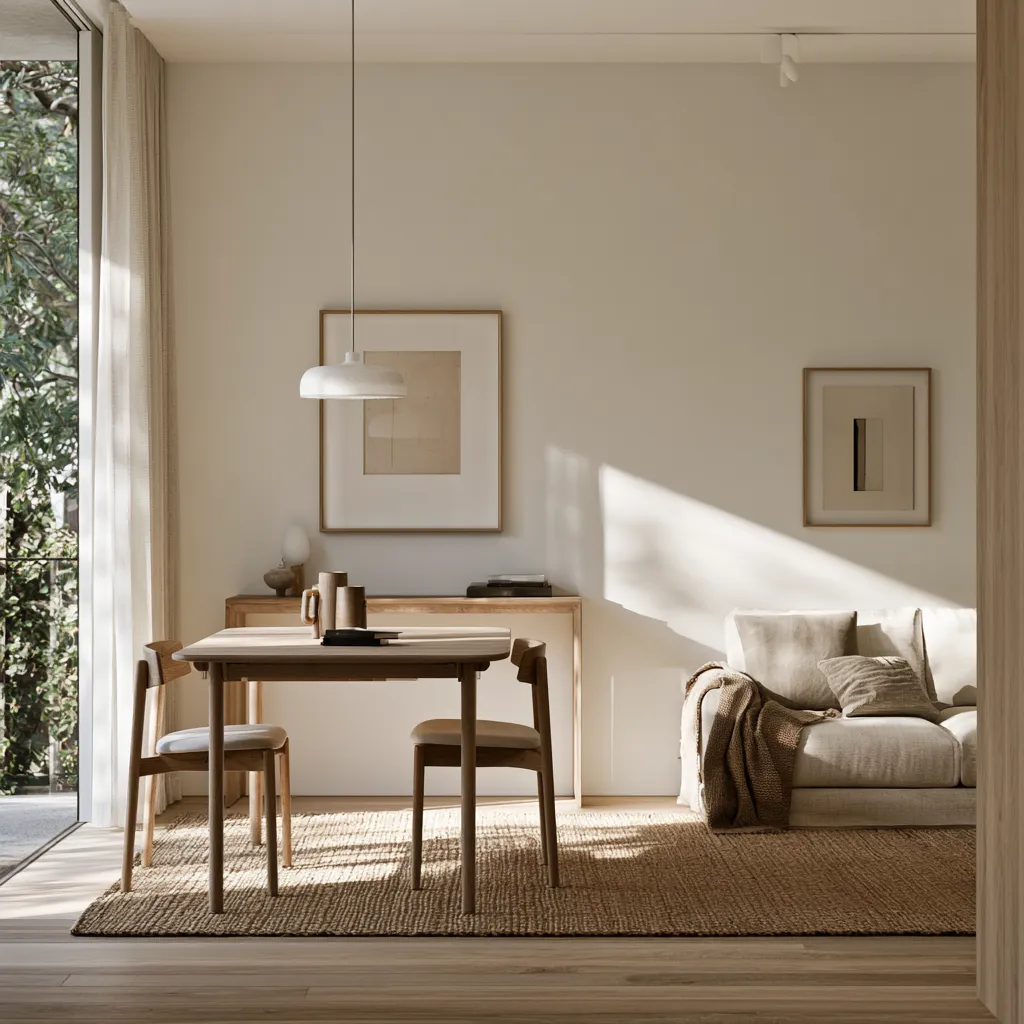
Minimalist white room layouts succeed when every piece earns its place. Start with walls in a soft warm white rather than pure cool white; the slight warmth stops the space from reading like a gallery after sunset. A low platform bed with crisp white linens becomes the clear center and leaves floor space open.
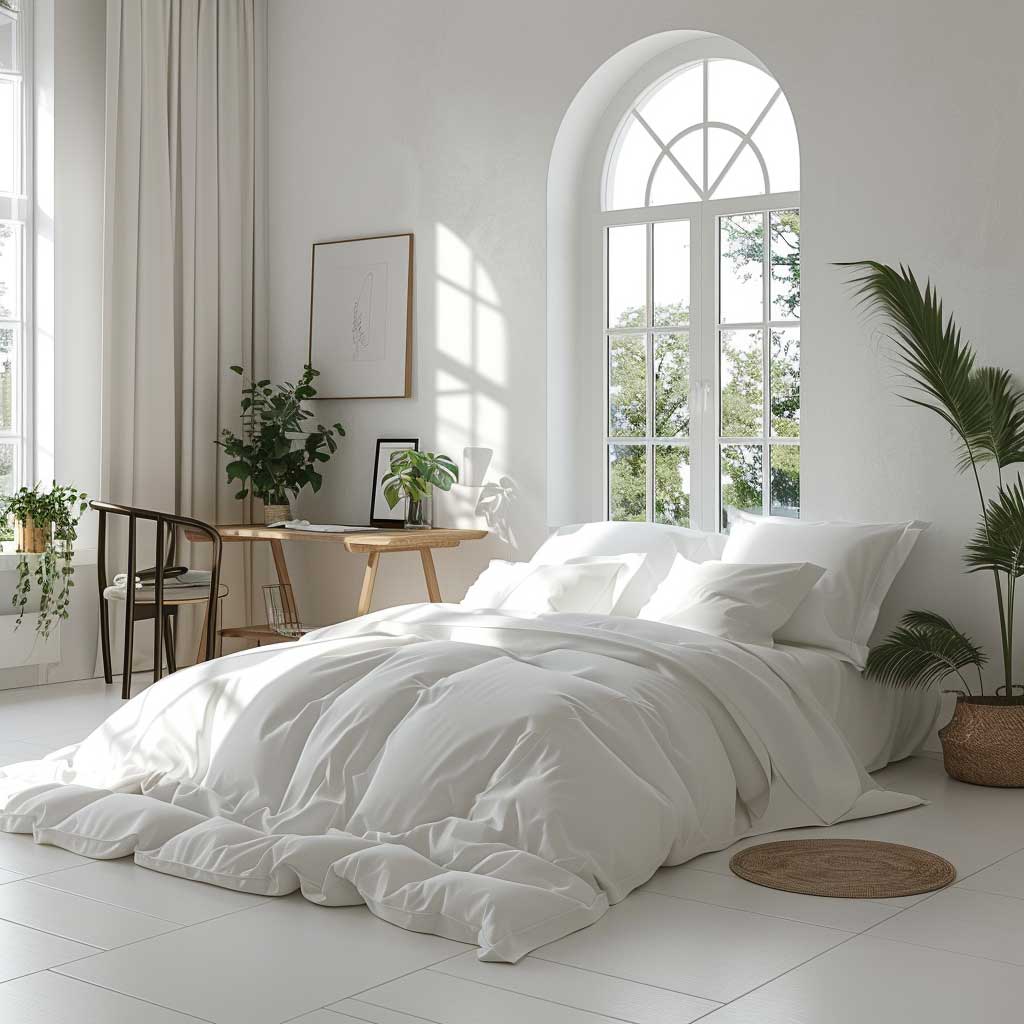
How much furniture is too much? Keep the list short: bed, one nightstand, one desk if needed. A single potted plant in the corner adds life the way a green leaf breaks a blank page. Avoid heavy curtains; sheer white panels or none at all let daylight do the heavy lifting.
Think of the room as a well-edited sentence. Extra words weaken the point. Store anything that does not serve daily use so surfaces stay clear. Average mid-range paint covers a standard bedroom for under $150 in materials when you roll it yourself.
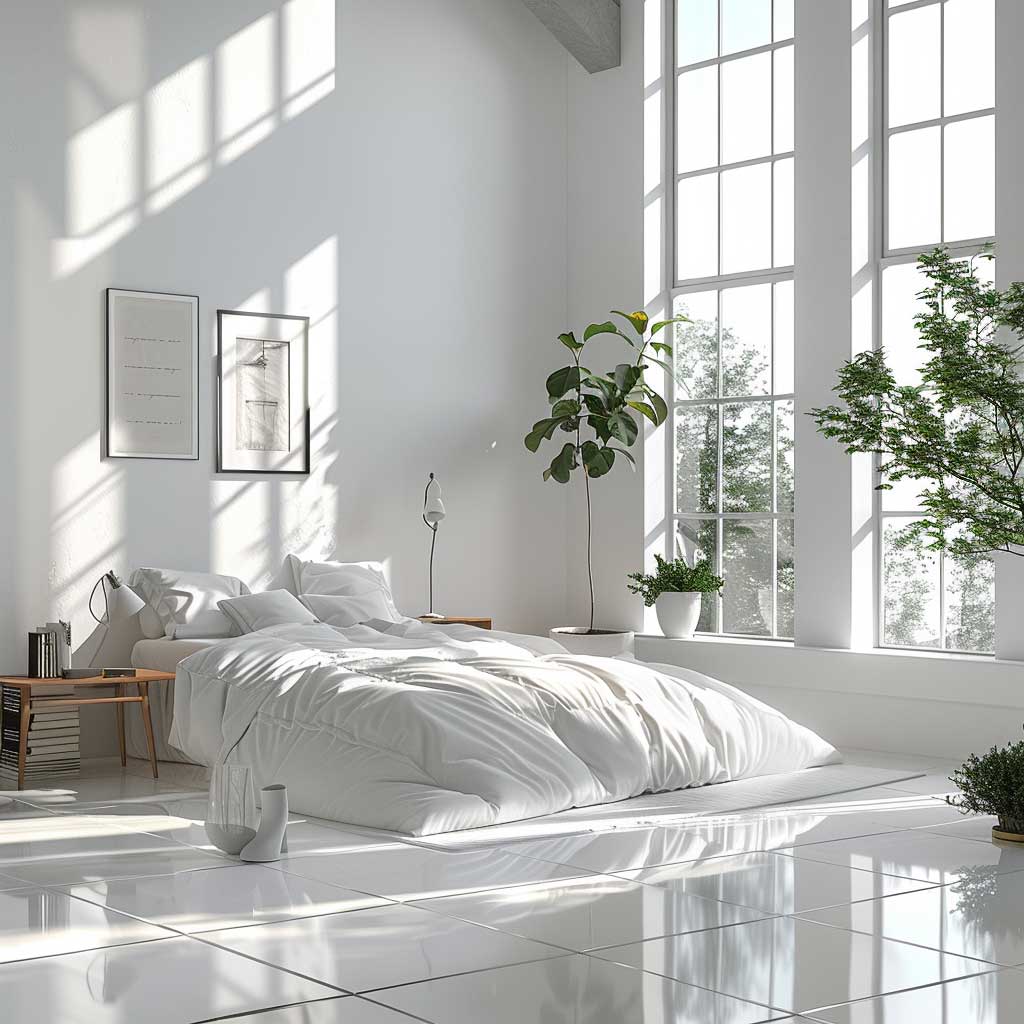
Wall art works only when it stays quiet. One or two pieces with thin frames or none at all keep the eye moving without clutter. A clean desk with just a lamp and notebook finishes the functional side. Skip the temptation to fill every corner; empty floor is part of the design.

Don’t Do This: Never fill a white minimalist room with matching white plastic storage bins. They photograph poorly and turn the calm into a storage unit. Choose closed wood or metal pieces instead. For related color moves that balance white, see mens bedroom color schemes that shift night mood.

Modern White Room Decor Built Around Clean Lines
Modern white room decor leans on sharp geometry and mixed materials rather than pure emptiness. A white sofa in the $900–$2,000 mid-range often anchors the living side while glass or metal surfaces keep the volume light. The goal is open flow with just enough edge to feel current.
Why glass coffee tables? They disappear visually and reflect light the way a calm lake reflects sky. Pair the sofa with a low bookshelf that holds books and one or two objects, nothing more. Abstract art in restrained tones adds movement without fighting the white base.

Lighting decides whether the room feels finished after dark. Floor lamps, table lamps, and one recessed or pendant source create layers. Cool white LEDs kill the mood; stick to 2700K–3000K bulbs. Metallic frames or a single clock introduce a quiet industrial note.

Avoid the trap of matching every metal finish. Mix brushed steel with one warmer tone if needed. The room should feel deliberate, not showroom-perfect. Average coverage for a mid-size living room wall set sits around three to four gallons of quality paint.
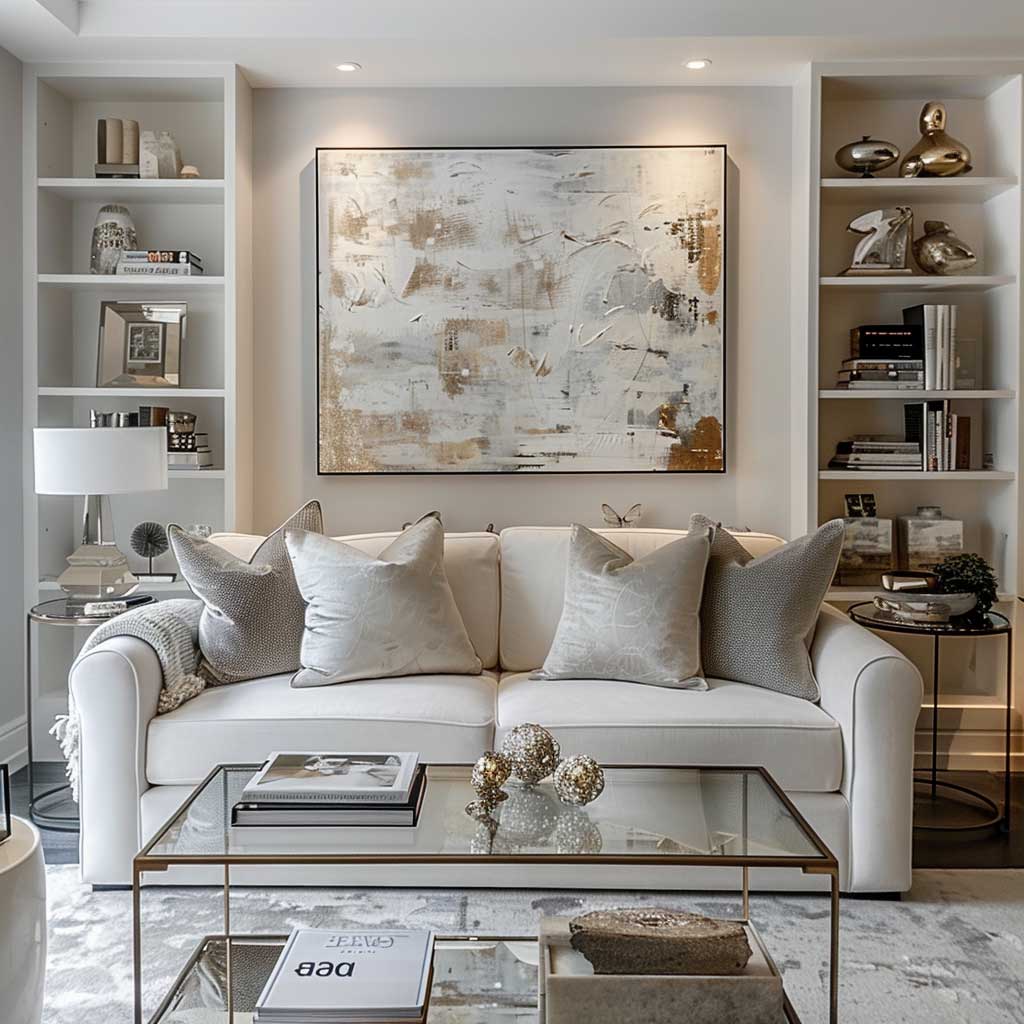
What happens if the sofa is too bulky? The open feel collapses. Choose pieces with raised legs so floor space remains visible. Keep surfaces almost empty; one tray or book is enough. For stronger contrast options that still respect white, explore sleek black and white bedroom layouts for men.
Layered Textures for Stylish White Spaces
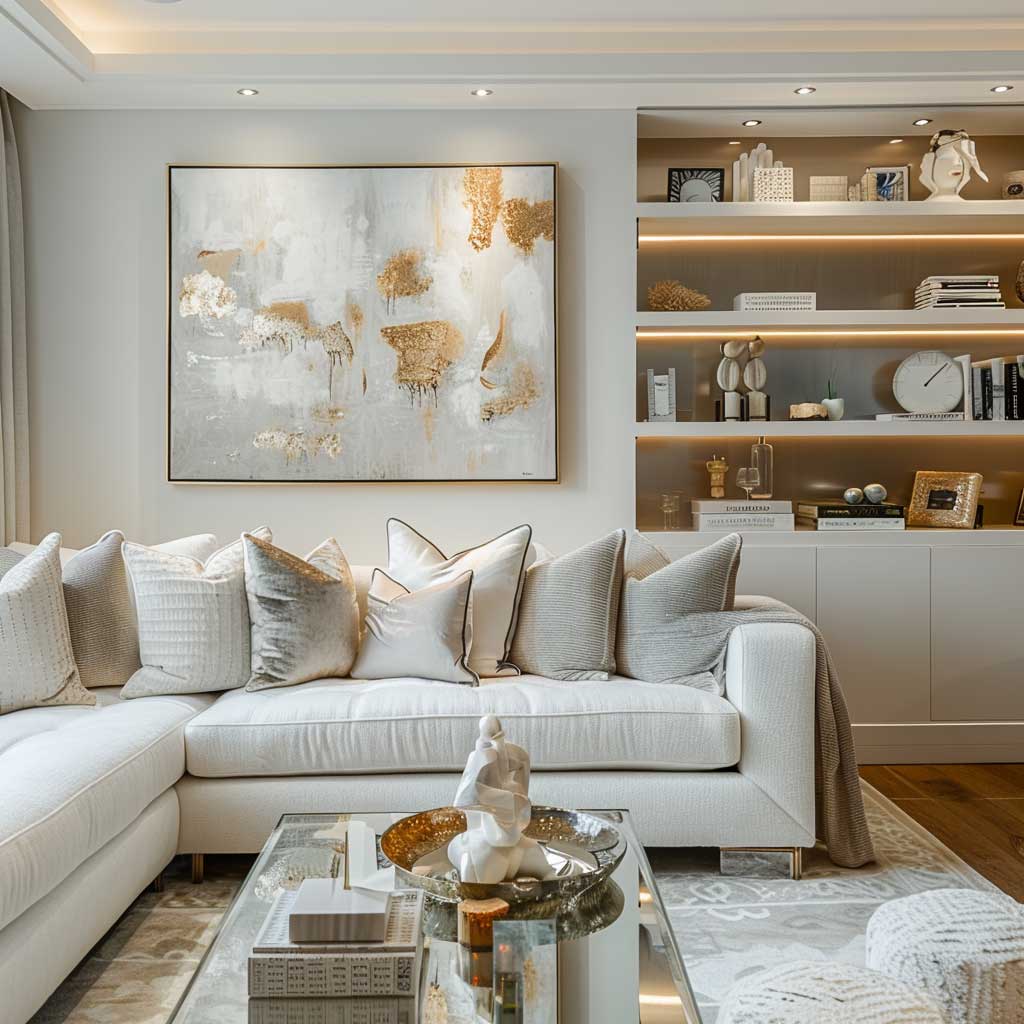
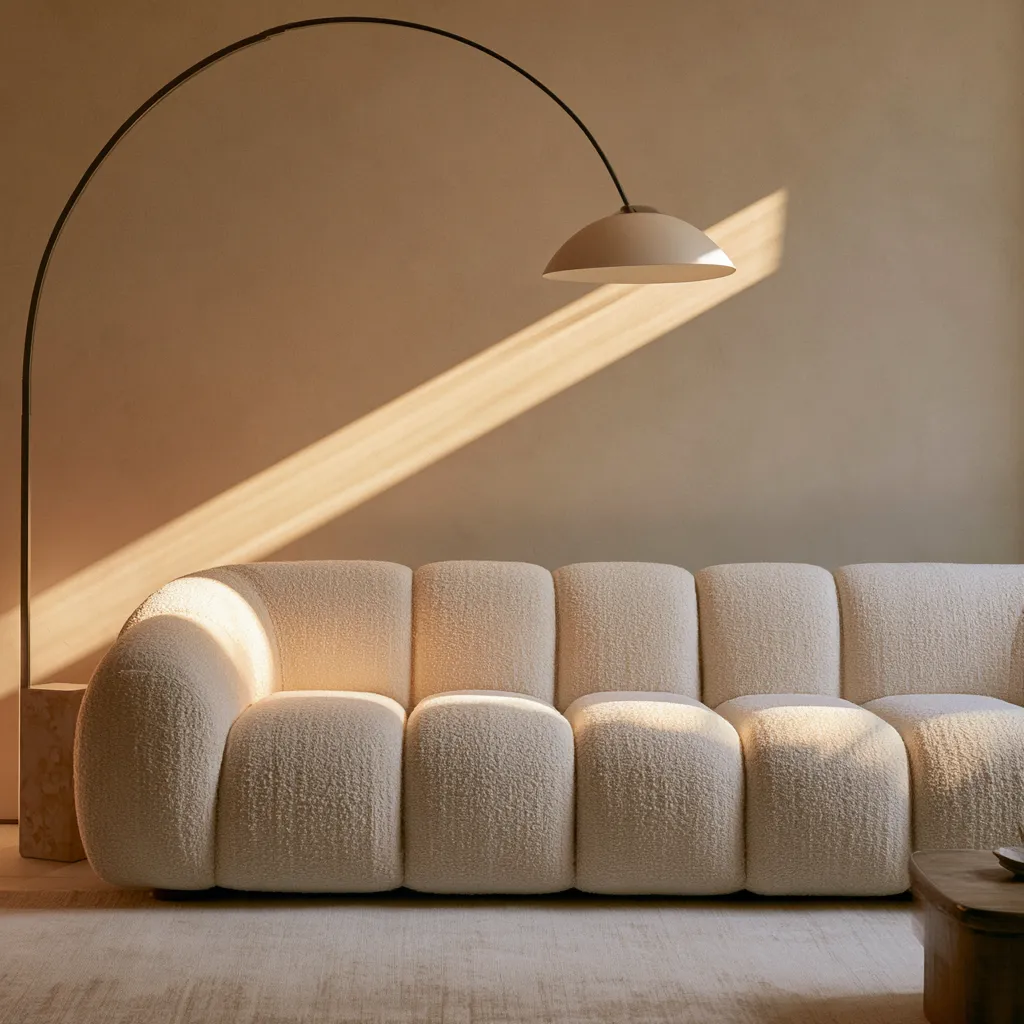
Stylish white spaces gain interest through texture rather than color. An elegant bed frame paired with white bedding and gray throws creates quiet contrast. A textured rug underfoot acts like a foundation layer that softens hard floors and pulls the scheme together.
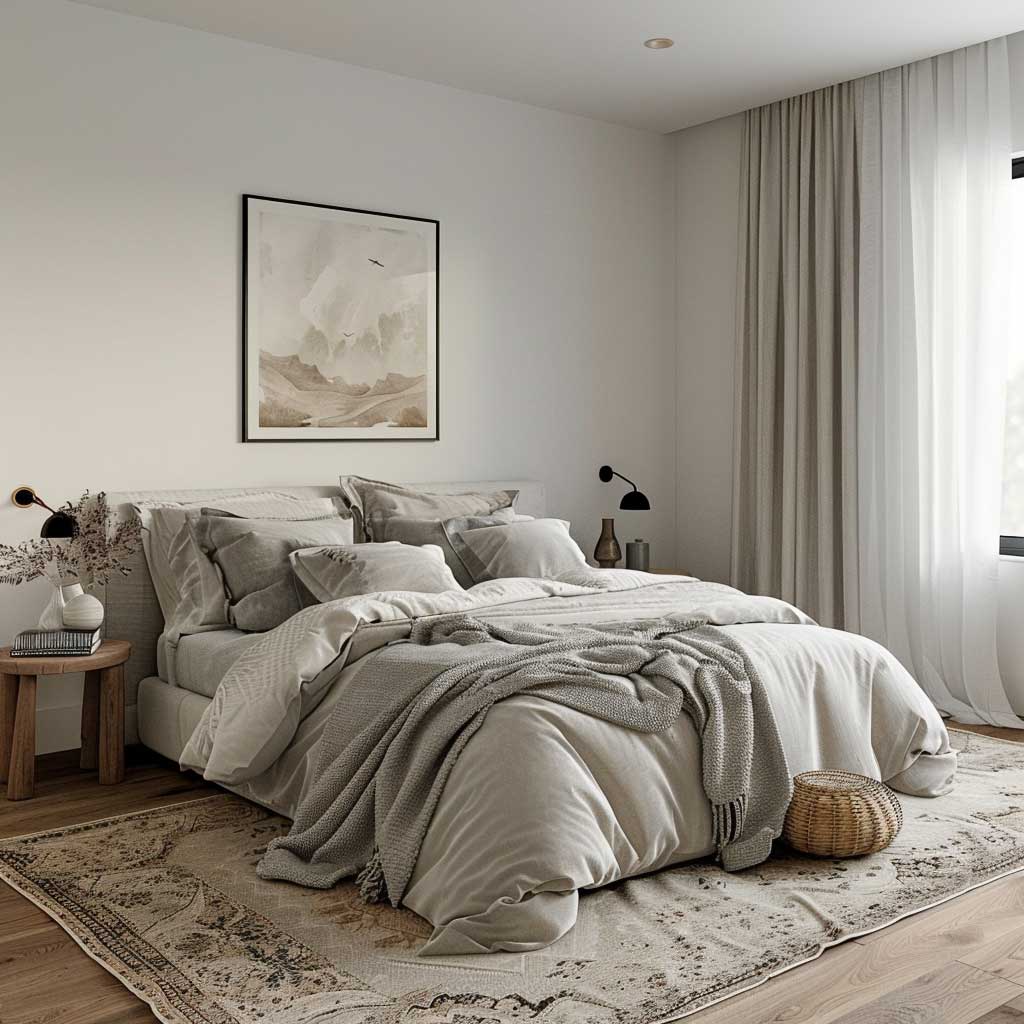
Bedside tables with clean profiles and simple lamps finish the sleep zone. Wood and metal together prevent the palette from feeling one-note. A wooden dresser or metal-framed mirror adds the kind of depth a single material cannot deliver.
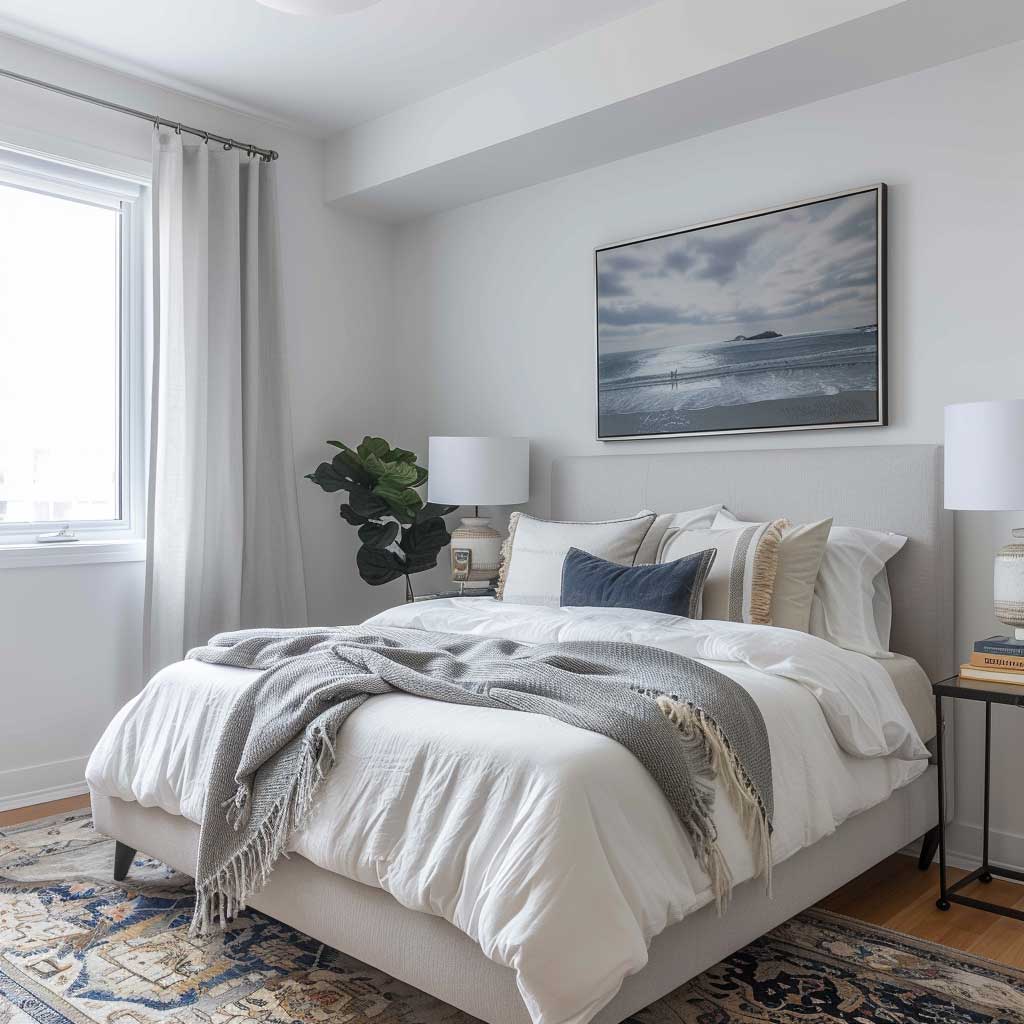
Artwork stays minimal yet present. One strong piece above the bed or a pair of smaller works on a side wall is enough. Lighting remains layered—table, floor, and ceiling sources working together. Skip the all-matching furniture set; variety in materials reads more intentional.
How much texture is enough? Aim for three surfaces: soft (bedding or rug), hard (wood or metal), and smooth (walls). This mix stops the white from going flat. Quality white paint with good hide often needs only two coats and lasts years with proper prep.

Never cover every wall with gallery frames in a white room. The visual noise fights the calm the palette is meant to create. Leave breathing room so light and negative space stay part of the design. Check current white paint ranges and undertones at Sherwin-Williams color tools for reliable options.

White Room Accessories That Add Character Without Clutter
White room accessories work best when they stay selective. One plant, one textured throw, and one metal or wood object usually finish the look. Too many small items turn the clean base into visual static. Average mid-range area rugs in neutral tones start around $150–$400 and deliver immediate warmth underfoot.
Choose accessories that serve a dual purpose—storage baskets, a reading lamp that doubles as sculpture, or a mirror that expands the sense of space. Skip novelty pieces that date quickly. The white background already does the brightening; accessories simply prevent it from feeling incomplete.
- One large plant in a simple pot anchors a corner
- Textured throw in gray or oatmeal softens the bed or sofa
- Metal or wood tray organizes daily items on a surface
- Single framed print or sculpture gives the eye a place to rest
Comparing Minimalist Modern and Layered Approaches
| Approach | Key Strength | Furniture Focus | Best Room Size | Typical Budget Start |
|---|---|---|---|---|
| Minimalist | Maximum calm and light | Few pieces, low profiles | Small to medium | Paint + bed under $600 |
| Modern | Sharp geometry and flow | Sofa + glass or metal | Medium living areas | Sofa $900–$2,000 range |
| Layered / Stylish | Warmth through texture | Mix of wood, metal, soft goods | Any size with good light | Rug + bedding $200–$500 |
Practical Moves That Keep White Rooms Livable
White walls and surfaces stay fresh when maintenance is simple. Choose washable paint finishes in eggshell or satin for high-touch areas. A weekly wipe and occasional vacuum of textiles prevent the gray film that dulls the brightness. Quality interior white still costs roughly $25–$60 per gallon depending on brand and coverage needs.
What if natural light is limited? Lean harder on layered artificial sources and keep furniture light in color and scale. Dark heavy pieces absorb the available light and shrink the perceived space. One well-placed mirror opposite a window can nearly double the daylight effect.
Think of white as the canvas and every added object as a deliberate brushstroke. Too many strokes turn the composition muddy. Start sparse, live with the room for a week, then add only what still feels missing.
Final Balance for Everyday Use
White room decor succeeds when brightness and usability sit in equal measure. The palette opens space and light; the furniture and texture keep it grounded for daily life.
Choose warm whites over cool ones, limit the furniture list, and introduce texture early. These three moves prevent the sterile outcome most people fear.
Layer lighting so the room works after dark. Keep surfaces clear and storage closed. The result is a space that stays sharp without constant upkeep.
Start with paint and one solid bed or sofa. Build from there only as needed. The restraint itself becomes the style.
Complete guide
Furniture Decor Ideas for Every Room in Your Home
Living room, bedroom, dining, kitchen, outdoor — all in one place
Complete guide
White Color in Home Design: Every Room, Every Style, Every Shade
Kitchens, bathrooms, living rooms, exteriors, palettes — all in one place
You Might Also Like

Related Topics