
Bangs are one of the most transformative fringe decisions you can make for your hair. A well-placed set of bangs can shorten a long face, soften a square jawline, or add dimension to fine, flat hair — all without a single inch of length removed from the rest of your cut. According to professional stylists, nearly 35% of salon clients request some form of bangs styling each year, yet fewer than half leave truly satisfied with the result. The disconnect is almost always the same: the wrong bang style for the face shape, hair texture, or lifestyle.
This guide brings together 50 expert articles covering every bang variation worth knowing — from micro bangs and blunt cuts to curtain fringe, Korean-inspired styles, and everything in between. Whether you have long curly hair, a short bob, or fine straight strands, there is a fringe style here that changes everything about the way your hair sits and frames your face.
Why Bangs Remain One of the Most Powerful Hair Transformations
Bangs occupy a rare space in hairstyling: they are low commitment in terms of length but extremely high impact in terms of appearance. A 2-inch fringe placed across the forehead changes how wide or narrow a face looks, shifts the perceived balance of facial features, and can visually lift the cheekbones without any contouring. For women over 40, the right bang style can take years off the face — a finding consistently reported in beauty editorial coverage and confirmed by face-shape research from major cosmetology schools.
The challenge is understanding the variables. Bangs behave differently on fine hair versus thick hair. They grow out at approximately 0.5 inches per month, meaning a micro bang becomes a full curtain fringe within 8 weeks. Temperature, humidity, and daily styling time all factor into which style is actually wearable for a given person. The articles collected below address every one of these variables in depth.
Bang Styles by Cut and Technique
Blunt and Sharp-Framed Bangs
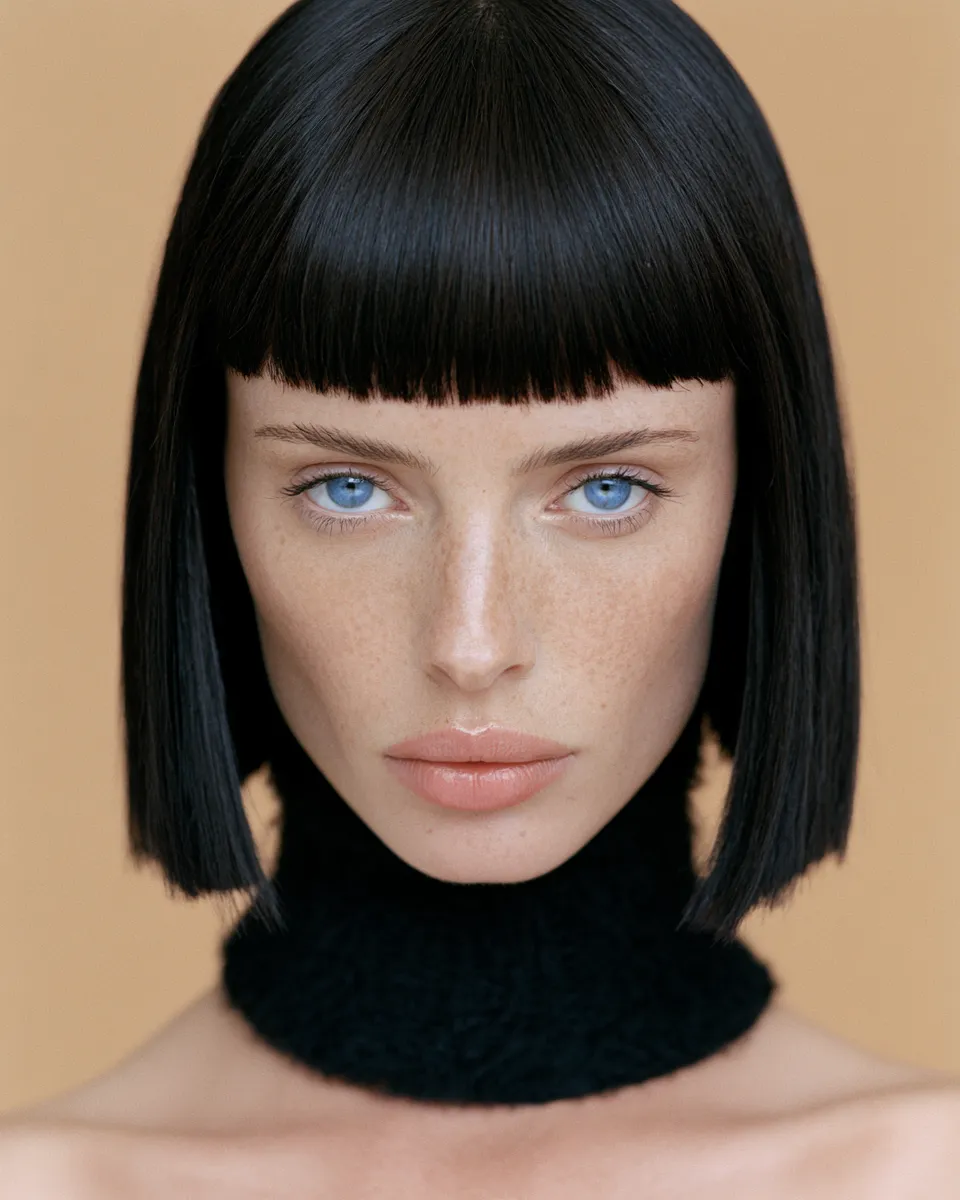
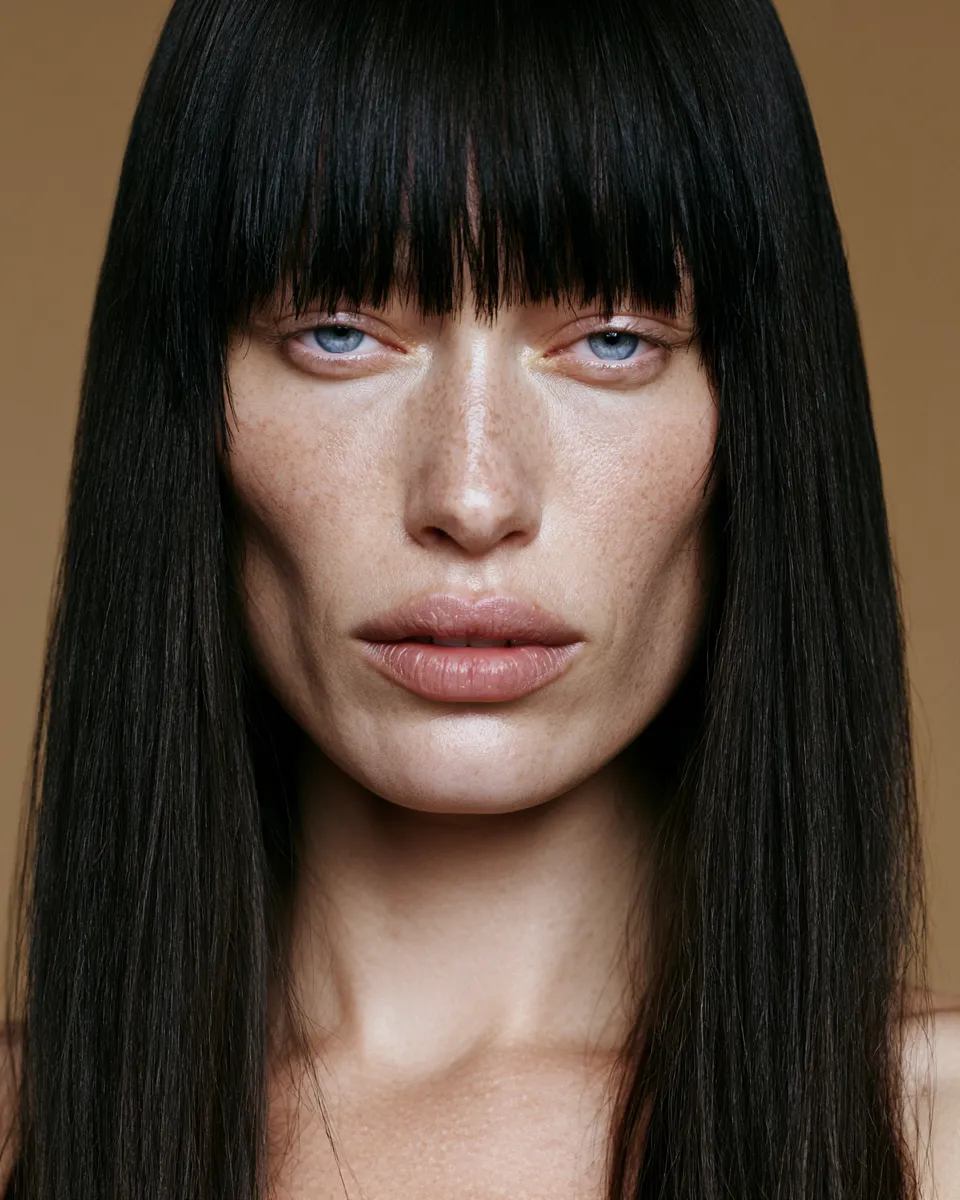
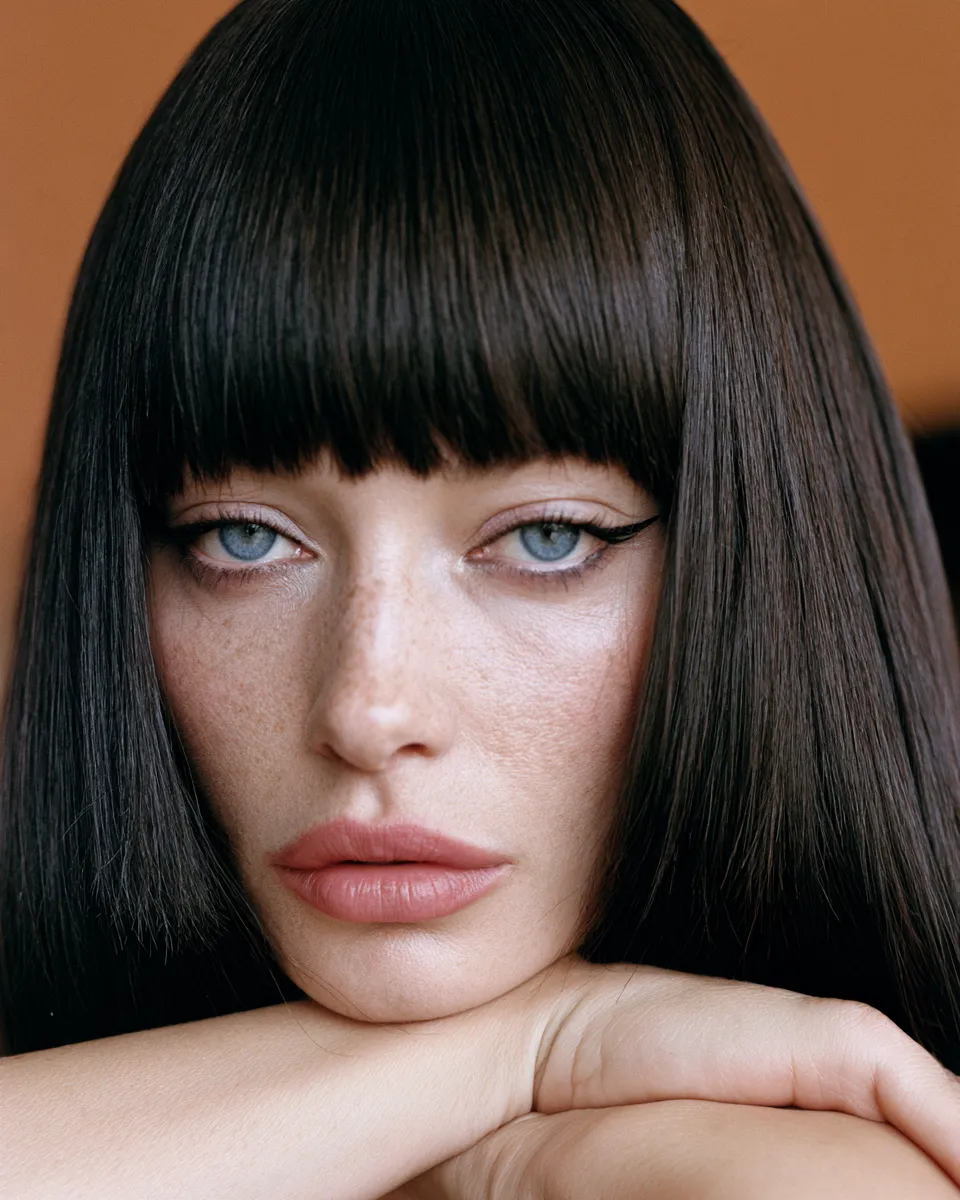
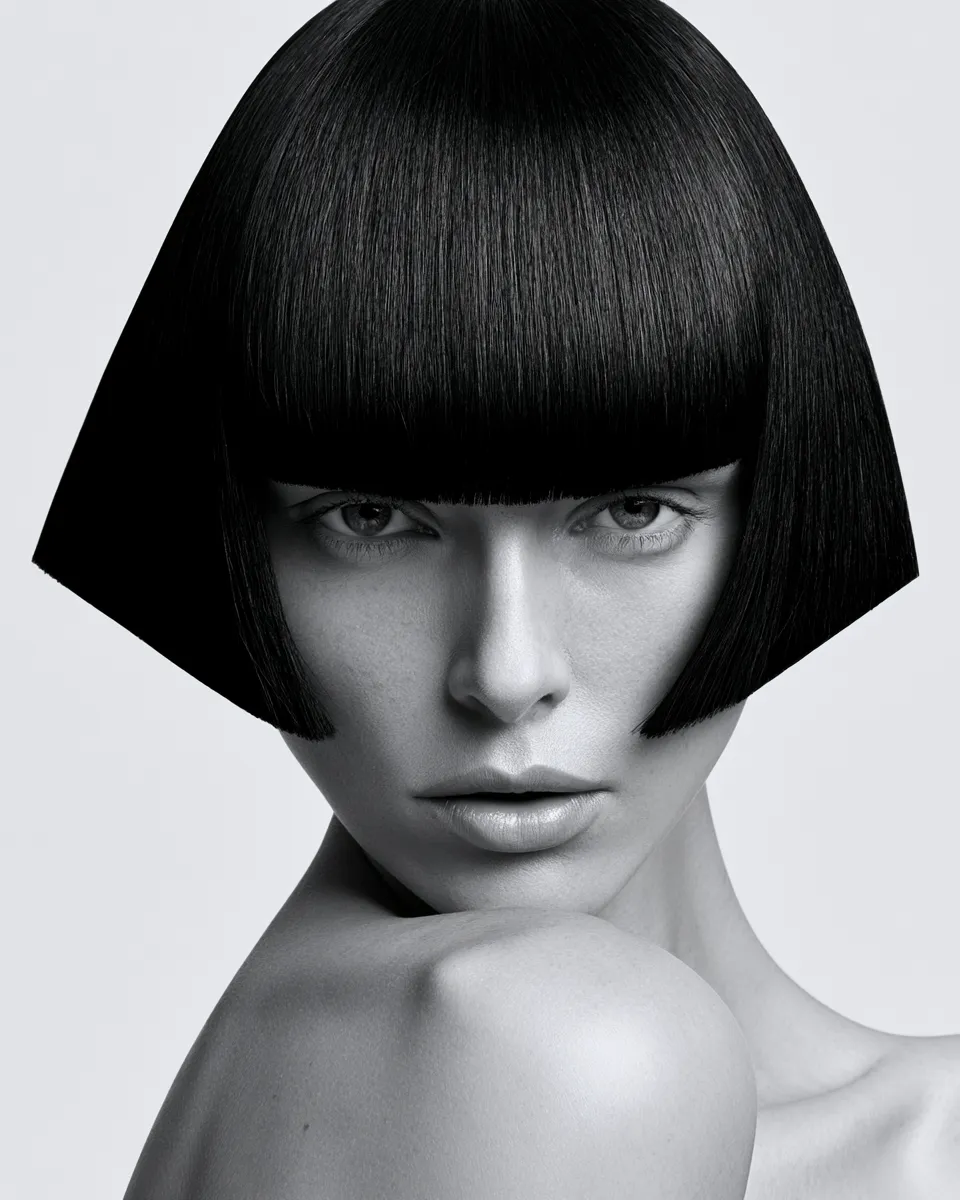
Blunt bangs have seen a major resurgence as the dominant fringe shape, edging out the softer, more diffused textures that dominated the previous decade. The appeal is architectural: a precise horizontal cut across the forehead creates a strong graphic line that frames the upper face and draws immediate attention to the eyes. Stylists report that blunt bangs work best on straight or slightly wavy hair and require regular trims every 4 to 5 weeks to maintain their sharp edge.
- Blunt Bangs Return — Why Sharp Framing Replaces Soft Texture
- Blunt Bangs on a Layered Bob Change the Entire Frame of Your Face
- Stunning Pink Ombre Hime Cut with Soft Blunt Bangs
Curtain and Textured Bangs
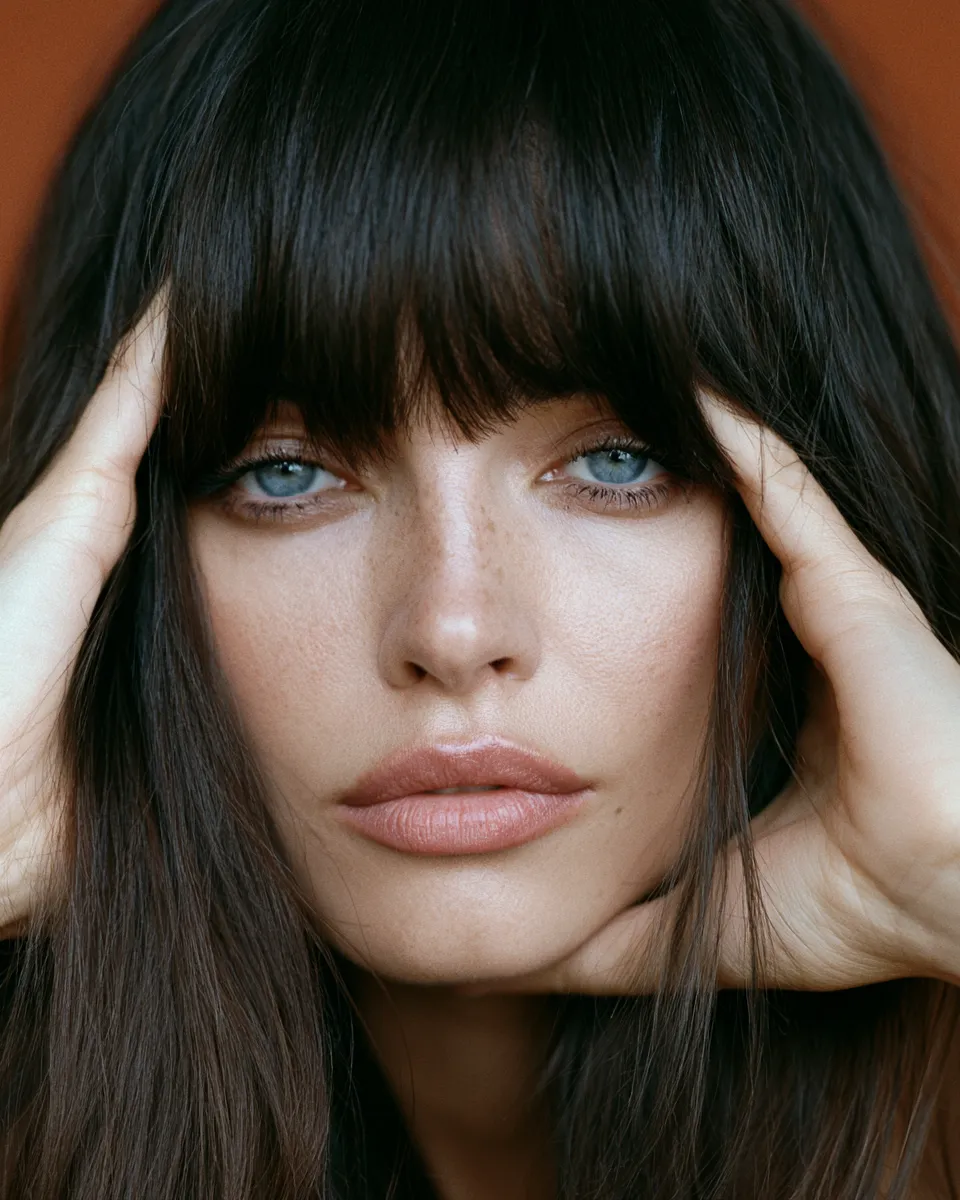
Curtain bangs part in the middle and sweep outward toward the temples, creating an open, face-framing effect that flatters almost every face shape. Their softness makes them significantly lower maintenance than blunt cuts — they grow out gracefully and blend into the rest of the hair without an obvious demarcation line. Textured curtain bangs take this further by adding intentional movement and separation, making them particularly flattering on wavy or naturally textured hair.
- Textured Curtain Bangs — Why Soft Framing Redefines Face-Flattering Hair
- 10+ Trending Hairstyles for Long Hair Women With Curtain Bangs
- 5+ Long Layered Hairstyles Featuring Curtain Bangs
- 11+ Long Curly Hairstyles Framed with Curtain Bangs
- Wispy Curtain Bangs Change Everything About the Hime Cut
- How to Revive Curtain Bangs on Second Day Hair Without Touching a Single Hot Tool
Wispy and Birkin Bangs
Wispy bangs are defined by their feathered, airy finish — individual strands are thinned at the ends to create a soft, effortless look that sits lightly across the forehead. The Birkin bang, named for the iconic style Jane Birkin popularized in the 1970s, is a specific iteration: longer, lighter, and slightly overgrown in a deliberate way. These styles suit finer hair particularly well because the thinning technique reduces bulk rather than adding it, and they create the illusion of movement even on stationary hair.
- These Wispy Birkin Bangs Will Completely Transform Your Face Shape
- Can Wispy Bangs Transform Your Long Hair Game
Micro and Baby Bangs
Micro bangs sit well above the eyebrow, often at mid-forehead or even at the hairline. This is the most editorial and directional of all bang styles — it exposes the forehead fully and makes a strong visual statement. Baby bangs occupy the same territory and are closely related to pixie cut styling, where the fringe is cropped close to the forehead as part of an overall short look. Both styles require significant commitment and a clear sense of personal style, but they offer a level of distinctiveness that no other fringe style can replicate.
- Micro Bangs Are Replacing Full Bangs Across All Hair Types
- 5+ Curly Pixie Cut Styles That Embrace Baby Bangs
- Baby Korean Bangs Framed by Midnight Blue Hair
Side Swept Bangs
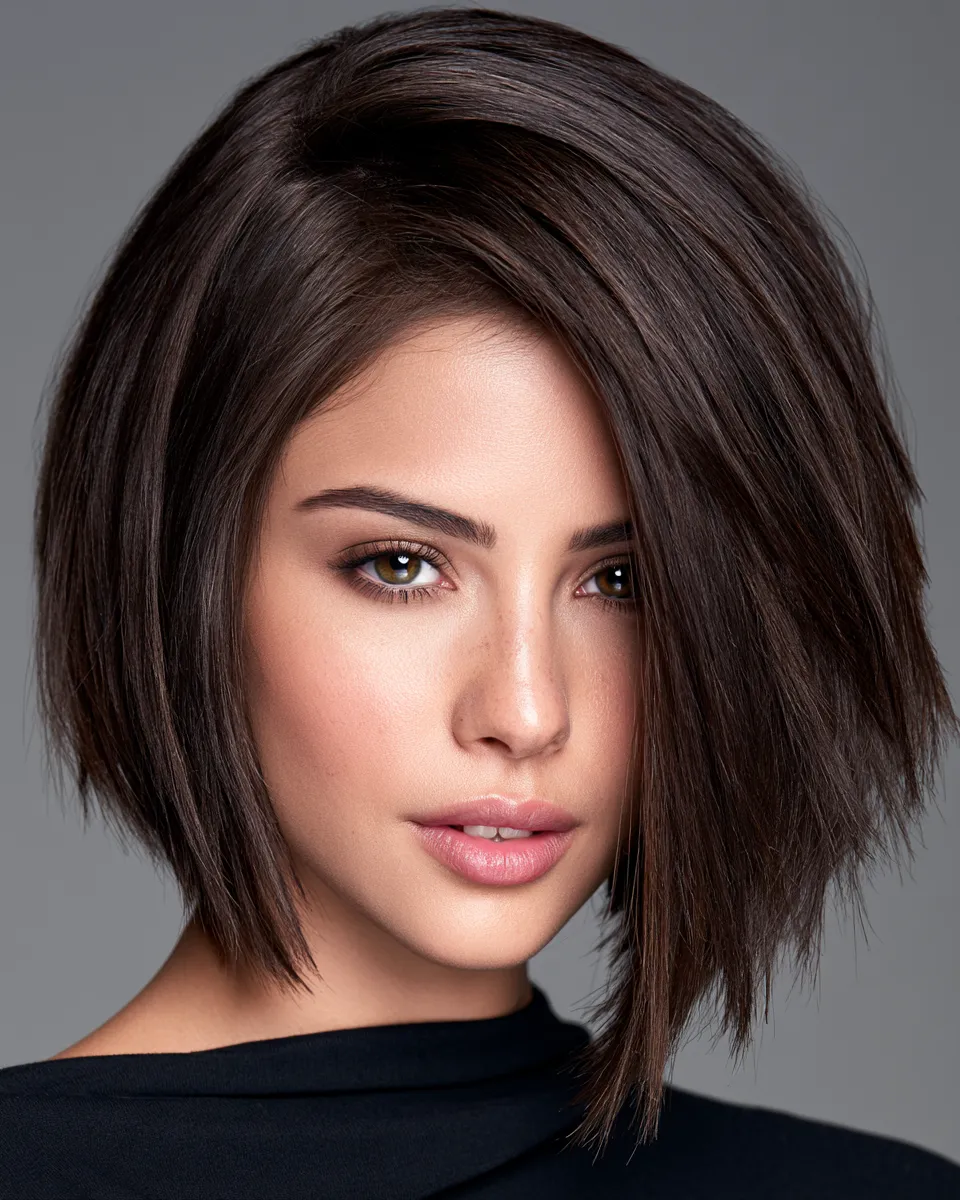
Side swept bangs are cut at an angle and styled to one side, creating a diagonal line across the forehead that is universally flattering. They work on round faces by adding asymmetry, on square faces by softening sharp corners, and on oval faces as a classic elongating frame. They also grow out more forgivingly than blunt or micro styles, which makes them a practical choice for anyone who wants bangs without the rigid upkeep schedule.
- How to Get a Retro Look with Long Wavy Hair and Side Swept Bangs
- Curly Hair With Side Swept Bangs Looks Better in Color — Here’s Proof
- Scissors Angled Down, Bangs That Don’t Budge — How to Cut Side Swept Bangs at Home
Fringe and Statement Bangs
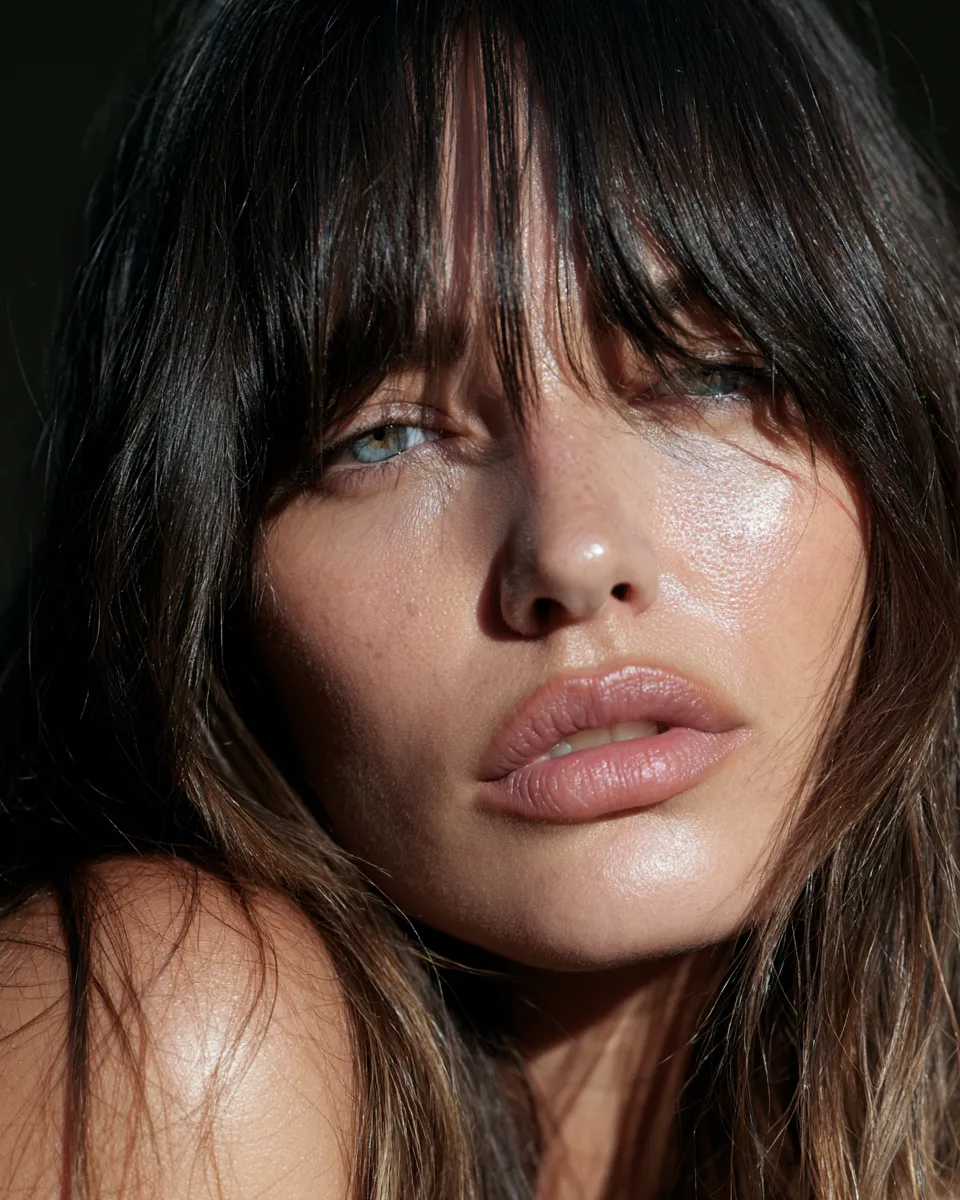
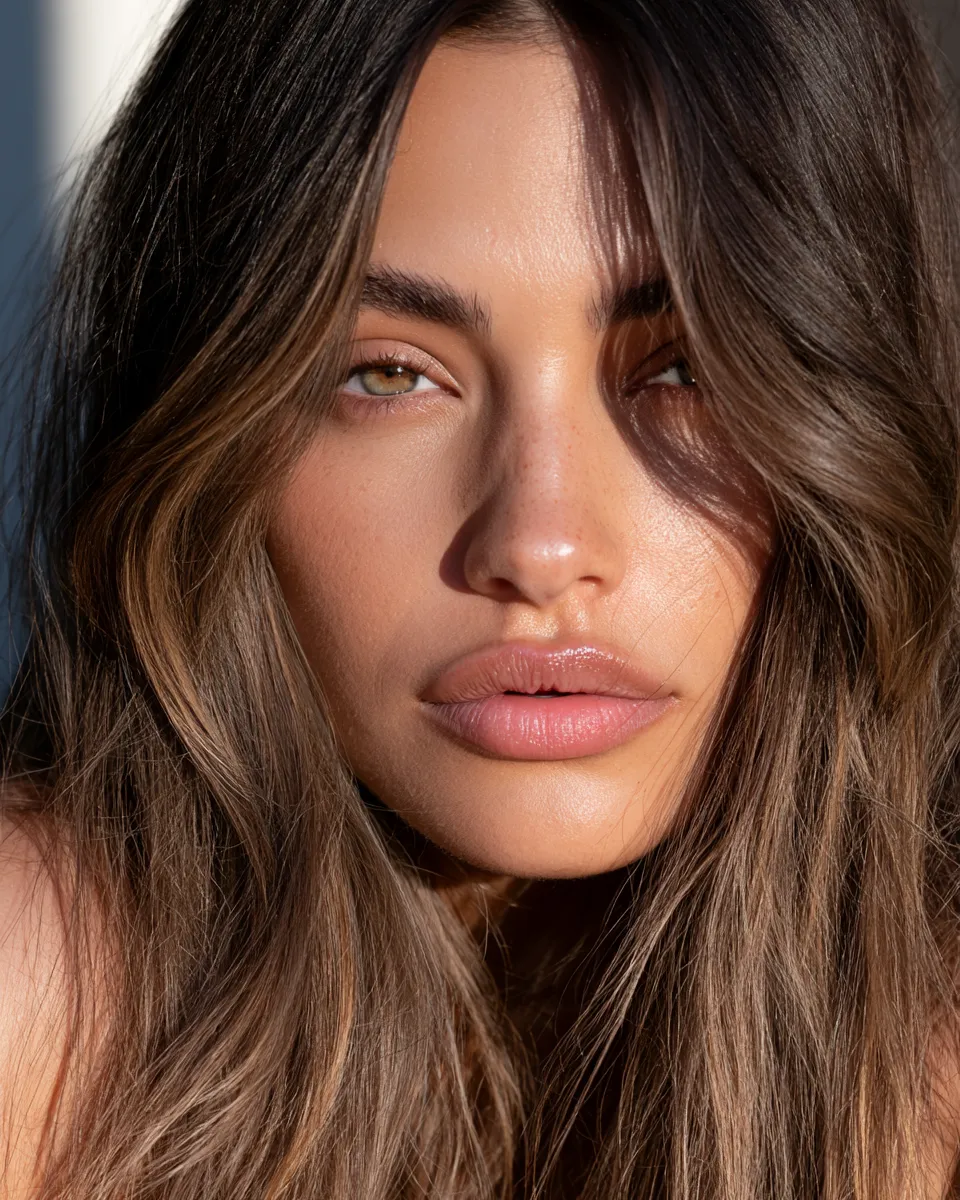
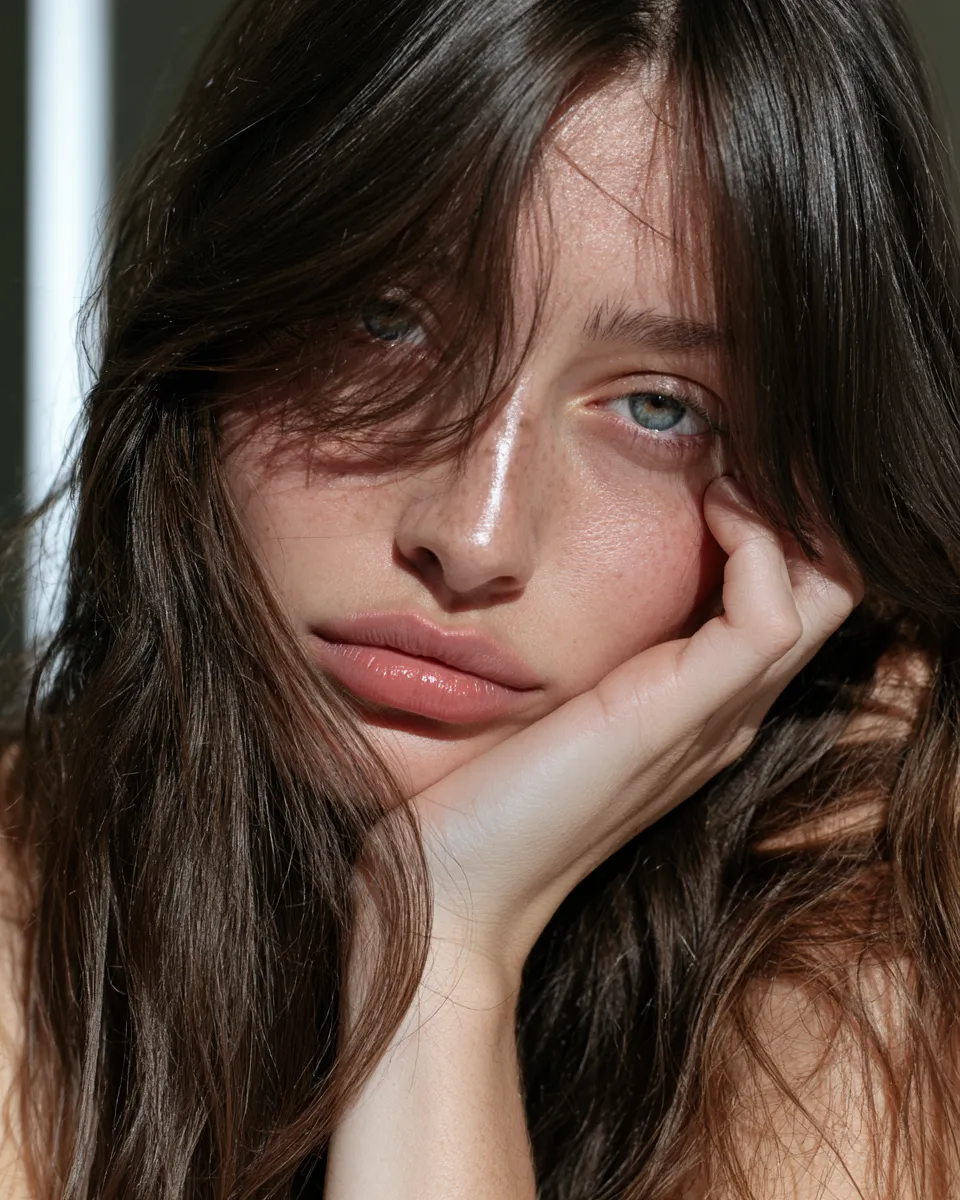
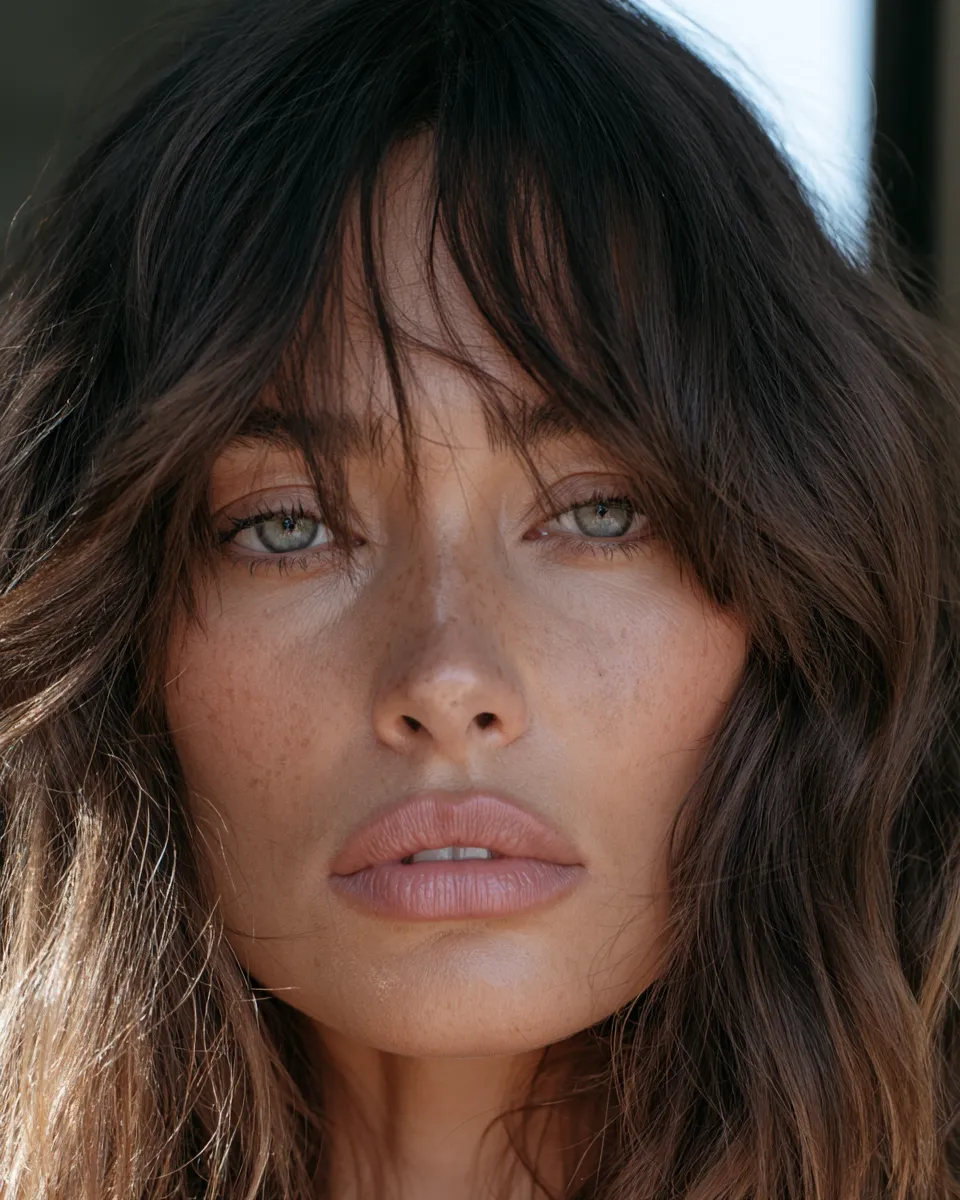
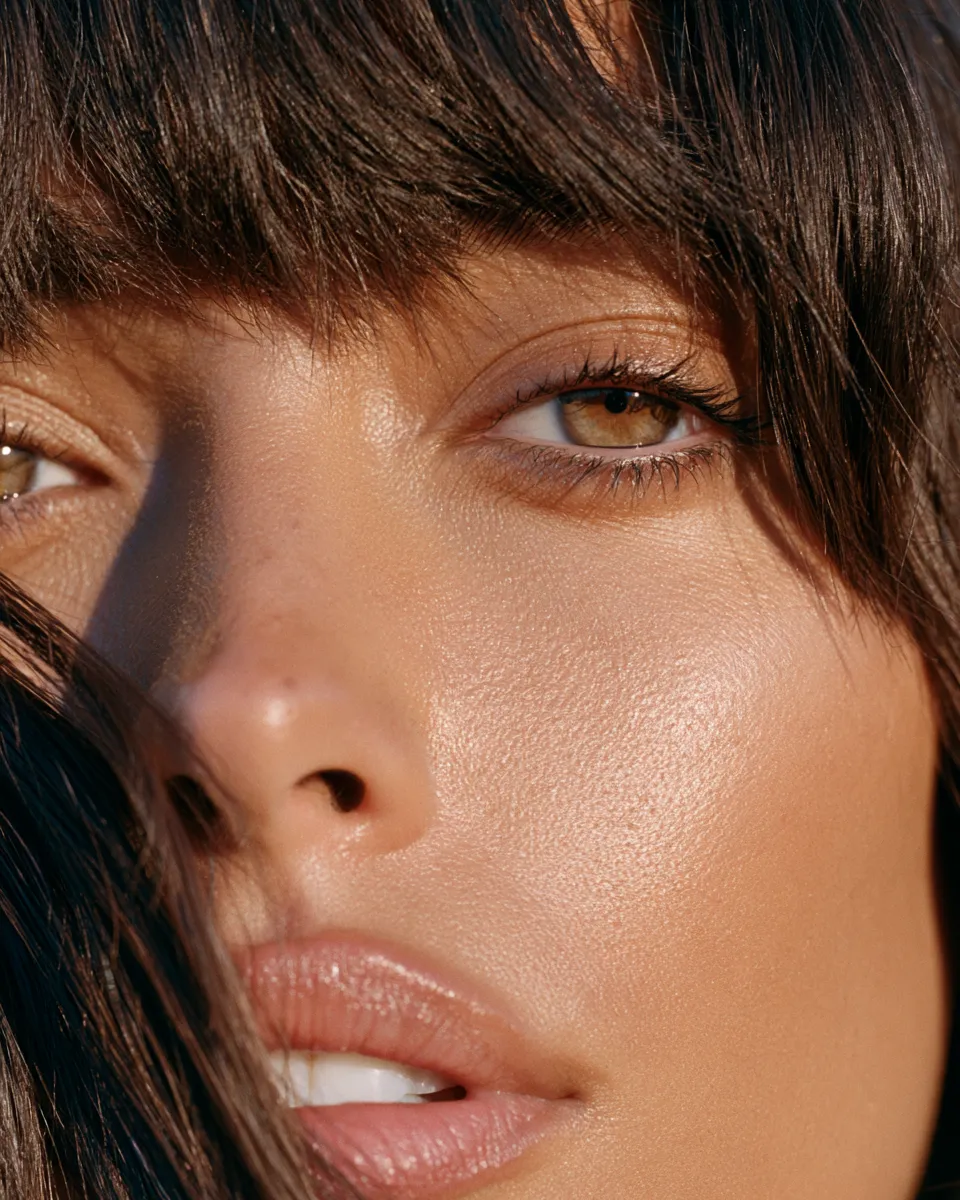
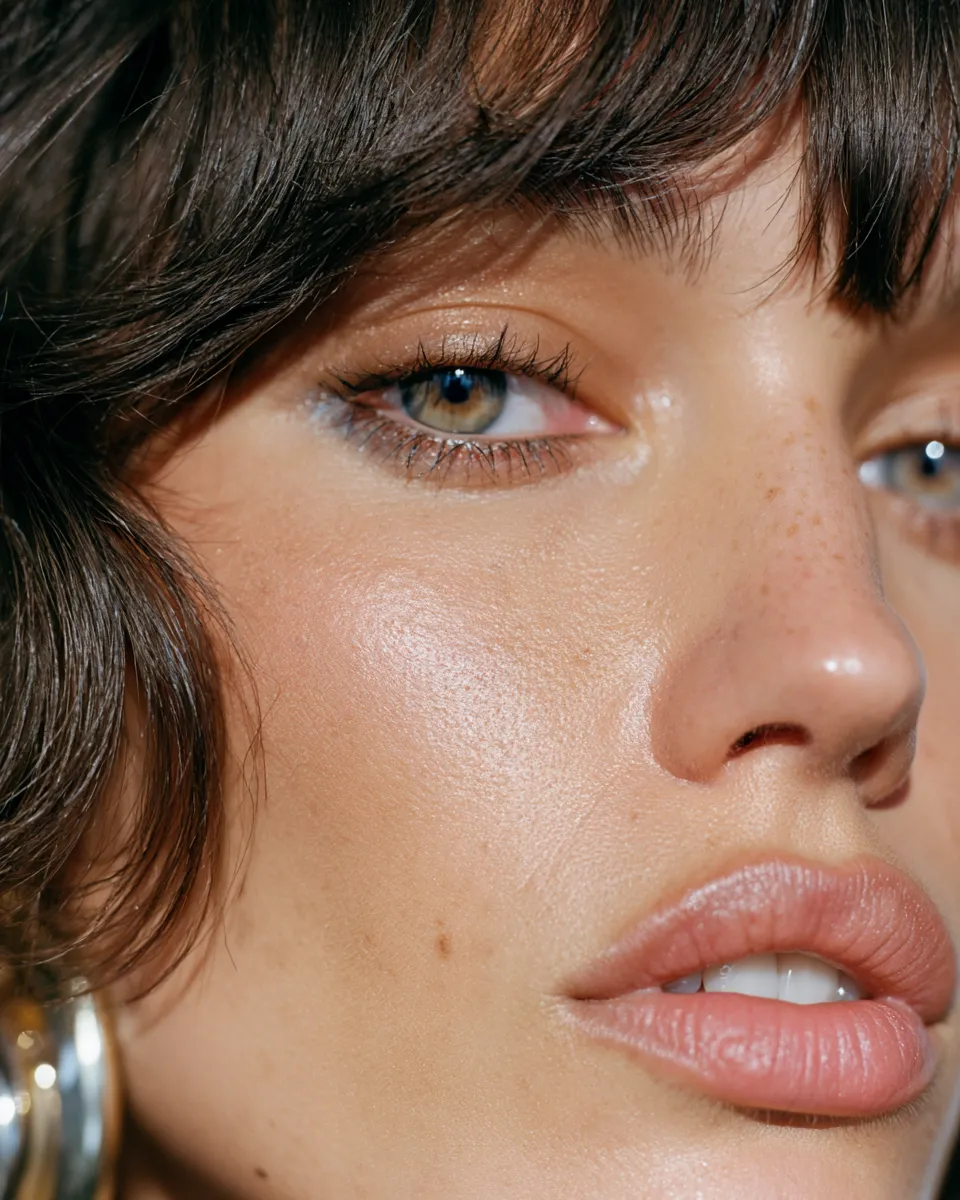
Fringe bangs encompass a broader category that includes European-inspired heavy fringe, shaggy overgrown styles, and any bang cut where the density and weight of the hair across the forehead is a primary aesthetic consideration. These styles make a stronger visual statement than wispy or side-swept alternatives and pair naturally with shag cuts and textured long layers.
Bang Styles by Hair Length
Bangs with Short Hair and Pixie Cuts
Short hairstyles with bangs present a unique opportunity: because the overall cut is already close to the head, the bang becomes the single most defining element of the look. A platinum pixie with a sleek bang reads completely differently from a textured pixie with a wispy fringe, even if the overall length is identical. The articles below explore the full range of short-bang combinations, from French bobs to sleek pixie cuts across multiple hair colors and textures.
- Textured Pixie Cuts Redefine Short Hair
- 9+ Short Hairstyles with Bangs in Bold Jet Black French Bobs
- 6+ Short Hairstyles with Bangs for Soft Ash Blonde Layers
- 10+ Short Hairstyles with Bangs Featuring Chestnut Bob Styles
- 8+ Short Hairstyles with Bangs in Sleek Platinum Pixie Cuts
- How to Choose the Best Pixie Cut with Bangs for Your Face Shape
- How to Achieve a Sleek Look with Short Hair and Bangs
Bob Hairstyles with Bangs
The bob and bangs combination is one of the most enduring pairings in modern hair history, and for good reason: both elements are defined by geometry and precision, so they naturally reinforce each other. A chin-length bob with blunt bangs creates a clean, architectural frame around the face. A shaggy bob with curtain bangs achieves something more relaxed and bohemian. Medium bobs with bold color — electric blue, fuchsia, ash gray — offer a third dimension entirely, making the bob-with-bangs a canvas for color expression as much as a cut.
- Dare To Go Bold With A Layered Bob With Bangs And Colour
- Medium Bob with Bangs Styled in Electric Blue Hue
- Medium Bob with Bangs in Vibrant Fuchsia Glow
- Sleek Bob Haircut with Bangs for Everyday Elegance
- Flattering Short Bob with Bangs for All Ages
- Bob for Long Face Shapes That Actually Shortens Without a Single Layer
- How to Add Color to a Bob with Bangs for a Bold Statement
Shoulder Length Hair with Bangs
Shoulder length — generally defined as hair falling between the chin and collarbone — is one of the most versatile lengths for bangs styling. It is long enough to create movement and volume, but short enough that the bang anchors the look without getting visually lost. Medium length hair with side bangs and feathered ends is particularly well suited to finer hair types, as the ends draw attention away from any lack of density.
- Shoulder Length Hair with Bangs: Style It, Keep It Fresh
- 6+ Medium Length Hairstyles for Thin Hair with Feathered Ends and Side Bangs
Long Hairstyles with Bangs
Long hair with bangs creates some of the most dramatic face-framing effects in hairstyling. Because the rest of the hair provides substantial length and volume, the bang functions almost independently — acting as a strong horizontal counterpoint to the vertical flow of the hair. Long layered styles with curtain or side-swept bangs are particularly popular because the layers add movement that makes the bang feel like a natural extension of the cut rather than an add-on.
- Playful Long Layered Hair with Bangs for a Youthful Style
- 6 Easy Hairstyles for Long Hair with Bangs to Try Today
- Butterfly Layers Long Hair Keeps Losing Shape Because of This One Cut Mistake
Bang Styles by Hair Type and Texture
Curly Hair with Bangs
Curly bangs are a category that many stylists and clients approach with hesitation, and for understandable reasons: curl patterns create unpredictable shrinkage, meaning a bang cut at eyebrow level when wet can spring up to mid-forehead when dry. However, with the right technique — point cutting, dry cutting, or cutting with the natural curl pattern rather than against it — curly bangs can be extraordinarily flattering. They add definition to the upper face and reduce the sometimes formless appearance of an unstyled curl mass.
- 3+ Curly Hair with Bangs Ideas for Every Face Shape
- Curly Shag Haircut with Micro Bangs and Wild Edges
- Honey Blonde Curls Stay Flat Until You Add Korean Bangs Here
Shag Haircuts with Bangs
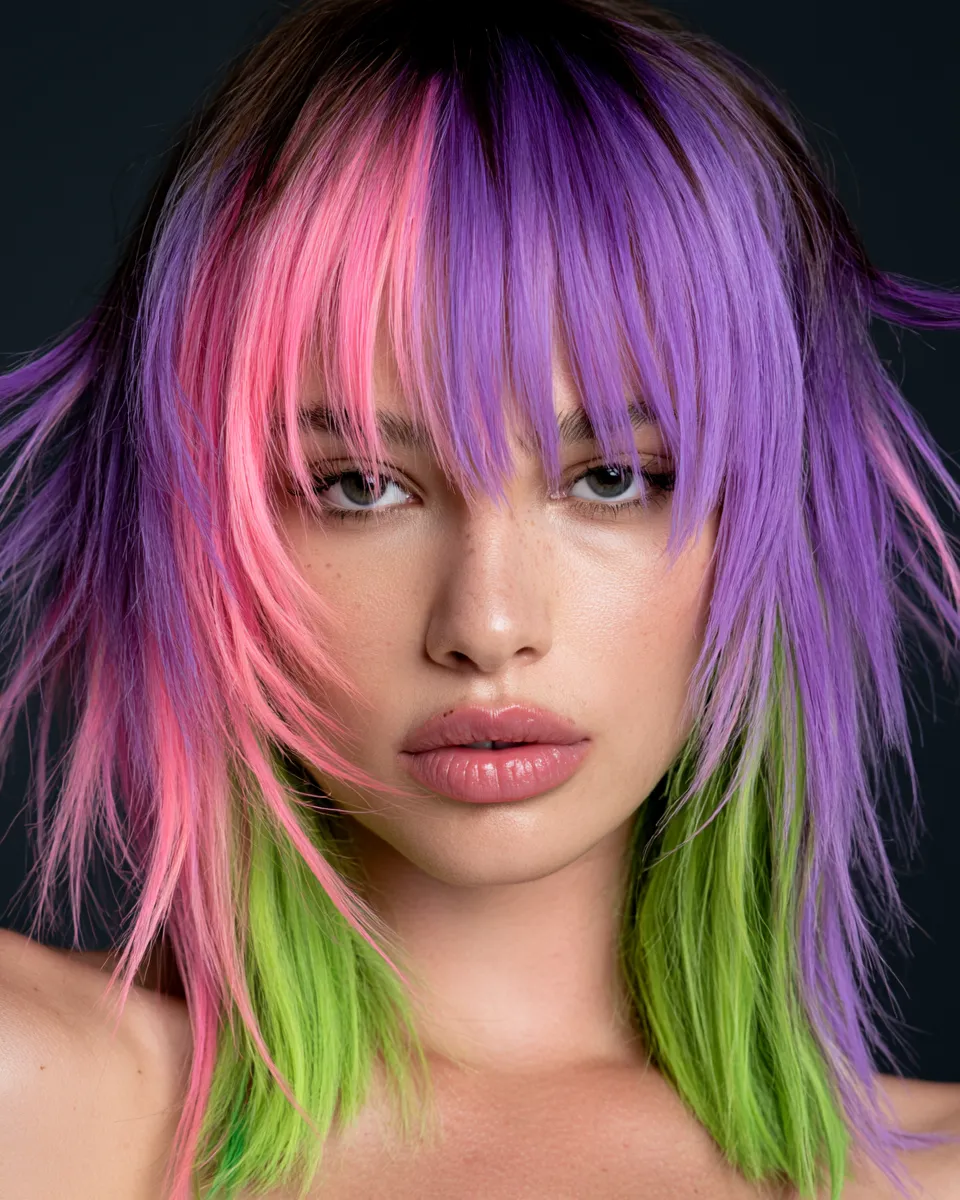
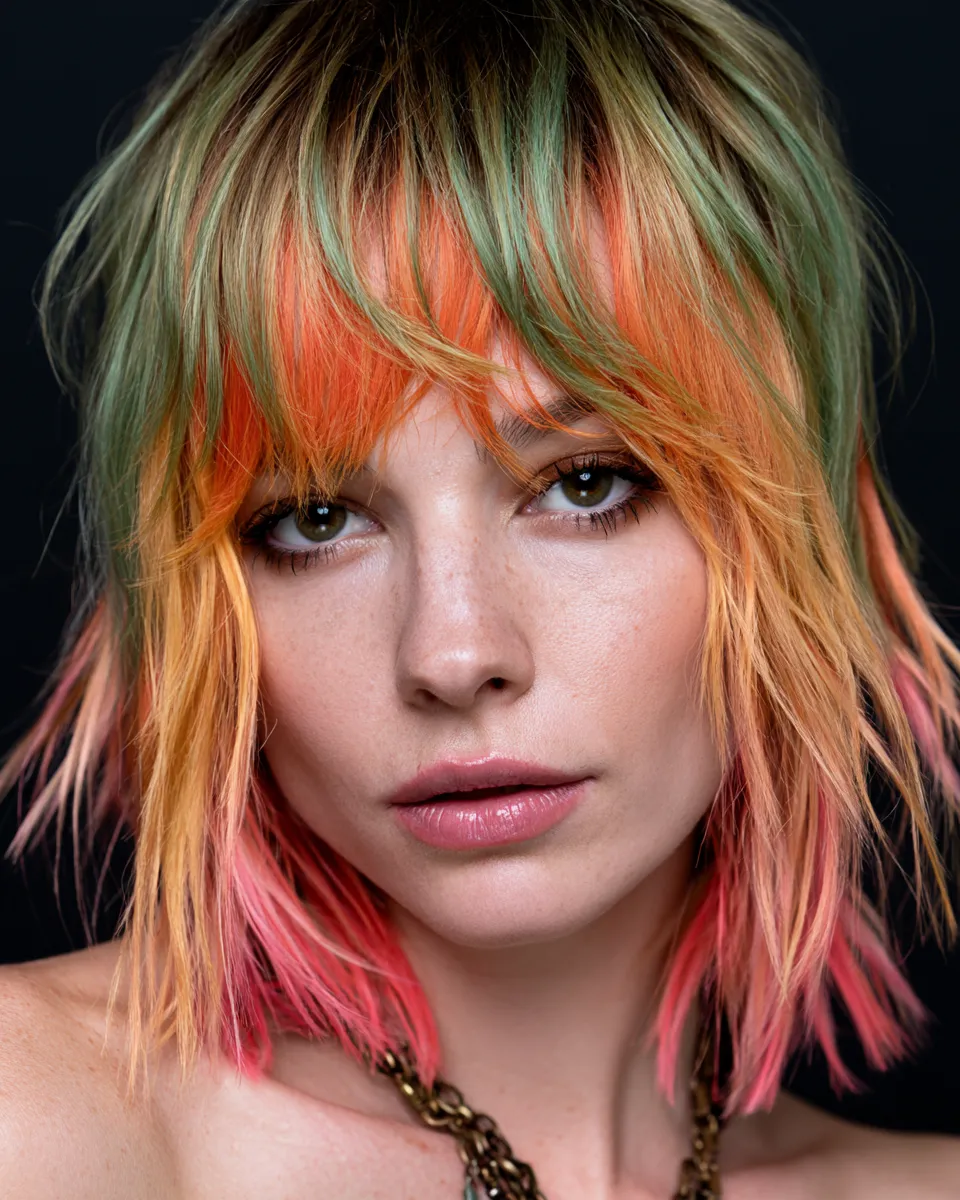
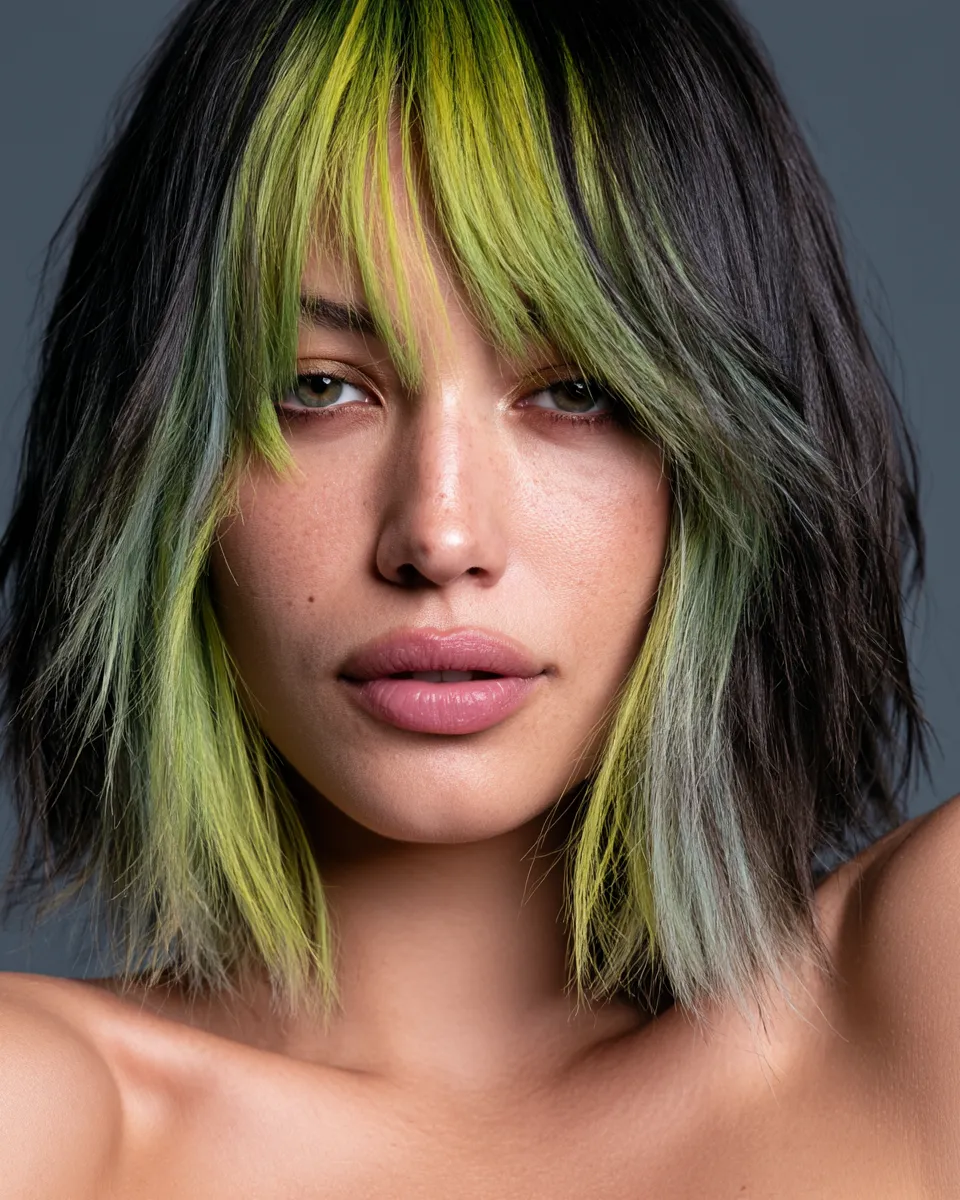
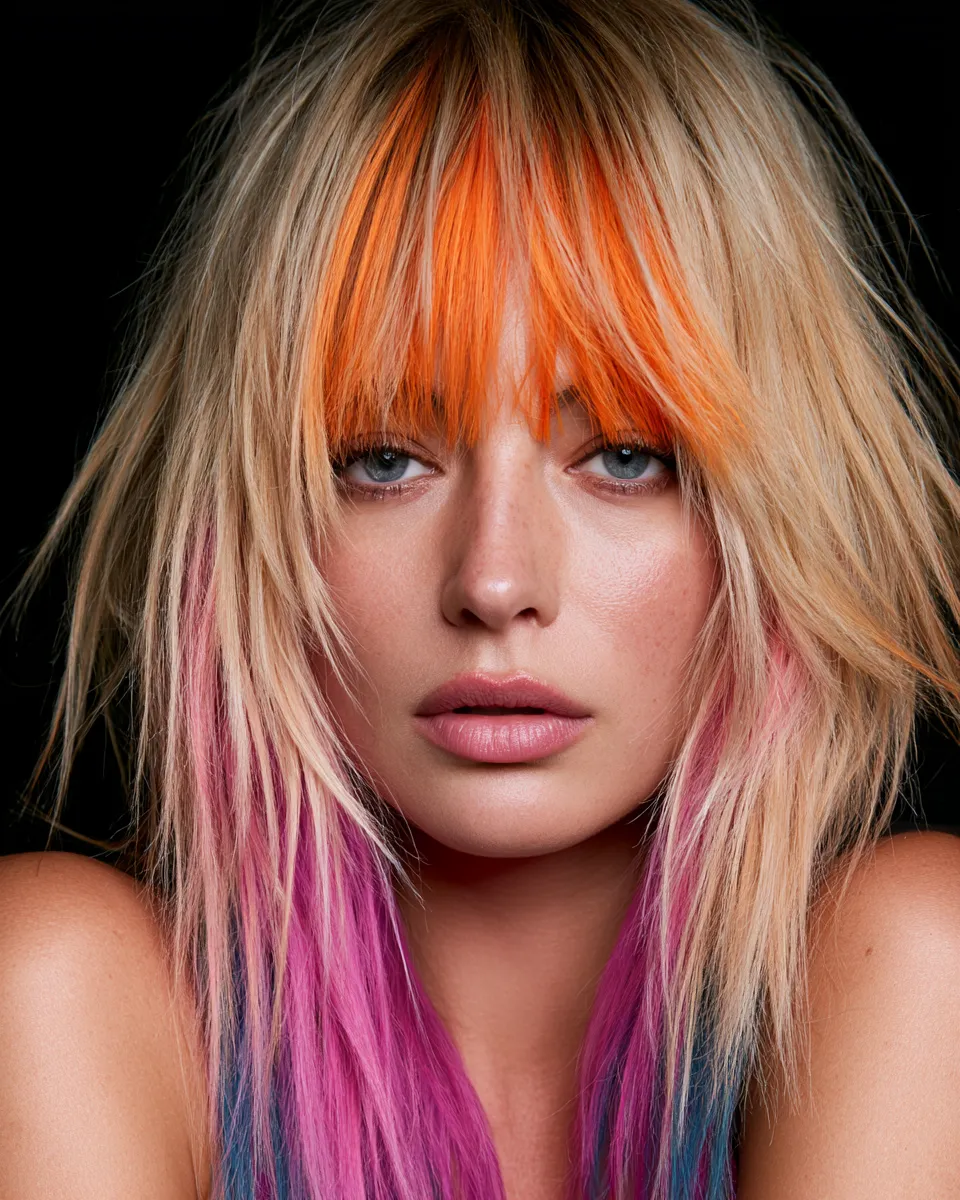
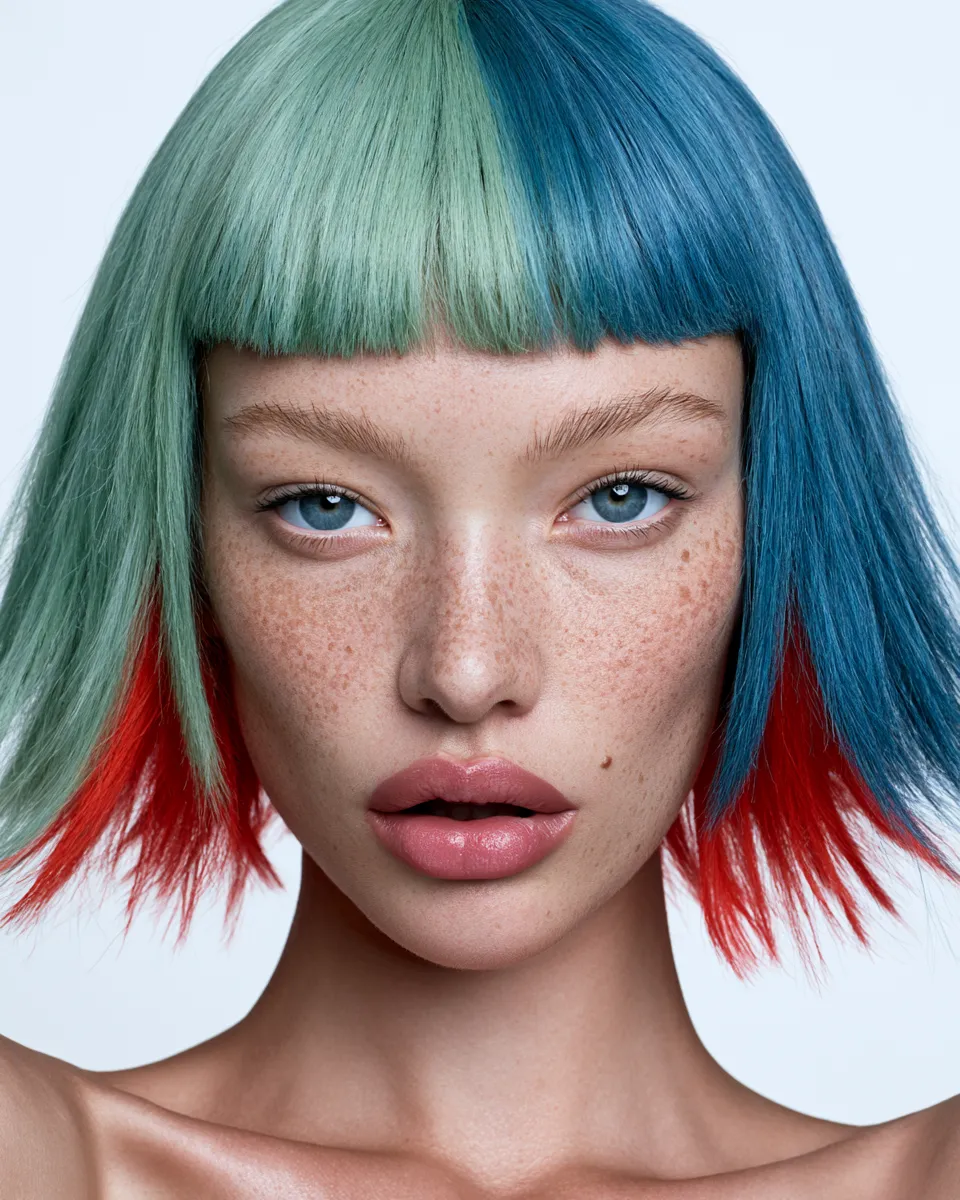
The shag haircut is defined by heavy layering, significant texture, and — in its most classic form — a pronounced bang or fringe. Shag-bang combinations are among the highest-impact hairstyles available, as the layering creates volume and movement throughout the entire cut while the bang anchors the face. Color plays a significant role in shag styling, with vibrant hues like electric blue, mint green, and fiery red frequently appearing in editorial shag references.
- 9+ Fresh Shag Haircut with Bangs in Mint Green for a Unique Twist
- 12+ Vibrant Shag Haircut with Bangs in Electric Blue for a Bold Statement
- 7+ Bold Shag Haircut with Bangs Ideas in Fiery Red for a Striking Look
Korean Bangs — A Style Category of Their Own
Korean-inspired bang styles have influenced Western hair trends significantly over the past several years, introducing a softer, more face-integrated approach to fringe styling. Rather than sitting flat across the forehead as a separate visual element, Korean bangs tend to blend into the rest of the hair through gradual layering and feathering techniques. The result is a more harmonious, less abrupt framing effect that suits a wider range of face shapes. This category includes baby bangs, curtain-style Korean bangs, long layered interpretations, and straight-across versions adapted for Western face structures.
- Baby Korean Bangs Framed by Midnight Blue Hair
- Curtain Korean Bangs with Platinum Blonde Layers
- Straight Korean Bangs with Ash Gray Bob Cut
- Honey Blonde Curls Stay Flat Until You Add Korean Bangs Here
- Long Layered Korean Bangs in Jet Black Gloss
Bangs for Older Women
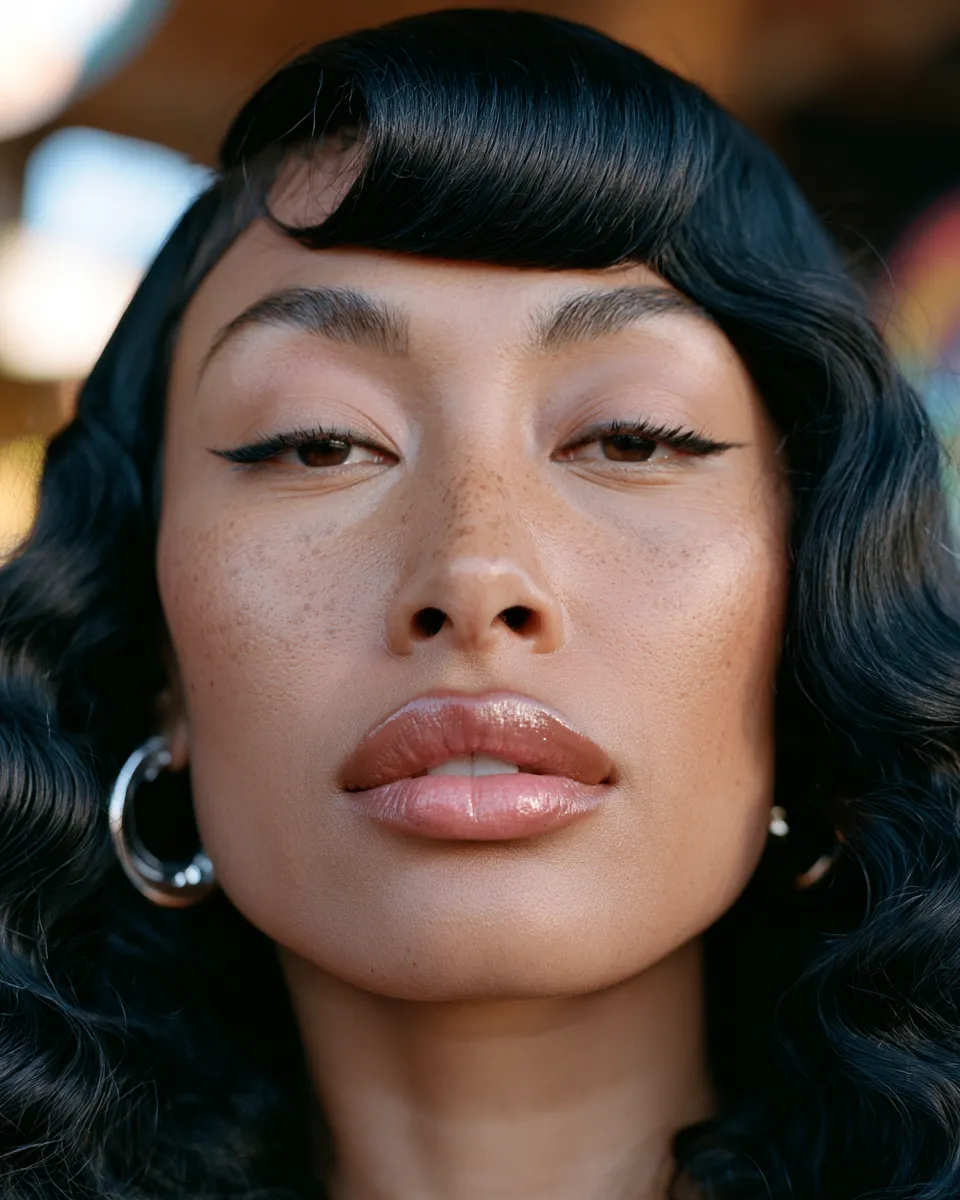
The relationship between bangs and aging is more nuanced than the common advice to avoid them after a certain age. Heavy, one-length bangs can, when cut incorrectly, add visual weight to the upper face and make fine lines across the forehead more visible. But wispy bangs, soft curtain styles, and feathered fringe actively soften the face by breaking up the forehead and redirecting the eye toward the eyes and cheekbones. Vintage wave styles and textured layers add movement that restores the dimensional quality that hair tends to lose with age.
- Vintage Wave Hairstyles for Older Women — Why Hollywood Waves Return
- Textured Layers for Older Women — Why Movement Replaces Flatness
- Flattering Short Bob with Bangs for All Ages
Trending Cuts That Incorporate Bangs
Beyond traditional bang categories, several emerging haircut trends have bangs as an integral structural element rather than an optional add-on. The Cloud Cut, the Shattered Bob, and the Hime Cut all use fringe in specific and intentional ways that set them apart from conventional bang styling. Understanding these cuts helps clarify why certain bangs only work within certain haircut structures — and why attempting to add a bang to the wrong foundation often fails.
- The Cloud Cut Gains Momentum While Every Other Length Stays Stuck
- The Shattered Bob: Why Fragmented Texture Is Replacing Sleek
- Wispy Curtain Bangs Change Everything About the Hime Cut
- Stunning Pink Ombre Hime Cut with Soft Blunt Bangs
Bangs for Every Occasion and Lifestyle
Not every bang style suits every lifestyle. A sleek blunt fringe demands daily heat styling and frequent trims. A wispy side-swept bang is wash-and-go friendly. A curtain bang with long layers can be pinned back on busy mornings and released on styled evenings. This section covers practical, occasion-ready approaches to styling existing bangs — including ponytail styling with bangs, which is one of the most requested but least discussed bang-management techniques.
- Pull Your Hair Back and Your Bangs Forward — Casual Ponytail With Bangs Looks Worth Copying
- Sleek Bob Haircut with Bangs for Everyday Elegance
- 6 Easy Hairstyles for Long Hair with Bangs to Try Today
Bang Style Comparison at a Glance
Choosing the right bang style depends on several factors working together. The table below compares the seven most popular bang styles across the dimensions that matter most for day-to-day wearability and styling commitment.
| Bang Style | Best Face Shape | Best Hair Type | Maintenance Level | Grow-Out Grace |
|---|---|---|---|---|
| Blunt / Full Bangs | Oval, Heart | Straight, Fine | High — trim every 4 weeks | Low — noticeable fast |
| Curtain Bangs | All face shapes | Wavy, Textured | Low to Medium | High — blends naturally |
| Wispy / Birkin Bangs | Round, Square | Fine, Thin | Low | High — barely noticeable |
| Side Swept Bangs | Round, Square, Long | Any | Low to Medium | High — transitions easily |
| Micro / Baby Bangs | Oval, Long | Straight, Thick | Very High — trim every 3 weeks | Very Low — grows out awkwardly |
| Korean Bangs | Oval, Round | Straight, Silky | Medium | Medium — layers help |
| Shag Fringe | Oval, Heart, Long | Thick, Wavy, Curly | Medium | High — part of the cut’s structure |
Face Shape Guide for Hairstyles with Bangs
Face shape is the single most influential factor in bang selection, yet it is also the most commonly misunderstood. Most people know their face shape in theory but misidentify it in practice — particularly around the distinction between oval and round, or between heart and triangle. The articles below approach face shape matching from specific cut perspectives, making them more useful than generic face-shape guides because they address the actual visual outcome for each combination.
- How to Choose the Best Pixie Cut with Bangs for Your Face Shape
- Bob for Long Face Shapes That Actually Shortens Without a Single Layer
- 3+ Curly Hair with Bangs Ideas for Every Face Shape
- These Wispy Birkin Bangs Will Completely Transform Your Face Shape
How to Cut and Maintain Bangs at Home
Between salon visits, bangs can grow from perfectly styled to completely unwearable in a matter of weeks. Understanding how to maintain, trim, and style bangs between appointments is a practical skill that significantly extends the life of any bang style. At-home cutting is particularly valuable for side-swept styles, where a small trim to restore the angle can make several additional weeks of wear possible without a salon visit. The key tool is sharp scissors designed for hair — kitchen scissors or craft scissors create blunt, ragged ends that shorten the fringe life considerably.
- Scissors Angled Down, Bangs That Don’t Budge — How to Cut Side Swept Bangs at Home
- Shoulder Length Hair with Bangs: Style It, Keep It Fresh
- How to Achieve a Sleek Look with Short Hair and Bangs
Bangs with Color — Making the Fringe the Feature
Color and bangs interact in a distinctive way: because bangs occupy the most visually prominent area of the head — directly above eye level — any color applied to the fringe is immediately and constantly visible. This makes the bang an ideal canvas for bold color choices, from vibrant fashion colors like electric blue and fuchsia to subtler shifts like platinum blonde or ash gray that create a striking tonal contrast with the rest of the hair. Ombre bangs, where the fringe graduates from one color to another, offer a particularly dynamic effect on longer bang styles.
- Dare To Go Bold With A Layered Bob With Bangs And Colour
- Medium Bob with Bangs Styled in Electric Blue Hue
- Medium Bob with Bangs in Vibrant Fuchsia Glow
- 9+ Fresh Shag Haircut with Bangs in Mint Green for a Unique Twist
- 12+ Vibrant Shag Haircut with Bangs in Electric Blue for a Bold Statement
- 7+ Bold Shag Haircut with Bangs Ideas in Fiery Red for a Striking Look
- Stunning Pink Ombre Hime Cut with Soft Blunt Bangs
- Baby Korean Bangs Framed by Midnight Blue Hair
- How to Add Color to a Bob with Bangs for a Bold Statement
Find Your Perfect Bang Style
Every article in this collection addresses a specific combination of bang style, hair type, length, face shape, or color — which means the right resource for your situation is almost certainly here. Start with the bang style category that most closely matches what you have in mind, read the face shape guidance to verify the fit, and then move to the maintenance articles to understand what the commitment actually looks like week to week. Bangs are one of the most impactful changes you can make to your hair, and the difference between bangs that work and bangs that frustrate almost always comes down to having the right information before you sit in the chair.
You Might Also Like
Related Topics